
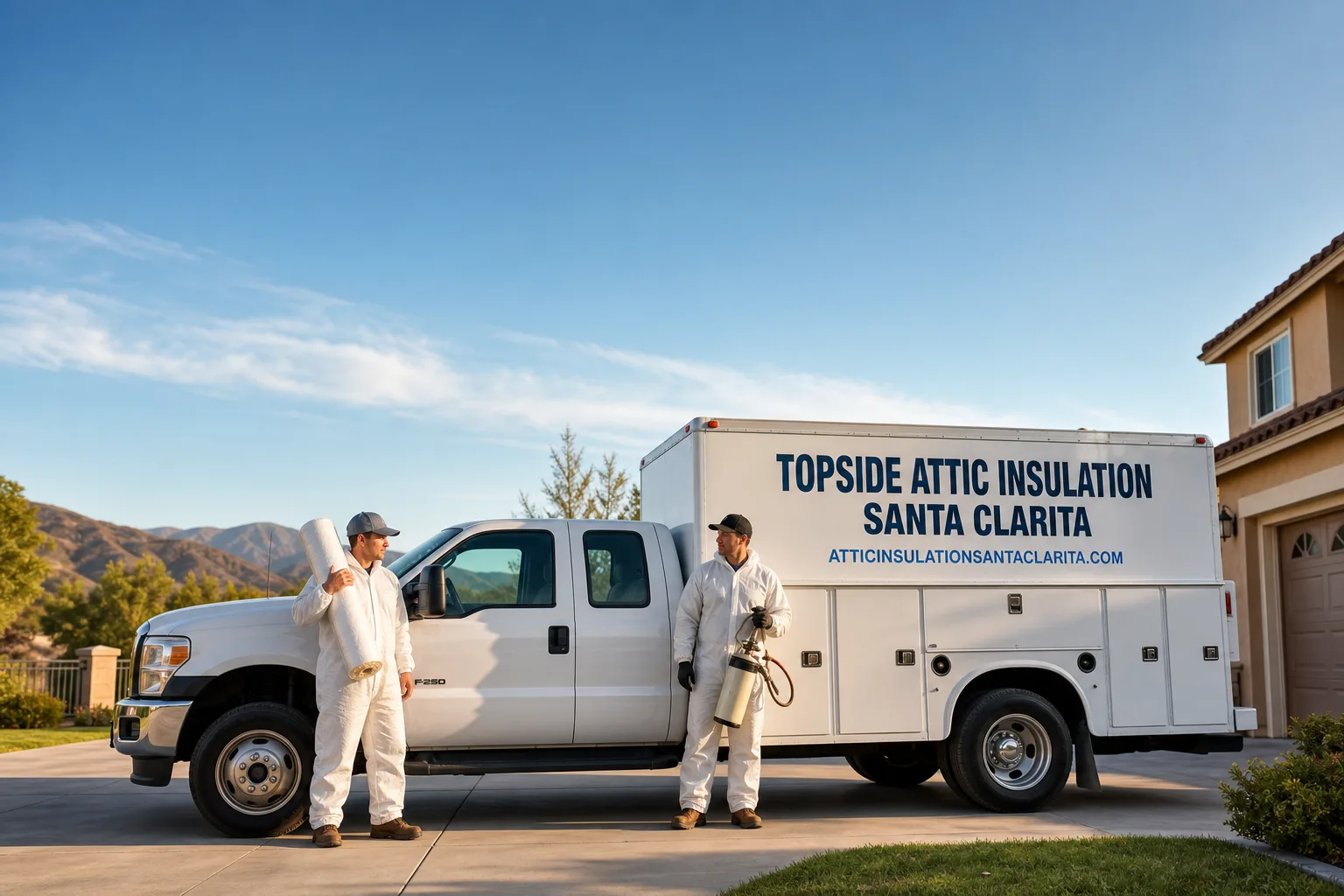
Fast, Reliable Blown-In Insulation Across San Fernando
Blown-in insulation in San Fernando typically costs $1,800-$4,500 for attic work and $2,200-$5,800 for dense-pack wall insulation in the city’s pre-1960s worker cottages, with most jobs completed in one to two days. We dispatch crews to San Fernando from our Los Angeles office and can usually schedule an estimate within 48 hours. If your home on Harps Street, Fourth Street, or anywhere near San Fernando Road is running $350+ electric bills in July, the problem is almost certainly insulation that predates California’s energy code by decades.
We’re familiar with every permitting quirk the City of San Fernando Building & Safety Department throws at insulation contractors. San Fernando isn’t LA County for permits. It’s its own jurisdiction. That matters because the inspector will flag knob-and-tube wiring, unsealed top plates, and blocked soffit vents that LA County crews might miss. Our Blown-In Insulation team has pulled dozens of San Fernando permits since 2016 and knows the submittal package the city expects.
Why Topside Attic Insulation Santa Clarita Is San Fernando’s Preferred Blown-In Insulation Company
We’ve sealed and insulated over 9,000 homes since 2016, and a growing share of them sit in San Fernando’s 2.4 square miles of post-WWII worker housing. The reviews we get from San Fernando customers tend to mention the same thing: we actually check the wall cavities before we quote, and we show the blower-door numbers at the end. One homeowner near Maclay Avenue wrote that our crew found hollow walls her previous contractor had assumed were already insulated. We dense-packed them anyway, because we test rather than guess.
Response time to San Fernando runs 24-48 hours for estimates, with most attic jobs starting within a week of written approval. Our technicians are background-checked, uniformed, and carry photo documentation equipment on every truck. Calls are answered by a live person, 24/7, at (747) 294-2764. No voicemail loops. No callback windows measured in business days.
What builds trust in San Fernando specifically is our familiarity with the city’s housing stock. These aren’t generic suburban tracts. They’re 800-1,200 square foot cottages built between 1940 and 1965 for industrial workers along San Fernando Road, framed with minimal lumber and no wall cavity insulation whatsoever. Many survived the 1971 Sylmar earthquake intact and were never gutted or renovated. That means the walls are still hollow. We know to lead with dense-pack or injection foam as the standard approach, not as an upsell, because open-wall demolition is rarely practical in these neighborhoods.
Our Blown-In Insulation Services in San Fernando
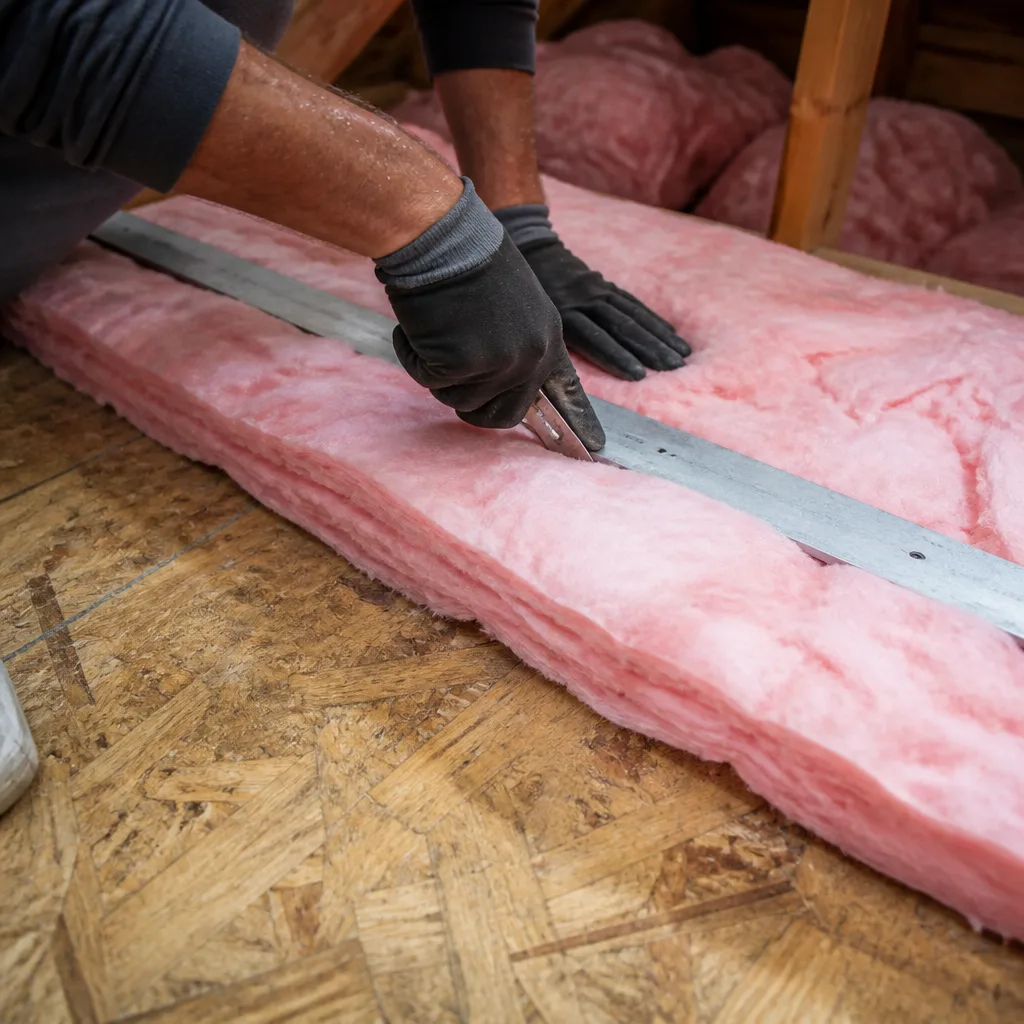
Blown-In Cellulose
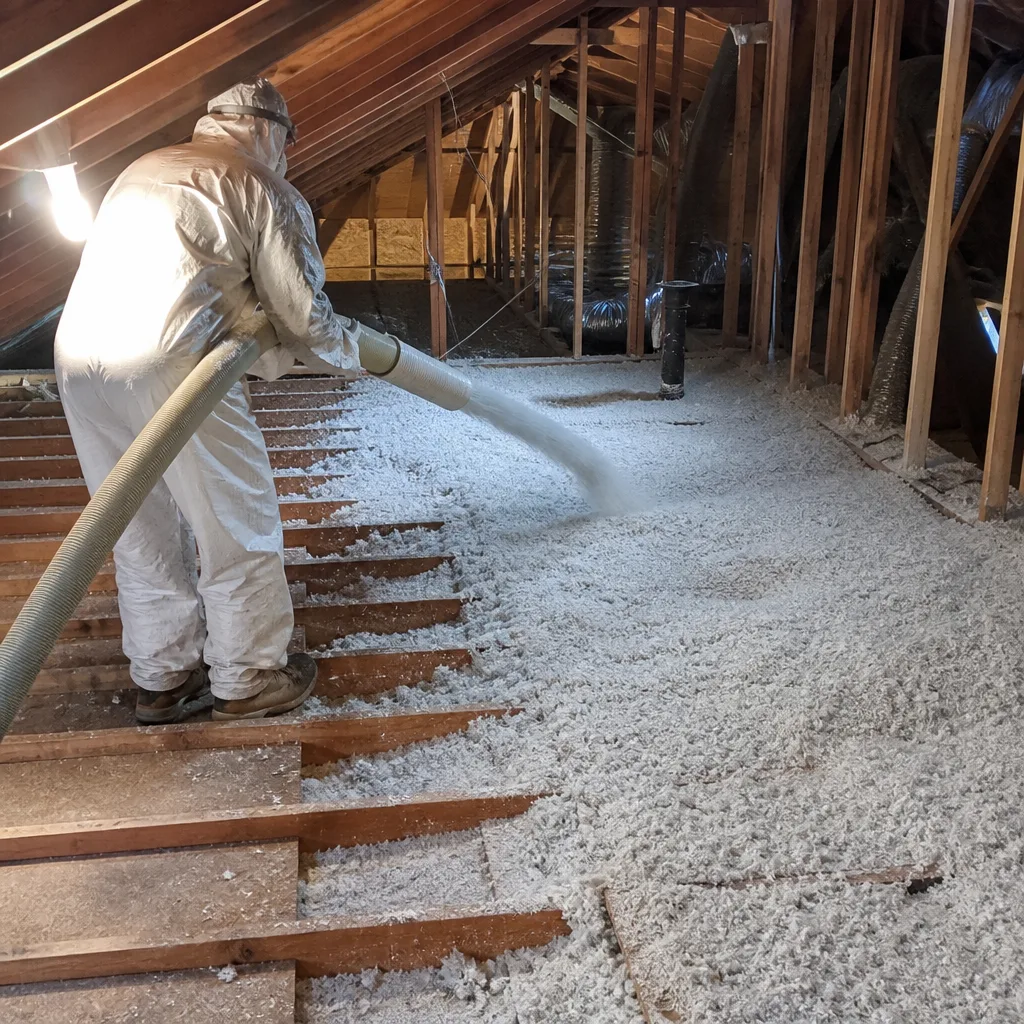
We dense-pack San Fernando wall cavities with GreenFiber cellulose, a treated recycled-paper product that fills irregular stud bays completely and slows air movement through the wall. Cellulose works particularly well in San Fernando’s pre-1960s cottages because the 2×4 framing is often uneven, and loose-fill fiberglass would settle in the gaps. In attics, we blow cellulose to R-38 or higher over a sealed floor deck, taking care to rake and level any compressed existing material first. A crew that skips that step leaves R-value gaps directly over the ceiling zones that heat up fastest.
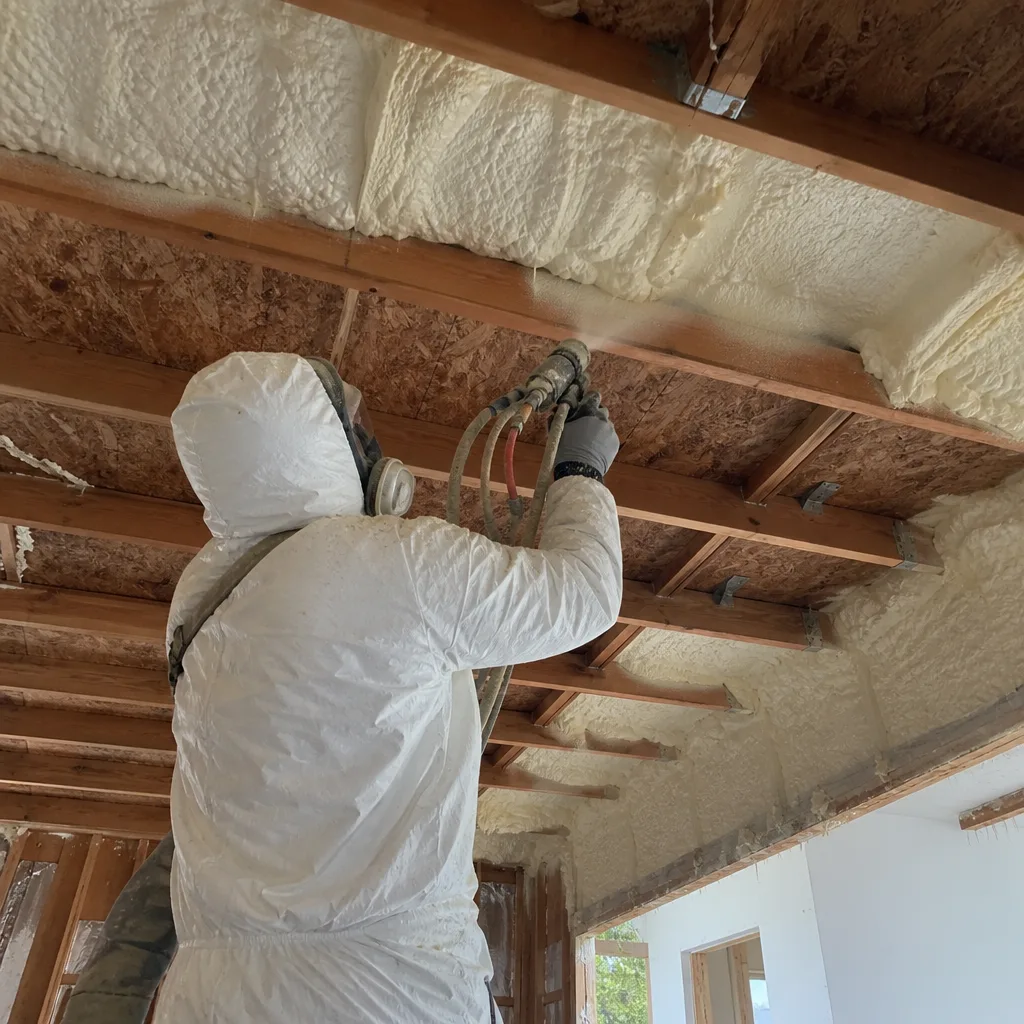
Blown-In Fiberglass
For attic top-ups in San Fernando’s low-pitch roofs, we use Owens Corning fiberglass blown to specified depth. Fiberglass doesn’t absorb moisture the way cellulose can, which matters in attics where roof leaks from aging shakes or original tar-and-gravel may go undetected. We pair this with air sealing of top plates, can lights, and plumbing penetrations before any material goes in. Blowing insulation over an unsealed attic floor is something we don’t do. Sealed first, then insulated. In that order.
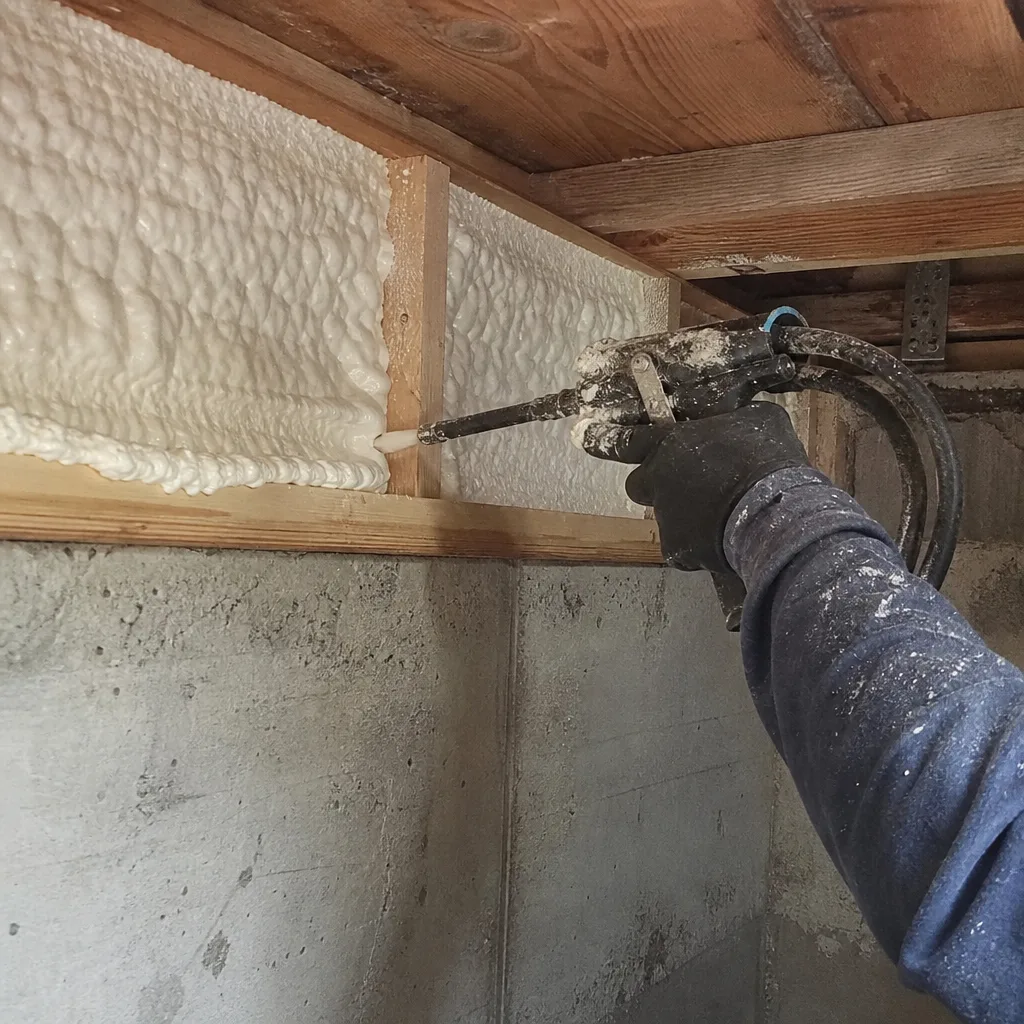
Dense-Pack Wall Insulation
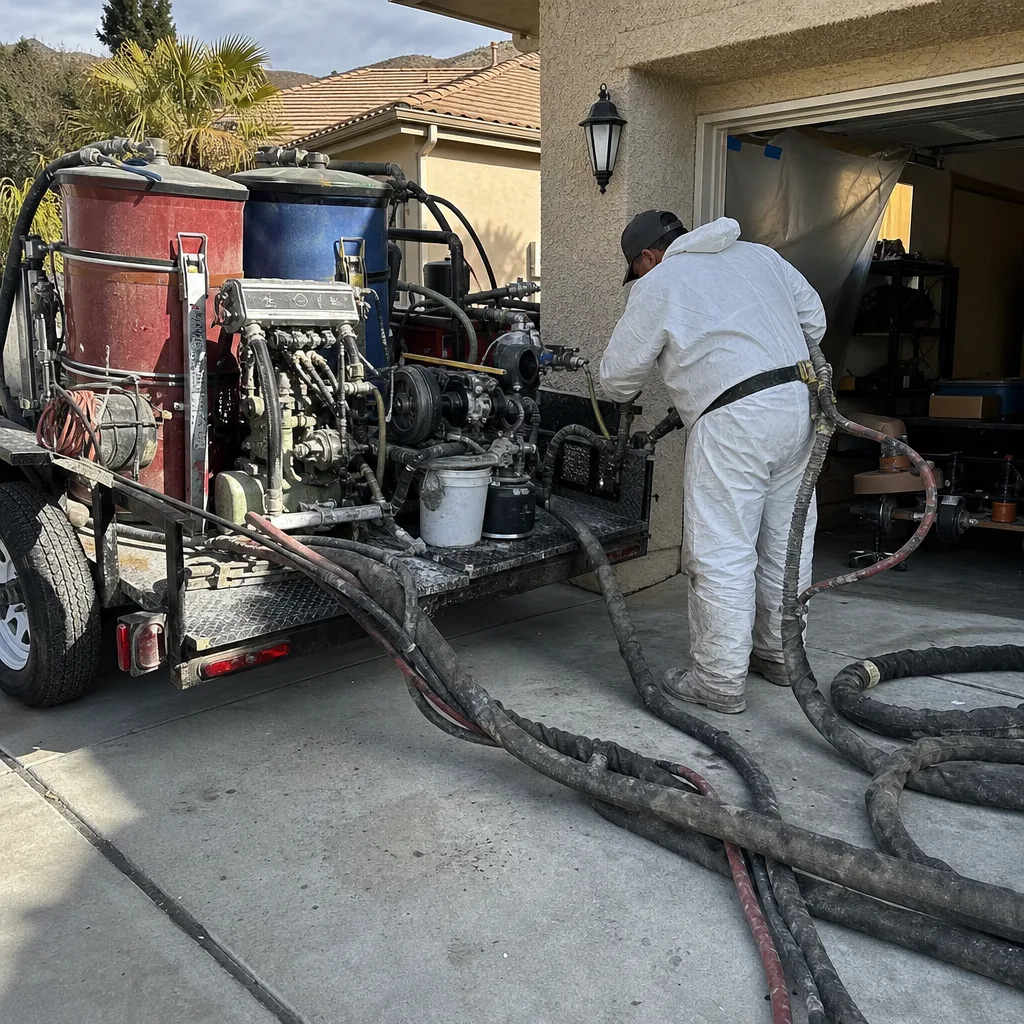
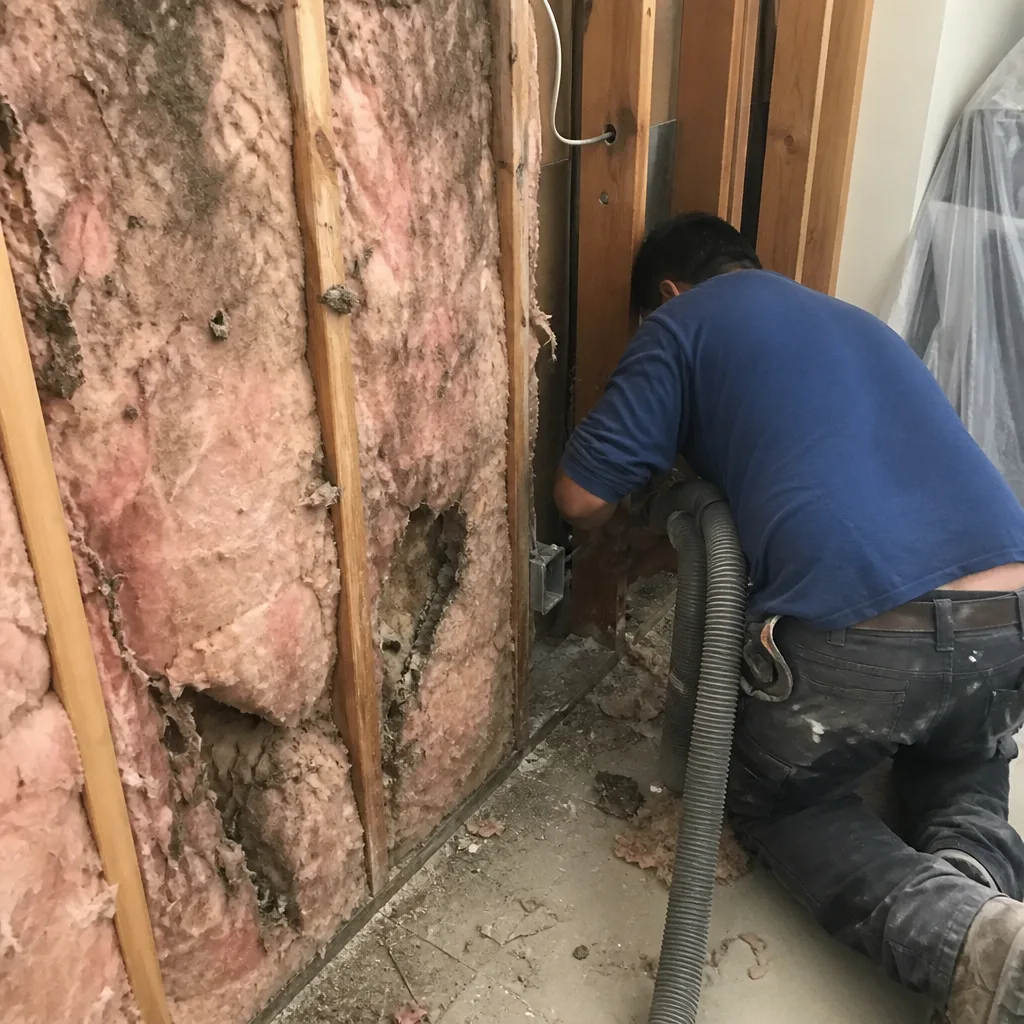
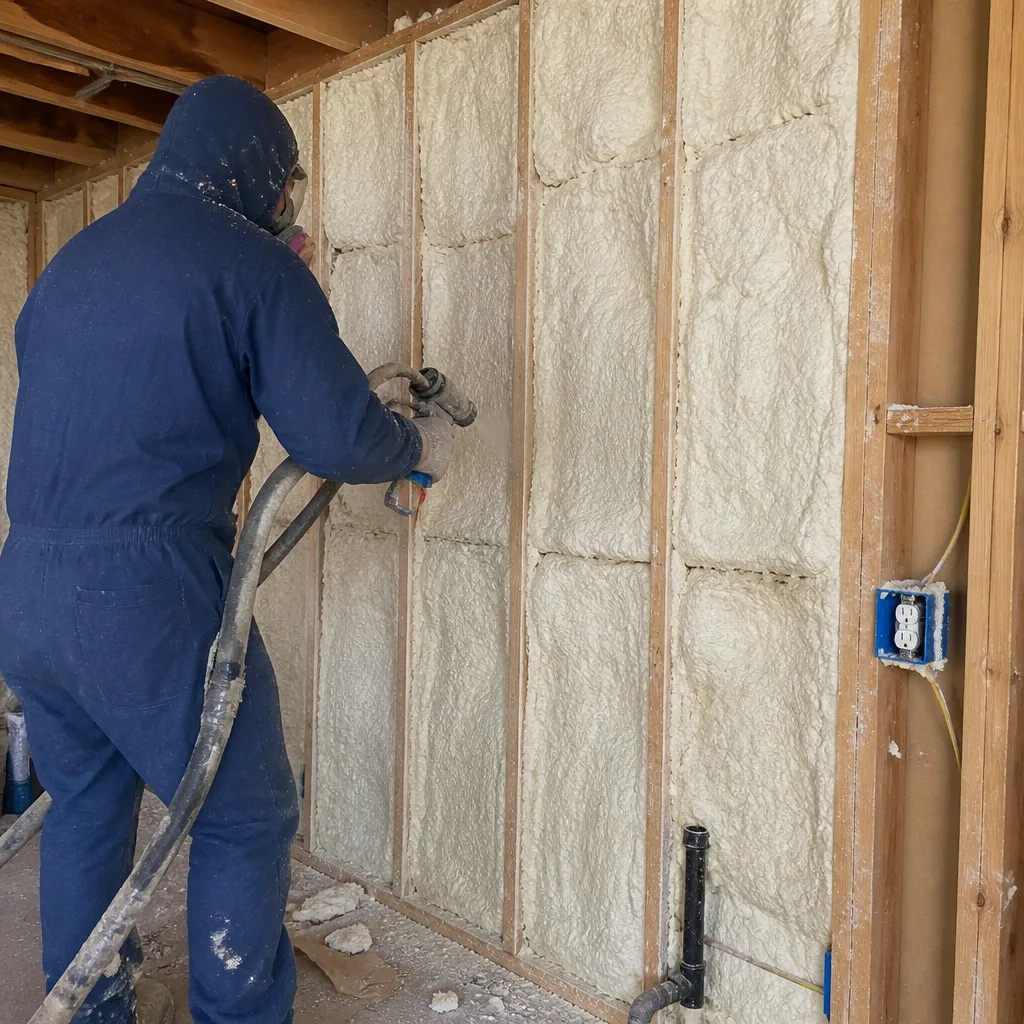
This is the service San Fernando homeowners need most and ask about least. Dense-pack blown-in fills hollow wall cavities through drilled access holes, packing cellulose or fiberglass at 3.5-4.0 pounds per cubic foot so it won’t settle. In San Fernando’s 1950s cottages, this is often the only practical way to insulate walls without gutting the interior. We pull a City of San Fernando permit for every dense-pack job, and the inspector verifies we’ve identified any knob-and-tube or unpermitted wiring before the cavities are filled. Buried wiring is a real fire risk. The permit process catches it.
Blown-In Top-Up
Many San Fernando attics have some existing insulation, usually thin, compressed mineral wool or early fiberglass batts installed by a previous owner. A blown-in top-up adds material to reach current Title 24 standards, but only after we rake the existing layer level and seal air leaks. We’ve seen crews in the Valley blow new cellulose directly over compressed old batts, creating a lumpy surface with thin spots directly above bedrooms. The homeowner feels those thin spots as hot ceiling zones in August. We photograph the before condition, rake it flat, seal it tight, then blow. You get the photo record.
What happens when you call
- 1
A real person answersNo phone trees - you reach a local pro.
- 2
You get an upfront price rangeHonest numbers before anyone is dispatched.
- 3
A background-checked tech heads outLicensed & insured, dispatched right away.
- 4
You approve before work beginsNothing starts until you say go.
 Before
 After
AfterTrusted Brands We Service in San Fernando
We source blown-in materials from Owens Corning, Knauf, and CertainTeed, among others, with no proprietary lock-in that limits your options. For San Fernando jobs, we stock GreenFiber cellulose and Owens Corning fiberglass on local trucks for same-day starts once the permit is approved. Rockwool mineral wool is available for fire-rated assemblies or specific acoustic applications. We don’t push one brand over another; we specify based on what your home’s envelope needs, then show you the data sheet before we order.
Common Blown-In Insulation Problems We See in San Fernando Homes
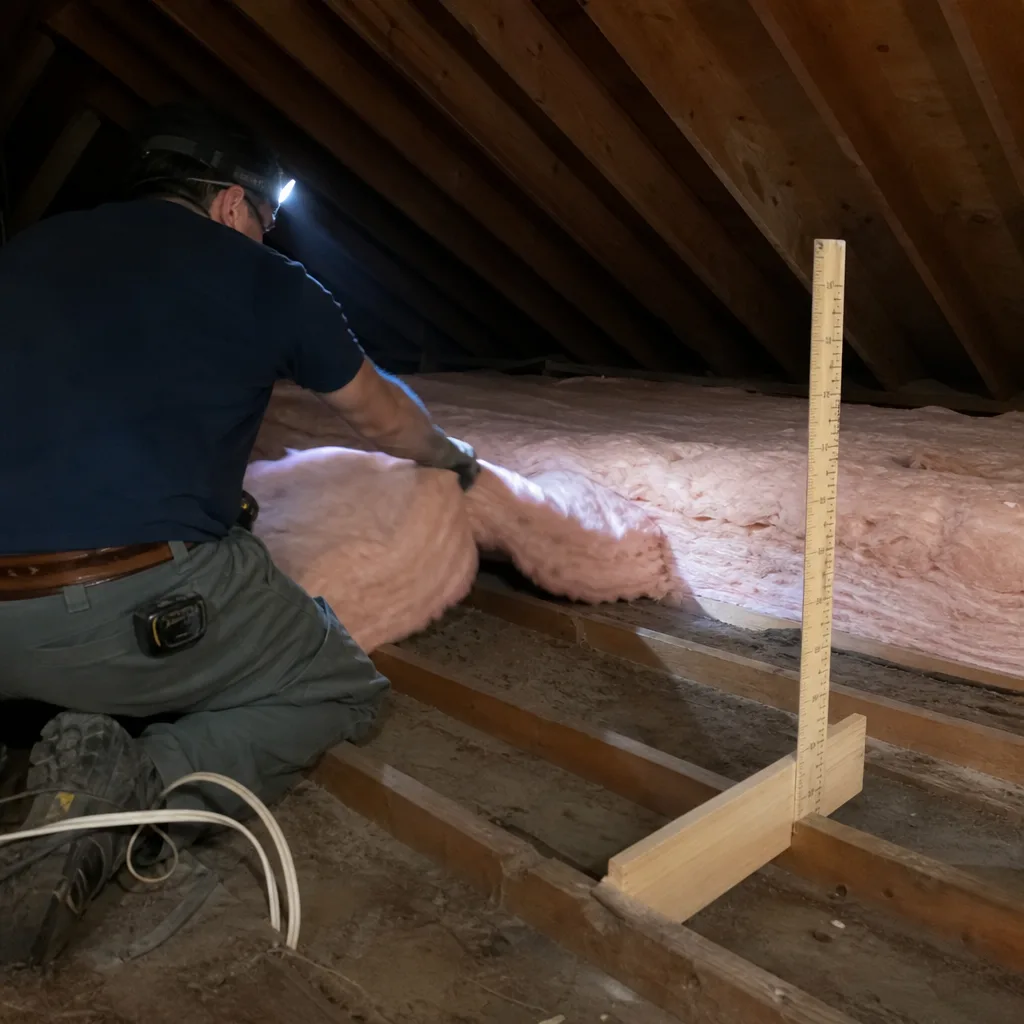
- Compressed attic insulation crushed by careless top-ups. Low-pitch 1940s-1960s San Fernando attics often have existing mineral wool or early fiberglass compressed to half its original thickness. A crew that blows new material over this without raking and leveling first creates R-value gaps over the hottest ceiling zones. We photograph the existing layer, rake it flat, then add.
- Loose-fill migration into hollow wall cavities. Unsealed top plates and open stud bays in San Fernando’s pre-1960s homes let attic-blown insulation drift down into walls or block soffit ventilation. We air-seal every penetration before blowing. The blower-door test confirms we got it.
- Knob-and-tube wiring buried by dense-pack. Original or unpermitted wiring in uninsulated wall cavities is common in San Fernando’s worker cottages. Dense-pack cellulose or injection foam buried against active knob-and-tube creates a fire hazard. Our City of San Fernando permit submittal includes electrical inspection where indicated, and we won’t proceed until clearance is documented.
- Attic temperatures exceeding 150°F destroying material performance. San Fernando’s inland Valley location, 10-15°F hotter than coastal LA with no marine layer, pushes attic surfaces past 150°F during heat events. Insulation rated for standard conditions underperforms here. We specify materials and depths for actual local conditions, not textbook averages.
Pricing for Blown-In Insulation in San Fernando, CA
A typical blown-in attic insulation job in a San Fernando cottage runs $1,800-$3,200 for air sealing plus material to R-38. Dense-pack wall insulation for a 1,000-square-foot home with hollow 2×4 cavities runs $2,200-$4,800, including City of San Fernando permit fees. Blown-in top-ups over existing material start around $1,200 if the attic floor is already sealed, $1,800-$2,800 if we need to rake, level, and seal first.
What moves the price: attic accessibility (many San Fernando homes have scuttle holes rather than pull-down stairs), the condition of existing wiring, whether knob-and-tube requires electrical remediation, and the extent of air sealing needed before material goes in. We provide a Written Price Before Any Work Starts, always, with a flat number and written scope. No range that widens once we’re in your attic. Free Second Opinion on any written estimate from another contractor. Call (747) 294-2764 for an exact quote.
We Also Serve Cities Near San Fernando
Our crews work throughout the northern San Fernando Valley and Santa Clarita Valley, including San Fernando, Burbank, Santa Clarita, Stevenson Ranch, and Castaic. Scheduling and dispatch are coordinated from our Los Angeles office, with local crews deployed to each area.
Serving San Fernando, CA - Our Local Coverage Area
We’re based in the San Fernando area and know this community well. Use the map below to see our service coverage - if you’re nearby, we can almost certainly help.
FAQs - Blown-In Insulation in San Fernando
You need a permit from the City of San Fernando Building & Safety Department, not LA County. San Fernando is an independent municipality with its own inspection authority. We pull the permit as part of our scope, include the fee in our written price, and schedule the inspection. Call (747) 294-2764 to start the process.
Yes. Dense-pack blown-in insulation fills hollow wall cavities through drilled access holes, then the holes are patched and painted. In San Fernando’s 1950s worker cottages, this is standard practice because the homes were never gutted after the 1971 Sylmar earthquake and the walls remain hollow. We pull a city permit and verify wiring condition before filling. Call (747) 294-2764 for a free assessment.
Attic blown-in insulation in San Fernando typically runs $1,800-$3,200; dense-pack wall insulation runs $2,200-$4,800 for a typical cottage; top-ups start around $1,200. These ranges include permit fees and air sealing. Your written price will be a flat number, not an estimate that changes. Call (747) 294-2764 for an exact quote.
Yes, but we rake and level the existing material first, then air-seal penetrations, then blow new material to the specified depth. Blowing over compressed or uneven old insulation creates hot spots. We document the before condition with photos and provide the photo record when we leave. Call (747) 294-2764 to schedule.
Yes, significantly. San Fernando’s inland climate pushes attic temperatures past 150°F, and uninsulated or underinsulated homes lose conditioned air as fast as the AC produces it. We were called to a 1952 two-bedroom cottage on the 900 block of Harps Street where summer electric bills exceeded $400. After dense-packing the hollow exterior walls with GreenFiber cellulose and blowing Owens Corning fiberglass to R-38 over the sealed attic floor, the home now holds 74°F on 104°F afternoons and the July bill dropped by roughly a third. Call (747) 294-2764 to discuss your home.
Written by Wes Okafor, Owner at Topside Attic Insulation Santa Clarita, serving San Fernando since 2016.