
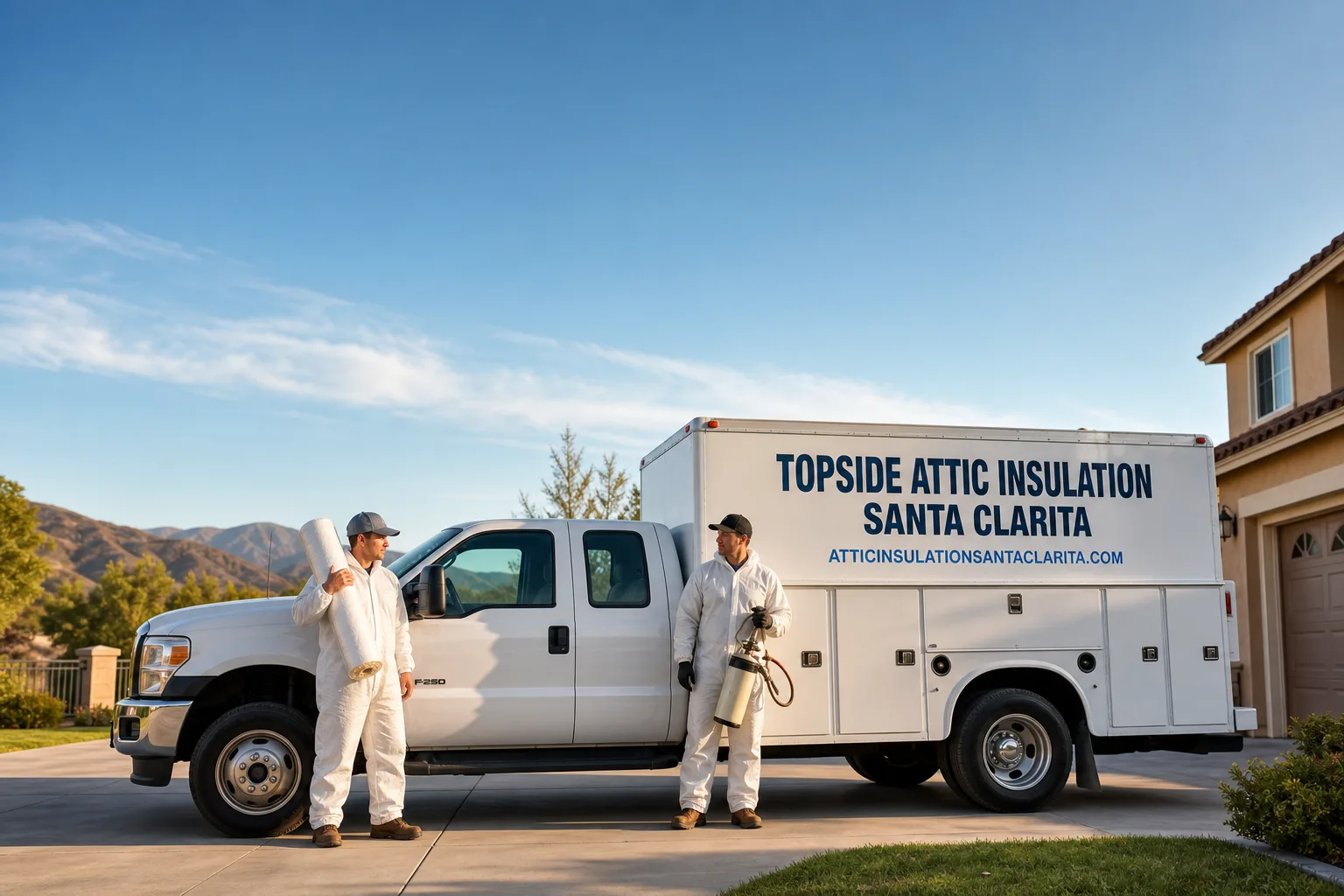
How Much Does Blown-In Insulation Cost in Santa Clarita?
Blown-In Insulation services in Santa Clarita typically cost between $1,800 and $4,200 for a standard attic in a 1,500 to 2,500 square foot home, with most jobs landing around $2,400 to $3,100 when air sealing is done first. The range shifts based on your current R-value, attic accessibility, and whether any old insulation needs to come out before new material goes in. Most installations are completed in a single day.
Blown-In Insulation Cost Breakdown (2026)
Blown-in insulation in Santa Clarita costs more than the national average in a few specific ways. Material costs here run slightly higher than inland markets further east, partly because of local labor rates and partly because properly installed jobs in the Santa Clarita Valley need to account for the region’s hot, dry summers – temperatures in Canyon Country and Saugus regularly push past 100°F in July and August, which means the insulation spec should be higher than what a moderate climate requires. Below is a realistic line-item breakdown for 2026.
| Service Item | Typical Cost Range (Santa Clarita, 2026) |
|---|---|
| Blown-in cellulose insulation (attic, per sq ft installed) | $1.20 – $2.10 |
| Blown-in fiberglass insulation (attic, per sq ft installed) | $1.40 – $2.40 |
| Full attic blown-in job, 1,000 sq ft attic, R-38 target | $1,400 – $2,200 |
| Full attic blown-in job, 1,500 sq ft attic, R-38 target | $1,900 – $2,900 |
| Full attic blown-in job, 2,000 sq ft attic, R-49 target | $2,500 – $3,800 |
| Attic air sealing before insulation (top plates, can lights, penetrations) | $600 – $1,400 |
| Old insulation removal before blowing in new material | $800 – $2,000 |
| Blown-in wall insulation (per linear foot of wall, retrofit) | $4.50 – $9.00 |
| Blower-door test (before and after air sealing) | $300 – $500 (often included in scoped job) |
Those ranges assume accessible attics with standard joist framing. If your attic in a Valencia or Stevenson Ranch home has been partially finished, has HVAC equipment sitting in the middle of the floor, or has ductwork that needs to be worked around, expect the upper end. Attics with heavily contaminated insulation – rodent droppings, vermiculite, or moisture damage – need removal and possibly attic cleaning before any new material goes in, which adds to the total but is not optional if the old material is compromised.
One number that rarely appears on competitor pricing pages: the R-value you need in Santa Clarita is higher than most homeowners expect. Title 24, California’s energy code, calls for R-38 at minimum in this climate zone, and many energy auditors recommend R-49 to R-60 for homes in the hotter microclimates around Newhall and Acton. Getting to R-49 with blown-in cellulose means approximately 13 to 14 inches of settled depth. Factor that into your quote comparison – a contractor pricing to R-38 and a contractor pricing to R-49 are quoting two different jobs.
What Affects Blown-In Insulation Pricing in Santa Clarita
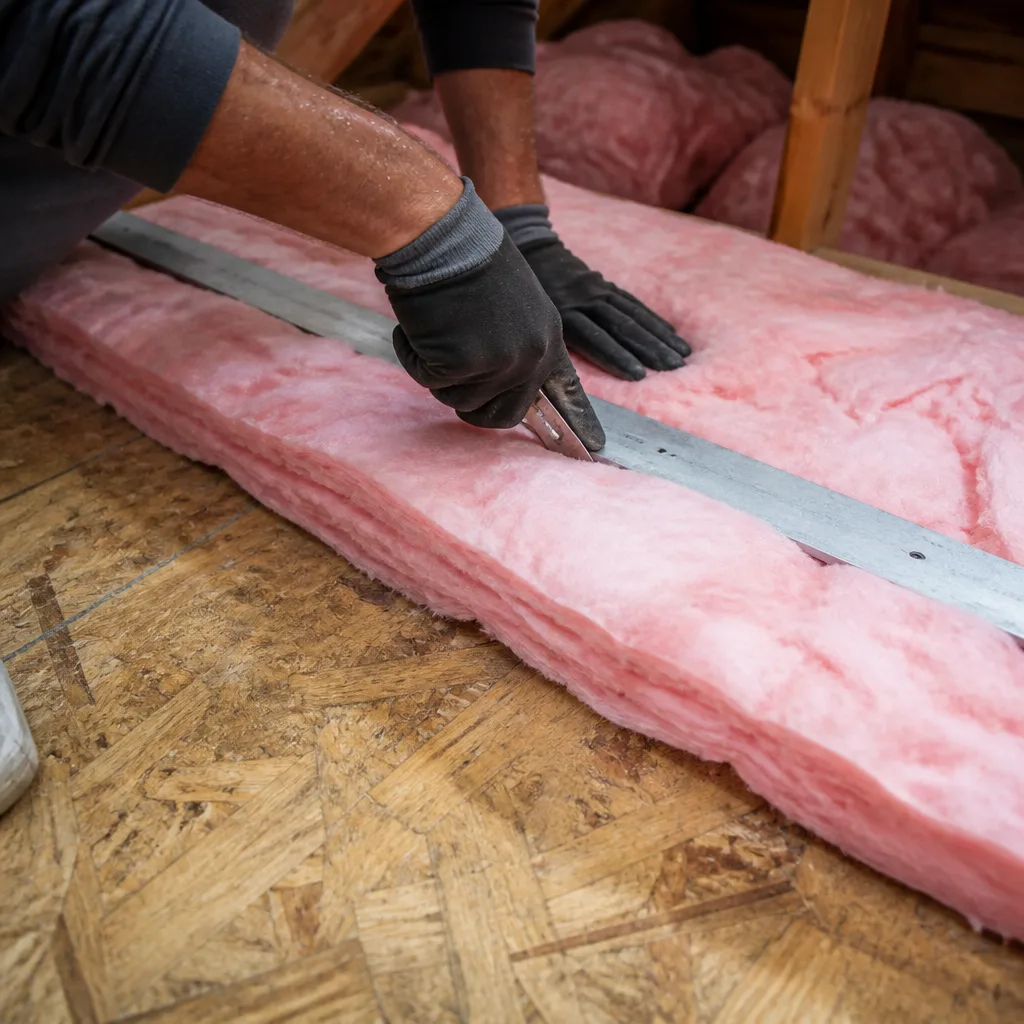
- Current insulation condition and R-value: If your attic already has 4 inches of old fiberglass batts sitting on the floor, a contractor needs to decide whether to blow over it or pull it out first. Old, compressed, or rodent-contaminated insulation typically has to come out before new material can be installed correctly. In Santa Clarita’s older neighborhoods like Newhall and the original Valencia tracts built in the 1970s and 1980s, we regularly find that original insulation has settled to below R-11 – half of what it needs to be.
- Attic accessibility and configuration: A standard gable-entry attic in a single-story Saugus home is straightforward to work in. A cut-up, multi-level attic in a two-story home in West Hills or Westridge adds time and material because the crew has to move the hose repeatedly and navigate low-clearance sections. Low-pitch roofs also limit mobility. These factors add $200 to $600 to the base job in most cases.
- Target R-value: Going from existing R-11 to R-38 costs considerably less than going from R-11 to R-60. The cost difference is mostly material. In Santa Clarita’s climate, every step up in R-value between R-38 and R-60 has a diminishing payback period, but homes in Canyon Country that face direct afternoon sun on the west elevation tend to benefit more from deeper insulation than homes with shade from mature tree cover.
- Air sealing before insulation: This is where most pricing comparisons break down. A quote that includes attic air sealing – sealing the gaps around top plates, recessed light cans, plumbing and electrical penetrations, and any HVAC chases – will always be higher than a quote that skips straight to blowing in material. But the two quotes are not comparable. Blown-in insulation over an unsealed attic floor performs meaningfully worse than the R-value label suggests, because conditioned air bypasses the insulation through the gaps. Under the Haven Standard at Envelope Insulation Co., air sealing is always completed before a single bag of insulation goes in – it is not offered as an add-on after the fact.
- Material choice – cellulose vs. fiberglass: Blown-in cellulose from manufacturers like GreenFiber typically runs $0.10 to $0.25 less per square foot than blown-in fiberglass from Owens Corning or Knauf, and it has a slight edge in air resistance. Fiberglass blown-in is a better fit in attics with potential moisture intrusion issues because it does not absorb water the way cellulose does. In Santa Clarita’s dry climate, cellulose is generally the more cost-efficient choice unless there’s a specific moisture concern.
- Removal of existing insulation: If the old material is damaged, contaminated, or too degraded to blow over, removal is a separate line item. In Santa Clarita, we see this most often in homes from the late 1970s to mid-1980s in Old Orchard and parts of Newhall that have rodent activity in the attic. Removal typically adds $800 to $2,000 to the project total, depending on attic size and how badly the old material is packed down. Attic cleaning and rodent proofing may be recommended alongside removal when the contamination is significant.
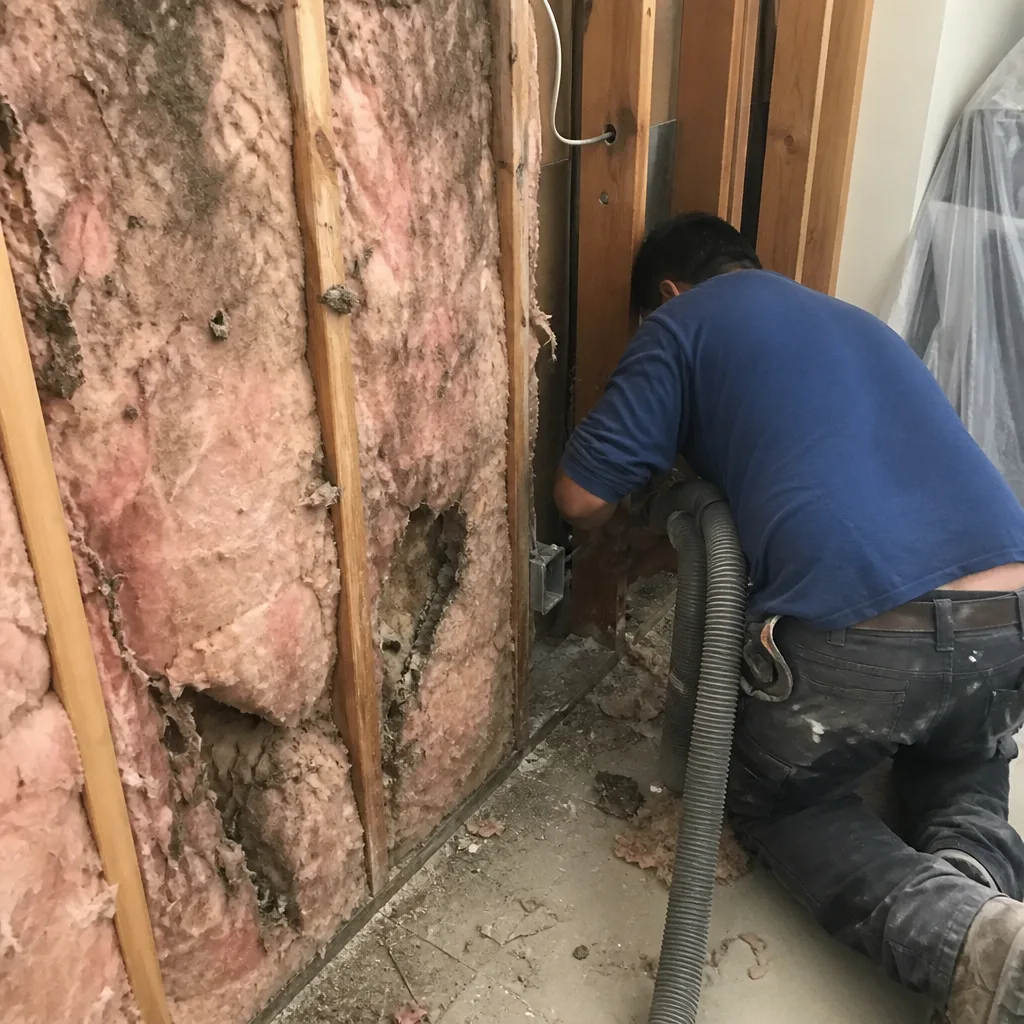 Before
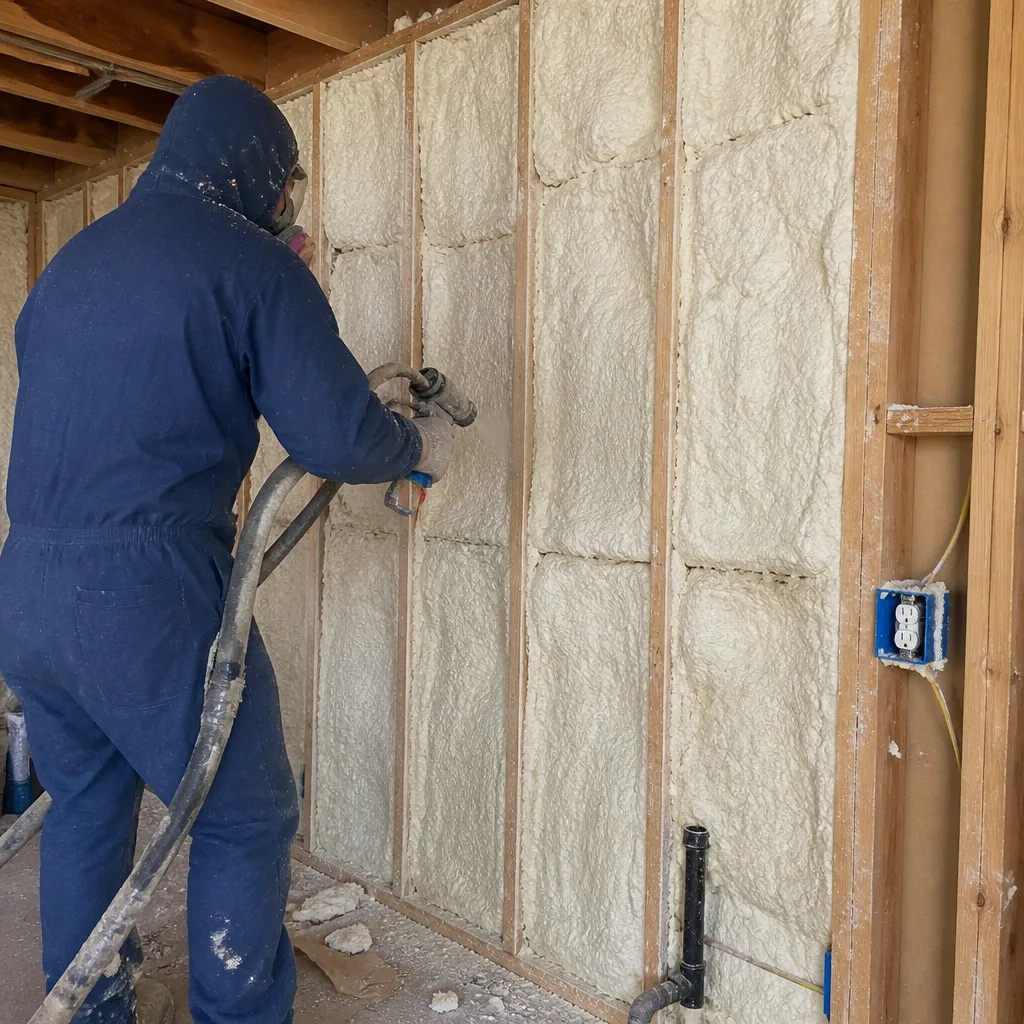 After
AfterHow to Save on Blown-In Insulation in Santa Clarita
The most reliable way to reduce the total cost of a blown-in insulation project is to avoid paying for a job that underperforms and needs to be done again in five years. That sounds obvious, but it happens regularly: a homeowner takes the lowest quote, the contractor blows in material without air sealing, and the energy bills barely move because conditioned air is still escaping through 40-year-old top plate gaps. The installation cost was lower. The outcome cost more.
With that said, there are legitimate ways to bring the price down on a properly scoped project.
- Apply for the SCE or SoCalGas rebate before the job starts. Southern California Edison and SoCalGas both offer residential rebates for insulation upgrades that bring attics up to code-required R-values. In 2025, SCE offered up to $500 back on qualifying attic insulation projects for homes in their service territory – Santa Clarita falls within their grid. Rebate amounts change, but they are worth confirming before you schedule the job. Your contractor should be able to tell you which programs are currently active.
- Check for federal tax credits. The Inflation Reduction Act’s 25C energy efficiency credit covers insulation improvements at 30% of material cost, up to $1,200 per year. That credit applies to the insulation material itself, not labor. On a $2,500 project, the material portion might account for $900 to $1,200, making the effective credit $270 to $360. Document everything – your contractor should provide an itemized receipt that separates material from labor costs.
- Bundle the air sealing and insulation in one visit. Scheduling attic air sealing as a separate job from blown-in insulation doubles the mobilization cost. When both are scoped together, the combined price is almost always lower than two separate quotes. At Envelope Insulation Co., air sealing and insulation are scoped as a single project by default, which keeps the combined price tighter than bidding them apart.
- Get a second opinion on any written estimate. If you have a quote from another contractor, bring it. Envelope Insulation Co. offers a free second opinion on any written estimate – we will read it with you, line by line, and tell you what’s included, what’s missing, and whether the spec matches what the job actually requires. This is part of the Haven Standard, not a sales tactic.
- Don’t skip the blower-door test to save money. A blower-door test – a pressurization measurement that shows, in a single number, how much conditioned air your building envelope is losing – runs $300 to $500 as a standalone service. On applicable jobs, Envelope Insulation Co. publishes before-and-after readings so you can see the actual performance change. Skipping it means you have no way to verify the air sealing worked. In a Santa Clarita home that might be running $350 to $500 a month in summer cooling costs, a $400 test that confirms a meaningful ACH reduction pays for itself inside a cooling season.
For a free estimate on a scoped project with written pricing before any work starts, call (747) 294-2764. Wes Okafor and the team at Envelope Insulation Co. answer live – no voicemail loops, no callback windows.
Santa Clarita Neighborhoods: What We See in the Field
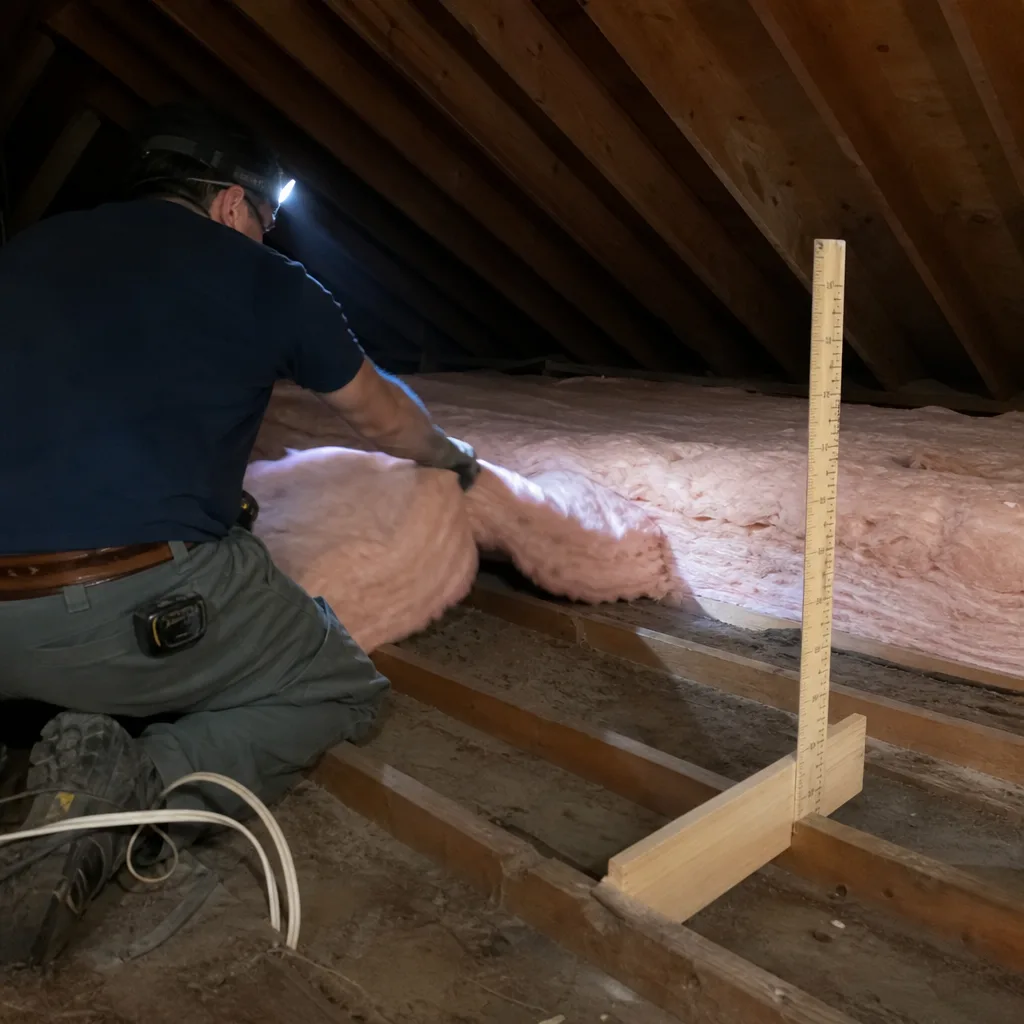
Santa Clarita is not a uniform market. The attic conditions in a 1971 Newhall ranch house are different from a 2004 Valencia townhome, which is different again from a 2018 new-construction home in Stevenson Ranch. The price range shifts accordingly, and so does the scope of work that actually makes a difference.
In Canyon Country, we regularly find spring and summer attic temperatures exceeding 140°F on the underside of the roof deck. At those temperatures, an attic floor insulated to R-30 with 20-year-old settled fiberglass is effectively performing at R-18 or less. Blowing in additional material to reach R-49 makes a measurable difference in cooling load. The before-and-after blower-door numbers we document on these jobs typically show CFM50 reductions of 30 to 45% when air sealing is done properly before the insulation goes in.
In Saugus and the older Valencia tracts along the 126 corridor, the main challenge is often that the attic was insulated in two or three different stages by previous owners. You end up with a patchwork of batts, blown-in, and sometimes even rigid foam scraps. None of it is wrong per se, but it creates gaps and inconsistencies that blower-door testing reveals clearly. Before adding more insulation, those gaps need to be addressed.
In newer Westridge and Stevenson Ranch homes, the starting point is usually better – these were often built to Title 24 compliance – but duct sealing and attic access sealing tend to be where the performance losses show up. The insulation R-value may be code-compliant while the attic is still losing conditioned air around improperly sealed access hatches and top plates that were never air sealed at the time of construction.
If you want to see documented before-and-after numbers from jobs in your specific neighborhood, ask when you call. We keep records on every job, and we can speak to what we have found in your part of Santa Clarita.
Blown-In vs. Other Insulation Types: What It Means for Price
Blown-in insulation is not always the right choice for every part of a home, and the cost comparison matters when you are deciding what to scope.
For attics in Santa Clarita, blown-in is almost always the most cost-effective option for adding R-value to an existing home. It fills around obstructions, reaches the edges of the attic floor that batts often miss, and can be installed faster than cut-and-fit batts over existing framing. The per-square-foot installed cost is typically 15 to 25% lower than re-batting the same attic with unfaced fiberglass batts.
For walls, blown-in becomes a retrofit option when you want to add insulation without opening the drywall. This is done by drilling small access holes in the exterior siding or interior drywall, blowing dense-pack cellulose or fiberglass into the cavity, then patching. It costs significantly more per square foot than attic blown-in – the $4.50 to $9.00 per linear foot range reflects that – but it is far less disruptive than a full wall re-insulation project. In older Newhall homes with uninsulated 2×4 walls, dense-pack retrofit blown-in is often the most practical way to meaningfully reduce heating and cooling loss through the walls without a gut renovation.
Spray foam insulation handles a different job: unvented attics, rim joists, and any penetration or junction where you need both air sealing and insulation in a single material. It costs more – typically $2.00 to $4.50 per square foot for open-cell, $5.00 to $8.00 for closed-cell – but it is the right tool for specific applications. Envelope Insulation Co. works with both, sourcing from Icynene and Demilec, and the job scope determines which material gets used where.
For a full breakdown of the Blown-In Insulation in Santa Clarita options available through Envelope Insulation Co., including material specs and what to expect on installation day, that page covers the scope in full detail.
What You Get With a Written Price and a Documented Record
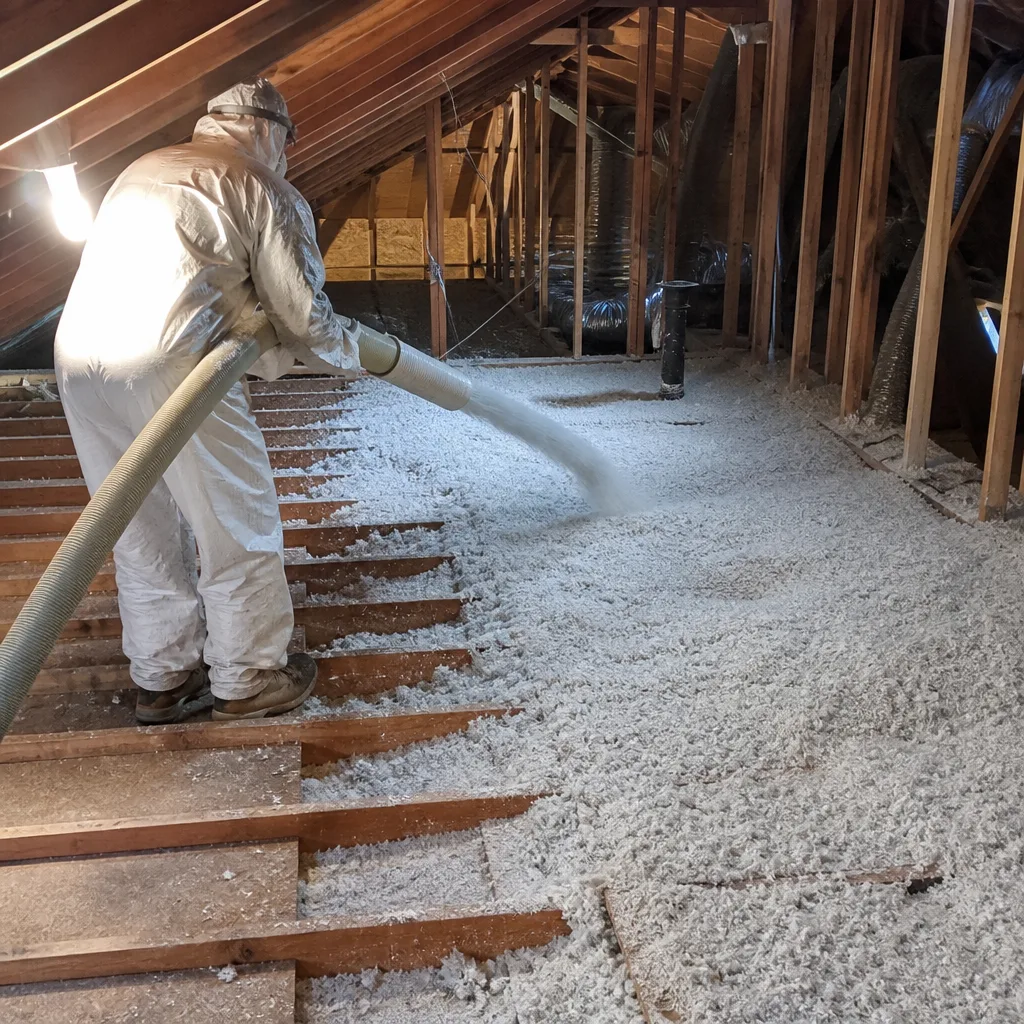
This is the part of the pricing conversation that doesn’t get discussed enough: what does the quote actually include, and what documentation do you have when the crew leaves?
Under Haven Standard Clause 1, every job at Envelope Insulation Co. starts with a written price, a written scope, and a written warranty. Nobody lifts a tool until you have all three in hand. That matters specifically for blown-in insulation in Santa Clarita because the most common complaint homeowners have after insulation jobs – “I don’t feel any difference” – is almost always traceable to a scope that didn’t include air sealing, or a depth that didn’t actually reach the specified R-value, or both. A written scope tells you exactly what R-value was targeted, what materials were used, and whether air sealing was included. If it wasn’t in writing, it’s hard to hold anyone to it.
When the job is done, you receive a Documented Photo Record. That includes photos of the attic before work started, photos of air sealing at the top plates and penetrations, and photos of the finished insulation depth at multiple measurement points across the attic floor. On applicable jobs – any job where attic air sealing is part of the scope – you also get before-and-after blower-door readings: two numbers that show exactly how much conditioned air the home was losing before we started and how much it was losing when we finished.
The 365-Day Done Right Promise covers everything in the written scope. If the result doesn’t match the written promise, Envelope Insulation Co. makes it right. No ambiguity about what “right” means because the written scope defines it before the job starts.
For homeowners in Santa Clarita who have spent any time reading reviews of insulation contractors, the pattern in the three-star reviews is consistent: vague scopes, undocumented work, and difficulty getting someone back out if there’s a problem afterward. The Haven Standard is built to close each of those gaps specifically.
FAQs – Blown-In Insulation Cost in Santa Clarita
How much does blown-in attic insulation cost in Santa Clarita?
Most attic blown-in insulation jobs in Santa Clarita run between $1,800 and $3,800 for a home with 1,000 to 2,000 square feet of attic floor, based on 2026 pricing. The lower end reflects a relatively accessible attic that needs top-up from a moderate existing R-value to R-38. The upper end reflects a larger or more complex attic that needs to reach R-49, includes attic air sealing, or requires some old material to be addressed first. Jobs that also include insulation removal, blown-in wall insulation, or radiant barrier installation will add to that range. For a written price specific to your home in Santa Clarita, call (747) 294-2764 – estimates are free, and the price is written before anyone starts.
Is it cheaper to repair or replace old blown-in insulation in Santa Clarita?
If the existing insulation is in decent condition – not contaminated, not compressed to below R-11, no moisture damage – adding material on top of it is almost always less expensive than removal and full replacement. Topping up an attic in a Saugus home from R-11 to R-38 typically costs $900 to $1,600, while a full removal and reinstall of the same attic might run $2,400 to $3,500. The question becomes removal versus top-up when the existing material has been compromised by rodents, moisture, or fire. At that point, removal is not optional regardless of cost – blown-in insulation laid over contaminated old material creates an ongoing odor and air quality problem. A site assessment will tell you which scenario you are in before you commit to either scope.
Can you blow in insulation over existing insulation in Santa Clarita?
Yes, in most cases – provided the existing insulation is dry, uncontaminated, and not compressed to the point of being structurally problematic. In Santa Clarita’s older neighborhoods, this is workable in probably 60 to 70% of the attics we assess. The main exceptions are attics with rodent activity (which requires removal and attic cleaning first), attics with moisture damage from past roof leaks, and attics where the old material is so heavily compressed that blowing over it creates an uneven depth. Your written scope will specify whether top-up or removal is the recommended approach and why.
How long does blown-in insulation last in Santa Clarita’s climate?
Properly installed blown-in cellulose or fiberglass insulation in a Santa Clarita attic has a realistic service life of 20 to 30 years before significant settling or performance degradation. The main threats to that lifespan in this climate are not temperature-related but biological: rodent activity that tunnels through and contaminates the material, and any roof or flashing leak that introduces moisture. Attics in Canyon Country and Newhall that have had prior rodent issues tend to need earlier replacement than attics in newer construction where pest entry points were sealed at build time. A blower-door test performed 10 to 15 years after installation is a practical way to check whether the envelope is still performing as it should, rather than waiting until energy bills signal a problem.
Does Envelope Insulation Co. charge for estimates in Santa Clarita?
No. The estimate is free, and it comes with a written price and written scope before any work starts – that is Haven Standard Clause 1, and it applies to every job including Santa Clarita. If you already have a written quote from another contractor, Wes Okafor and the team will read it with you at no charge and walk through what’s included, what’s missing, and whether the spec is appropriate for your home’s specific situation. Call (747) 294-2764 to schedule.
Key Takeaways
- Blown-in insulation in Santa Clarita runs $1,800 to $4,200 for most residential attic jobs in 2026, with the middle of the range landing around $2,400 to $3,100 when air sealing is included.
- California Title 24 requires R-38 minimum in this climate zone; R-49 to R-60 is recommended for hotter microclimates in Canyon Country and Newhall.
- Air sealing before insulation is the most important factor for actual energy performance – blown-in material over an unsealed attic floor underperforms its rated R-value significantly.
- SCE and SoCalGas offer rebates on qualifying insulation upgrades, and the federal 25C tax credit covers 30% of material costs up to $1,200 per year.
- Before-and-after blower-door readings are the only way to verify that air sealing actually worked – Envelope Insulation Co. publishes these numbers on every applicable job.
- Written price, written scope, and written warranty come before any work starts – no exceptions under the Haven Standard.
- The 365-Day Done Right Promise covers all completed work; if it doesn’t match the written scope, it gets made right.
Get a Written Price for Your Santa Clarita Home
If you’re ready to find out exactly what blown-in insulation will cost for your home in Santa Clarita, the most useful next step is a site assessment with a written price at the end of it. No vague estimates, no “we’ll follow up with a number later.” Under Haven Standard Clause 1, you get a flat price, a written scope, and a written warranty before anyone starts – and a Documented Photo Record when the crew leaves.
Envelope Insulation Co., led by Wes Okafor, has been doing this work in the Santa Clarita Valley since 2016. Every job starts with air sealing. Every job closes with documentation. And every applicable job includes before-and-after blower-door numbers so you can verify what you paid for.
Call (747) 294-2764 to schedule your free estimate. A live person answers – no voicemail, no callback window. Or visit our home page to learn more about the full building-envelope service line.
Pricing reflects the Santa Clarita market as of 2026. Topside Attic Insulation Santa Clarita offers free estimates – call (747) 294-2764.
Written by Wes Okafor, Owner at Envelope Insulation Co., serving Santa Clarita since 2016.
What Our Customers Say
"Two other companies quoted to blow more insulation on top of what was there. These were the only ones who said the existing material had to come out first, and explained why."
- Clifford E."Turned up on time, protected the hallway, and the written scope matched what was actually done."
- Bruno S."They photographed rodent damage in the old insulation that we had no idea about, and priced the exclusion work separately so we could decide."
- Harriet N.