
Demilec Crawl Space Encapsulation & Vapor Barrier in Santa Clarita: What to Know First
We provide independent Demilec crawl space encapsulation and vapor barrier service in Santa Clarita, typically scheduling within 24 to 48 hours and completing most jobs in a single day. Most encapsulation projects in the Santa Clarita market run between $3,800 and $7,200 depending on crawl space square footage, existing moisture damage, and whether the Demilec foam layer needs partial remediation first. We’re not Demilec-authorized; we are an independent service provider that works on what is actually installed in your home, and we give you a written price before any work starts.
This page is for homeowners in Santa Clarita, Valencia, Stevenson Ranch, and Canyon Country who have Demilec spray foam or hybrid insulation in their crawl space and need vapor barrier replacement, full encapsulation, or moisture control after product failure. If you’re seeing sagging foam, water pooling on the ground, or a musty smell rising through the floor, call (747) 294-2764. We’ll read your crawl space the same way we read a blower-door report: with numbers and a written scope.
How Demilec Products Fail - and How We Fix Them
- Demilec Heatlok XT sagging from the band joist in humid crawl spaces. Heatlok XT is an HFO-blown closed-cell foam with strong initial adhesion, but in Santa Clarita’s clay-heavy soils where groundwater wicks upward through stem walls, prolonged seasonal humidity can degrade the foam-to-wood bond at the band joist. We see this in older homes near Bouquet Junction where crawl spaces were never fully encapsulated. Our fix: remove the failed foam section with a controlled cut, dry the substrate with targeted airflow, then reinstall with a moisture-cured adhesive system and a full ground vapor barrier to break the humidity cycle.
- Demilec Heatlok HFO Pro developing surface oxidation when the vapor barrier is missing or torn. This newer low-GWP formulation is more environmentally stable than earlier generations, but it still needs a sealed environment. When homeowners skip the ground vapor barrier or use thin 6-mil plastic that shreds on rocky Santa Clarita soil, UV-stabilized or not, the foam surface oxidizes and turns chalky. We strip the oxidized layer, apply a compatible primer, and install a 20-mil reinforced polyethylene vapor barrier with sealed seams - not taped edges, heat-welded seams that hold.
- Demilec Sealection 500 shrinkage in unconditioned crawl spaces with temperature swing. Sealection 500, an open-cell water-blown foam used in some 2015-2019 Santa Clarita builds, can shrink 3-5% when installed in cavities that see 40-degree winter nights and 110-degree summer days. The gap that forms at the stud edge becomes a convection channel. We don’t just spot-spray; we remove the compromised cavity fill, verify the substrate moisture content stays below 19% with a pin meter, then reinstall with a closed-cell alternative or a hybrid system matched to the cavity depth.
- Demilec Agribalance breaking down where rodent activity has compromised the vapor barrier. Agribalance, the soy-based formulation, is more susceptible to organic contamination than petroleum-based foams. In Santa Clarita’s hillside neighborhoods like Sand Canyon, where ground squirrels and roof rats are active, urine and nesting material that contacts exposed Agribalance creates a breakdown zone. We remediate by cutting out contaminated foam back to sound material, treating the wood with an enzyme cleaner, installing rodent-proof hardware cloth at penetrations, and laying a new vapor barrier with mechanical fasteners - not just weight bags - at seams and piers.
- Demilec foam applied over wet substrate during original construction, now trapping moisture. This isn’t a product defect; it’s an installation error we see repeatedly in Santa Clarita tract homes built during the 2017-2019 rush. Foam sprayed over wood reading 22% moisture or higher cures to a hard shell that hides rot. We use a non-invasive moisture meter to map the subfloor, remove foam only where necessary, allow targeted drying with dehumidification, then reinstall with full documentation of substrate conditions. The report goes home with you. The numbers don’t lie, and you shouldn’t have to take anyone’s word for it.
Our Demilec Crawl Space Encapsulation & Vapor Barrier Process
- 1
Call and scope. A live person answers 24/7. We ask for photos if you have them, schedule a site visit, and confirm: this is a Demilec product, what you’re seeing, and what documentation you received at original install.
- 2
On-site diagnostics with written findings. Wes or a trained technician measures crawl space dimensions, maps moisture readings at 12 points, identifies the Demilec line and condition, and photographs every failure zone. You get a written scope and flat price before anyone lifts a tool - Haven Standard Clause 1.
- 3
Parts decision: OEM-compatible or upgraded alternative. For Demilec remediation, we source compatible replacement foam from Demilec’s current distribution network or, when the application calls for it, specify an alternative from our approved materials list including Icynene or Johns Manville systems. We explain the trade-off in R-value, vapor permeance, and cost; you choose.
- 4
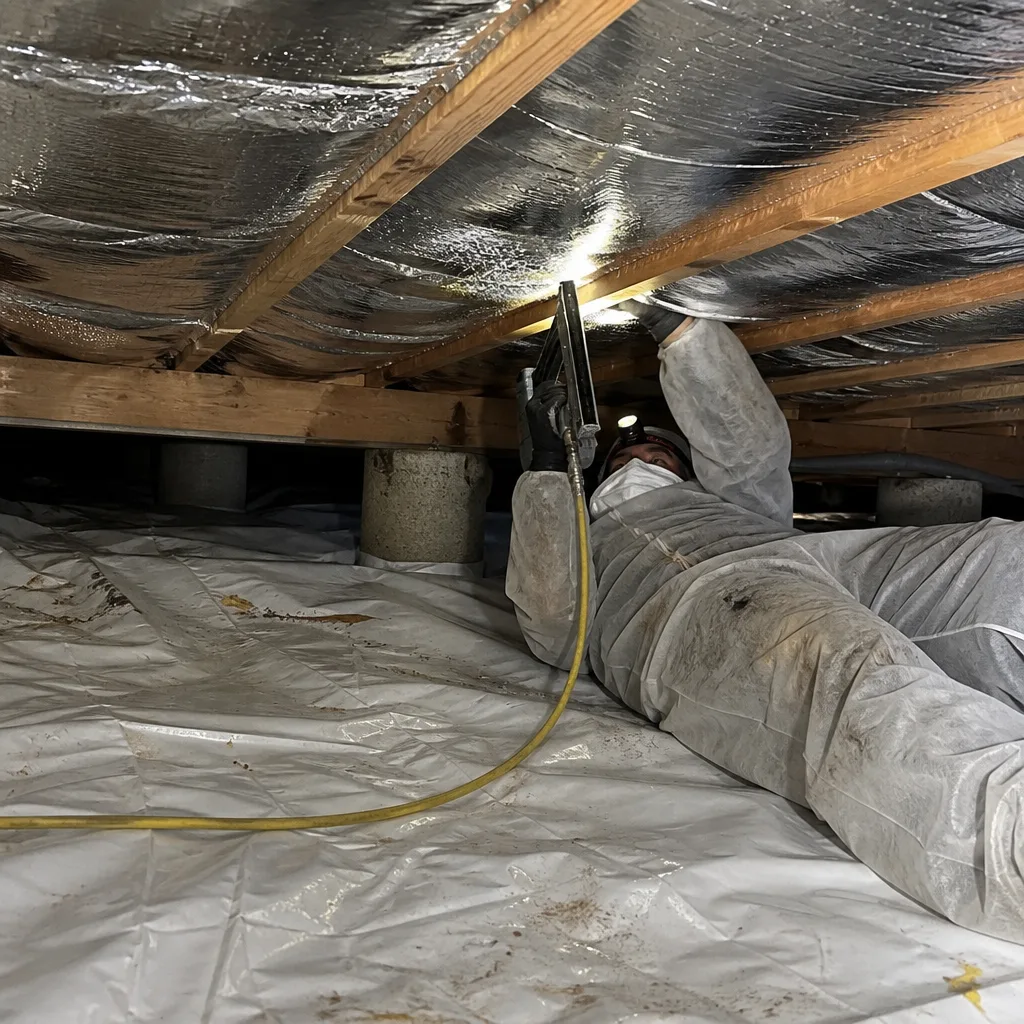
Remediation and encapsulation. Controlled removal of failed material, substrate preparation, new foam or insulation installation where needed, then full ground and pier encapsulation with 20-mil reinforced vapor barrier, sealed seams, and mechanical fastening at all terminations.
- 5
Verification and documentation. Post-job moisture readings, photographs of completed work, and a Documented Photo Record delivered to you. If the job included air sealing at the rim joist, we run a blower-door test - a pressurization reading that shows, in one number, how much conditioned air your building envelope is losing - and hand you the before-and-after report.
- 6
365-Day Done Right Promise activation. Your written warranty and scope go in a folder. If it’s not done right, we make it right.
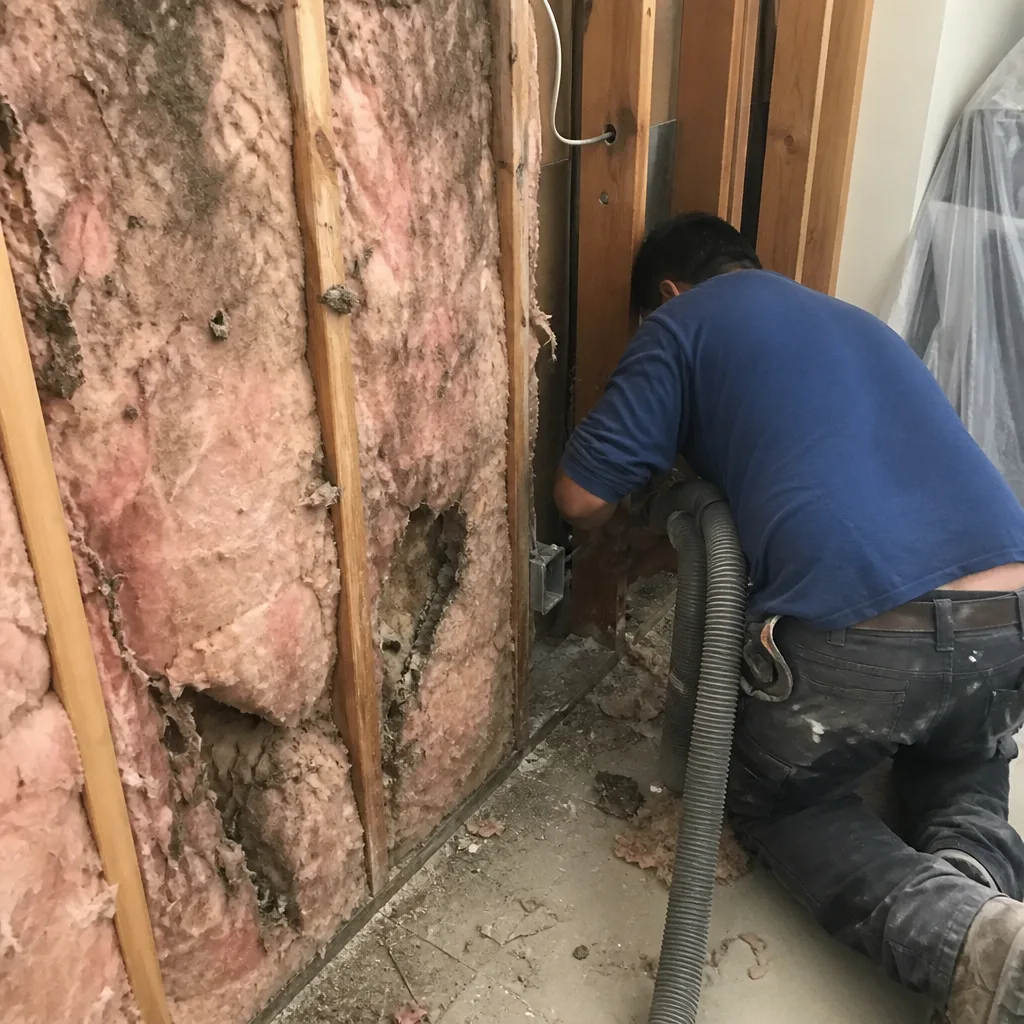 Before
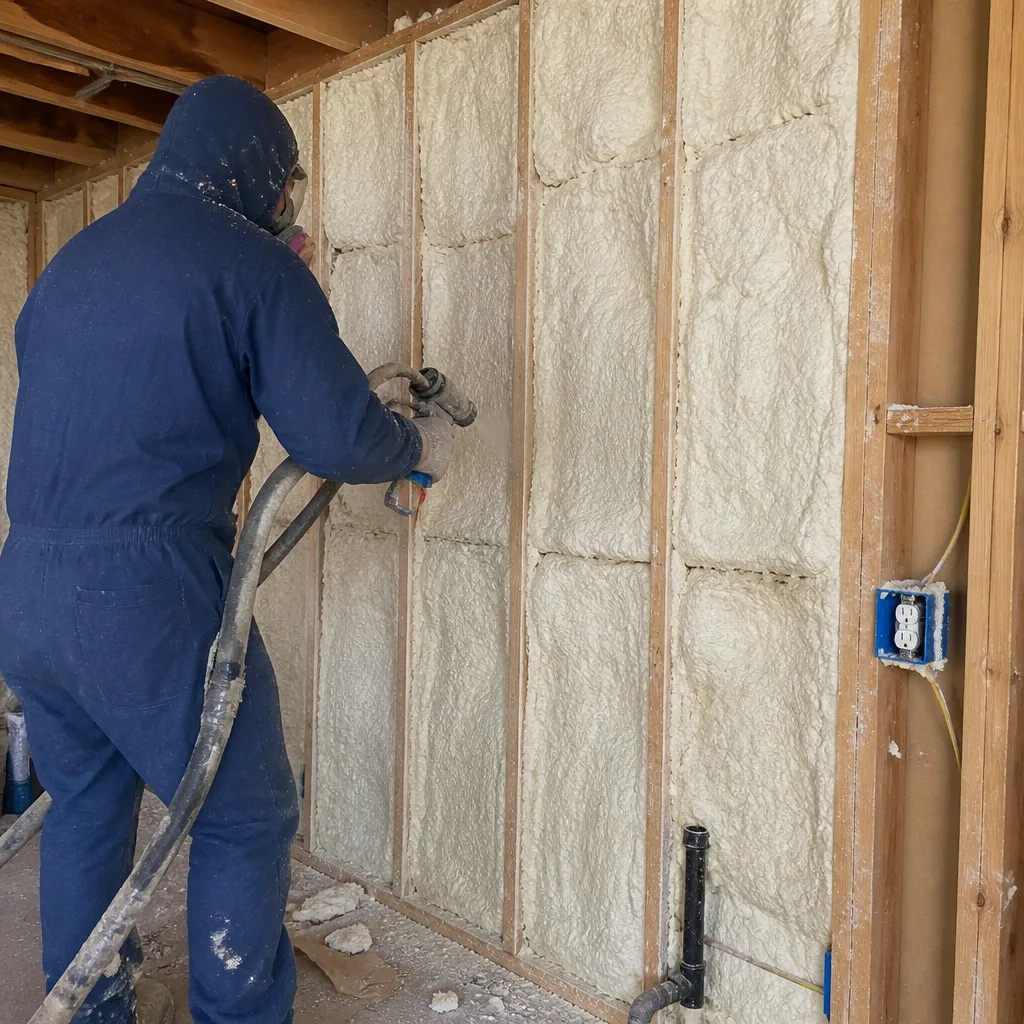 After
AfterWhat Demilec Crawl Space Encapsulation & Vapor Barrier Costs in Santa Clarita
Most Demilec crawl space projects in Santa Clarita fall into these ranges:
| Scenario | Typical Range |
|---|---|
| Vapor barrier replacement only (no foam remediation) | $2,400 - $3,800 |
| Partial Demilec foam removal + vapor barrier | $4,200 - $6,500 |
| Full encapsulation with Demilec foam remediation | $6,800 - $10,500 |
| Added dehumidification and conditioning | $1,800 - $3,200 additional |
What moves the price: crawl space square footage, accessibility (some Santa Clarita hillside homes have 18-inch clearances), extent of foam degradation, whether the subfloor needs drying time, and if rodent damage requires structural repair before encapsulation. We also handle Reflectix systems and can compare approaches if you’re weighing a full switch.
Call (747) 294-2764 for a written estimate - they’re free, and we give you a Free Second Opinion on any competing quote you bring us.
Why Santa Clarita Homeowners Call Topside Attic Insulation Santa Clarita for Demilec Work
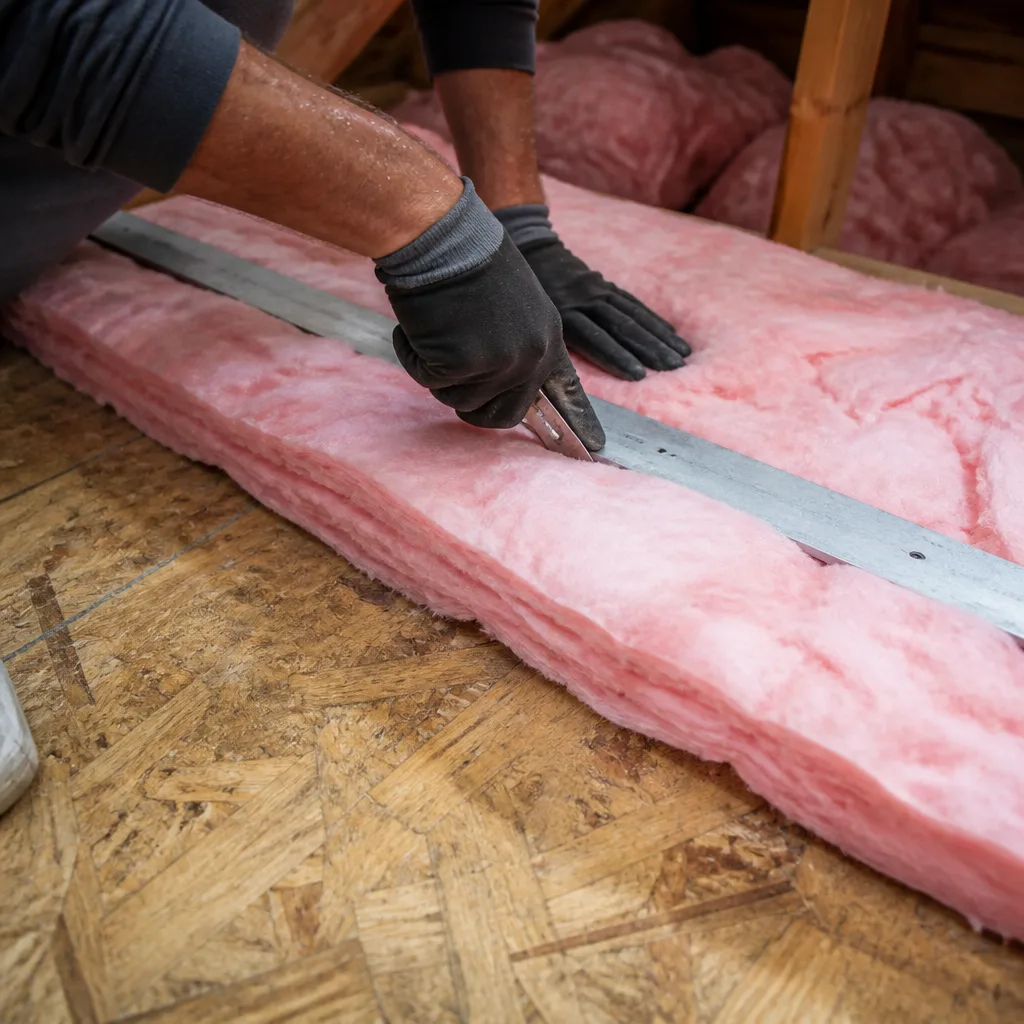
We’ve sealed and insulated over 9,000 homes since 2016, and a growing share of our crawl space calls in Santa Clarita involve Demilec products installed during the 2015-2019 building boom. Wes Okafor trained in building science at Washburne Trade School in Chicago before moving west, and his crew has worked crawl spaces from ranch houses in Saugus to custom builds in Sand Canyon. We don’t sell proprietary systems - we work with Owens Corning, Johns Manville, Knauf, Rockwool, CertainTeed, Icynene, Demilec, GreenFiber, and Reflectix - so our recommendation follows your home’s condition, not a supplier contract.
Every job gets a written price first, a Documented Photo Record at completion, and the 365-Day Done Right Promise in writing. Calls are answered by a live person 24/7. Background-checked, uniformed technicians. No voicemail loops.
FAQs
Demilec’s material warranty covers defects in the foam itself, not installation errors or environmental failures, and it typically requires documentation of proper application conditions that original installers often didn’t record. As an independent Demilec service provider, we document substrate moisture, temperature at install, and product batch where visible; this paperwork often helps homeowners pursue legitimate material claims even though we’re not affiliated with Demilec. Call (747) 294-2764 and we’ll review what you have.
We typically schedule within 24 to 48 hours for crawl space moisture issues, and same-day for active water intrusion that threatens structural damage. Santa Clarita’s summer heat accelerates mold growth once a vapor barrier fails, so we prioritize calls with documented moisture readings or visible pooling. Call (747) 294-2764 - a live person answers.
Spot repair runs $1,200 to $2,800 if the failure is isolated to one bay or band joist section, but partial remediation often reveals hidden degradation that makes full encapsulation the better value at $6,800 to $10,500. We give you both numbers in writing and explain what we’d need to find to change the recommendation. Estimates are free.
We can source current Demilec formulations that are chemically compatible with your installed foam, but color and texture won’t match exactly due to aging and oxidation. For visible areas or complete cavity fills, we typically recommend removing the full cavity content for uniformity. We also work with Icynene and Johns Manville systems if you prefer a full brand switch - no proprietary lock-in.
Look for three things: sagging or separating foam at the band joist, standing water or heavy condensation on the ground plastic, and musty odor rising through floor registers. Note your home’s build year and any paperwork from the original insulation job. Photos help us prep. Call (747) 294-2764 - we’ll give you a written scope and flat price before any work starts.
Written by Wes Okafor, Owner, Topside Attic Insulation Santa Clarita at Topside Attic Insulation Santa Clarita, serving Santa Clarita and nearby areas.