
Attic Insulation Replacement in Santa Clarita, CA
Attic insulation replacement means removing what’s up there now – damaged, contaminated, or simply exhausted material – sealing the attic floor against air movement, and installing fresh insulation to a verified depth and R-value. Most Santa Clarita homes we inspect are running on blown cellulose or fiberglass batts that have been in place since the 1990s or early 2000s, and the performance gap between that material and a properly replaced, air-sealed attic is measurable on a blower-door test and on an electric bill. If you’re ready to talk specifics, call us at (747) 294-2764 – a live person will answer, not a voicemail system.
This page covers everything you need to know before making a decision: the signs that replacement is the right call, how we actually do the work, what it costs in this market, and what documentation you’ll have when we leave. For a broader look at attic insulation options in the area, our Attic Insulation in Santa Clarita page is the right starting point.
Envelope Insulation Co. operates under The Haven Standard, which means a written price before any work starts, a documented photo record when we’re done, and before-and-after blower-door numbers on every job where air sealing is part of the scope. Wes Okafor has been running this operation since 2016, and the process has stayed the same: seal first, insulate second, document everything.
When You Need Attic Insulation Replacement
Not every attic needs a full replacement. Sometimes an Attic Insulation Top-Up is enough. But in Santa Clarita’s climate – hot, dry summers that push attic temps past 150°F in neighborhoods like Stevenson Ranch and Sand Canyon, combined with cooler winters in the higher-elevation parts of Saugus and Newhall – insulation takes a beating that accelerates degradation. Here are the situations where replacement makes more sense than adding to what’s already there:
- Rodent activity or contamination. If rats or mice have nested in the attic, the insulation is compromised – compressed, soiled with urine and droppings, and potentially carrying hantavirus-associated risk. Blowing new material on top of contaminated insulation doesn’t fix the problem; it buries it. Replacement and sanitation are the only correct path.
- Water intrusion from a past roof leak. Wet insulation loses R-value immediately and creates conditions for mold growth. In many Canyon Country and Copper Hill homes we’ve inspected, the insulation looked intact from the hatch but was matted flat against the attic floor after a single season of moisture cycling. Wet batts and saturated blown material have to come out.
- Insulation depth below R-19. California Title 24 sets R-38 as the current minimum for attic insulation in Climate Zone 9 and Zone 16, which covers most of Santa Clarita. We regularly find homes – particularly those built before 1995 – sitting at R-11 or R-13. If the existing material is intact and the attic floor is sealed, a top-up can work. If the material is degraded, replacement gets you a clean start and a documented R-value.
- Cellulose that has settled to under three inches. Loose-fill cellulose settles over time. Three inches of settled cellulose in a Valencia home built in 1988 is providing roughly R-7 – far below code and barely any barrier against a Santa Clarita summer. Once material has settled that far, there’s often not enough structure left to top-up to code effectively without removing and starting over.
- Vermiculite or other legacy materials. Some older homes in the Newhall and Castaic corridors still have vermiculite insulation, which has a known association with asbestiform minerals and requires testing and proper abatement before anything else happens. We do not disturb suspected vermiculite without a certified test result.
- Attic was insulated without air sealing. This is the most common scenario we see in Santa Clarita homes built between 1985 and 2005. Insulation was blown in directly over an unsealed attic floor – open top plates, unblocked can lights, and gaps around HVAC penetrations left wide open. Adding more insulation to this doesn’t fix the air loss; it just buries the problem deeper. Replacement, with air sealing done first, is the only way to get the performance the insulation is rated for.
Our Attic Insulation Replacement Process
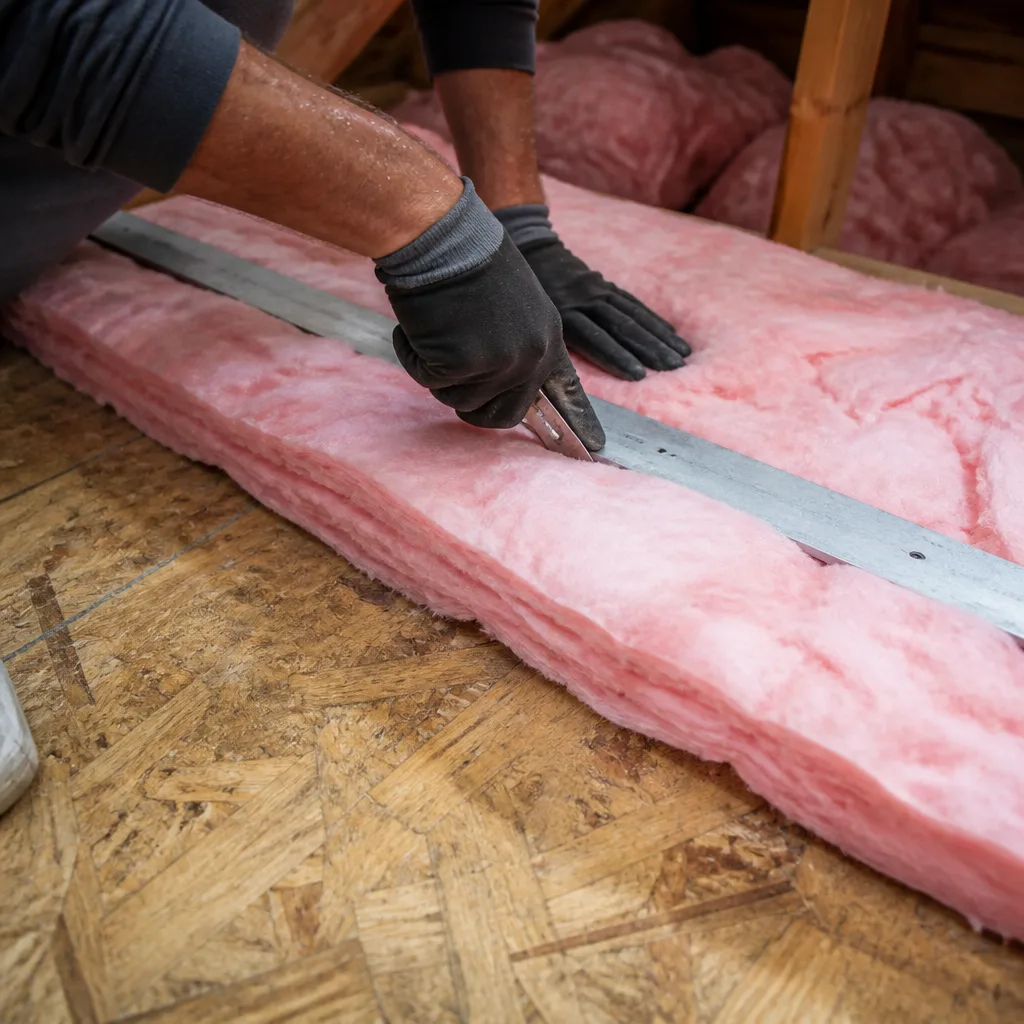
The order of operations matters. We will not blow insulation without Attic Baffles & Ventilation Prep and a sealed attic floor – that’s a structural rule at Envelope Insulation Co., not a case-by-case judgment call. Here’s how a replacement job runs from start to finish:
- Attic inspection and blower-door baseline. Before we move anything, we document what’s there. That means photos of existing insulation depth and condition, identification of any contamination or moisture damage, and a blower-door test – a pressurization reading that gives us a single CFM50 number representing how much conditioned air the building envelope is currently losing. In many Saugus and Stevenson Ranch homes we test, that number comes in between 3,500 and 5,000 CFM50 before any work. That baseline is your reference point for everything that follows.
- Written price and scope before any work starts. Under Haven Standard Clause 1, you receive a flat written price, a written scope of work, and a written warranty before anyone lifts a tool. No verbal estimates, no surprises when the invoice arrives.
- Removal of existing insulation. We use high-capacity vacuum removal equipment and sealed bags to pull out the old material. If there’s rodent contamination, the attic is treated and sanitized as part of this phase – not skipped and not deferred. Removal debris is bagged and hauled off the property; we don’t leave material in your driveway or staging area.
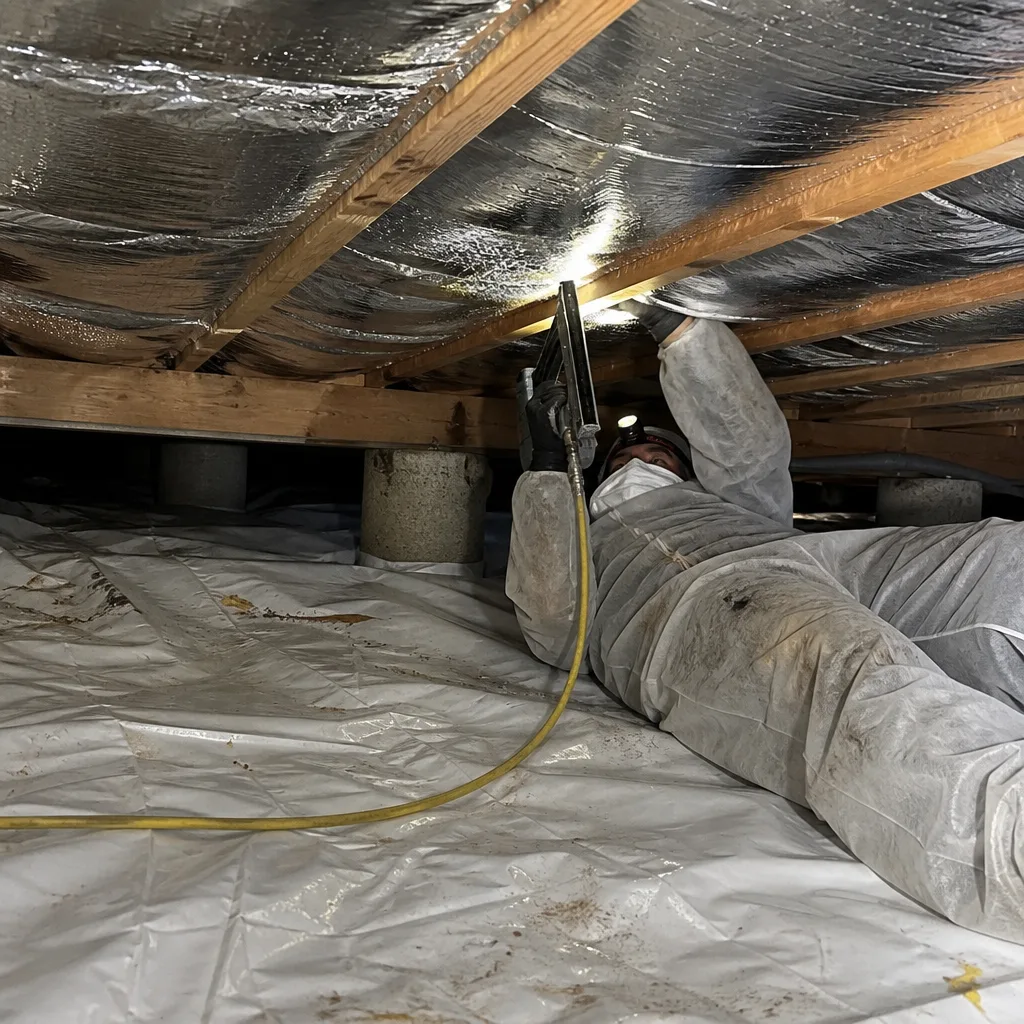
- Air sealing of the attic floor. This is the step most contractors either skip or upsell. We seal top plates – the framing gaps between living space and attic – recessed can lights if they’re not rated for insulation contact, HVAC penetrations, plumbing chases, and any other bypasses we found during inspection. The material we use depends on the gap size: two-part spray foam for larger openings, fire-rated caulk for narrower penetrations. Nothing gets insulated until this is done.
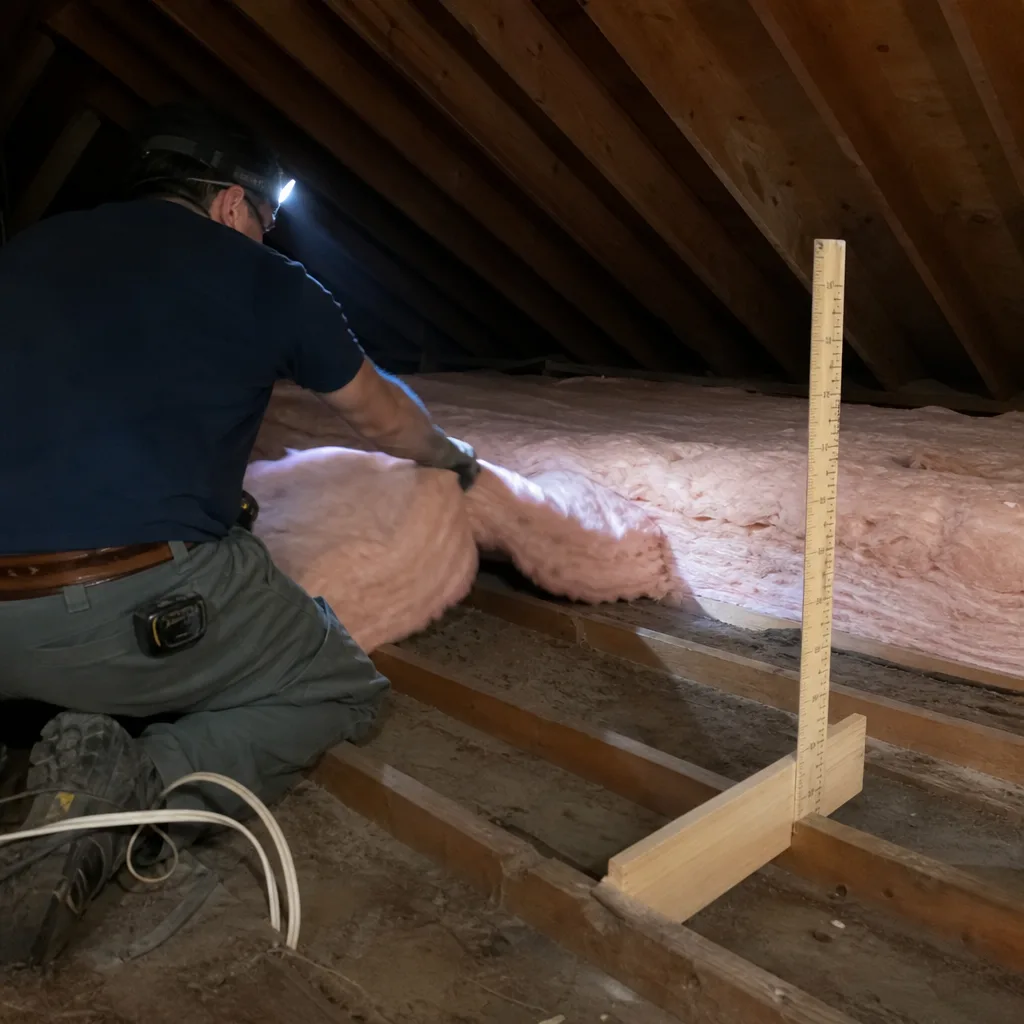
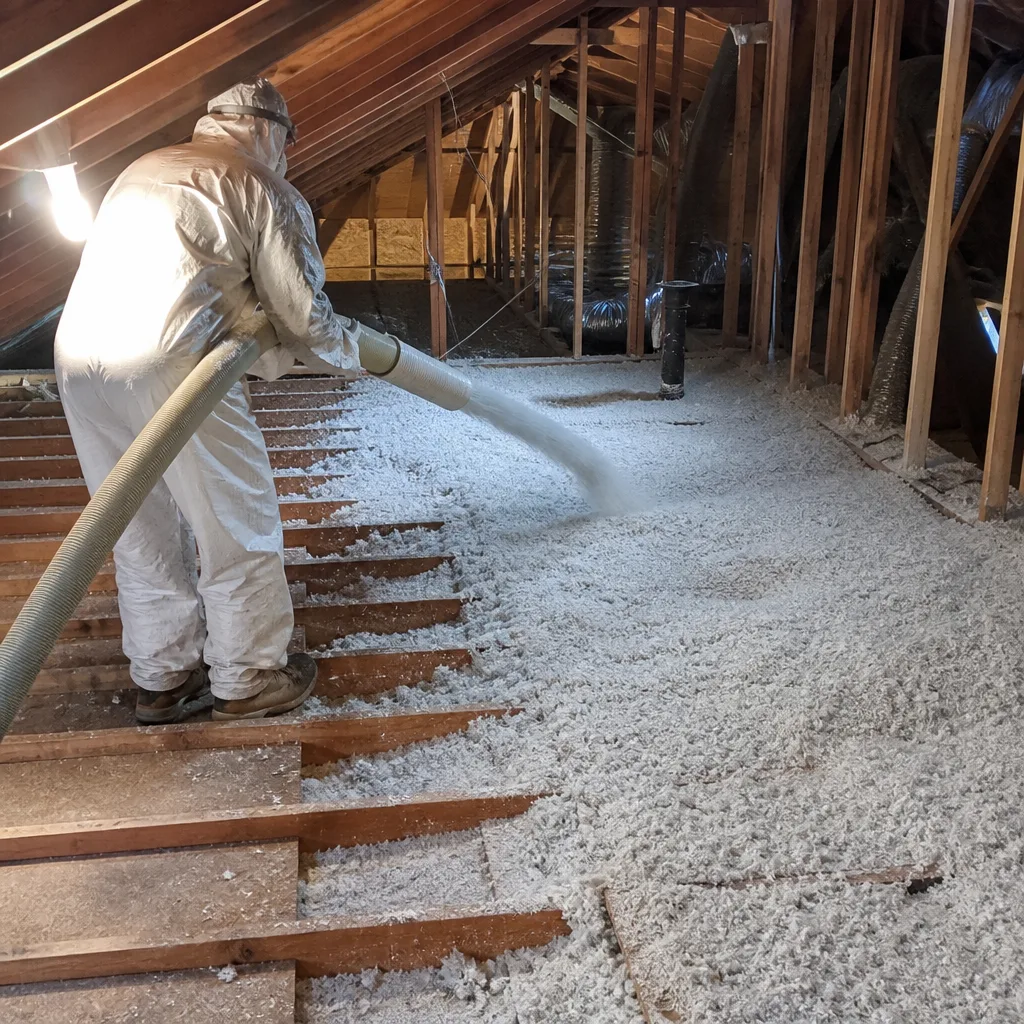
- Installation of new insulation to code depth. We install blown insulation – typically Johns Manville or Knauf blown fiberglass or fiber, depending on the job requirements – to a minimum of R-38, which is the current California Title 24 requirement for Santa Clarita’s climate zones. We set depth rulers in the field so the final photos show the actual installed depth, not an estimate.
- Post-installation blower-door reading and documentation. After installation, we run the blower-door test again. The after number, compared to the before number, shows you exactly what the air sealing accomplished. We’ve seen jobs in Canyon Country drop from 4,800 CFM50 to under 2,200 after attic floor air sealing alone. Both numbers go into your documented job record along with the photo set. You leave with a record of what changed, not a promise that something did.
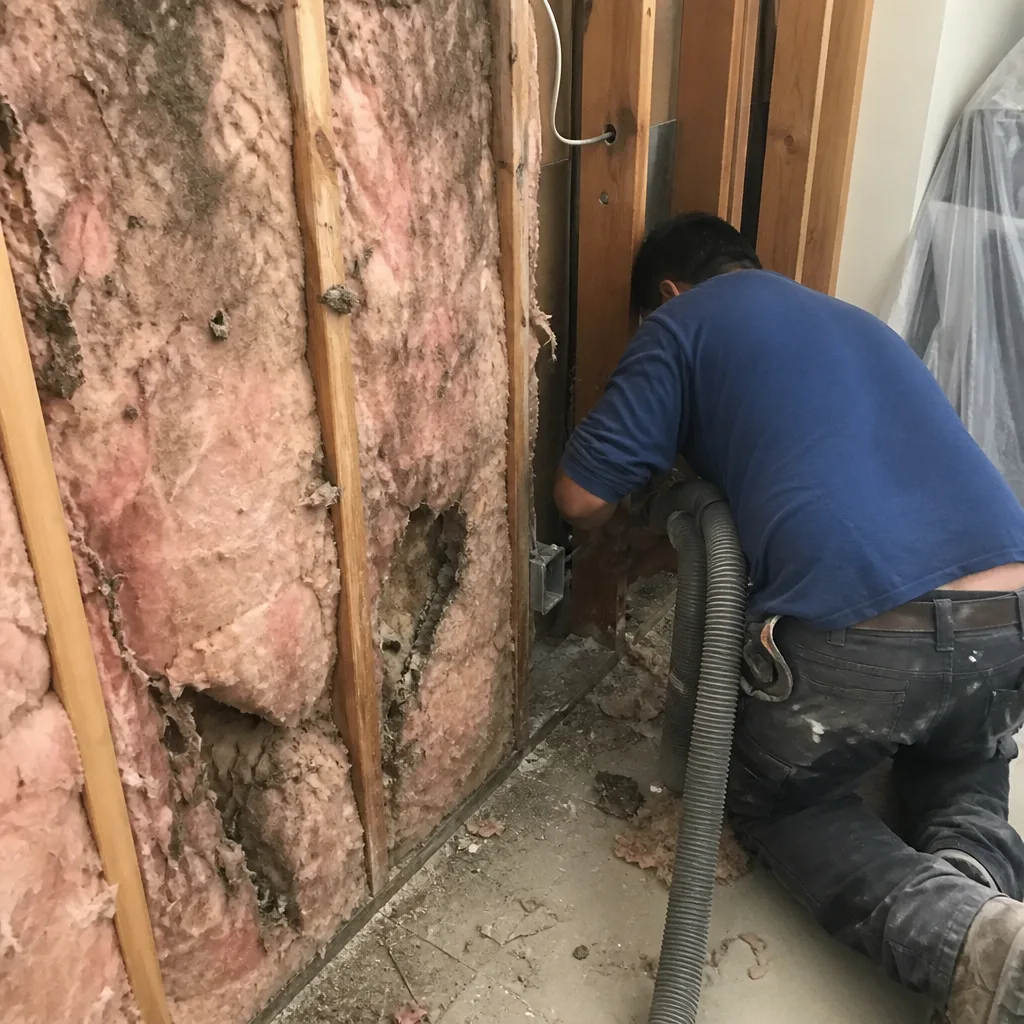 Before
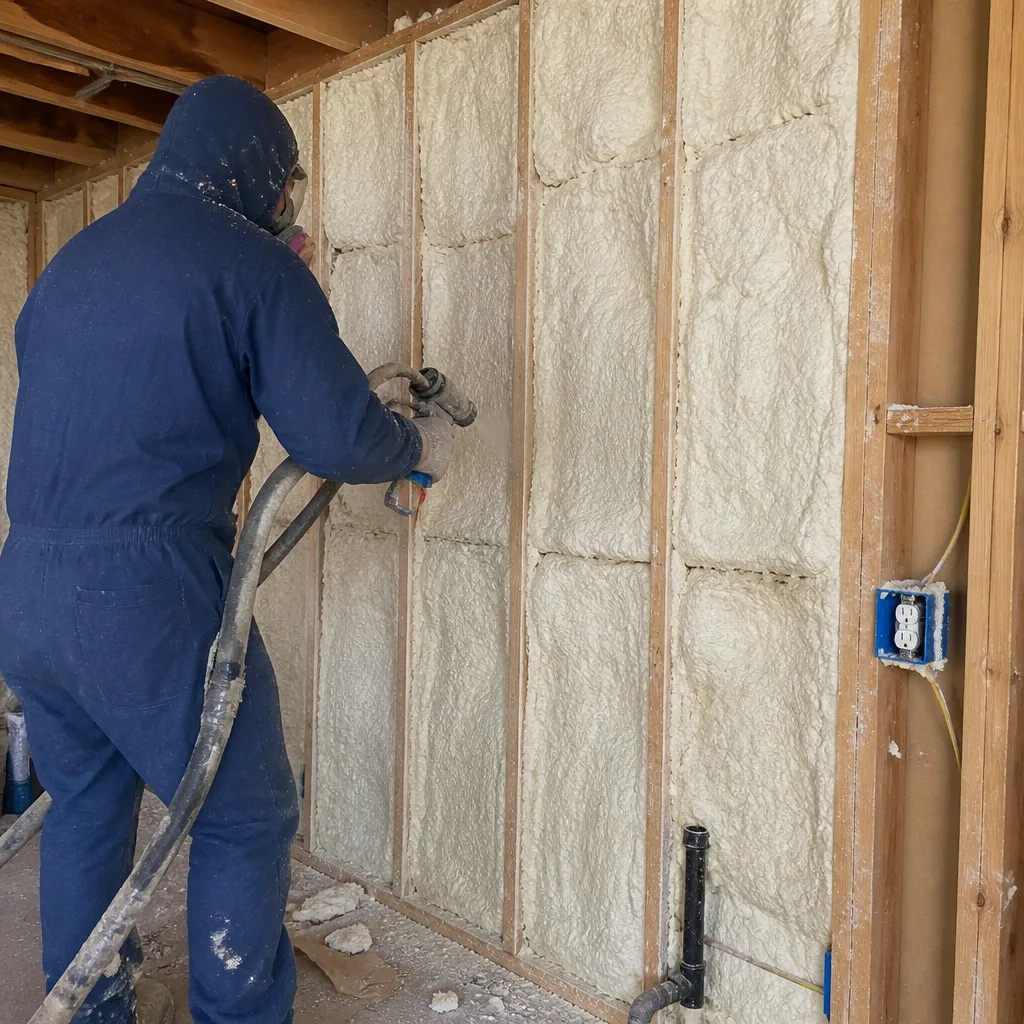 After
AfterAttic Insulation Replacement Pricing in Santa Clarita
Attic insulation replacement in Santa Clarita runs between $1,800 and $4,500 for most single-family homes, with the final number depending on four main variables: attic square footage, existing insulation depth and condition, whether contamination remediation is needed, and the extent of air sealing required. Here’s how those variables typically break down in this market:
| Scope | Typical Range |
|---|---|
| Removal + air sealing + re-insulation (1,000-1,200 sq ft attic, no contamination) | $1,800 – $2,400 |
| Removal + air sealing + re-insulation (1,500-1,800 sq ft attic, moderate settling) | $2,400 – $3,200 |
| Removal + rodent remediation + air sealing + re-insulation (any size) | $2,800 – $4,500 |
| Air sealing only (no insulation removal, standalone scope) | $600 – $1,200 |
A few things that shift the number up or down in Santa Clarita specifically: homes in the higher-elevation parts of Newhall and Bouquet Junction tend to have deeper attic cavities with more framing complexity, which adds labor time. Homes in newer master-planned sections of Valencia and Stevenson Ranch often have better attic access and fewer penetrations, which brings the air sealing phase in faster. Homes built in the 1970s and early 1980s in the original Newhall corridor sometimes have non-standard truss configurations that slow vacuum removal.
Under Haven Standard Clause 1, you will receive a written price for your specific attic – not a range, not an estimate that becomes something else on the invoice. The inspection that generates that written price is free. If you have a written estimate from another contractor, we’ll read it with you at no charge – that’s our Free Second Opinion offer, and it applies to any written quote regardless of who wrote it.
To schedule your inspection and get a written price for your Santa Clarita home, call (747) 294-2764.
What Affects R-Value Requirements in Santa Clarita
Santa Clarita sits across two California Building Climate Zones – Zone 9 covers the valley floor neighborhoods like Valencia, Newhall, and most of Canyon Country, while Zone 16 applies to the higher desert-adjacent elevations including parts of Agua Dulce and Acton at the city’s edges. Both zones carry an R-38 minimum for attic insulation under Title 24, but Zone 16 homes experience wider temperature swings and benefit measurably from R-49 or higher when the budget allows.
The practical effect: a home in Stevenson Ranch at 1,200 feet elevation and a home in the Saugus flatlands both need R-38 by code, but the Stevenson Ranch home is losing more heat in January nights and gaining more in peak August afternoons. When we spec replacement jobs in the higher neighborhoods, we often recommend going to R-49 – the incremental material cost is modest against the performance gain, and we document the installed depth either way so you have the record if you ever pull permits or sell the property.
For a full overview of how insulation choices map to Santa Clarita’s climate zones and construction types, the Attic Insulation in Santa Clarita page covers the broader context.
Materials We Use for Replacement Jobs
We source from established manufacturers – Johns Manville, Knauf, CertainTeed, and Rockwool among them – and the material choice for a given job depends on the attic configuration, the existing conditions, and what performance target we’re hitting. We don’t lock you into a proprietary product line.
For most Santa Clarita replacement jobs on standard wood-truss attics, Blown-In Attic Insulation is the workhorse: it installs fast, settles less than cellulose over time, and performs well through the thermal cycling this climate produces. For attics with unusual configurations, dense-pack applications, or specific fire-rating requirements, the spec may look different – and we’ll explain the reasoning in writing before the job starts.
FAQs – Attic Insulation Replacement
How long does attic insulation replacement take in Santa Clarita?
Most single-family attic replacement jobs in Santa Clarita complete in one day. A 1,200-square-foot attic with standard conditions – no contamination, accessible hatch, no vermiculite concerns – typically runs six to eight hours from setup to final blower-door reading. Attics with significant rodent contamination or complex HVAC penetrations may extend into a second day, and we’ll tell you that in the written scope before work starts, not after the crew has arrived. We schedule a named technician and send a text when they’re on the way, under Haven Standard: Arrive on Schedule.
Is it always necessary to remove the old insulation before adding new?
No – removal isn’t always required. If the existing material is dry, free of contamination, and above roughly R-13 with structural integrity intact, a top-up after air sealing may be the correct call. But if the material is compressed, wet, contaminated with rodent activity, or so settled that you can’t get to the attic floor to seal penetrations properly, removal is the prerequisite. We’ve inspected attics in Canyon Country where the existing cellulose looked adequate from the hatch and turned out to be matted flat at R-7. The inspection tells us which situation we’re in, and we document what we find so you’re making a decision based on actual conditions rather than assumptions.
What documentation do I receive after replacement?
Every replacement job closes with three things: a documented photo record showing existing conditions, mid-job air sealing, and final installed depth; before-and-after blower-door readings in CFM50 so you can see the measurable air-sealing result; and the written warranty tied to the 365-Day Done Right Promise. If anything isn’t right within 365 days of completion, we make it right – that’s a written commitment, not a verbal assurance. You receive these documents when the job closes, not on request after the fact.
Does attic insulation replacement qualify for any rebates or tax credits in Santa Clarita?
As of 2025, the federal 25C tax credit covers 30% of insulation and air sealing costs up to a $1,200 annual cap for qualifying improvements, and Southern California Edison and SoCalGas both run rebate programs for attic insulation upgrades that apply to Santa Clarita addresses. Eligibility depends on your specific utility account, existing insulation levels, and the installed R-value. We provide the documentation – installed R-value, material type, contractor details – that rebate applications typically require. We don’t file the rebate on your behalf, but the paperwork we give you covers what the applications ask for. Confirm current program availability directly with your utility before the job, since program terms change.
Why the Order of Operations Matters
The single most common mistake in our Attic Insulation services – and we see the results of it regularly in Santa Clarita resale homes – is insulating before sealing. It feels counterintuitive, but blowing R-38 of fiberglass over an attic floor with open top plates and unblocked can lights is closer to stuffing a draft under a door than it is to building a thermal barrier. The insulation slows conductive heat transfer; it does almost nothing to stop the air movement that’s carrying your conditioned air directly into the attic.
We’ve run blower-door tests on homes in Valencia and Saugus where the attic had fresh insulation – installed within two years – and the CFM50 reading was still above 4,500. The insulation looked fine. The air sealing had never been done. When we went back, sealed the floor, and re-tested, the number dropped to under 2,000 without touching the insulation at all. That’s the gap between installed R-value and actual performance, and it’s why we won’t insulate an attic floor that isn’t sealed first.
Our parent home page covers the full scope of what Envelope Insulation Co. does across the building envelope, if you want context on how attic work connects to the rest of the system.
Key Takeaways
- Attic insulation replacement in Santa Clarita typically runs $1,800 to $4,500 depending on attic size, condition, and whether contamination remediation is needed.
- California Title 24 requires R-38 minimum for attic insulation in Santa Clarita’s climate zones; many homes we inspect are well below that threshold.
- Air sealing – top plates, can lights, HVAC penetrations – is completed before any insulation is installed, every time, without exception.
- Every job closes with a documented photo record and before-and-after blower-door readings so you can see the measured result, not just take our word for it.
- The written price comes before any work starts – Haven Standard Clause 1 – and the 365-Day Done Right Promise applies to everything we install.
- A live person answers at (747) 294-2764, 24/7. No voicemail loops.
Schedule Your Attic Inspection in Santa Clarita
If your attic insulation is degraded, contaminated, or simply never performed the way it should have because it went in before the air leaks were sealed, the next step is an inspection that gives you actual data – not a sales pitch. We’ll document what we find, give you a blower-door baseline, and deliver a written price for the replacement scope before we ask you to decide anything. To schedule that inspection for your Santa Clarita home, call Wes Okafor and the team at (747) 294-2764. The estimate is free, the price is written, and the work doesn’t start until you’ve approved both.
Written by Wes Okafor, Owner at Topside Attic Insulation Santa Clarita, serving Santa Clarita since 2016.