
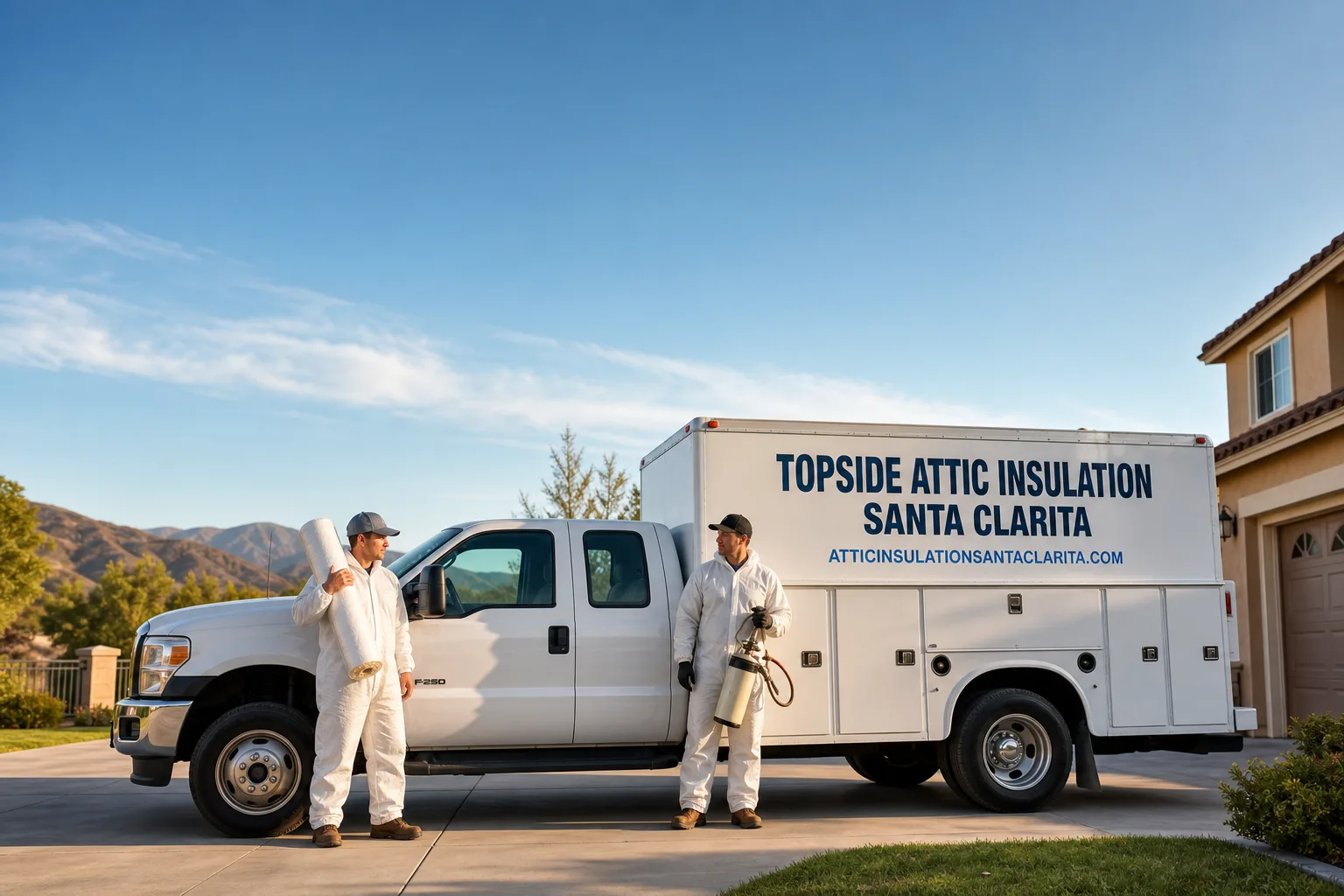
Fast, Reliable Blown-In Insulation Across Hidden Hills
Most blown-in insulation jobs in Hidden Hills run $2,800-$6,500 depending on attic size, existing conditions, and whether fire-rated thermal barriers are required for VHFHSZ compliance. Our crews are dispatched from the Los Angeles office and typically reach Hidden Hills properties within 45-60 minutes during standard scheduling windows. We’ve worked on original 1960s ranches off Long Valley Road and new 12,000-square-foot estates near Round Meadow Road, so we know the split between underinsulated vintage attics and Title 24-tight new construction. Call (747) 294-2764 for a written price before any work starts.
Why Topside Attic Insulation Santa Clarita Is Hidden Hills’s Preferred Blown-In Insulation Company
We’ve sealed and insulated over 9,000 homes since 2016, and a meaningful share of them sit inside Hidden Hills gates. Reviews from Hidden Hills customers consistently mention the blower-door numbers we leave behind, not vague promises about comfort.
Our response time to Hidden Hills averages under an hour from dispatch because crews stage from the Valley edge, not Santa Clarita proper. That matters when a Santa Ana event is forecast and you’re trying to get insulation sealed before wind-driven dust infiltrates the attic.
We know the local inspection path. Hidden Hills falls under Los Angeles County Fire Department jurisdiction for VHFHSZ compliance, and our spec sheets are pre-built around Chapter 7A so the inspector sees fire-rated materials and proper thermal barriers on the first pass. No callbacks for paperwork.
Every job gets a named technician, a text when they’re en route, and a Documented Photo Record before we leave. Under Haven Standard Clause 1, you get the written price and written scope before anyone touches your attic.
Our Blown-In Insulation Services in Hidden Hills
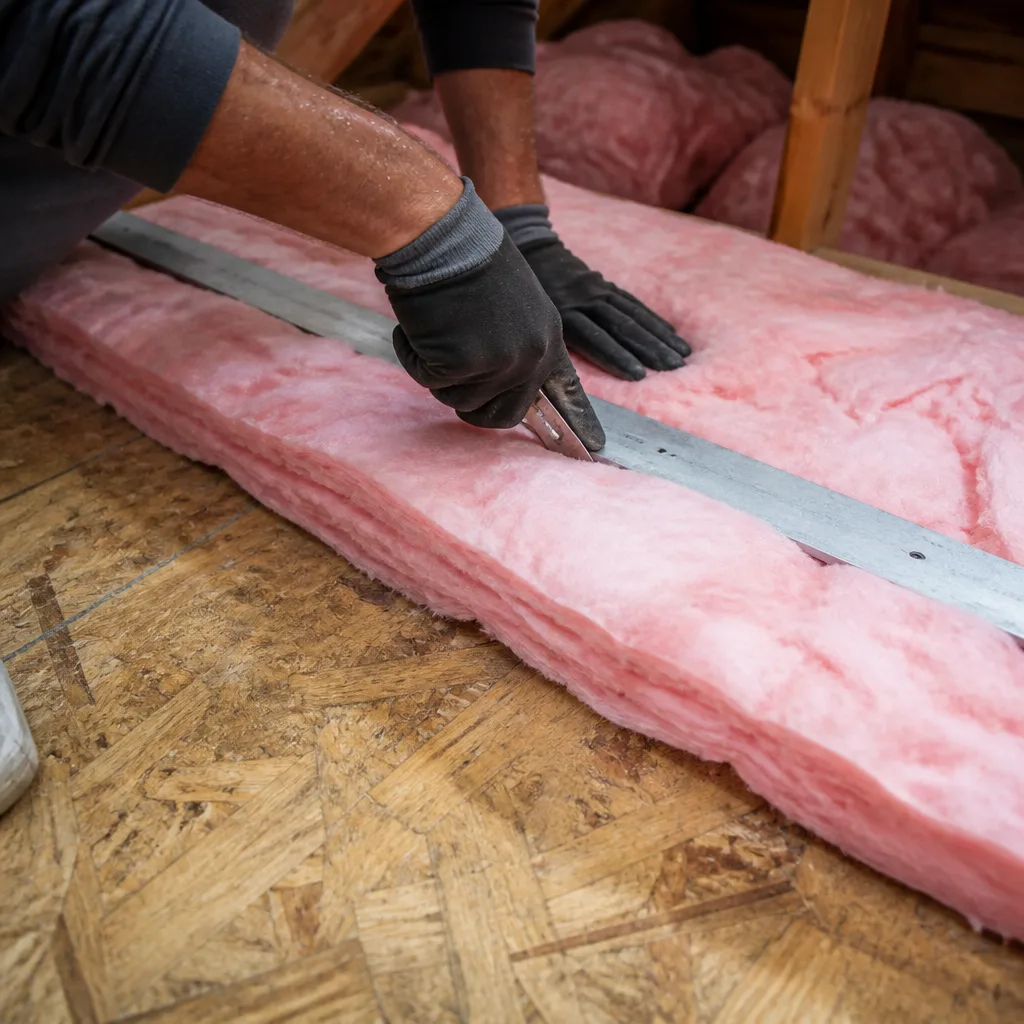
Blown-In Cellulose
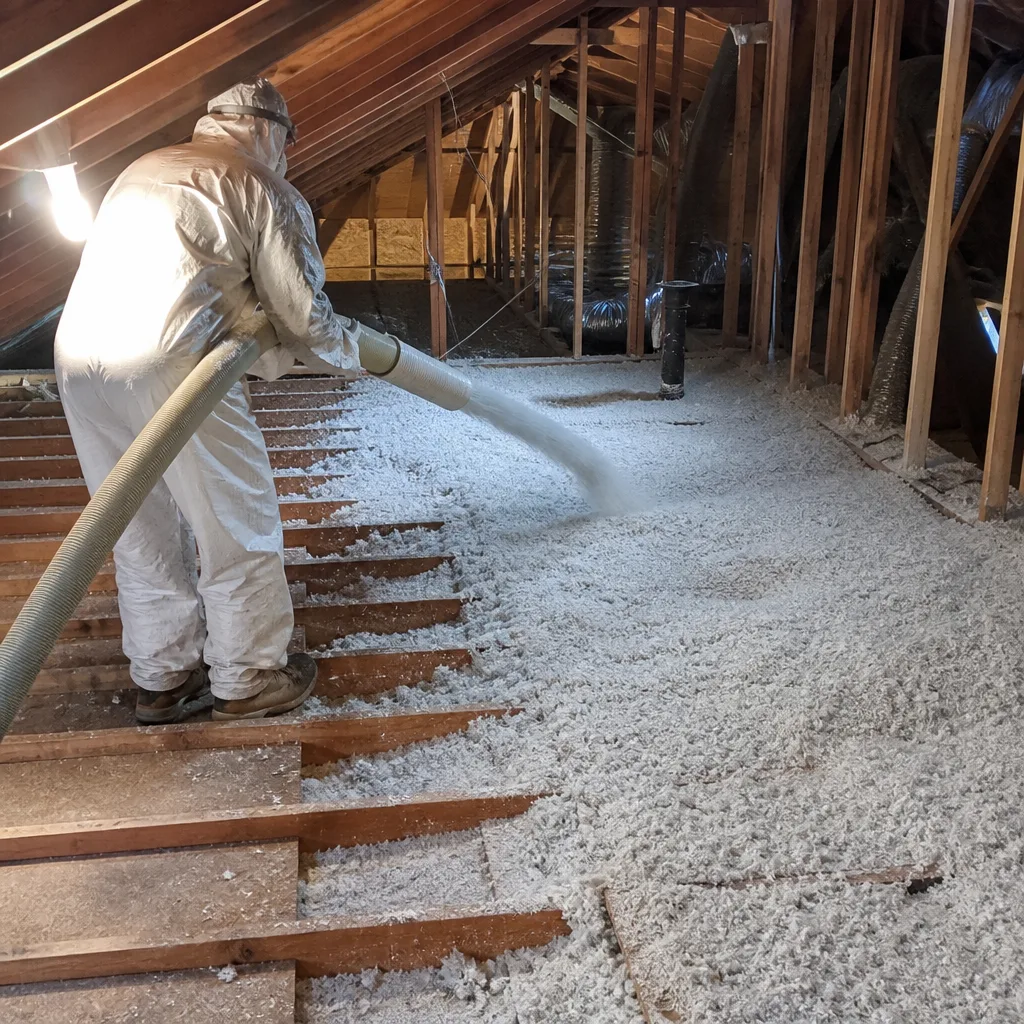
We specify GreenFiber cellulose for most Hidden Hills attics because it carries a Class 1 fire rating and can be paired with the thermal-barrier assemblies Chapter 7A requires in this VHFHSZ. Cellulose settles to a dense, monolithic layer that blocks convective looping, the air movement that degrades performance in shallow 1960s ranch attics. For a typical 2,400-square-foot original Hidden Hills ranch, blown-in cellulose to R-38 runs $3,200-$4,800 including air sealing of top plates and can-light enclosures. New custom estates with complex roof planes and multiple attic zones usually land in the $5,500-$8,200 range.
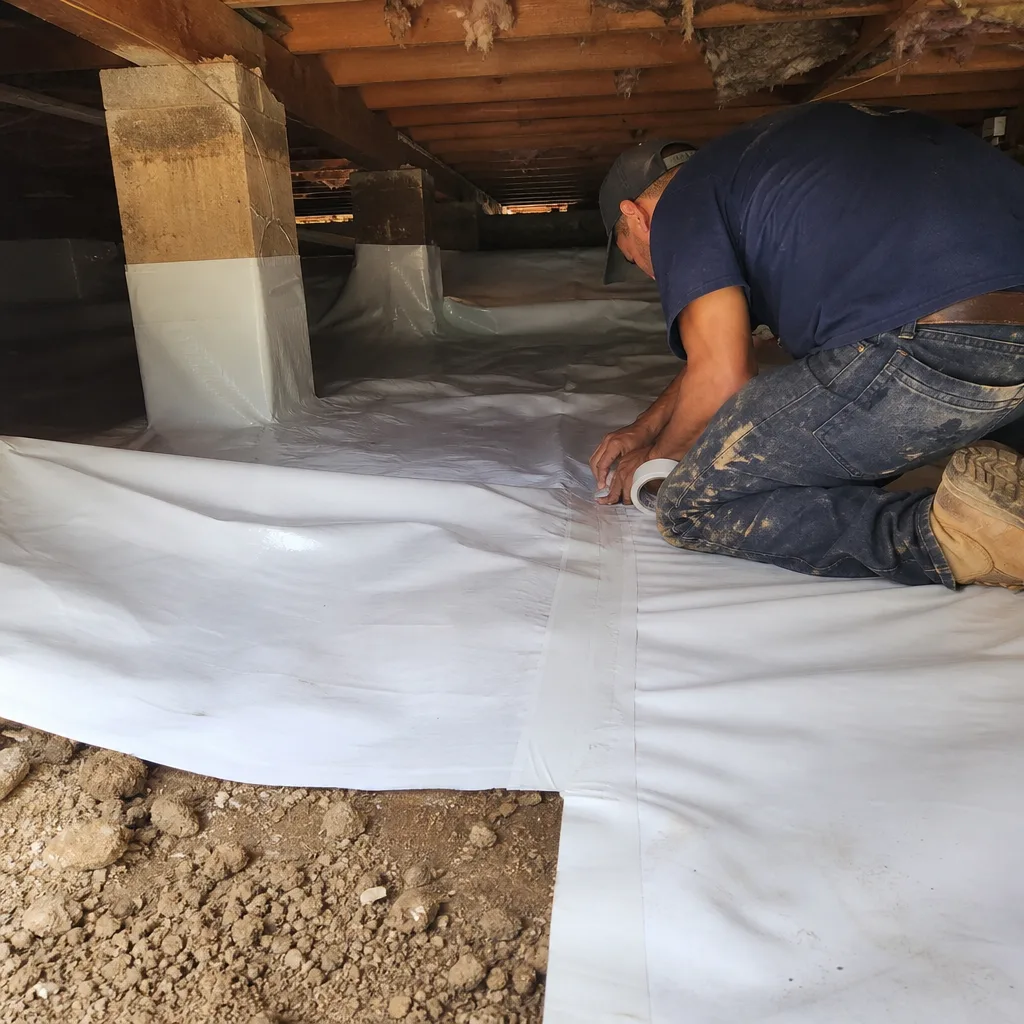
Blown-In Fiberglass
Knauf and Johns Manville loose-fill fiberglass work well in Hidden Hills homes where moisture management is the priority, fiberglass doesn’t hold water weight the way cellulose can if a roof leak develops before it’s caught. We use fiberglass selectively, in newer builds with conditioned attic designs or where the homeowner specifically requests it. Pricing runs comparable to cellulose, sometimes 8-12% higher depending on the R-value target and whether we’re blowing over existing batts or starting from a stripped deck.
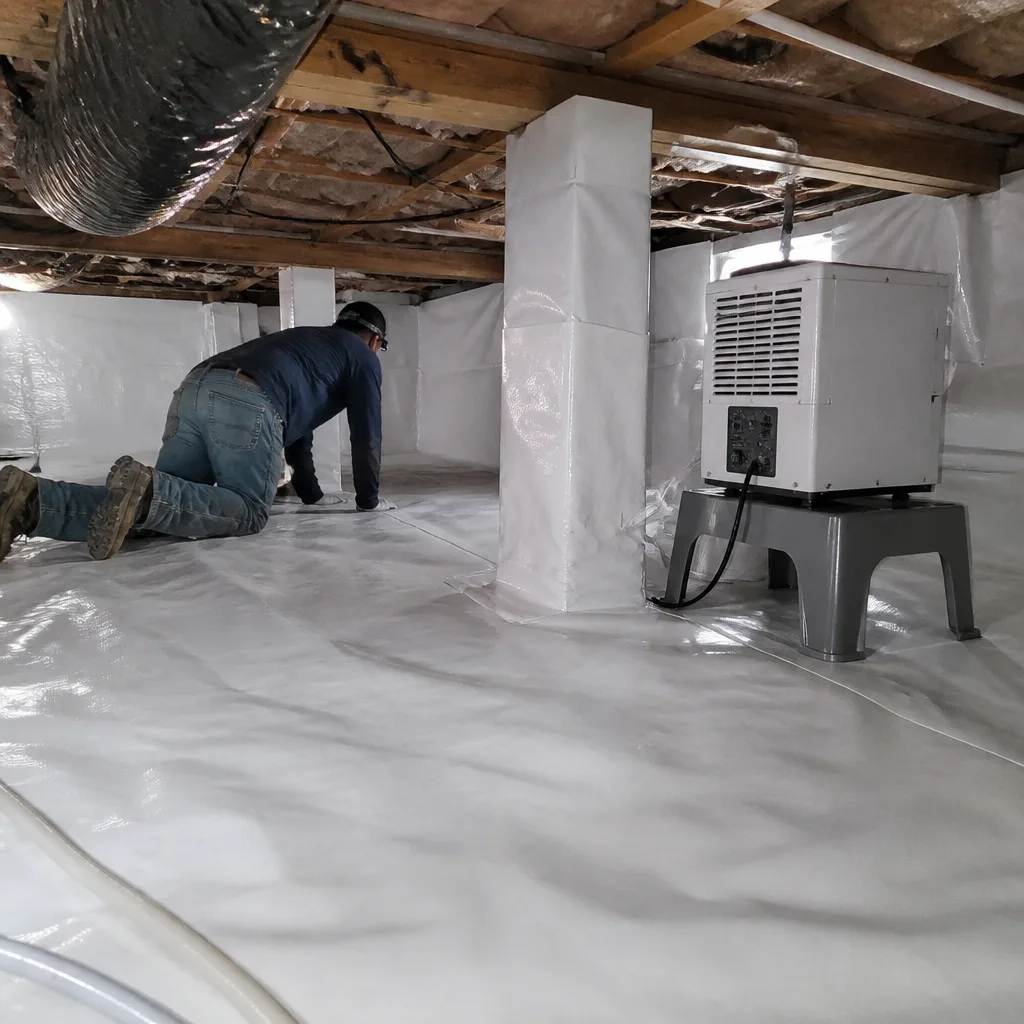
Dense-Pack Wall Insulation
Many Hidden Hills ranches were built with uninsulated 2×4 walls, and dense-pack cellulose is the retrofit that doesn’t require gutting finished interiors. We drill strategic access points, pack the cavity to 3.5 pounds per cubic foot, and seal. The material won’t settle or sag, and it adds significant sound damping between rooms, a secondary benefit in open-plan renovations common on Hidden Hills estates. Wall jobs typically run $2,800-$5,400 for a single-story ranch depending on linear footage and interior finish type.
Blown-In Top-Up
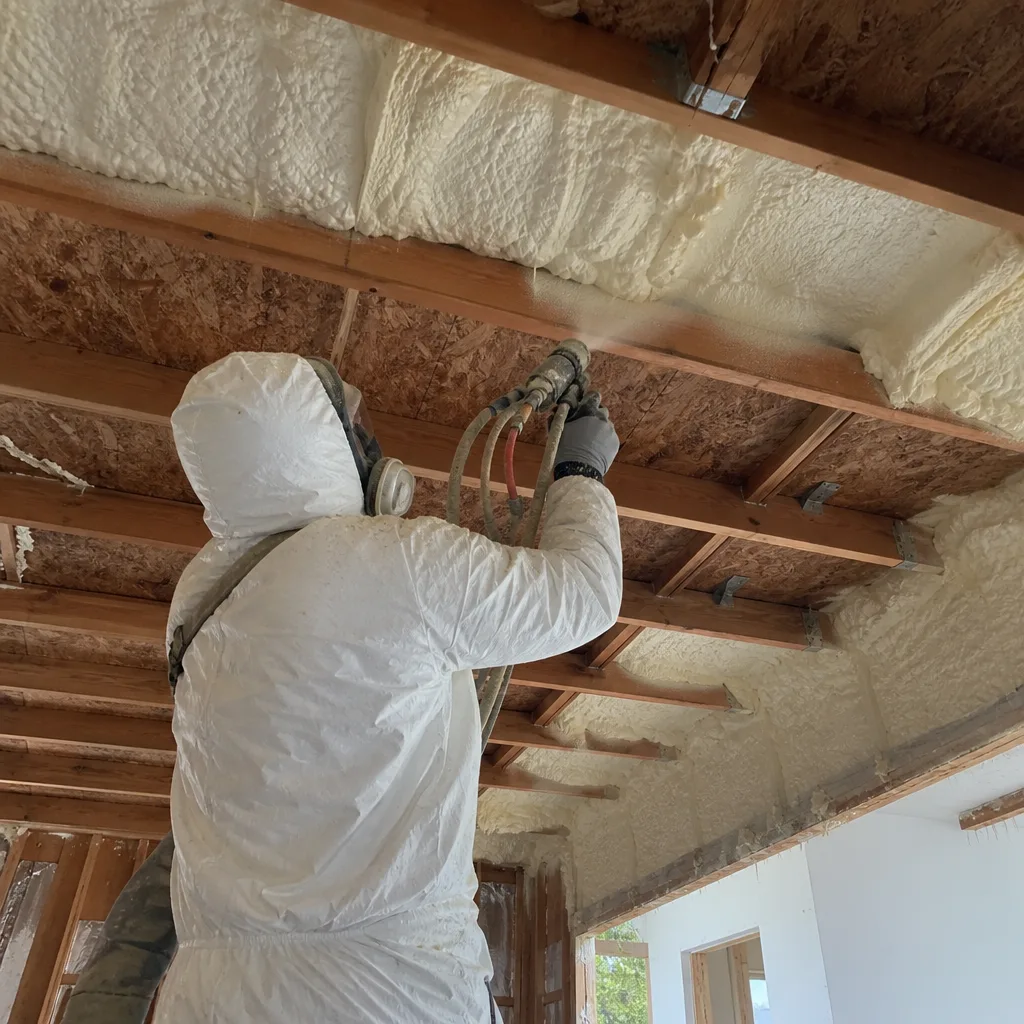
This is where Hidden Hills gets complicated. A top-up sounds simple, add material over what’s there. But on a 1963 ranch on Long Valley Road, our crew opened the attic expecting exactly that and found the original fiberglass batts installed below the joists, leaving a bare roof deck radiating straight onto the ceiling below. We air-sealed the top plates, laid GreenFiber cellulose above the joists to the Title 24 target, and installed a fire-rated thermal barrier at the attic interface to satisfy the VHFHSZ requirement. The homeowner’s upstairs cooling load dropped noticeably by the next heat event. A true top-up in Hidden Hills starts with verification of what’s actually there. Budget $2,800-$4,200 for a proper top-up with air sealing; if we find the below-joist failure, the full correction runs $4,500-$7,200.
What happens when you call
- 1
A real person answersNo phone trees - you reach a local pro.
- 2
You get an upfront price rangeHonest numbers before anyone is dispatched.
- 3
A background-checked tech heads outLicensed & insured, dispatched right away.
- 4
You approve before work beginsNothing starts until you say go.
 Before
 After
AfterTrusted Brands We Service in Hidden Hills
We source blown-in materials from Knauf, Johns Manville, and Rockwool, among others, no proprietary lock-in means we spec what’s right for the assembly, not what a manufacturer requires us to move. For Hidden Hills, that flexibility matters because VHFHSZ compliance sometimes limits which products qualify for the thermal-barrier layer. We keep common fire-rated cover boards and ignition-barrier coatings in regional inventory so a Hidden Hills job doesn’t wait on a freight shipment. Every bag lot is documented in your photo record with manufacturer and R-value per inch at settled depth.
Common Blown-In Insulation Problems We See in Hidden Hills Homes
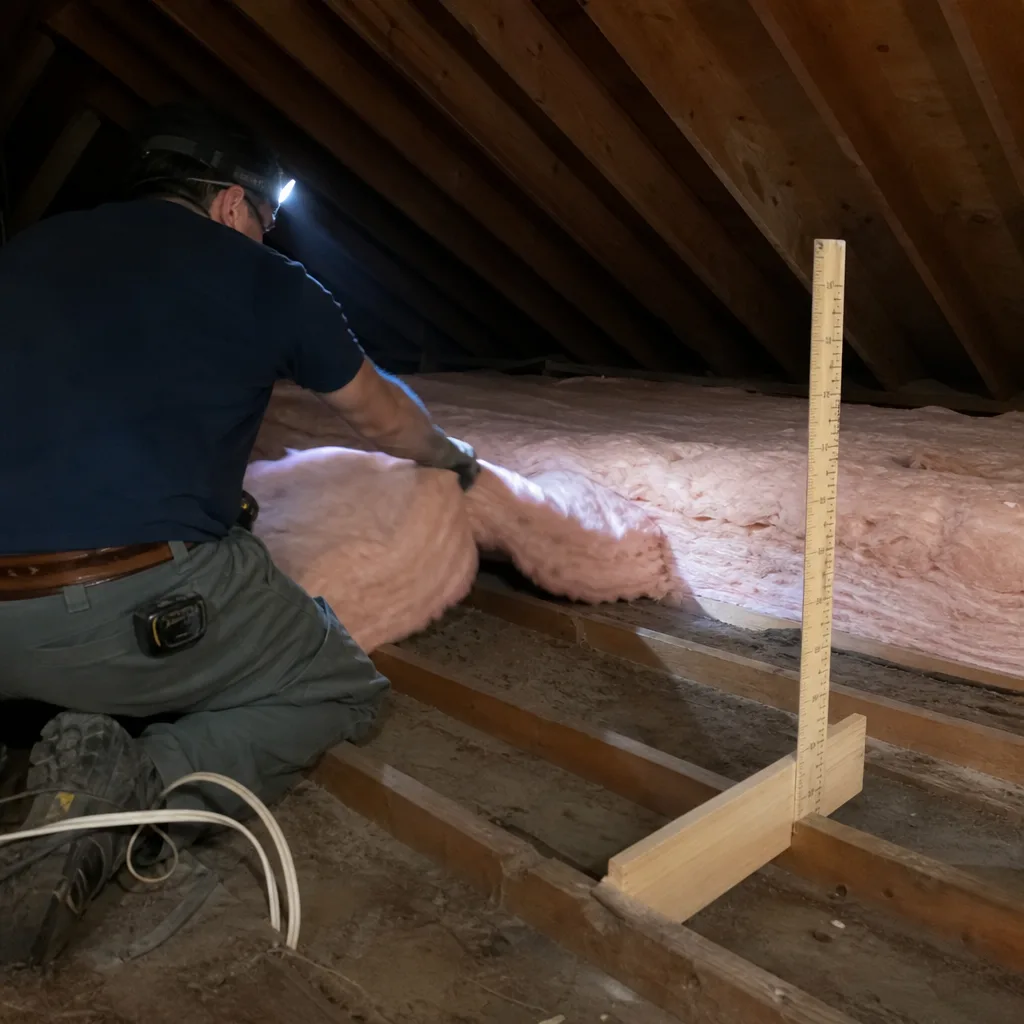
- Insulation below the joists on original ranches. A blown-in top-up over the top plate still leaves radiant heat pouring off a bare roof deck, and the finished ceiling stays hot. The fix is stripping the old batts, air sealing, and blowing above the joists to full depth.
- Santa Ana wind events degrading older batts. Fall winds dry and compress insulation against vented soffits, which then blocks blown-in cellulose from reaching the full R-value depth we specified. We inspect soffit baffles and replace any that are crushed or missing before blowing.
- Spray foam installed without fire-rated covering in a VHFHSZ attic. An installation that fails inspection and has to be torn back out before any blown-in work can be signed off. We see this on flipped ranches where the previous owner cut corners.
- New custom estates missing the Title 24 R-value target by assembly error. Complex rooflines with multiple attic zones sometimes leave one zone underinsulated because the builder counted total square footage instead of zone-by-zone R-value. We map with thermal imaging and correct with targeted dense-pack or blown-in where access allows.
Pricing for Blown-In Insulation in Hidden Hills, CA
Here’s what most jobs actually cost in this market:
| Service | Typical Range in Hidden Hills |
|---|---|
| Blown-in cellulose, ranch attic to R-38 | $3,200-$4,800 |
| Blown-in cellulose, large custom estate | $5,500-$8,200 |
| Blown-in fiberglass equivalent | $3,500-$5,400 |
| Dense-pack wall insulation (2×4 walls) | $2,800-$5,400 |
| Blown-in top-up with air sealing | $2,800-$4,200 |
| Below-joist correction + full re-insulation | $4,500-$7,200 |
| Fire-rated thermal barrier (VHFHSZ add) | $800-$1,400 |
What moves the number: attic square footage, existing material condition, accessibility, whether we need to install or upgrade soffit baffles, and the VHFHSZ thermal-barrier requirement that adds a compliance layer most neighboring cities don’t face. Every quote is flat, written, and delivered before work starts. No estimate changes unless you change the scope. Call (747) 294-2764 for yours.
We Also Serve Cities Near Hidden Hills
Our crews regularly work in Hidden Hills and the surrounding communities: Santa Clarita, Stevenson Ranch, San Fernando, and Castaic. If you’re just outside the gates or managing a portfolio that spans the western Valley, we can coordinate multi-property scheduling from the same dispatch.
Serving Hidden Hills, CA - Our Local Coverage Area
We’re based in the Hidden Hills area and know this community well. Use the map below to see our service coverage - if you’re nearby, we can almost certainly help.
FAQs - Blown-In Insulation in Hidden Hills
Yes, any insulation installed in a Hidden Hills attic must meet Chapter 7A requirements for fire-rated materials or proper thermal-barrier assemblies. Our spec sheets and inspection photos for Hidden Hills attics get built around this compliance from the first walk-through, so the job passes L.A. County Fire inspection on the first submission. Call (747) 294-2764 and we’ll review the specific barrier type your assembly requires.
The original fiberglass batts were likely installed below the joists, leaving the roof deck bare and radiating directly onto your ceiling, a common 1960s practice that a simple top-up doesn’t correct. We verify joist-plane placement before blowing; if the old material is below, we strip, air seal, and reinstall above the joists to full R-value depth. Call (747) 294-2764 for a free inspection of what’s actually in your attic.
Only if the existing spray foam has the required fire-rated covering or thermal barrier that VHFHSZ compliance demands. We’ve encountered flips where open-cell foam was left exposed; that fails inspection and must be corrected before any new insulation is added. We’ll assess the existing assembly and quote the compliance layer if it’s missing.
California Title 24 requires R-38 minimum for attic insulation in the climate zone that covers Hidden Hills, though many custom builders spec R-49 or higher for the 105°F+ summer performance margin. We verify zone-by-zone coverage with thermal imaging; complex rooflines sometimes hide underserviced areas even when the total square footage looks correct.
Extreme attic temperatures, we’ve measured over 150°F in poorly insulated Hidden Hills attics during heat events, make settled density and air sealing more important than the specific fiber type. A dense, well-sealed cellulose layer at proper depth outperforms a thicker but poorly installed fiberglass job because it stops convective heat transfer, the air looping that accelerates when temperature differentials are severe. We match material to the assembly condition, not the thermometer reading.
Written by Wes Okafor, Owner at Envelope Insulation Co., operating under The Haven Standard since 2016.