
Icynene Radiant Barrier Installation: The Santa Clarita Owner’s Guide
Most Icynene radiant barrier installations in Santa Clarita run between $2,800 and $4,600 for a typical 1,800-2,400 square foot attic, and we can usually schedule within 48 hours. We stock Icynene-compatible radiant barrier rolls and fastening systems on every truck, so there’s no waiting on a supplier run to the Valley. Homeowners usually figure out something’s wrong when their upstairs bedrooms won’t cool below 78 degrees even after sunset, or when their July electric bill jumps $80-$120 year-over-year with no rate change from SCE.
Which Icynene Models This Applies To
Icynene doesn’t manufacture a standalone radiant barrier product under its own label. What we see in Santa Clarita attics is Icynene spray foam insulation - typically open-cell LD-C-50 or closed-cell MD-C-200 - installed alongside a radiant barrier substrate, usually foil-faced OSB roof sheathing or a standalone reflective foil draped over rafters. The compatibility issue isn’t the foam itself; it’s whether the radiant barrier was installed with the proper 3/4-inch minimum air gap on the reflective side, per California Title 24.
We’ve pulled down foil that’s been pressed directly against roof decking in Canyon Country homes, rendering it a $1,200 piece of shiny wallpaper. The fix means re-stapling with proper standoffs or switching to a perforated product that won’t trap moisture against Icynene’s vapor-permeable open-cell foam. Check your attic: if the foil is flat against the deck or the rafters, it was done wrong. We also see Reflectix products paired with Icynene in older Valencia installations; those hold up fine if the air gap was respected, but the tape seams fail after 7-10 years in Santa Clarita’s heat-cycling attic environment.
Topside Attic Insulation Santa Clarita is an independent service provider with no affiliation to Icynene or Demilec. We source Icynene-compatible materials through our regular supply chain alongside Owens Corning, Johns Manville, and Knauf products.
Signs Your Icynene Radiant Barrier Installation Is Failing
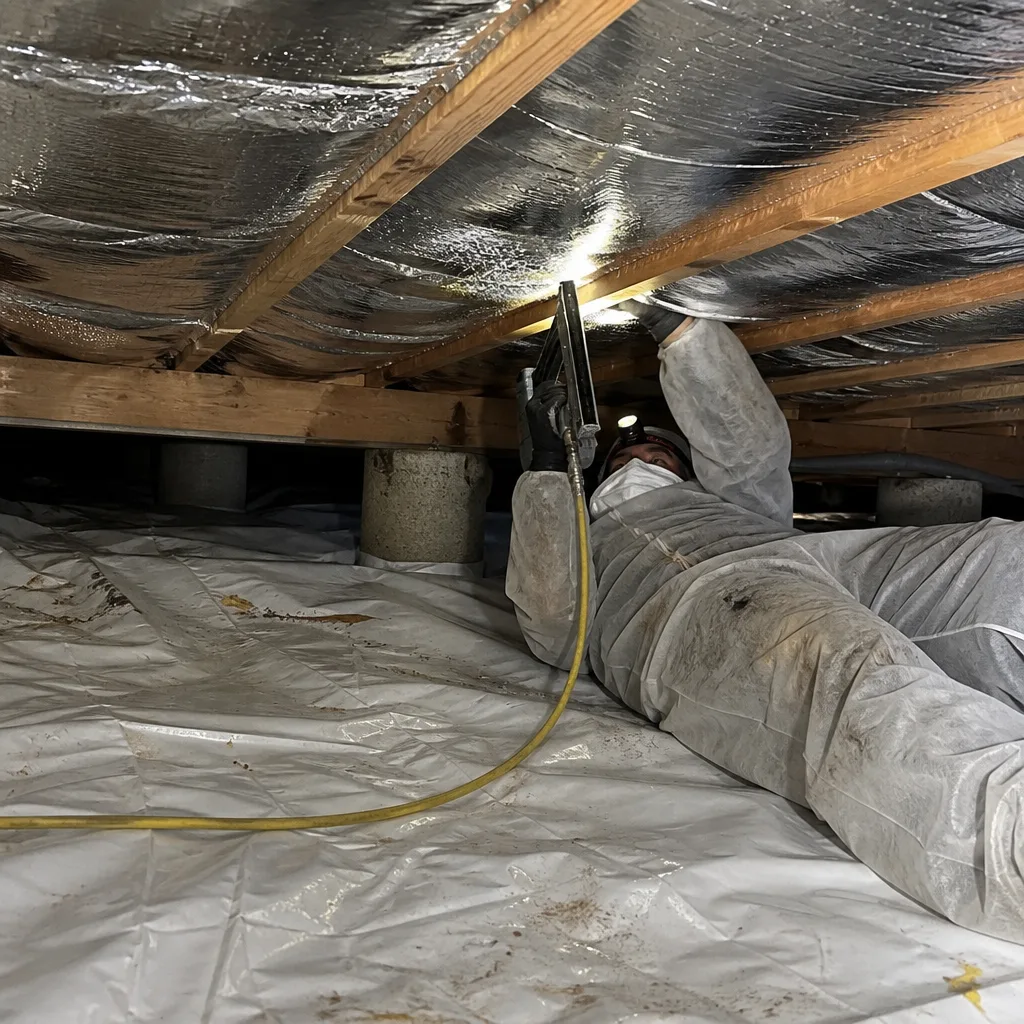
- Second-floor rooms stay hot past 9 p.m. In Santa Clarita, ambient temps drop fast after sunset thanks to our desert-adjacent diurnal swing. If your upstairs is still 10-15 degrees warmer than downstairs at 10 p.m., the radiant barrier has likely detached, torn, or was installed without the required air gap and is no longer reflecting infrared radiation back toward the roof deck.
- Electric bills spike June through September. A properly installed radiant barrier can reduce attic heat gain by 20-35 percent. When it fails, your HVAC runs longer to compensate. We see this most in Stevenson Ranch homes with west-facing roofs where afternoon solar load is brutal.
- Visible drooping, tearing, or missing sections in the attic. Santa Clarita’s 110°F+ attic peaks in August degrade the polypropylene scrim in cheaper foils. The tape adhesive on seam joints gives out first, then gravity takes over. We’ve found entire sheets bunched against insulation in 12-year-old Saugus installs.
- Moisture staining on rafters or roof sheathing. This is the big one with Icynene open-cell foam. If a non-perforated radiant barrier was installed over vapor-permeable foam, moisture that migrates through the foam hits the foil and condenses. The result is dark streaks on wood, sometimes mold. This isn’t a roof leak; it’s a vapor-drive problem created by incompatible materials.
- Hot spots on your ceiling with an infrared thermometer. A working radiant barrier creates relatively uniform ceiling surface temps. Point an IR gun at your upstairs ceiling on a July afternoon; 10°F+ variation between joist bays means the barrier’s compromised or missing in sections. We bring thermal imaging on every assessment call to confirm this without guessing.
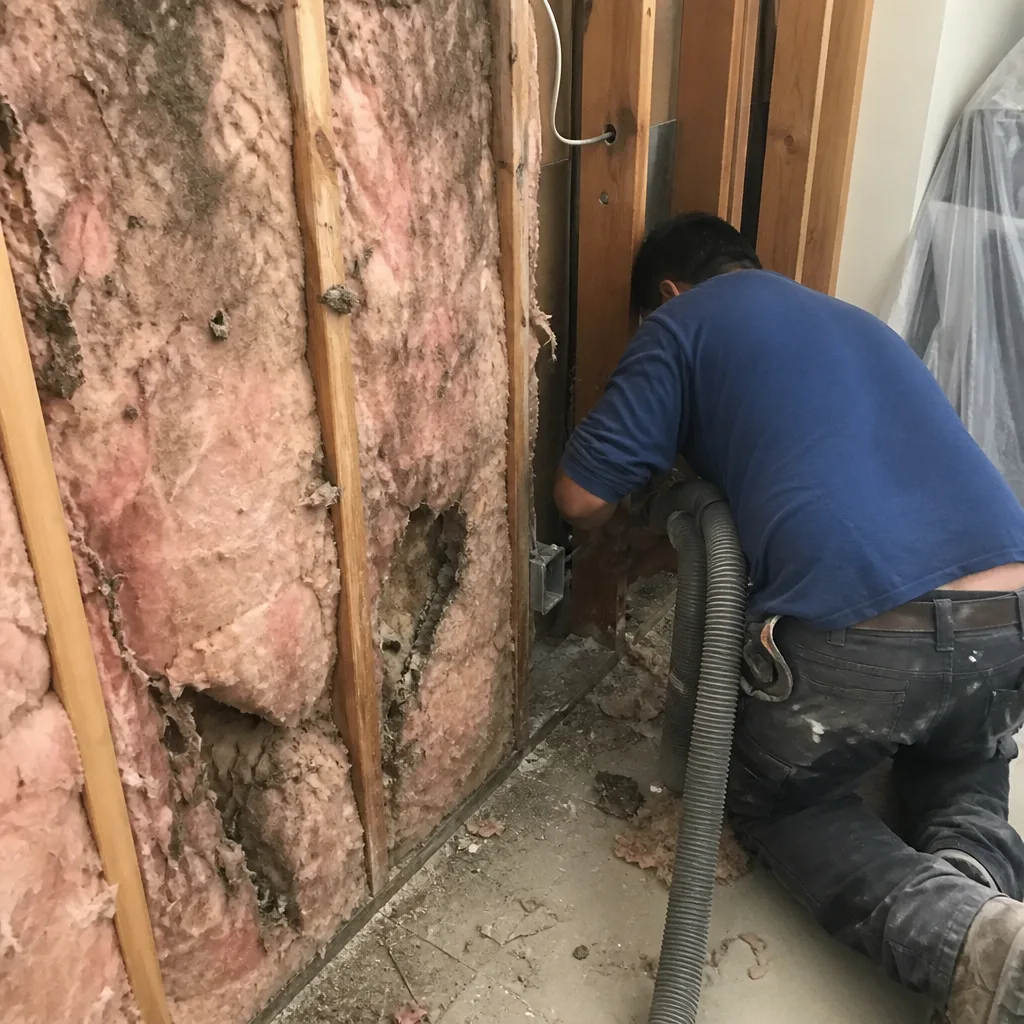 Before
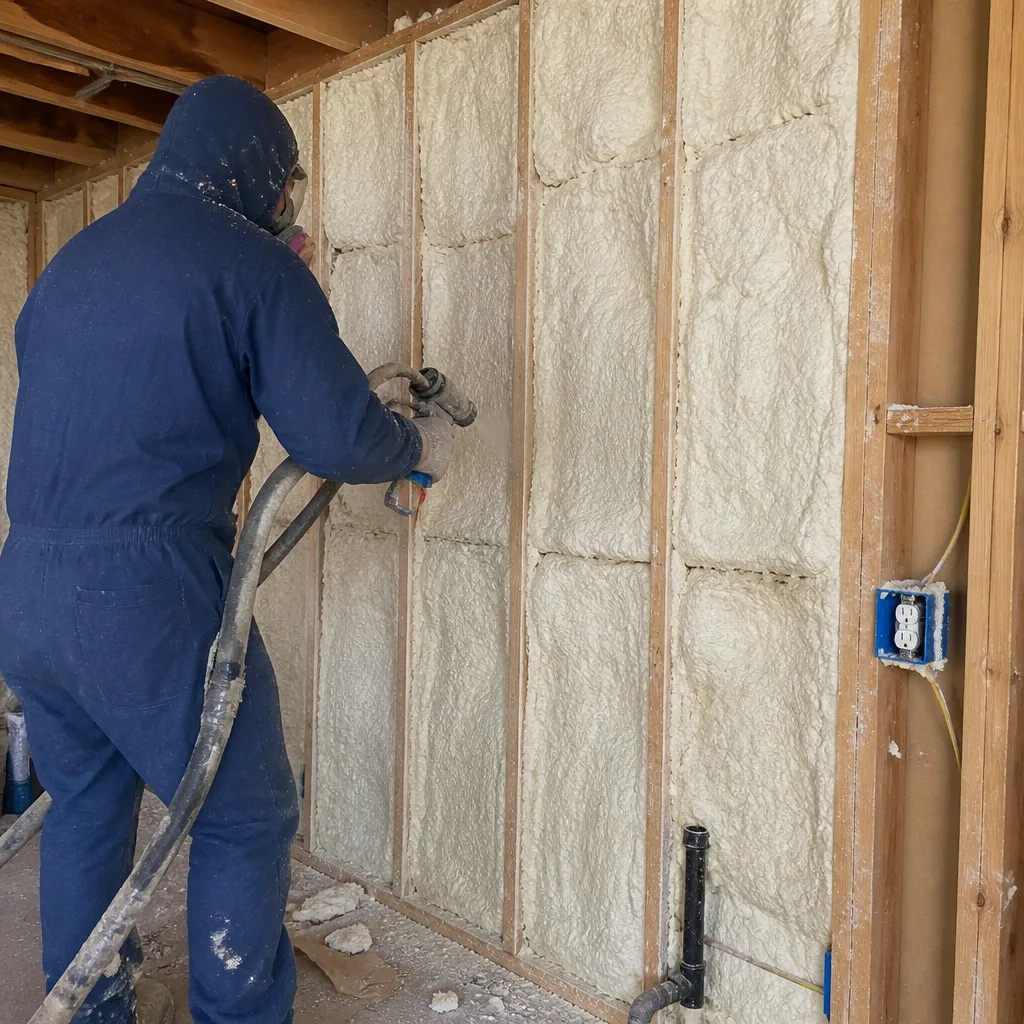 After
AfterReplacement Cost & What’s Included
| Component | Typical Range (Santa Clarita) |
|---|---|
| Radiant barrier material (perforated foil, 1,000 sq ft attic) | $1,100 - $1,600 |
| Air-gap standoffs / fastening system | $280 - $420 |
| Air sealing of top plates, can lights, penetrations (Haven Standard prerequisite) | $680 - $980 |
| Labor for removal, prep, and install | $740 - $1,100 |
| Before-and-after blower-door test with printed report | Included |
| Documented Photo Record | Included |
The total installed price for most Santa Clarita homes falls between $2,800 and $4,600. Smaller single-story homes in Newhall can run closer to $2,200; larger two-stories with complex rooflines in Sand Canyon push $5,200. What moves the needle: attic square footage, whether we’re removing failed existing material, accessibility (some Valencia Town Center tract homes have 14/12 pitch roofs that slow work), and whether we find moisture damage requiring remediation before new material goes up.
Every job gets a Written Price Before Any Work Starts, per Haven Standard Clause 1. No exceptions. The 365-Day Done Right Promise covers the installation and materials. We publish before-and-after blower-door numbers so you can verify the air-sealing result we achieved before the radiant barrier went in.
DIY or Call Us?
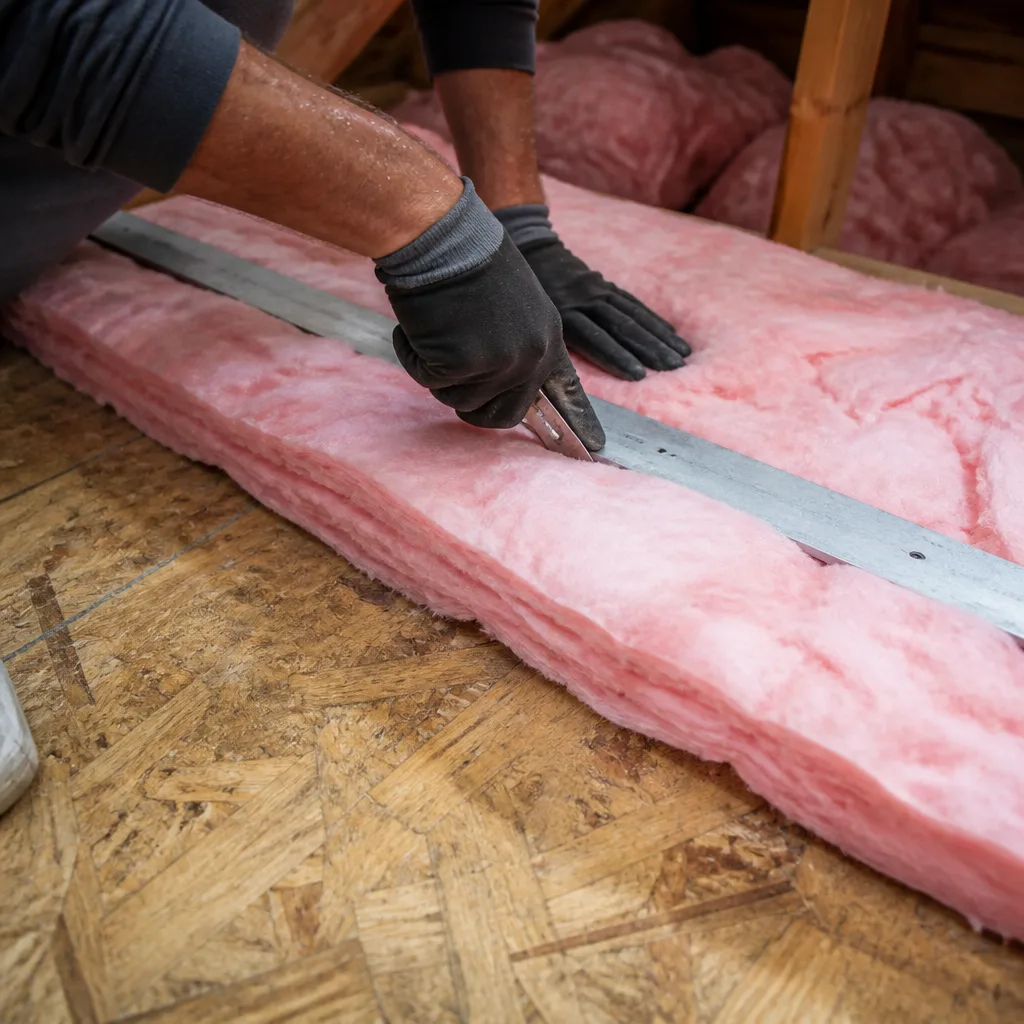
There’s safe checking, and then there’s work that belongs to someone who’s done it a few hundred times.
What you can do: Verify the air gap with a ruler or inspect for visible tears from the attic hatch with a headlamp. Take photos of any labels on existing foil products. Check your SCE bill history online for the seasonal jump. All useful data.
Where DIY goes wrong: Working on rafters in 130°F attic heat is how homeowners fall through ceilings or trigger cardiac events. Re-stapling foil properly requires knowing which side faces the gap (hint: the shiny side isn’t always the working surface, and some products are directional). Most critically, if you’re seeing moisture staining, you need to diagnose vapor drive before adding any new layer, or you’ll trap water and rot your roof deck. We’ve replaced sheathing in two Santa Clarita homes where well-meaning owners layered new foil over old and sealed the moisture in.
We’re not going to tell you it’s rocket science. But we will tell you that the report goes home with you. The numbers don’t lie, and you shouldn’t have to take anyone’s word for it.
Call (747) 294-2764 for a free estimate. A live person answers, 24/7.
FAQs
Quality perforated foil products last 15-20 years when properly installed with adequate air gap and compatible insulation. In Santa Clarita’s climate, the failure point is usually tape seams at 7-10 years or physical damage from contractor traffic. We use mechanical fasteners at seams on every job, not tape alone, because our summers test adhesive chemistry harder than the manufacturers’ labs in Ohio ever did.
Patching small tears is possible, but it’s rarely cost-effective. By the time we’re called, the material has typically degraded across broad sections, seams have failed systematically, and the original installation lacked the air gap that would have prevented the damage. We quote repair only when the failure is isolated and the original install was correct. Call (747) 294-2764 and we’ll tell you straight which category you’re in - estimates are free.
Most Santa Clarita homes are a one-day job: removal of failed material in the morning, air sealing and blower-door verification midday, new radiant barrier install and final documentation in the afternoon. Large or complex attics may run into a second day. We give you a written schedule with your price, not a “we’ll see how it goes.”
Yes. We carry perforated radiant barrier rolls, standoff fastening systems, and compatible air-sealing materials on every vehicle. For Icynene open-cell foam assemblies specifically, we stock vapor-smart products that won’t create the condensation problems non-perforated foils do. If your attic has an unusual configuration - we’ve seen custom cathedral ceilings in Placerita Canyon - we’ll measure on-site and source any specialty material within 24 hours.
Written by Wes Okafor, Owner, Topside Attic Insulation Santa Clarita at Topside Attic Insulation Santa Clarita, serving Santa Clarita and nearby areas.