
Knauf Attic Air Sealing: The Santa Clarita Owner’s Guide
We stock and install Knauf-compatible attic air sealing components in Santa Clarita, with most residential jobs running between $850 and $2,400 depending on attic square footage and existing penetration count. Same-day service is available when we have your configuration in our Santa Clarita warehouse, which we do for the most common Knauf Ecoseal and Insulation Accessories series. Most homeowners discover their air sealing has failed when rooms stay cold despite new insulation, or when a recent energy audit flags bypasses the original installer missed.
Which Knauf Models This Applies To
Knauf’s attic air sealing line breaks into two families we work with regularly: the Ecoseal System, a water-based elastomeric sealant applied to top plates and penetrations, and the Insulation Accessories line of preformed foam gaskets, weatherstripping, and dam assemblies. Ecoseal carries a lot number starting with “ES-” followed by the batch date; if your attic has gray or white flexible sealant beads along joist ends and around pipe chases, that’s Ecoseal. The accessories line uses “IA-” prefixes and includes orange-labeled gasket rolls and yellow-labeled box dams for recessed lights.
Here’s the compatibility gotcha we see in Santa Clarita: Ecoseal Latex (the original water-based formula) and Ecoseal LC (low-VOC, introduced around 2019) are not interchangeable on the same substrate without priming. We’ve found original Ecoseal beads in Valencia Park homes from the 2017-2018 building boom that were patched with LC during a flip, and the adhesion failed within 18 months. The label on your joist or penetration will read either “ES-L” or “ES-LC” in the fine print. If you can’t read it, a fingernail test helps: original Ecoseal cures to a firm rubber that won’t indent; LC stays slightly tackier.
We carry both formulations on our Santa Clarita trucks, plus Knauf OEM gasket stock in 3/8″, 1/2″, and 5/8″ thicknesses. Aftermarket equivalents from Owens Corning and Johns Manville match most Knauf specs, but we default to OEM when the original install was Knauf start-to-finish. Mixing manufacturers within the same air barrier isn’t a code violation, but it complicates warranty claims if a failure occurs at the material boundary.
Signs Your Knauf Attic Air Sealing Is Failing
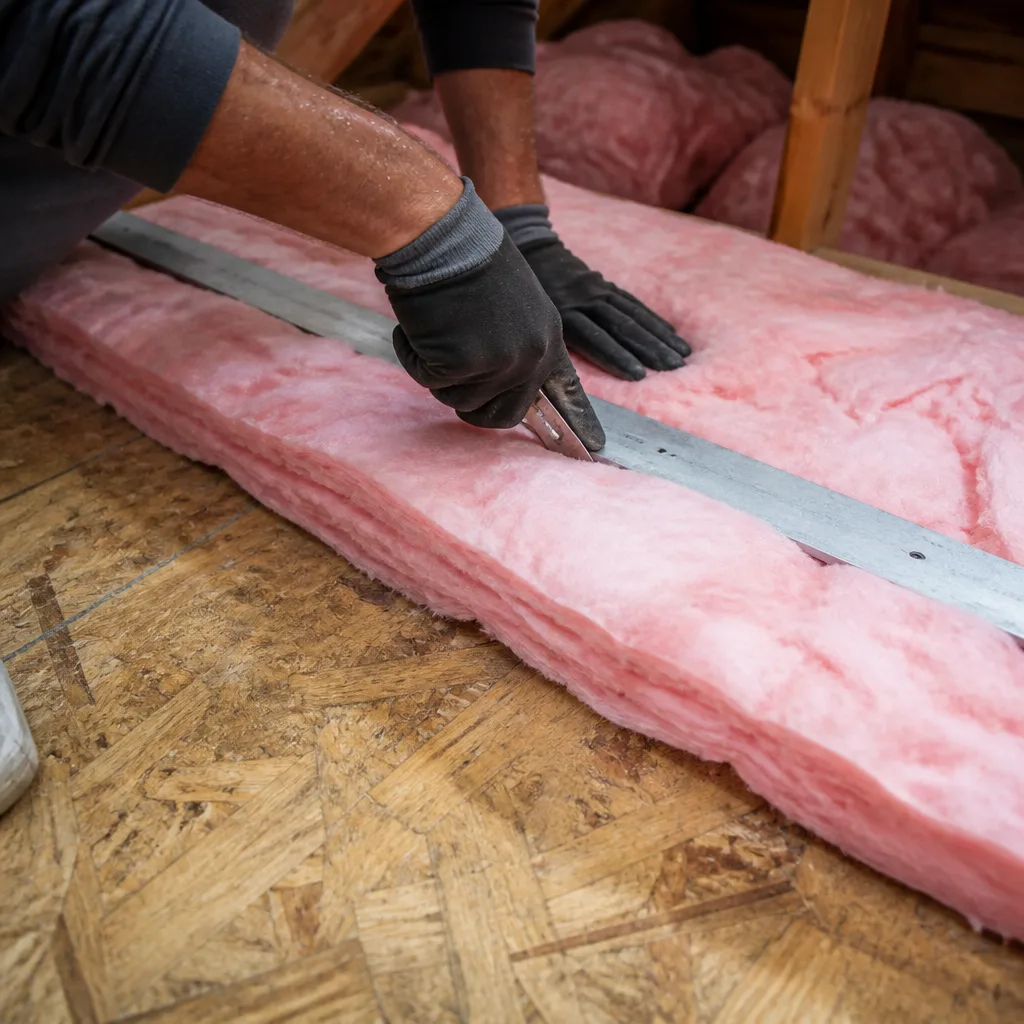
- Uneven room temperatures despite adequate insulation depth. Conditioned air is escaping through bypasses the sealing was meant to block. In Santa Clarita’s summer heat, this shows up as a 6-10 degree split between rooms on the same duct run, especially in two-story homes near Stevenson Ranch where the attic sits above both conditioned floors.
- Dust streaks around ceiling registers or can light trims. These dark lines are filtration soiling, attic air being pulled through gaps by the pressure differential between conditioned space and attic. The Knauf gasket or Ecoseal bead has cracked, shrunk, or pulled away from the penetration edge.
- Ice damming or moisture staining on north-facing eaves in winter. Even Santa Clarita’s mild winters produce enough temperature differential for warm, moist attic air to condense on cold sheathing when bypasses let conditioned air leak upward. The Ecoseal at the top plate is the usual culprit in homes built 2015-2019.
- Blower-door test showing minimal improvement after insulation upgrade. We see this when another contractor blew in cellulose or fiberglass over existing Knauf sealing without inspecting it first. The insulation hides the failure; the air leakage number barely moves. Our pre-job test catches this before we start.
- Musty odors after Santa Clarita’s rare heavy rain events. Wind-driven rain finds its way through soffit vents, and if the Knauf sealing at the wall-to-attic junction has gaps, moisture migrates into conditioned space through the bypass path. This is less common but more serious, as it can precede mold.
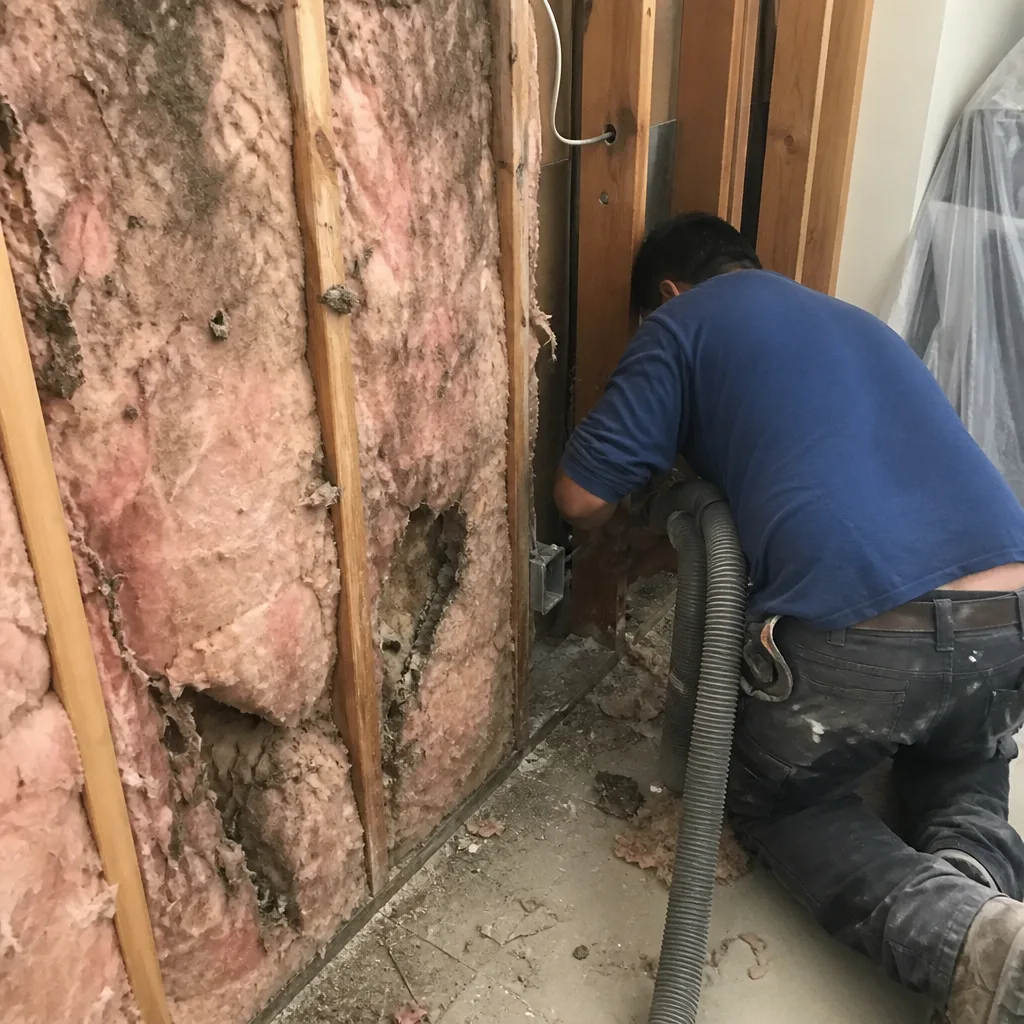 Before
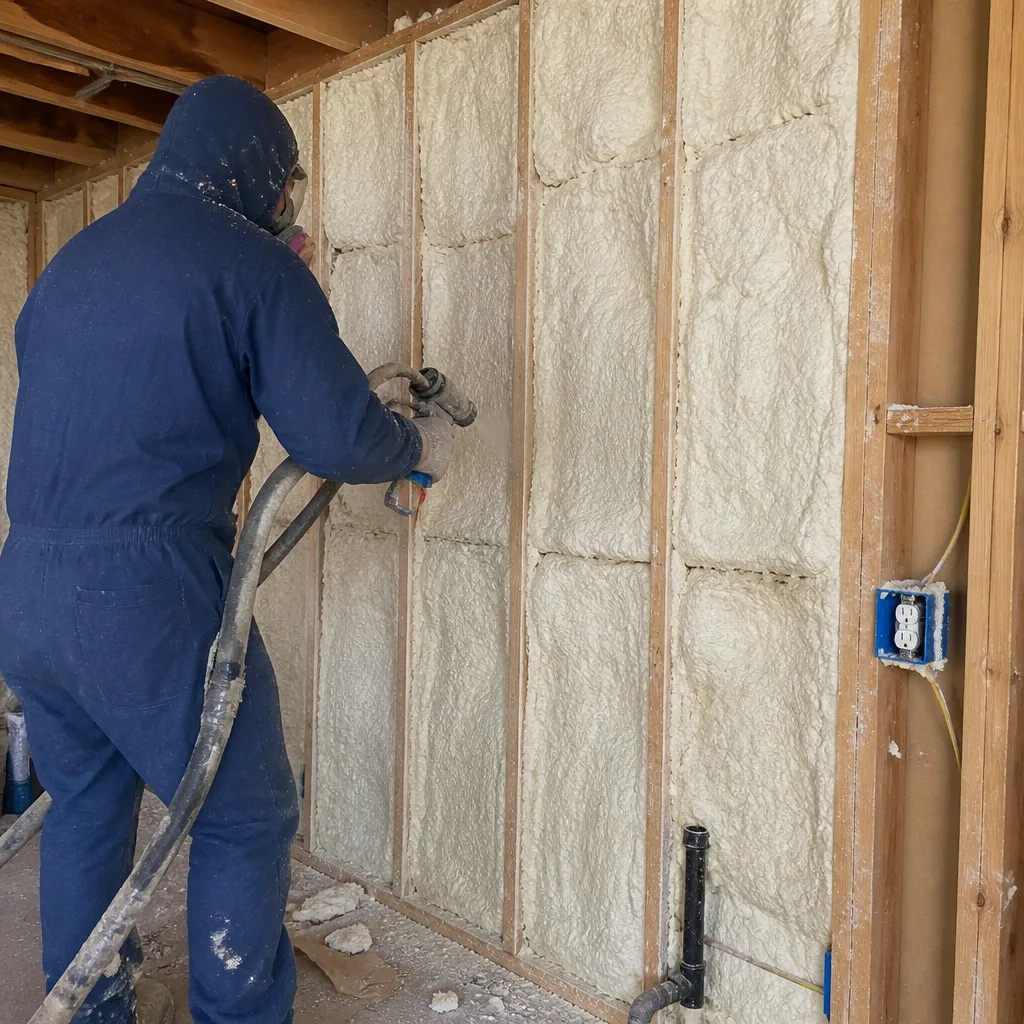 After
AfterReplacement Cost & What’s Included
Most Knauf attic air sealing replacements in Santa Clarita fall between $850 and $2,400 installed. The low end covers a single-story ranch under 1,200 square feet with straightforward access and under 20 penetrations to seal. The high end reaches two-story homes over 2,500 square feet with complex rooflines, numerous can lights, and a chimney or two flues requiring fire-rated sealant detail work.
What drives the range: attic square footage, penetration count (each can light, duct boot, wire hole, and top plate junction adds labor), accessibility (truss spacing, existing insulation depth that must be moved and replaced), and whether we’re matching existing Knauf product or switching series. Our price includes Knauf OEM material or equivalent, labor, moving and replacing existing insulation, and cleanup. We do not charge separately for the blower-door test; it’s included because we won’t seal what we haven’t measured first.
Every job closes with a written invoice, a Documented Photo Record of the sealed areas, and printed before-and-after blower-door numbers. The 365-Day Done Right Promise applies: if air leakage rises above our post-job number within a year, we return and fix it. Haven Standard Clause 1 means you get that written price before anyone lifts a tool.
DIY or Call Us?
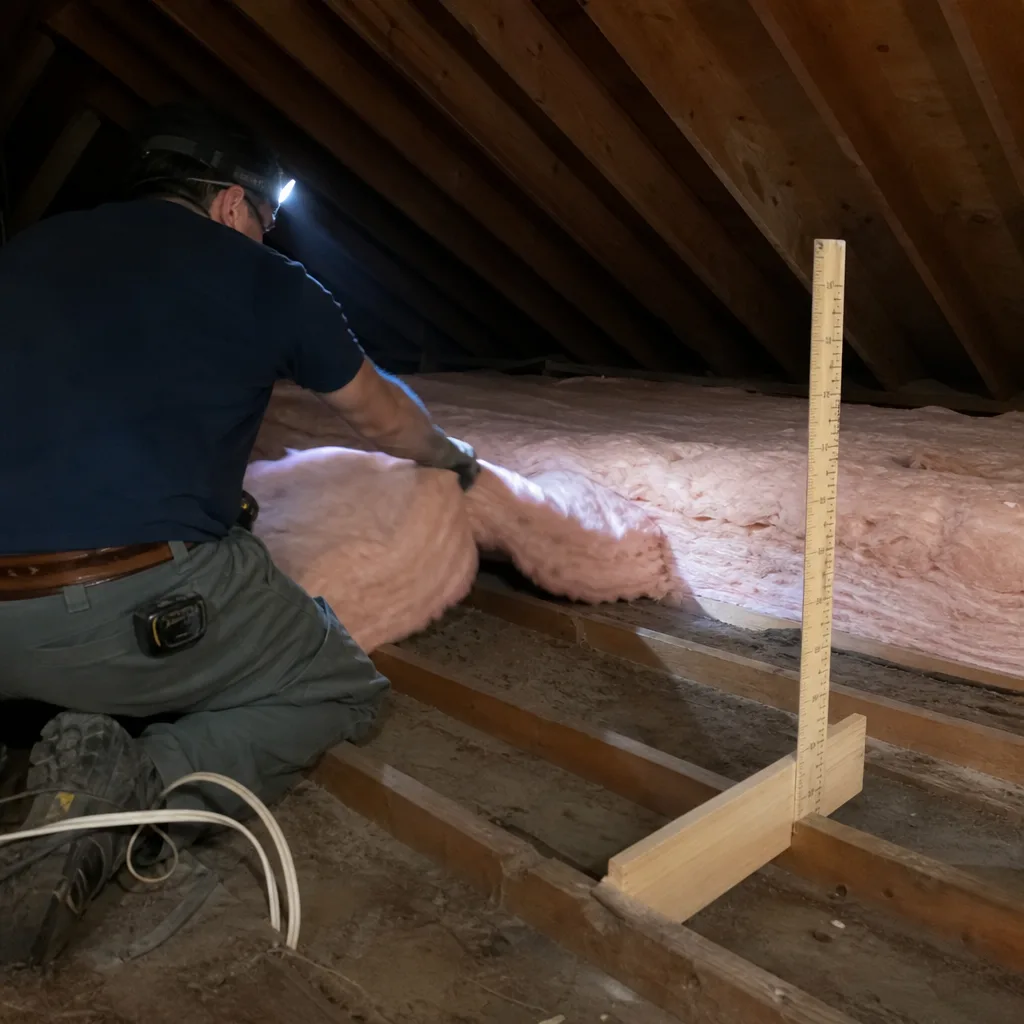
There’s safe checking, and then there’s the work itself.
An owner can safely verify which Knauf product is installed by reading labels on accessible joists or penetration edges from the attic hatch with a flashlight. You can also run a simple smoke pencil test: on a windy day, hold a lit incense stick near ceiling registers and can lights from below; disturbed smoke suggests bypasses. Document what you find with photos.
The actual replacement is different. Attic work involves heat stress, confined spaces, and the risk of disturbing electrical junctions or knocking loose old vermiculite insulation. More critically, effective air sealing requires a blower-door test to locate leaks you cannot see, and another to confirm the fix. Without that measurement, you’re guessing. We’ve been called to Santa Clarita homes where a well-meaning owner spent a weekend with caulk and still showed 3,800 CFM50 on our test. The report goes home with you. The numbers don’t lie, and you shouldn’t have to take anyone’s word for it.
Call (747) 294-2764 for a free estimate. We’ll read your existing setup, give you a written price, and schedule when it works for you.
FAQs
Properly applied Knauf Ecoseal lasts 15-20 years in Santa Clarita’s dry climate, though the 110°F+ attic summers can accelerate surface aging. Gasket materials typically need inspection at 10-12 years. Call (747) 294-2764 for a free assessment if your home is approaching that age.
Spot repairs work for isolated cracks in otherwise sound Ecoseal beads, but only if the original material is identified correctly and the substrate is clean. We see more failures from incompatible patch materials than from age. For widespread degradation or homes where the original installer missed major bypasses, full replacement is the cost-effective route. Call (747) 294-2764 and we’ll tell you which category you’re in.
Most single-story homes in Santa Clarita take one crew day; two-story or complex rooflines run into a second day. That includes setup, moving existing insulation, sealing, replacing insulation, and the before-and-after blower-door test. We don’t skip the test to save time.
Yes. We carry Ecoseal Latex, Ecoseal LC, and the full gasket size range in our Santa Clarita warehouse. Same-day service is available for standard configurations; specialty orders arrive within two business days. Call (747) 294-2764 to confirm availability for your specific model.
Written by Wes Okafor, Owner, Topside Attic Insulation Santa Clarita at Topside Attic Insulation Santa Clarita, serving Santa Clarita and nearby areas.