
Owens Corning Crawl Space Encapsulation: The Santa Clarita Owner’s Guide
Most Owens Corning crawl space encapsulation systems we install in Santa Clarita run between $3,800 and $7,200 for a complete vapor barrier, seam sealing, and conditioning setup, depending on square footage and whether the foundation needs mechanical dehumidification. We stock Owens Corning-compatible 12-mil and 20-mil reinforced polyethylene barriers, plus the specialized seam tape and mechanical fasteners that match their system specs, and we can usually inspect and quote same-day. Homeowners typically figure out something’s wrong when they notice a sharp musty smell climbing from the crawl space into the living area, or their hardwood floors start cupping near exterior walls during Santa Clarita’s dry summer heat - signs that moisture is migrating up through a compromised or improperly sealed barrier.
Which Owens Corning Models This Applies To
Owens Corning doesn’t sell crawl space encapsulation as a single branded “system” with a model number the way they do with insulation batts. Instead, they specify material grades: the 12-mil reinforced polyethylene for standard vapor barrier applications, and the 20-mil for high-traffic or rodent-prone crawl spaces common in older Santa Clarita neighborhoods like Newhall and Canyon Country. The compatibility gotcha is seam tape chemistry - Owens Corning’s specified tape uses a butyl-rubber adhesive that bonds to their barrier’s polyethylene coating; generic duct tape or even some “vapor barrier tapes” will off-gas and delaminate in 18-24 months, especially with the thermal cycling we see here between 45°F winter nights and 105°F summer days.
To identify what you’ve got, look for the Owens Corning logo printed in the corner of the barrier sheet, or check for a 6-inch grid pattern woven into the reinforcement scrim - aftermarket barriers often skip the grid or use a 12-inch pattern. If your existing barrier is failing at seams or pulling from the sill plate, the original installer may have used non-OEM tape or skipped mechanical fastening at the foundation wall transition. We carry both the Owens Corning-specified butyl tape and a commercial-grade equivalent that matches the same ASTM E1745 Class A permeance rating, and we’ll show you both so you can decide.
Signs Your Owens Corning Crawl Space Encapsulation Is Failing
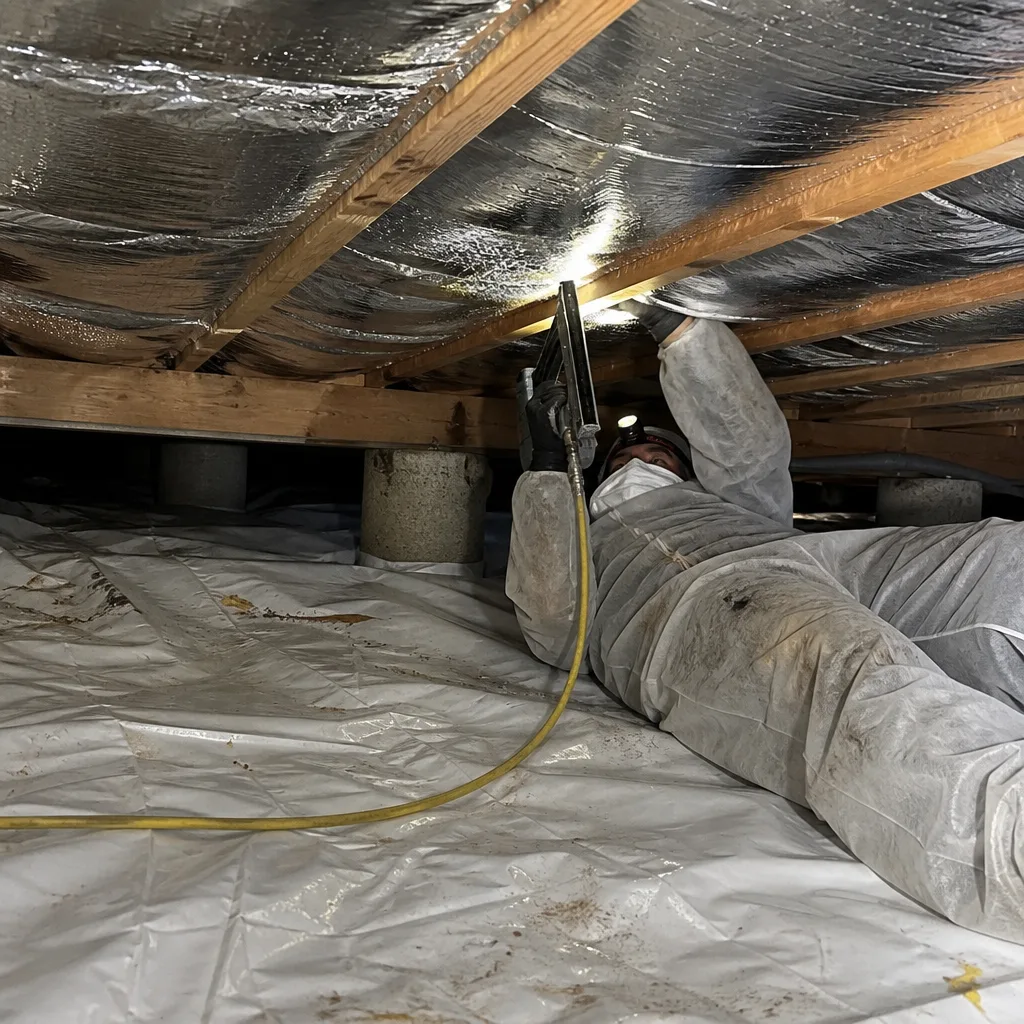
- Musty odors rising into living spaces. When the vapor barrier tears at seams or pulls from piers, soil moisture evaporates directly into the crawl space air. That humid air finds every penetration into the conditioned space above - in Santa Clarita, we see this most often in ranch-style homes with floor registers that weren’t sealed to the subfloor.
- Hardwood floor cupping or laminate bubbling near exterior walls. Moisture migrating upward through gaps in the barrier raises the equilibrium moisture content of the subfloor. The boards swell on the bottom face first, creating a concave “cup” profile that’s often mistaken for plumbing leaks.
- Condensation on ductwork or insulation in the crawl space. A properly sealed barrier keeps the crawl space air close to the temperature of the soil below and the conditioned space above. When sealing fails, summer humidity hits the cold duct surface and drips - we’ve found rusted collar ties and compromised flex duct this way in homes near the Santa Clara River wash where water tables run higher.
- Increased pest activity or rodent trails on the barrier surface. Tears in the barrier create access to the soil and nesting material. The 20-mil Owens Corning-specified barrier resists gnawing better than 6-mil builder-grade poly, but a seam gap at a pier block is an open door either way.
- Your dehumidifier runs constantly or can’t reach setpoint. A 70-pint dehumidifier in a 1,200-square-foot crawl space should cycle normally if the envelope is sealed. If it’s running 20+ hours daily, the load calculation assumed a sealed space - and yours isn’t anymore.
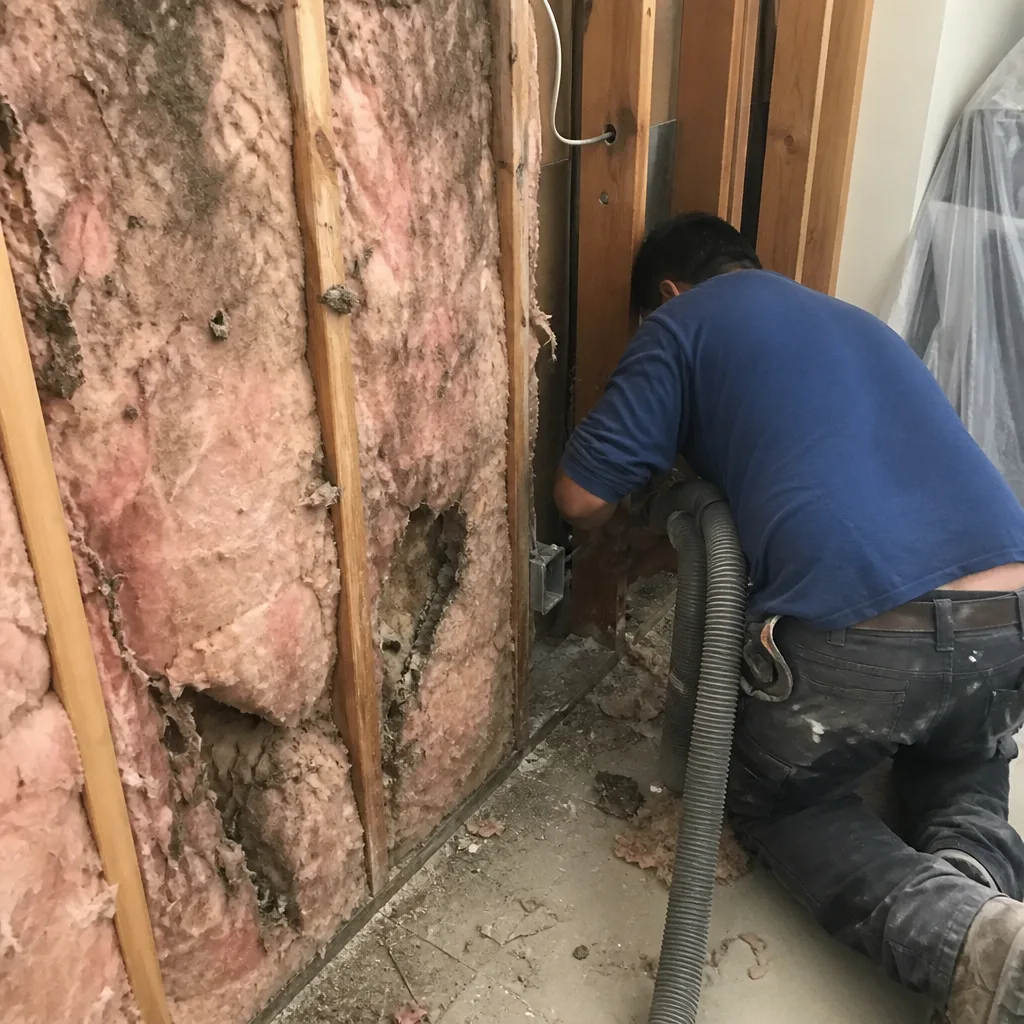 Before
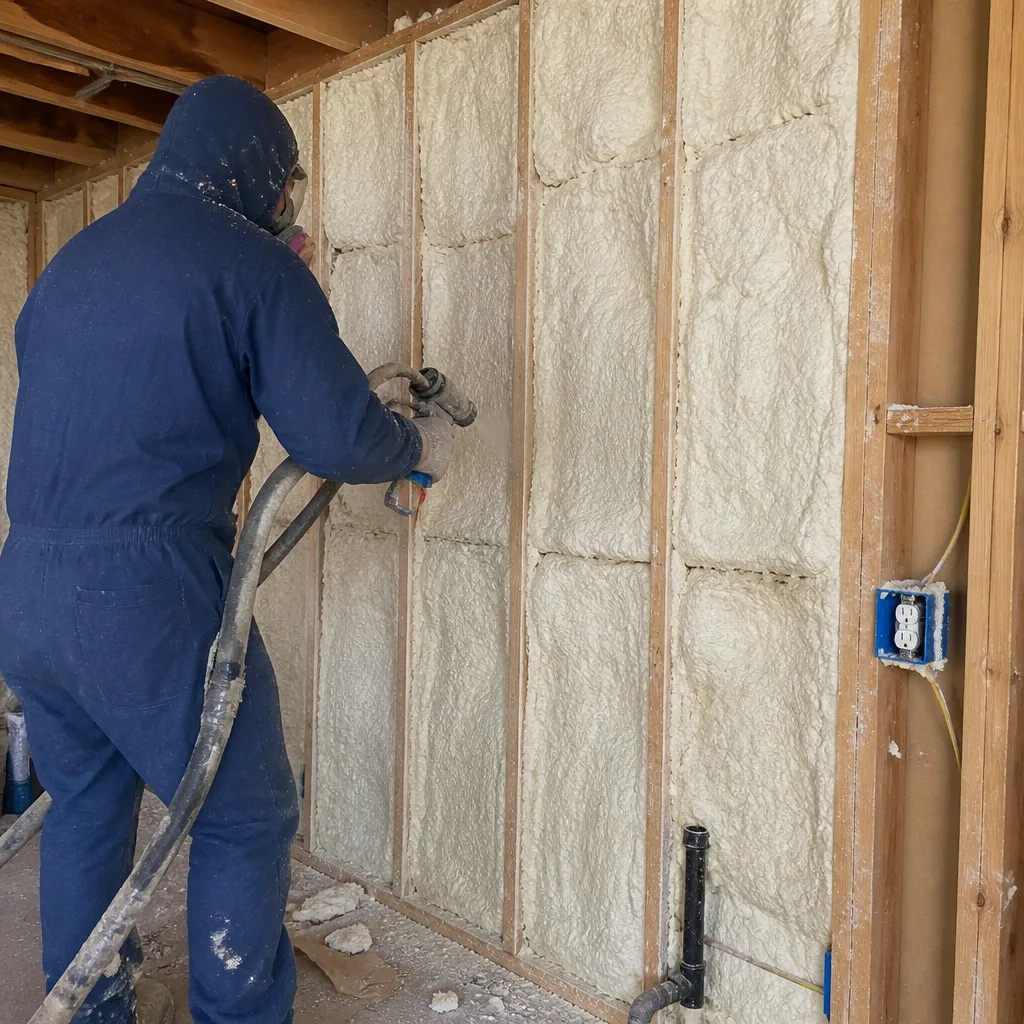 After
AfterReplacement Cost & What’s Included
In Santa Clarita, a full Owens Corning-compatible encapsulation replacement runs $3,800-$5,400 for crawl spaces under 1,000 square feet with good access, and $5,800-$7,200 for larger footprints or those requiring dehumidifier installation. The range depends on three things: barrier grade (12-mil versus 20-mil), whether we need to remove and dispose of the failed existing barrier, and if the foundation walls show efflorescence that needs cleaning before new material goes down.
Every quote we write breaks out material, labor, and any mechanical components separately - Haven Standard Clause 1, flat price in writing before any work starts. The installed price includes the reinforced barrier, butyl seam tape, mechanical fastening at sill plates and piers, and a post-installation inspection with photos. We warranty the installation workmanship for 365 days under our Done Right Promise; material defects fall to the manufacturer’s spec. If you bring us a competing written estimate, we’ll review it line-by-line at no charge - our Free Second Opinion.
DIY or Call Us?
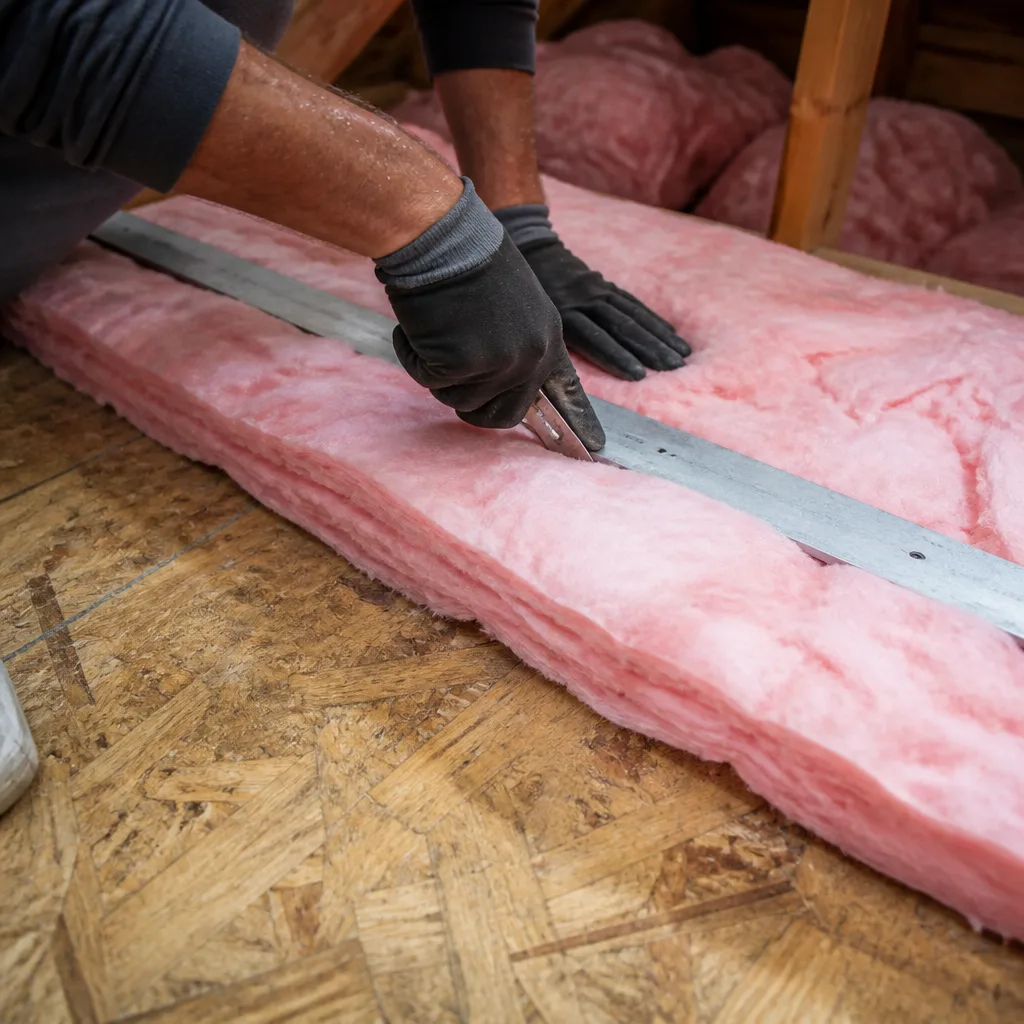
There’s no high-tension danger in crawl space encapsulation the way there is with garage door springs, but there’s a lot of ways to do it wrong and only one way that holds up. A homeowner can safely check for obvious tears, standing water, or disconnected dehumidifier drains. What you can’t see from the access hatch is whether the sill plate was properly sealed with closed-cell foam before the barrier went in, or if the pier wraps were done with the “burrito fold” that keeps water from tracking up the post - and if those steps were skipped originally, laying new poly over the top just traps moisture against the wood.
Santa Clarita’s clay-heavy soils in areas like Saugus and Sand Canyon also mean vapor drive is stronger here than in sandier coastal zones; a 6-mil barrier that might pass in San Diego fails here. We carry the 12-mil and 20-mil Owens Corning-compatible stock on our trucks, and we run a blower-door test on the main house before we start - because a crawl space that’s communicating with the attic through bypasses will defeat any barrier you put down. Call (747) 294-2764 for a written price; estimates are free and the scope is in your hands before we lift a tool.
FAQs
A properly installed 12-mil or 20-mil reinforced barrier with butyl-sealed seams should last 15-20 years in Santa Clarita’s climate, though the thermal cycling between summer highs and winter lows can stress seam tape at pier transitions starting around year 12. We inspect seam integrity as part of any service call and re-tape before failure. Call (747) 294-2764 if you’re in the 10-year window and want a condition check - estimates are free.
Localized tears under 6 inches can be patched with compatible butyl tape and an overlay patch of matching material, but if you’re seeing multiple seam failures, widespread embrittlement, or if the original installer used non-OEM tape, replacement is the cost-effective call. We’ve done patch jobs in Santa Clarita that looked fine at six months and failed again at 14 because the underlying tape chemistry was wrong. We stock both patch materials and full replacement rolls; we’ll show you what we find and write a price for either path.
Most residential crawl spaces in Santa Clarita - 800 to 1,400 square feet with standard access - take one to two days. Day one is removal, surface prep, and any sill-plate air sealing; day two is barrier installation, seam taping, and mechanical fastening at piers and walls. Larger footprints or crawl spaces with limited headroom (under 18 inches) add time. We give you a written schedule with the price, and we text when the crew is en route.
We carry 12-mil and 20-mil reinforced polyethylene barriers, butyl seam tape, and mechanical fasteners on every truck - no ordering delay. For Owens Corning specifically, we use material that matches their specified ASTM ratings; we are an independent service provider and not affiliated with Owens Corning, but we’ve worked with their product specs long enough to know the compatibility requirements cold. Same-day inspection and next-day installation is standard in Santa Clarita; call (747) 294-2764 to book.
Topside Attic Insulation Santa Clarita also stocks parts for Reflectix radiant barrier systems if your building envelope includes multiple material types.
Written by Wes Okafor, Owner, Topside Attic Insulation Santa Clarita at Topside Attic Insulation Santa Clarita, serving Santa Clarita and nearby areas.