
Rockwool Radiant Barrier Installation: The Santa Clarita Owner’s Guide
Rockwool radiant barrier installation in Santa Clarita typically runs $2,800-$4,200 for a complete attic system on a 1,500-2,500 square foot home, and we stock the full Rockwool AFB, Comfortbatt, and Safe’n’Sound lines for same-day starts. Most homeowners figure out something’s wrong when their upstairs bedrooms won’t cool below 78°F even after sunset, or when their July electric bill jumps 30% year-over-year despite the AC never shutting off.
Which Rockwool Models This Applies To
Rockwool doesn’t manufacture a standalone radiant barrier product, which is the first compatibility gotcha we see in Santa Clarita attics. What Rockwool does make is high-density stone wool insulation, typically the Comfortbatt (for wood studs) or AFB (acoustical fire batt) lines, that gets paired with a separate radiant barrier layer, usually foil-faced polyiso or a perforated aluminum product like Reflectix. The match matters: Comfortbatt R-23 at 5.5 inches compresses poorly, so your radiant barrier substrate needs to be rigid foam, not a flexible roll product that’ll gap at the rafter bays. Check your existing batts for the black-and-tan Rockwool label with the density rating, 2.5 pcf for Comfortbatt, 4.0 pcf for Safe’n’Sound. If you’re retrofitting over existing loose-fill, we measure net free attic area first; Rockwool’s weight at 1.6-2.0 pounds per square foot at R-30 can oversag 24-inch truss spacing if the barrier deck isn’t structural.
Topside Attic Insulation Santa Clarita is an independent service provider, not affiliated with Rockwool. We source Rockwool through standard distribution alongside Owens Corning, Johns Manville, and the other brands we carry. For the radiant barrier component itself, we typically spec a perforated, double-sided aluminum product that won’t trap moisture against the stone wool; the unperforated stuff fails first in Santa Clarita’s dry heat because it turns the attic into a vapor barrier sandwich.
Signs Your Rockwool Radiant Barrier Installation Is Failing
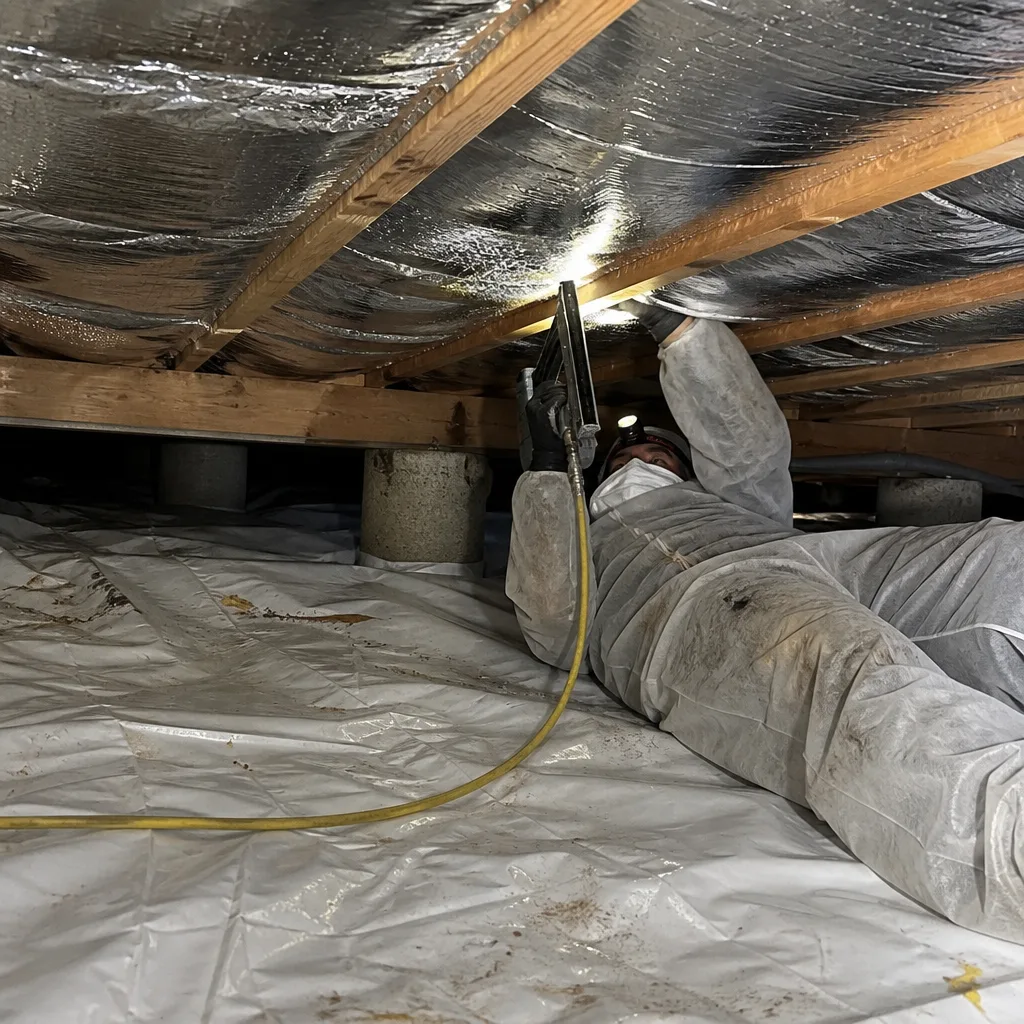
- Hot ceiling patches at midday. If you can trace the rafter bays with your hand on the drywall and feel stripes of heat, the radiant barrier has detached or was never continuous at the ridge. Rockwool batts don’t stop radiant heat transfer; they slow conductive loss. Missing foil means 160°F roof decking is radiating straight through.
- AC runs continuously from 2 PM to 8 PM. Santa Clarita’s solar load peaks late afternoon. A properly installed radiant barrier drops attic surface temperatures 20-35°F; without it, your ducts in the attic are swimming in 140°F air and the system never catches up.
- Dust streaking at ceiling penetrations. This one’s often misread as a duct leak, but it’s actually thermal bypass: the Rockwool settled or the barrier tore at a top plate, and now conditioned air is escaping into the attic, pulling attic dust back through the drywall gaps. We find this constantly in Canyon Country homes built 2005-2012.
- Musty smell after Santa Clarita’s rare heavy rain. Stone wool is hydrophobic and won’t mold, but if the radiant barrier was installed as a vapor barrier on the wrong side, condensation forms at the cold plane in winter. The fix isn’t replacing the Rockwool; it’s reconfiguring the barrier assembly.
- Visible sag or compression in the batts. Rockwool Comfortbatt holds its shape better than fiberglass, but if your original installer stuffed R-30 into a 2×6 rafter bay, the radiant barrier foil is now buckled and creating air gaps. Compressed insulation loses 30-50% of its rated R-value, and the barrier can’t reflect what it can’t see.
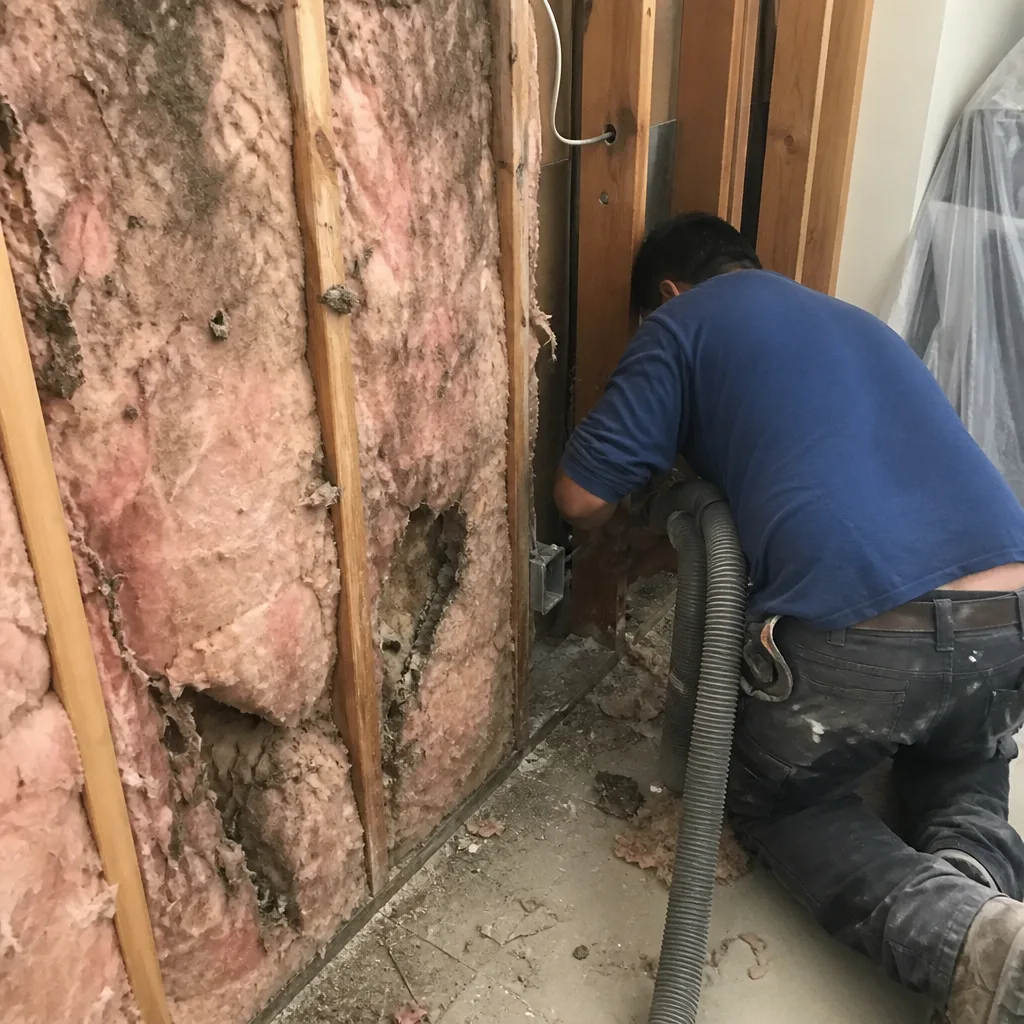 Before
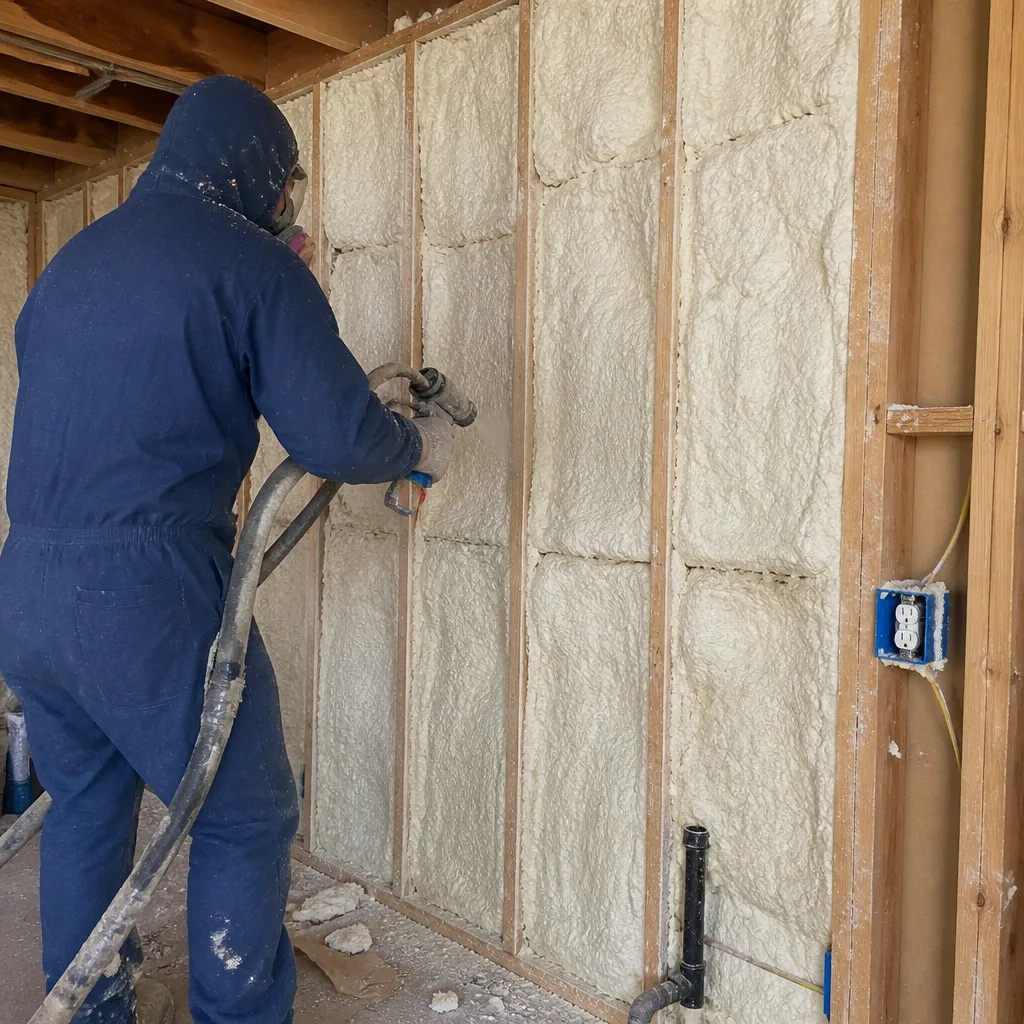 After
AfterReplacement Cost & What’s Included
Most Rockwool-plus-radiant-barrier retrofits in Santa Clarita fall between $2,800 and $4,200 for attics in that 1,500-2,500 square foot range. The low end assumes accessible attic space, intact decking, and a straightforward barrier-over-batt install with minimal air sealing needed. The high end covers vaulted ceilings in Saugus or Sand Canyon with limited headroom, requiring hand-cut batts and extended labor for barrier continuity at the hips and valleys.
Every job starts with a written price before any work starts, per Haven Standard Clause 1. That price includes the Rockwool batts, perforated radiant barrier material, mechanical fasteners (never just staples that pull through in Santa Clarita’s heat-cycling), top-plate and penetration air sealing, and a Documented Photo Record of the completed assembly. On applicable jobs, we run a blower-door test before and after, a pressurization reading that shows, in one number, how much conditioned air your envelope was losing. The report goes home with you. The numbers don’t lie, and you shouldn’t have to take anyone’s word for it.
DIY or Call Us?
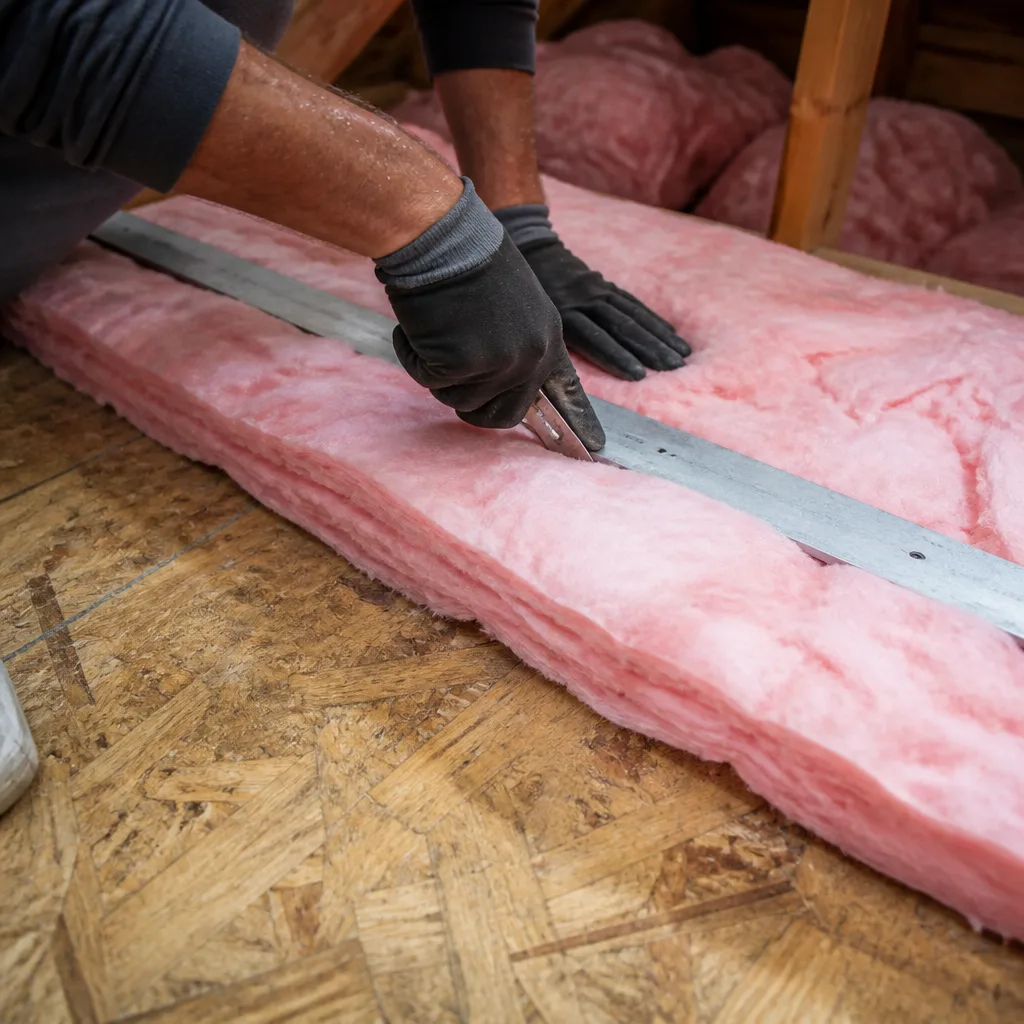
There’s no high-tension danger here like a garage door spring, but there are two honest ways DIY goes sideways in a Santa Clarita attic. First, radiant barrier effectiveness depends on emissivity and proper air gap geometry; most homeowner installs we see have the foil pressed against the roof deck or the insulation, which kills the reflectivity and can trap moisture. Second, Rockwool is itchier than fiberglass and denser to cut; without a proper respirator and a serrated blade, you’ll end up with compressed batts and gaps at the perimeter.
What you can safely check: go up on a cool morning and look for torn or detached barrier at the ridge, and measure any settled batts against the rafter depth. If the barrier’s intact and the Rockwool fills the bay without compression, you may just need air sealing at the top plates. If anything’s missing, torn, or compressed, call (747) 294-2764. We’ll read your situation with you, no charge for the assessment.
FAQs
In Santa Clarita’s climate, properly installed stone wool batts last 50+ years without settling, but the radiant barrier foil degrades faster, typically 15-25 years before emissivity drops measurably. The critical failure point is usually the fasteners or tape, not the foil itself; Santa Clarita’s 120°F attic peaks in summer cycle the adhesive until it lets go. Call (747) 294-2764 and we can inspect attachment integrity during a free estimate.
Patch repairs work if the foil tear is small and the Rockwool beneath is still full-depth and dry. We tape tears with aluminum-backed tape rated for 200°F, but if the barrier has detached across multiple bays or the batts have shifted, partial replacement costs nearly as much as a proper redo because the labor is in the access and fitting, not the material. We give you both options in writing before any work starts.
Most Santa Clarita attics take one full day for a crew of two; complex rooflines or attics with HVAC equipment to work around push to a day and a half. We air seal first, then install the Rockwool, then hang the barrier, then verify with a blower-door test if the scope includes it. You’ll get a written schedule with your written price, and a text when the crew is on the way.
We stock Comfortbatt in R-15, R-23, and R-30, plus AFB for fire-rated assemblies, and perforated radiant barrier rolls in 4- and 6-foot widths. Same-day starts are standard for Santa Clarita calls booked before 10 AM. For less common densities or Safe’n’Sound for interior partition work, we pull from distribution in the San Fernando Valley and typically have it next morning.
Ready to get your attic performance on paper? Call (747) 294-2764 for a free estimate. We’ll measure your space, identify your existing Rockwool line if it’s already in place, and give you a written price before any work starts. Every job closes with a Documented Photo Record, and on applicable work, before-and-after blower-door numbers you can hold in your hand.
Written by Wes Okafor, Owner, Topside Attic Insulation Santa Clarita at Topside Attic Insulation Santa Clarita, serving Santa Clarita and nearby areas.