
Crawl Space Vapor Barrier in Santa Clarita, CA
A crawl space vapor barrier is a thick polyethylene sheet installed across the soil floor – and often up the foundation walls – of your home’s crawl space to block ground moisture before it migrates into the structure above. Most Santa Clarita homes with vented crawl spaces need one, and many that already have a thin plastic sheet installed need an upgrade to a mil-rated barrier that actually does the job. At Topside Attic Insulation Santa Clarita, we’ve been installing Crawl Space Encapsulation & Vapor Barrier services in homes across the Santa Clarita Valley since 2016, every job starting with a written price and ending with a documented photo record – no exceptions.
If you’re seeing condensation on floor joists, noticing a musty smell that climbs through the subfloor, or watching your hardwood floors cup slightly during warmer months, ground moisture is likely the culprit. This page explains what a vapor barrier installation involves here in Santa Clarita specifically, what it costs, and what you’ll have in hand when we leave. To understand how vapor barrier work fits into a broader crawl space solution, see our Crawl Space Encapsulation & Vapor Barrier in Santa Clarita page.
To schedule a free estimate or ask a quick question, call (747) 294-2764 – a live person picks up, not a voicemail system.
When You Need a Crawl Space Vapor Barrier
Not every crawl space problem looks dramatic from the outside. Several quiet signals point to a moisture intrusion that a properly installed vapor barrier can stop at the source.
- Musty or earthy odors inside the living space. When Santa Clarita homes in the Bouquet Canyon and Sand Canyon corridors sit over bare or thinly covered soil, the smell of damp earth works its way up through subfloor penetrations and HVAC returns. A properly lapped and sealed barrier eliminates the moisture pathway that feeds that odor.
- Visible condensation or water staining on floor joists. If you shine a flashlight into your crawl space and see dark staining, soft wood, or glistening moisture on the bottom of the subfloor – especially in winter and early spring when the Santa Clarita area gets its rain – the soil is actively releasing moisture vapor into that air pocket.
- Hardwood or engineered-wood floors that cup, buckle, or feel soft in spots. Moisture migrating up from an uncovered crawl space floor raises the equilibrium moisture content of the wood above it. In neighborhoods like Valencia and Stevenson Ranch, where slab-on-grade homes are common but older tract homes on raised foundations are mixed in, this is a frequently overlooked source of flooring damage.
- A thin or torn plastic sheet already in place. Many Santa Clarita homes built before the mid-1990s have a 4-mil or 6-mil poly sheet stapled loosely to the joists or laid flat on the soil. That material degrades, tears at entry points, and leaves large gaps at the perimeter. Current best practice – and California Energy Code language – calls for a 10-mil to 20-mil reinforced barrier that laps up the foundation wall and is mechanically fastened and sealed at every seam.
- High humidity readings in the crawl space. A relative humidity reading above 60% sustained in a crawl space creates the conditions wood-destroying fungus needs to establish. If you’ve had a home inspector note elevated moisture readings, a vapor barrier is the first structural correction – before any insulation work makes sense.
- Recent rodent activity or pest treatment. Pest control operators frequently pull or disturb existing vapor barrier material. After a rodent remediation – a service we also provide through our attic cleaning and rodent proofing work – the barrier typically needs to be replaced rather than patched.
Our Crawl Space Vapor Barrier Process
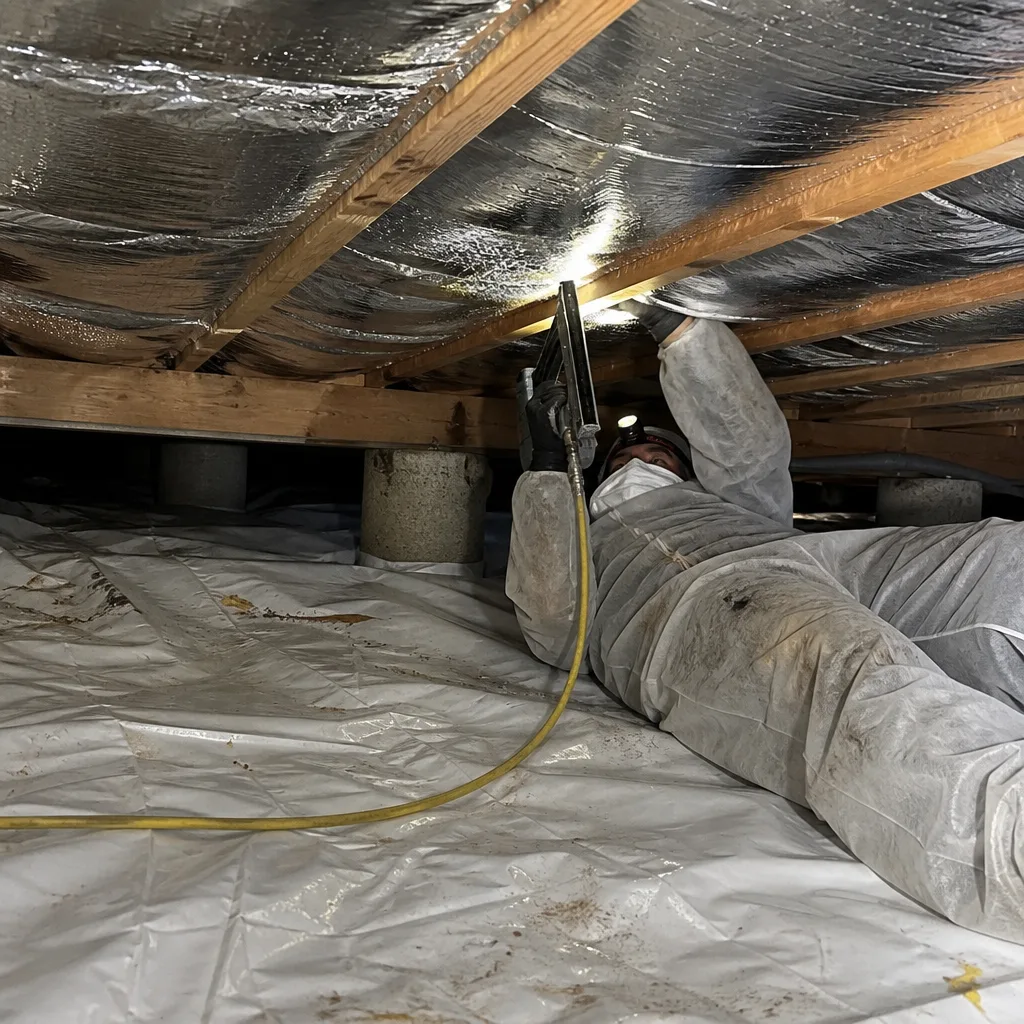
Every vapor barrier job we do in Santa Clarita follows the same sequence. Skipping steps is how the industry delivers installations that fail in two seasons; we don’t skip steps.
- Written scope and price before anyone enters the crawl space. Under Haven Standard Clause 1, you receive a flat written price and a written scope of work before work starts. That document names the barrier product and mil rating, the square footage to be covered, seam-sealing method, and what the crew will do with any existing deteriorated material. No surprises when the job is done.
- Pre-installation crawl space assessment and photo documentation. A uniformed, background-checked technician photographs the existing conditions – current barrier condition (if any), joist moisture staining, standing water, debris, rodent damage, and the condition of the perimeter foundation wall. These photos are yours; they’re part of the Documented Photo Record included on every job.
- Debris removal and surface preparation. Loose material, old plastic sheeting, and debris are removed before anything new goes down. Soil that is visibly wet or has standing water is flagged in writing before we proceed – a drainage or grading correction is a separate scope that has to happen first, and we’ll tell you that clearly rather than lay barrier over a water problem.
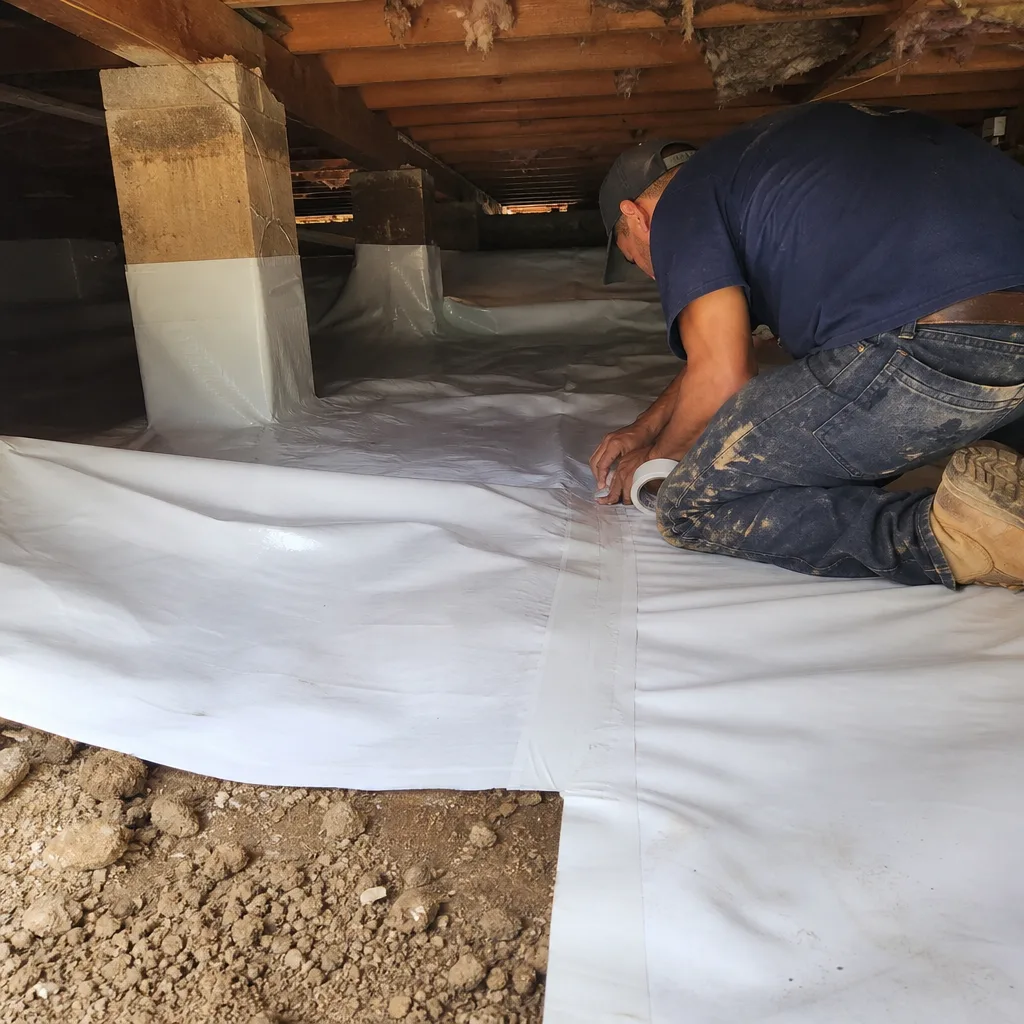
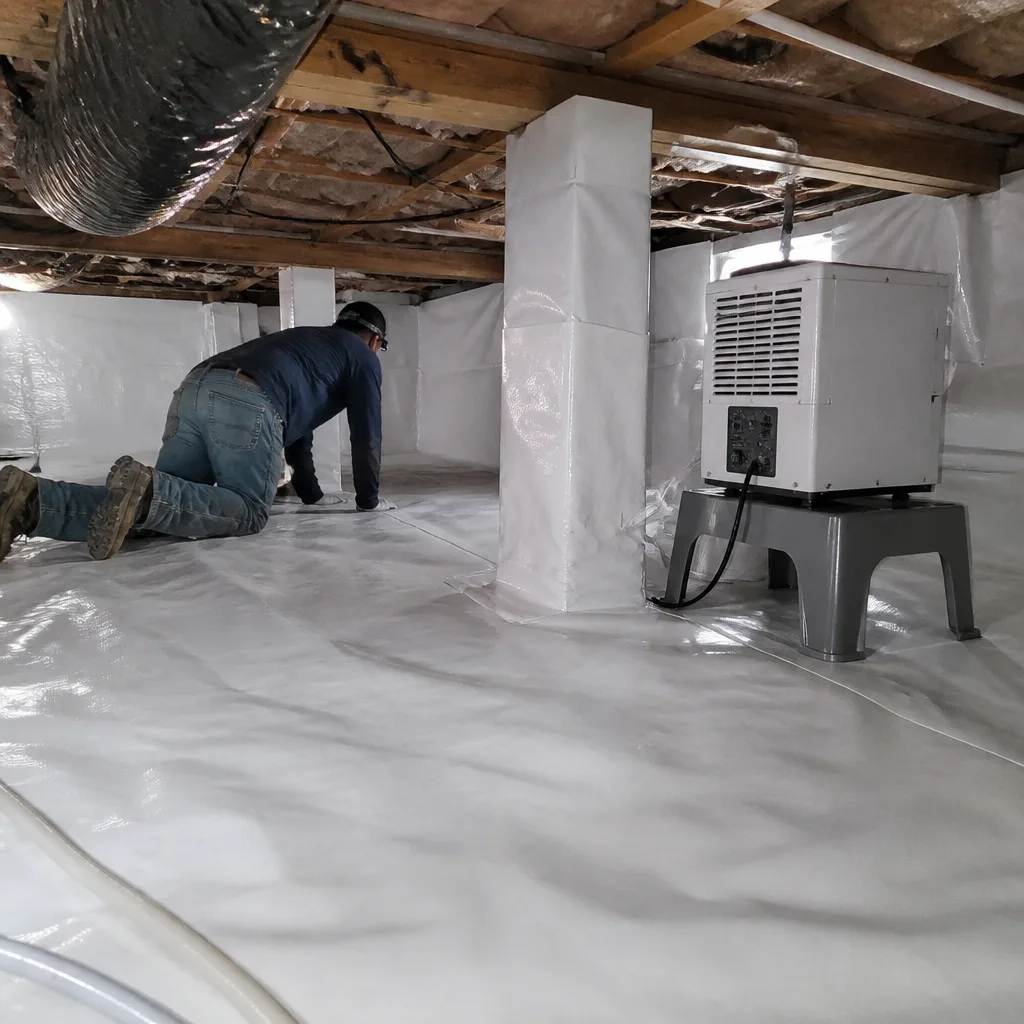
- Barrier installation with proper overlap and wall coverage. We install a reinforced polyethylene barrier at the mil rating specified in your scope – typically 12-mil to 20-mil for Santa Clarita crawl spaces, where the combination of clay-heavy soil and seasonal rain creates meaningful vapor drive. Sheets are overlapped a minimum of 12 inches at seams and run up the foundation wall a minimum of 6 inches, fastened mechanically and sealed with manufacturer-specified tape so the barrier functions as a continuous plane rather than a patchwork.
- Penetration sealing and perimeter fastening. Every pipe, post, and column penetrating the barrier gets cut, fitted, and sealed. Perimeter edges are secured to the foundation wall with termination bar or construction adhesive appropriate to the substrate. This step is what separates a barrier that holds for 20 years from one that fails at the first pest-control visit.
- Post-installation inspection and documented photo record. After the crew finishes, the same technician photographs the completed installation – seams, wall coverage, penetrations, and overall coverage – and that photo set is delivered with your paperwork. You can see exactly what was installed and how. The 365-Day Done Right Promise applies from that day forward: if it’s not done right, we make it right.
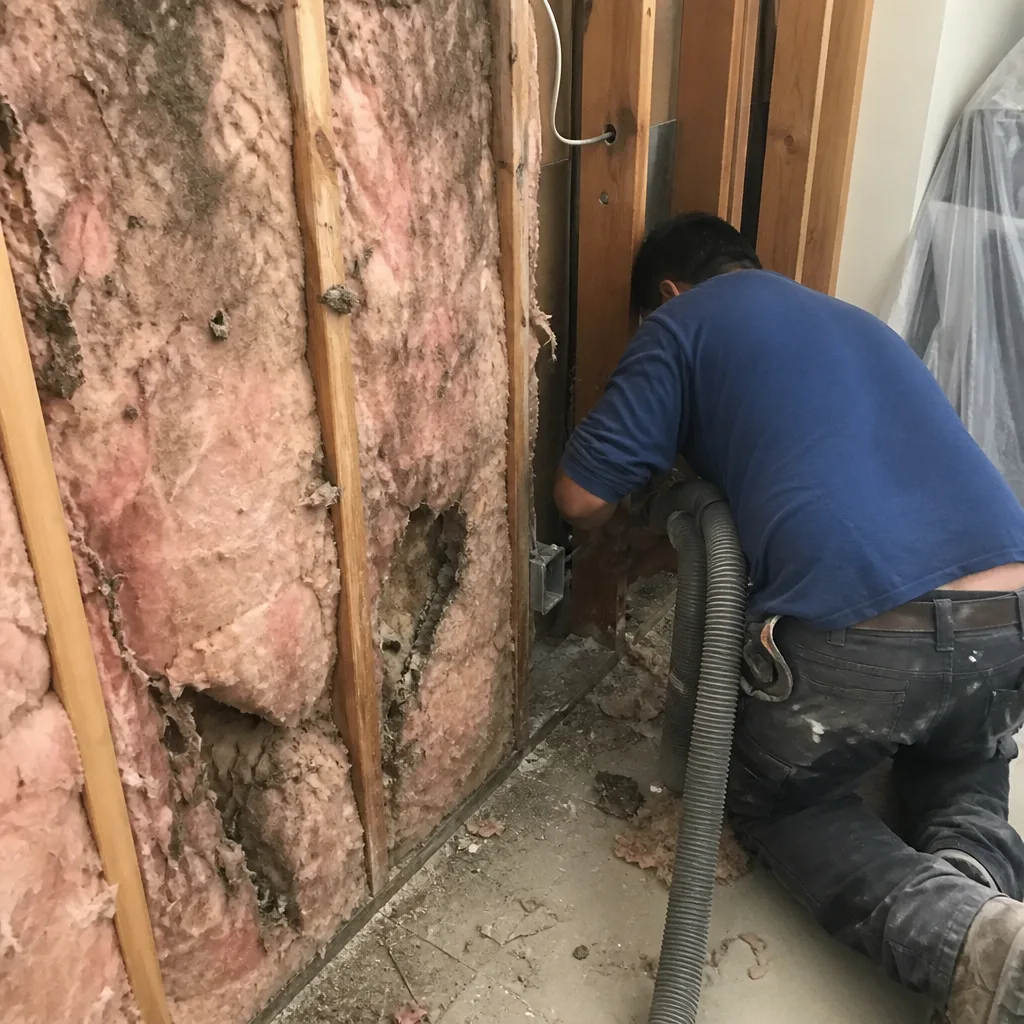 Before
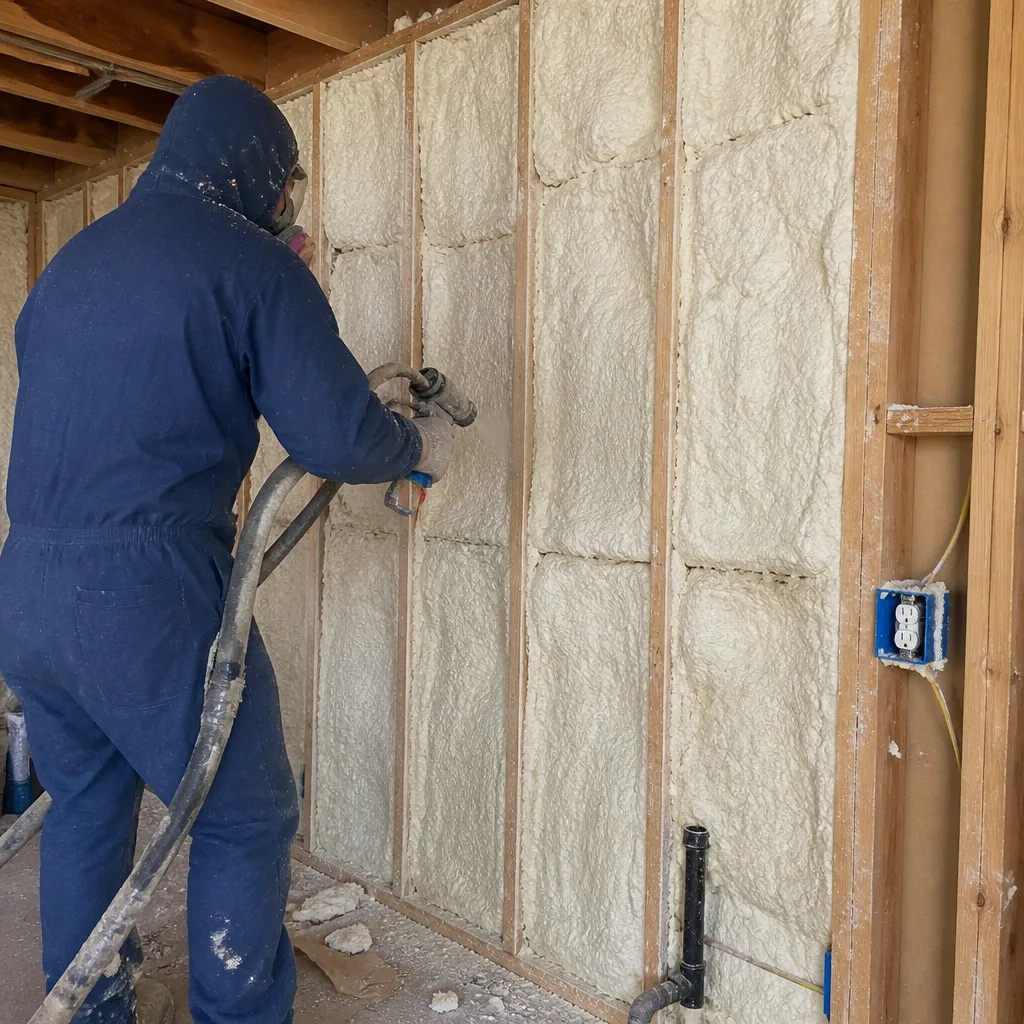 After
AfterCrawl Space Vapor Barrier Pricing in Santa Clarita
How Much Does Crawl Space Encapsulation & Vapor Barrier Cost? (2026 Price Guide) - Santa Clarita, CA: vapor barrier installation in Santa Clarita typically runs between $1,200 and $4,500 for a standard residential crawl space, with most jobs falling in the $1,800 to $3,000 range. That spread is wide because crawl spaces vary significantly – access height, square footage, existing material that needs to be removed, and the mil rating of the barrier all move the number.
| Scope | Typical Range (Santa Clarita market) |
|---|---|
| Small crawl space, clean substrate, 10-mil barrier (up to ~800 sq ft) | $1,200 – $1,800 |
| Mid-size crawl space, minor debris removal, 12-mil barrier (800 – 1,400 sq ft) | $1,800 – $2,600 |
| Large crawl space, existing barrier removal, 20-mil reinforced barrier (1,400+ sq ft) | $2,600 – $4,500 |
| Full encapsulation (barrier + perimeter wall coverage + sealed vents) | $4,000 – $8,500+ |
A few factors that routinely affect the final number in Santa Clarita specifically:
- Crawl space height. Homes in older parts of Newhall and Canyon Country often have crawl spaces under 18 inches of clearance. Restricted-access work takes longer and is priced accordingly – we’ll note the access condition in the assessment.
- Existing material removal. Pulling deteriorated 4-mil or 6-mil poly, especially if it’s been in place since the 1980s and has degraded into fragments, adds labor. The scope document will spell out whether removal is included or quoted separately.
- Mil rating of the barrier. A 10-mil barrier costs less material than a 20-mil reinforced barrier. For homes with clay-heavy soil – common in the eastern Santa Clarita Valley where the soil retains moisture from the winter rain season – we typically recommend at least 12-mil.
- Seam and penetration count. A crawl space with multiple columns, posts, HVAC drops, and plumbing risers requires more cut-and-seal work than an open rectangular space.
You’ll have a flat written price in hand before any work starts. If you’ve already received a written estimate from another contractor, bring it to us – we offer a free second opinion on any written estimate and will read it with you line by line. Call (747) 294-2764 to set up a free on-site estimate at your Santa Clarita home.
FAQs – Crawl Space Vapor Barrier
What thickness of vapor barrier does a Santa Clarita crawl space need?
Most Santa Clarita crawl spaces should have a minimum 10-mil reinforced polyethylene barrier, and we typically install 12-mil to 20-mil depending on soil conditions and how much moisture activity we observe during the assessment. The 6-mil poly common in homes built before 1995 degrades quickly, tears at access points, and leaves gaps at the perimeter that defeat the purpose. California Energy Code references Class I vapor retarders for crawl space floors in Climate Zone 9 – which covers most of the Santa Clarita Valley – and a properly installed 10-mil or heavier barrier meets that requirement. The specific product and mil rating will be named in your written scope before any work starts, so you know exactly what you’re getting. Call (747) 294-2764 if you want a quick phone assessment of what your specific home is likely to need.
Can I install a crawl space vapor barrier myself?
You can lay plastic sheeting yourself, but the installation details that determine whether the barrier actually works – seam overlap, wall termination, penetration sealing, and mechanical fastening – are where DIY installs typically fall short. A barrier that isn’t lapped and sealed at seams allows vapor to migrate through the gaps just as freely as bare soil. We see this regularly on assessment visits in Santa Clarita homes where a previous owner laid barrier material but didn’t tape seams or run the sheet up the foundation wall. If the crawl space is clean, flat, and accessible, a professional installation in Santa Clarita runs $1,200 to $2,600 for most standard sizes – a number that’s easier to evaluate once you’ve seen what proper seam-sealing and perimeter fastening actually requires. There are no genuinely dangerous high-voltage or high-tension components in standard vapor barrier work, but working in a confined, low-clearance space with degraded materials and potential biological hazards from rodent activity does warrant care and protective equipment.
How long does a crawl space vapor barrier last?
A properly installed 12-mil to 20-mil reinforced polyethylene barrier typically lasts 15 to 25 years in a Santa Clarita crawl space, assuming it isn’t mechanically disturbed by pest control activity or plumbing work. Thinner 6-mil poly degrades significantly faster – often within 10 years – particularly in areas with seasonal moisture fluctuation. The photo record we provide at job completion gives you a documented baseline; if a pest control operator or plumber needs to access the space later, you’ll have a reference for what the original installation looked like and whether any repairs are needed afterward. Our 365-Day Done Right Promise covers the installation from day one, and any issue with the installation itself within that period is corrected at no charge.
Is a vapor barrier the same as full crawl space encapsulation?
A vapor barrier covers the soil floor and runs partway up the foundation wall – its primary job is blocking ground moisture vapor. Full crawl space encapsulation adds sealed foundation wall coverage from floor to rim joist, sealed vents, and often a conditioned or actively managed air supply to the crawl space, creating a semi-conditioned environment rather than a vented one. A vapor barrier alone is the right scope for many Santa Clarita homes, particularly those with vented crawl spaces in decent condition where the primary concern is soil moisture. Encapsulation makes more sense when the crawl space will be used for storage, when an existing vapor barrier has failed repeatedly, or when the home has chronic humidity-related issues in the living space above. Our Crawl Space Encapsulation & Vapor Barrier in Santa Clarita page walks through that distinction in more detail. For a specific recommendation based on your home, call (747) 294-2764 – the assessment visit is free and you’ll have a written price in hand before we start anything.
Why Santa Clarita Homeowners Choose Topside Attic Insulation
Santa Clarita’s climate runs hotter and drier than most of Southern California for much of the year, but the wet season – typically November through March – delivers enough rainfall to drive real soil moisture into crawl spaces built on the clay-heavy decomposed granite common in the eastern valley. Homes in Saugus, Canyon Country, and the older Newhall corridor were frequently built with minimal or no crawl space moisture management. We’ve assessed hundreds of them since 2016.
What we find, consistently, is that thin poly sheeting installed at original construction has torn at foundation vents, been disturbed by pest control operators, and left 30 to 40 percent of the soil floor uncovered. That uncovered soil is where the moisture problem lives. Installing Crawl Space Insulation over an unsealed, inadequately covered crawl space floor is exactly the kind of work we don’t do – the sequence matters, and ground moisture has to be addressed before thermal performance work starts.
Every job we complete in Santa Clarita leaves the homeowner with three documents: a written scope of what was done, the post-installation photo record, and the 365-Day Done Right Promise in writing. Those aren’t extras we offer on request – they’re how every job closes, under The Haven Standard that Wes Okafor built this company around in 2016.
Envelope Insulation Co. sources barrier materials from manufacturers including Johns Manville and CertainTeed, among others. We don’t lock you into a proprietary product line – the material named in your written scope is the material installed.
If you have a written estimate from another contractor and want a second read on what it actually includes – barrier mil rating, seam-sealing method, wall coverage height, what happens to existing material – bring it in. The second opinion is free, and it takes about 15 minutes.
Key Takeaways
- Most Santa Clarita crawl spaces need at least a 12-mil reinforced vapor barrier; the 6-mil poly common in pre-1995 homes is undersized and typically degraded.
- Vapor barrier installation runs $1,200 to $4,500 in the Santa Clarita market; most standard jobs fall between $1,800 and $3,000.
- A flat written price is in your hands before any work starts – Haven Standard Clause 1, no exceptions.
- The completed job comes with a Documented Photo Record and the 365-Day Done Right Promise in writing.
- Vapor barrier and full encapsulation are different scopes; we’ll tell you which your home actually needs after the assessment, not before.
- We offer a free second opinion on any written estimate from another contractor.
Get a Free Vapor Barrier Estimate in Santa Clarita
If your Santa Clarita home has a vented crawl space – especially one with existing plastic sheeting that’s more than ten years old – a vapor barrier assessment is a straightforward starting point. We’ll photograph what’s there, tell you what we’d recommend and why, and hand you a flat written price before any work is scheduled. No vague quotes, no pressure to commit on the day.
Call (747) 294-2764 to schedule your free on-site estimate. A live person answers, and you’ll have a named technician and a text when they’re on the way – no callback windows, no voicemail loops. Topside Attic Insulation Santa Clarita has been doing this work in the Santa Clarita Valley since 2016, and that written price before any work starts is how every job begins. Learn more about how vapor barrier work fits into a complete crawl space solution on our home page.
Written by Wes Okafor, Owner at Topside Attic Insulation Santa Clarita, serving Santa Clarita since 2016.