
How Much Does Spray Foam Insulation Cost in Santa Clarita?
Spray foam insulation in Santa Clarita typically costs between $1.50 and $4.50 per board foot, with most residential jobs landing between $2,800 and $7,500 total depending on square footage, foam type, and whether air sealing is completed before the insulation goes in. Open-cell foam runs cheaper – usually $1.50 to $2.50 per board foot – while closed-cell foam, which is more common in Santa Clarita’s hot attic environments and crawl spaces, runs $3.00 to $4.50 per board foot. Most homeowners in the Valencia, Stevenson Ranch, and Saugus areas who contact us for a whole-attic spray foam job are looking at somewhere between $3,500 and $6,000 once everything is documented and done right.
Spray Foam Insulation Cost Breakdown (2026)
Here are the real numbers for the Santa Clarita market as of 2026. These ranges reflect what we see quoted and completed in this valley – not national averages pulled from a research aggregator.
| Application Area | Foam Type | Typical Santa Clarita Cost | Notes |
|---|---|---|---|
| Attic floor (1,000 sq ft) | Open-cell | $1,800 – $2,800 | Common in older Saugus and Canyon Country track homes |
| Attic floor (1,000 sq ft) | Closed-cell (2″) | $3,200 – $4,800 | Better vapor control in Newhall and older Bouquet Canyon-area homes |
| Attic roof deck / cathedral ceiling | Closed-cell (3″) | $4,500 – $7,500 | Spray-to-deck application seals the thermal boundary at the roofline |
| Crawl space rim joists | Closed-cell (2″) | $600 – $1,400 | Often combined with vapor barrier work; common in Stevenson Ranch homes built on grade |
| Garage ceiling / between floors | Open-cell | $1,200 – $2,200 | Sound control is the secondary benefit; thermal is primary |
| Wall cavities (new construction or open walls) | Open-cell or closed-cell | $2,500 – $5,500 | Requires open stud bays; rarely done on existing closed walls without a full gut |
| Air sealing (top plates, can lights, penetrations) – prerequisite | Two-component spray foam or caulk | $400 – $1,200 | This step happens before any insulation goes in – always |
| Full attic package (air seal + spray foam, ~1,200 sq ft) | Closed-cell hybrid | $5,500 – $8,500 | Most common whole-home upgrade in Valencia and Plum Canyon |
A few things push these numbers in either direction. Attic accessibility is the biggest variable in Santa Clarita specifically – homes in the Saugus and Canyon Country areas built in the late 1970s and 1980s often have low-pitch rooflines and cramped attic entries that add labor time. Foam thickness matters too: every inch of closed-cell foam adds roughly $0.80 to $1.20 per board foot, and building codes in Los Angeles County – which governs most of Santa Clarita – require a minimum R-38 in attic assemblies for Title 24 compliance. That typically means 3 to 5 inches of closed-cell or 6 to 8 inches of open-cell, depending on the assembly. Jobs that include old insulation removal before foam application add $500 to $1,500 for a standard attic.
One thing we do differently at Envelope Insulation Co.: air sealing is not an optional add-on billed after the job starts. Every spray foam quote includes a written scope that addresses air sealing of top plates, can lights, and penetrations as a prerequisite step. Spray foam over an unsealed attic floor is a documented waste of money – conditioned air bypasses the insulation layer entirely through those gaps. We have blower-door test – a pressurization measurement that shows, in one number, how much air your building envelope is losing – results from jobs in Stevenson Ranch where pre-sealing ACH50 readings dropped from 8.2 to 3.1 after air sealing alone, before a single board foot of foam went in. The insulation is doing different work when the envelope is already tightened.
What Affects Spray Foam Insulation Pricing in Santa Clarita
- Foam type: open-cell versus closed-cell. Open-cell foam expands aggressively and is lighter and cheaper – around $1.50 to $2.50 per board foot – but it is vapor-permeable, which matters less in Santa Clarita’s dry climate than it would in a coastal or high-humidity market. Closed-cell foam is denser, adds structural rigidity to the assembly, and acts as its own vapor retarder; it runs $3.00 to $4.50 per board foot but is the better choice for Santa Clarita attic roof-deck applications where summer temperatures at the sheathing level regularly exceed 140°F.
- Attic configuration and access. Santa Clarita has a wide range of housing stock. Homes in the planned communities of Valencia – built primarily between 1985 and 2005 – tend to have better attic access and more uniform joist spacing. Older Newhall and Bouquet Junction-area homes from the 1960s and early 1970s can have knee-wall configurations, irregular framing, and access hatches that make foam application significantly more labor-intensive. Tight access adds roughly $300 to $800 to a typical job.
- Square footage and foam thickness required. This is straightforward math, but it compounds. A 1,500-square-foot attic floor requiring R-38 with closed-cell foam at 3 inches costs measurably more than a 900-square-foot space requiring the same R-value with open-cell at 7 inches. Los Angeles County’s Title 24 standards set the floor; your home’s age, orientation, and existing thermal bridging determine whether you stop at that floor or go higher.
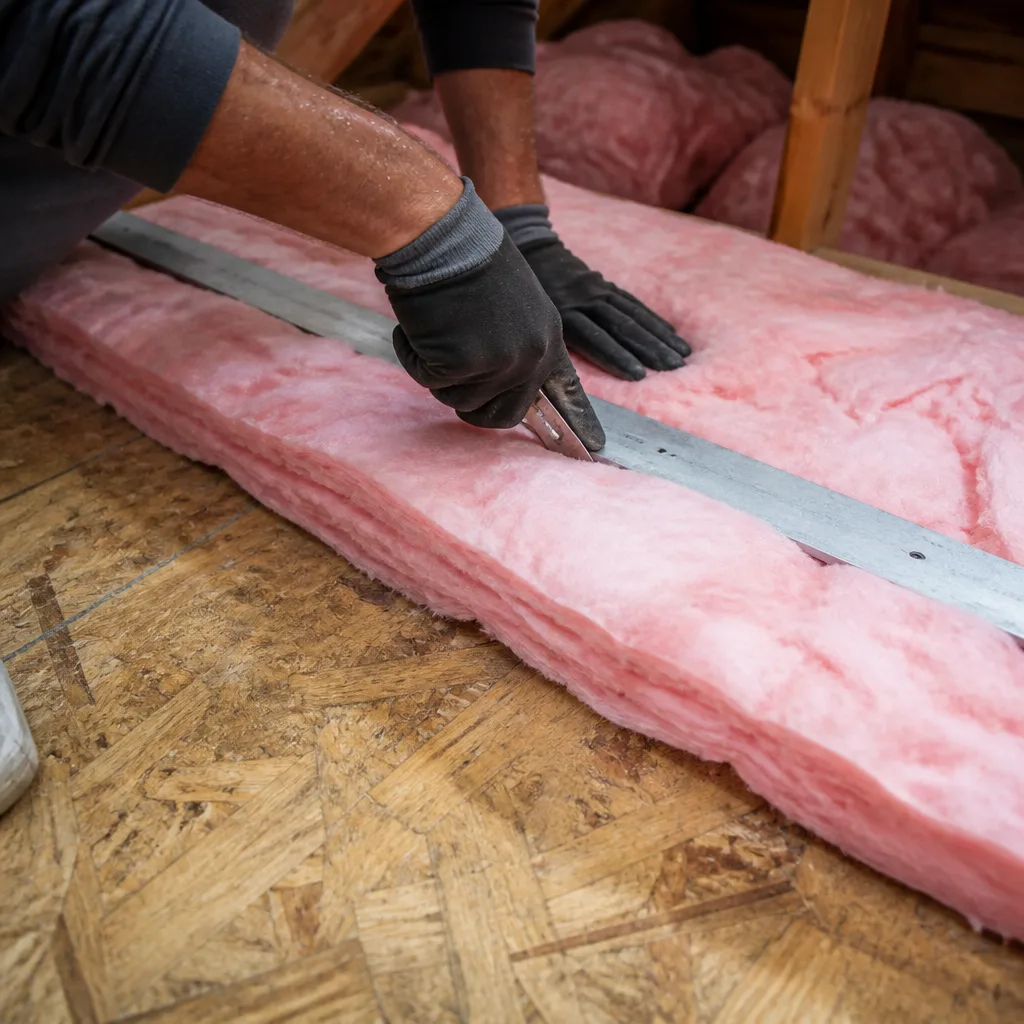
- Existing insulation removal. Many Canyon Country and Saugus homes still have the original fiberglass batts or blown cellulose from original construction. When that material is degraded, contaminated, or insufficient, it needs to come out before foam goes in. Removal and disposal for a 1,200-square-foot attic typically adds $600 to $1,400 depending on depth and contamination. We document the existing R-value and condition in the written scope so there are no surprises mid-job.
- Local labor costs and drive time. Santa Clarita’s position at the northern end of Los Angeles County means labor rates reflect the broader LA County market, not the lower averages you might see quoted for Antelope Valley or the High Desert. Contractors based in Van Nuys or Burbank who quote jobs in Castaic or Val Verde may also charge fuel surcharges that are not always visible in the headline number. A written scope delivered before work starts – Haven Standard Clause 1 – eliminates that ambiguity.
- Permit requirements. LA County requires permits for some spray foam applications, particularly closed-cell foam applied to a roof deck or in a sealed unvented attic assembly. Permit costs in the Santa Clarita Valley typically run $150 to $450 depending on scope, and some contractors exclude this from their quoted price. Ask before you sign anything. Our written scope specifies whether a permit is included, who pulls it, and what the inspection process looks like.
- Air sealing scope before foam. This is where Santa Clarita homes built before 2006 show their age. Top plates on interior partition walls, can lights that open directly into attic space, and HVAC penetrations are common in 1980s and 1990s track homes throughout the valley. Sealing these before foam goes in is not optional if the goal is a measurable performance result. In homes in Plum Canyon and Fair Oaks Ranch where we have blower-door tested before and after, proper air sealing alone accounts for 40 to 60 percent of the total performance improvement documented on the job.
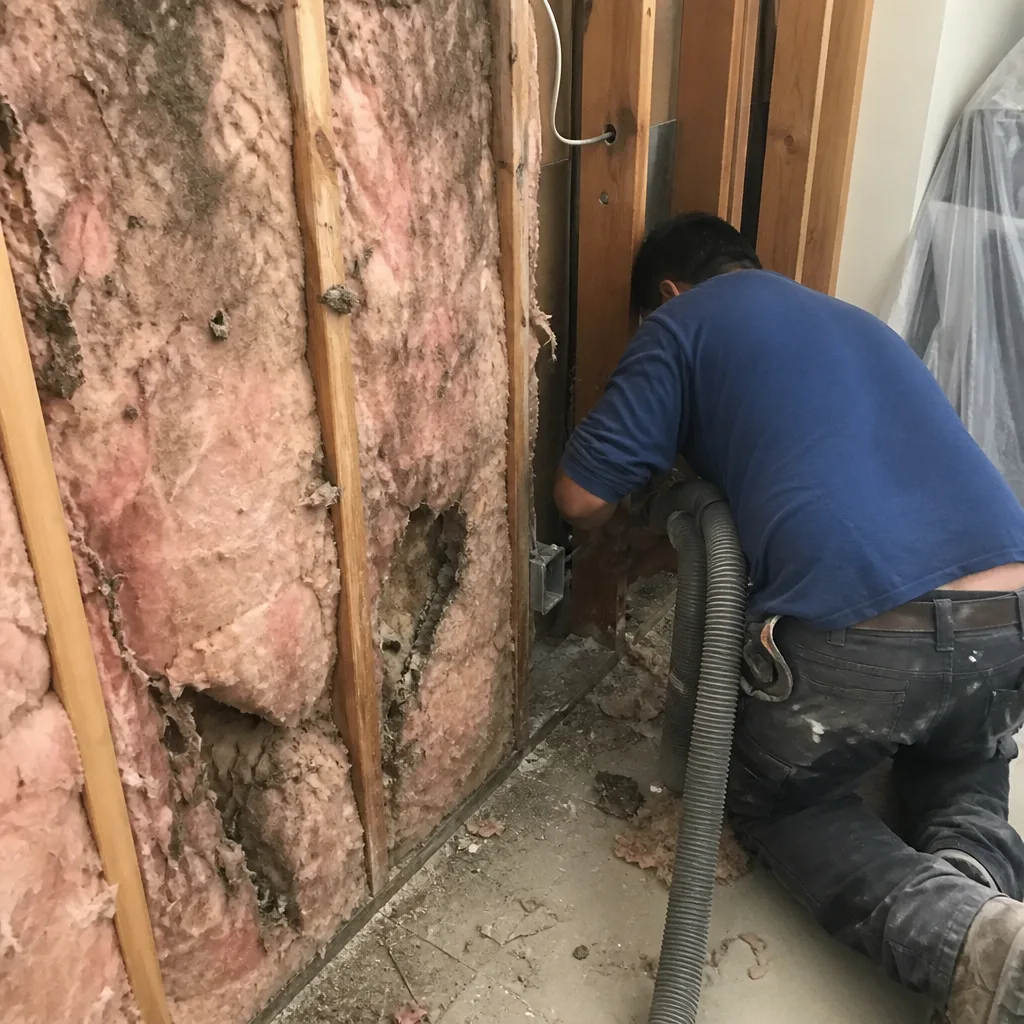 Before
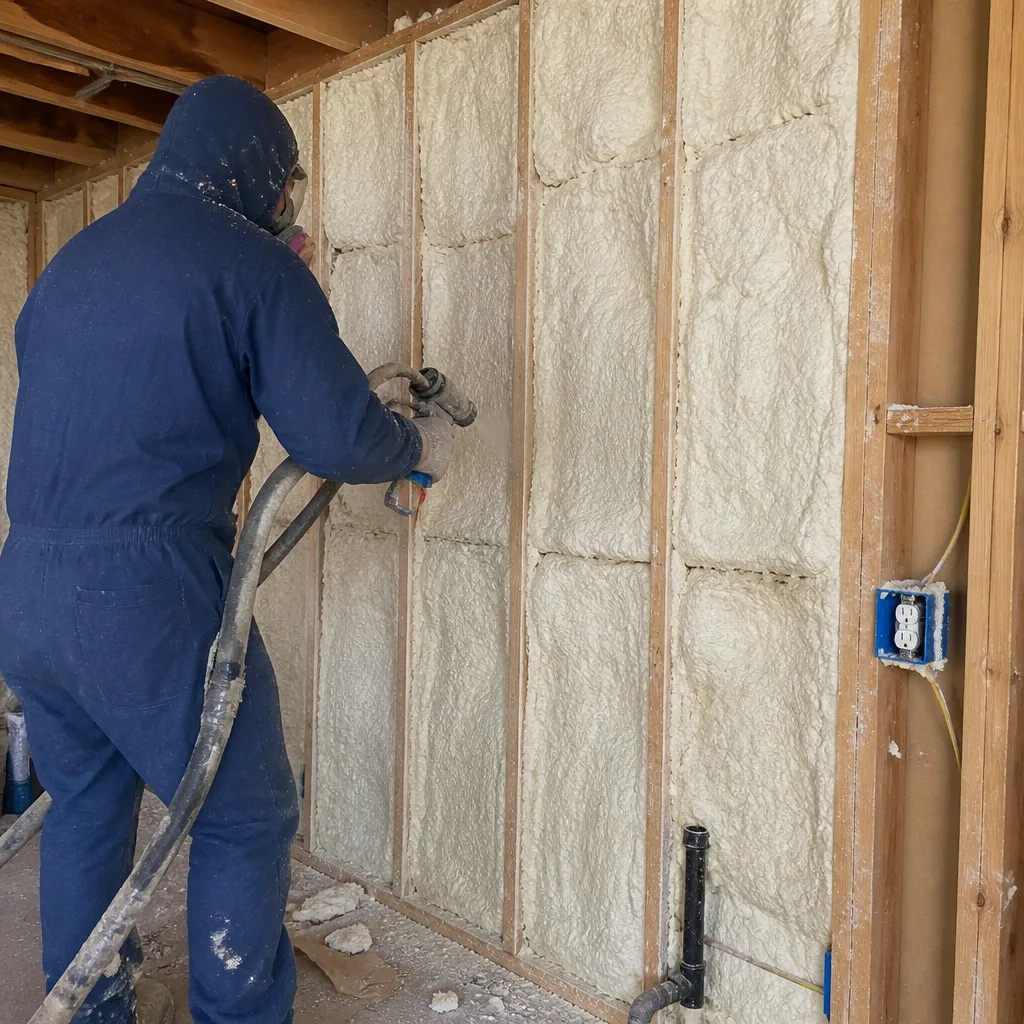 After
AfterHow to Save on Spray Foam Insulation in Santa Clarita
The most reliable way to save money on spray foam insulation in Santa Clarita is to make sure the scope is right before the foam goes in – not after. Re-spraying an attic because the air sealing step was skipped, or because the original contractor used too little foam to meet R-38, costs more than doing it correctly the first time. That sounds obvious, but it is the single most common reason homeowners in the Santa Clarita area call us after using a lower-bid contractor.
Here are the strategies that actually reduce total cost without compromising the outcome:
- Combine services in a single visit. Attic air sealing, spray foam application, and blower-door testing happen on the same crew mobilization. Splitting those into separate visits because you got individual quotes for each adds labor cost with no performance benefit. A written scope that covers the full envelope sequence is cheaper per deliverable than three separate jobs.
- Use open-cell foam where closed-cell is not structurally required. For attic floors in conditioned-attic assemblies where the foam sits above the joists rather than against the roof deck, open-cell foam reaches the required R-value at lower cost. In Santa Clarita’s climate zone (CEC Climate Zone 9), open-cell at R-19 to R-38 is a reasonable choice for attic floors and interior ceiling applications. Closed-cell is the right call at the roof deck, at rim joists, and anywhere vapor control matters.
- Schedule in fall or early winter. Foam contractors in the Santa Clarita area are busiest from March through August when homeowners notice their summer cooling bills. October through January typically offers shorter lead times and, in some cases, more flexibility on scope discussions. We do not manufacture scarcity – there are no countdown timers on our scheduling – but the calendar reality is that fall is a better time to get the crew’s full attention.
- Use available utility rebates. Southern California Edison offers rebates for insulation improvements that meet Title 24 standards. As of 2026, qualifying attic insulation upgrades in the Santa Clarita area may be eligible for rebates of $0.10 to $0.25 per square foot depending on the installed R-value and the utility program cycle. These programs change annually; ask for documentation of installed R-value in your written scope, because that is what the utility requires to process the claim.
- Get a second opinion on any written estimate you already have. We offer a free second opinion on any written estimate – bring us a competing quote, and we will read through it with you. This is not a sales tactic; it is how we help homeowners understand whether the scope they were quoted actually addresses the problem they are trying to solve. More than once, that review has revealed that a lower-bid quote omitted air sealing entirely, or specified open-cell foam for a roof-deck application where closed-cell is the only material that makes thermal sense.
- Pair spray foam with a home energy audit. An energy audit – which includes a blower-door test and thermal imaging – identifies where your building envelope is actually losing conditioned air before any money is spent on materials. In Santa Clarita homes we have audited in Stevenson Ranch and the newer Plum Canyon development, thermal imaging has redirected the spray foam scope by 20 to 40 percent because the actual air pathways were in the floor assembly and wall top plates, not in the locations the homeowner assumed. Spending $300 to $500 on an audit before a $5,000 foam job is arithmetic, not a luxury.
For a free, written estimate on our Spray Foam Insulation services in the Santa Clarita area, call (747) 294-2764. The estimate comes back as a written price before any work starts – that is not a selling point, it is the foundation of how we operate.
Spray Foam vs. Other Insulation Types: Santa Clarita Cost Comparison
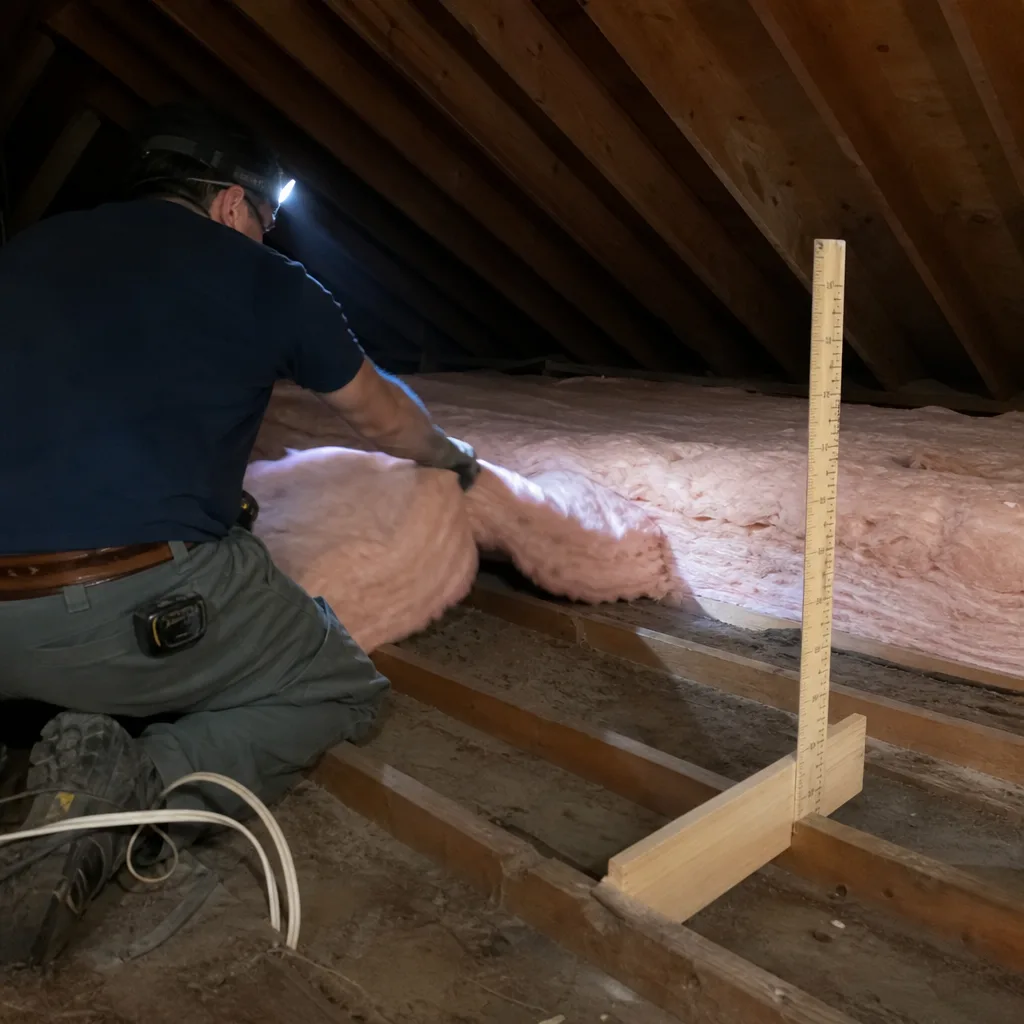
Not every Santa Clarita home needs spray foam, and we will tell you that directly rather than default to the higher-margin material. Here is how spray foam sits relative to the other options for the most common application in this market – attic insulation.
- Blown-in fiberglass or cellulose: $0.75 to $1.40 per square foot installed, or roughly $900 to $1,800 for a 1,200-square-foot attic at R-38. This is the right call for attic floors where the air sealing step has already been completed and the goal is pure thermal resistance at the lowest material cost. It does not air-seal on its own.
- Fiberglass batts: $0.50 to $0.90 per square foot installed. The least expensive option and the most commonly installed in the Santa Clarita housing stock from 1975 to 1995. Batts do not seal air gaps – every penetration, top plate gap, and can light remains an uncontrolled air pathway. For homes where reducing air infiltration is the primary goal, batts alone do not solve the problem.
- Open-cell spray foam: $1.50 to $2.50 per board foot. Air-seals and insulates simultaneously. Best for attic floors in interior-conditioned assemblies, garage ceilings, and between-floor applications where vapor control is not a concern.
- Closed-cell spray foam: $3.00 to $4.50 per board foot. Air-seals, insulates, and acts as a Class II vapor retarder. The correct material for Santa Clarita roof-deck applications, crawl space rim joists, and any assembly where summer heat drive is the governing condition. In Santa Clarita attics that reach 140°F at the sheathing, the thermal performance difference between open-cell and closed-cell at the deck is measurable in post-installation blower-door and thermal camera data.
- Rigid foam board: $1.00 to $2.50 per square foot installed, depending on thickness and R-value. More common in new construction and in continuous insulation applications over exterior sheathing. Rarely the right retrofit choice for Santa Clarita attics unless the roof deck is being replaced simultaneously.
The short answer: for Santa Clarita homes built between 1975 and 2005 with no prior air sealing work, the combination of attic air sealing followed by either blown-in insulation (for the floor) or closed-cell foam (at the roof deck) delivers the best documented performance per dollar. Wes Okafor and the team at Envelope Insulation Co. have run blower-door tests on hundreds of homes in this valley since 2016, and that combination consistently produces the largest pre-to-post ACH50 drop – which is the number that tells you how much the envelope actually changed, not how much insulation was installed.
For a detailed look at the full range of spray foam applications we handle in the valley, the Spray Foam Insulation in Santa Clarita page covers every assembly type we work on, with documentation on the application process and what the written scope looks like for each.
What the Job Process Looks Like: From Quote to Blower-Door Reading
Understanding what you are paying for is easier when you know what the job sequence actually looks like. Here is how a typical spray foam insulation job in Santa Clarita runs under the Haven Standard.
Step 1: Written Estimate with a Full Scope
We measure the attic or application area, document the existing insulation condition and R-value, identify all air sealing locations, and return a written price covering every line item – foam type, thickness, square footage, air sealing scope, any removal required, and permit status. No work starts without your signature on that document. Under Haven Standard Clause 1: Written Price Before Any Work Starts, that is not a policy that gets waived for any reason.
Step 2: Pre-Job Blower-Door Test (on applicable jobs)
Before the crew starts, a blower-door test establishes the baseline ACH50 reading for the home. ACH50 – air changes per hour at 50 pascals of pressure – is the number that tells you, in one figure, how leaky the building envelope is before we touch it. In Santa Clarita homes we have tested in Canyon Country and Newhall, baseline readings typically fall between 6.5 and 11 ACH50. The California Energy Code threshold for a well-sealed home is 5 ACH50 or below. That baseline number goes into the job record.
Step 3: Air Sealing – Before Any Foam
Top plates, can light boxes, attic hatch frames, plumbing and electrical penetrations, HVAC boots – all of these get sealed before the foam rig starts. This step is not billed separately as a surprise. It is in the written scope from the start. We will not spray foam over an unsealed attic floor. That is a documented performance failure, and the blower-door reading at the end would show it.
Step 4: Spray Foam Application
The foam crew applies the specified material at the specified thickness, documenting passes and coverage in the photo record. For closed-cell applications on a roof deck in Santa Clarita, ambient temperature matters – foam yield and adhesion are affected by attic temperatures above 100°F, which is a real variable during Santa Clarita summers. Early-morning starts on hot-weather jobs are standard practice, not a preference.
Step 5: Post-Job Blower-Door Test and Documentation
After the foam cures, we run the blower-door again. The post-job ACH50 reading is recorded alongside the pre-job number, and both go into the Documented Photo Record that leaves with the homeowner. In a well-executed Santa Clarita attic job, the post-sealing ACH50 typically drops 30 to 55 percent from the baseline. Those numbers are yours. They document what you paid for in a single figure that no amount of marketing language can replicate or inflate.
Step 6: Written Warranty and 365-Day Promise
The job closes with a written warranty and the 365-Day Done Right Promise: if it is not done right, we make it right. That applies to adhesion failures, coverage gaps found in the photo record, or any performance shortfall documented by a follow-up blower-door test within the warranty period.
FAQs – Spray Foam Insulation Cost in Santa Clarita
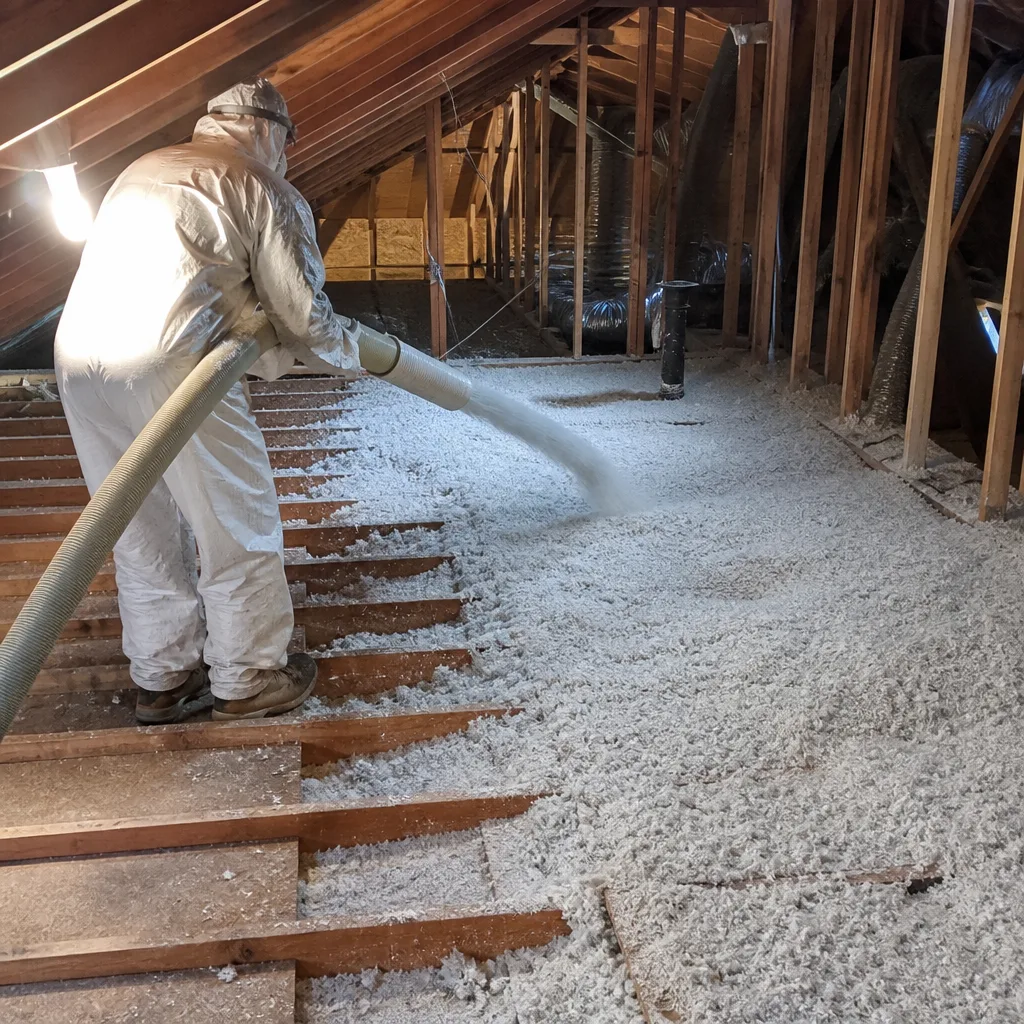
How much does spray foam insulation cost per square foot in Santa Clarita?
Spray foam in Santa Clarita runs $1.50 to $2.50 per board foot for open-cell and $3.00 to $4.50 per board foot for closed-cell. On a per-square-foot basis for a typical 2-inch closed-cell application to an attic roof deck, expect $6.00 to $9.00 per square foot installed – which includes materials, labor, and the air sealing prerequisite. For open-cell at R-19 on an attic floor, the installed cost is closer to $3.00 to $5.00 per square foot. For an exact written figure based on your home’s actual square footage and assembly, call (747) 294-2764 – estimates come back as a written price, not a ballpark range over the phone.
Is spray foam insulation worth it in Santa Clarita’s climate?
Yes, for specific applications – particularly roof-deck assemblies, rim joists, and any location where air sealing and thermal resistance need to be accomplished in a single material. Santa Clarita sits in CEC Climate Zone 9, where summer cooling loads dominate the annual energy profile. Attic temperatures at the sheathing in Valencia and Stevenson Ranch regularly exceed 130 to 145°F in July and August. Closed-cell foam applied directly to the roof deck moves the thermal boundary to the roofline and reduces radiant heat transfer into the attic assembly more effectively than floor-level insulation alone. Blower-door data from jobs we have completed in the Santa Clarita area since 2016 shows post-installation ACH50 reductions of 35 to 55 percent in homes where the foam was preceded by proper air sealing – which is the result that translates to lower utility bills.
How long does spray foam insulation last in Santa Clarita?
Properly installed closed-cell spray foam has an effective service life of 80 years or more under normal conditions. The material does not settle, compact, or absorb moisture the way fiberglass batts and blown cellulose can in older Santa Clarita homes. Open-cell foam is similarly durable but is vapor-permeable, which means it can absorb and release moisture over time – not a significant concern in Santa Clarita’s arid climate, but worth noting in crawl spaces or any below-grade application. The Documented Photo Record we provide at job close gives you a baseline record of coverage thickness and condition that is useful for any future inspection or resale disclosure.
Do I need a permit for spray foam insulation in Santa Clarita?
It depends on the application. In Santa Clarita, which falls under Los Angeles County Building and Safety jurisdiction, spray foam applied to an attic floor typically does not require a permit if it is a like-for-like insulation upgrade. However, closed-cell foam applied to a roof deck to create an unvented attic assembly – a common and effective configuration in this market – does require a permit because it changes the building’s ventilation assembly classification. Permit costs in this area run $150 to $450 depending on scope. Our written scope specifies permit status, who is responsible for pulling it, and what the inspection process looks like. You will know before work starts, not after.
Can you spray foam over existing insulation in Santa Clarita?
Sometimes, but not always. Spray foam can be applied over existing blown-in cellulose or fiberglass on an attic floor if the existing material is in good condition, uncontaminated, and at a depth that still allows the foam to reach full adhesion with the framing or substrate. In practice, many Santa Clarita homes – particularly Canyon Country and Saugus homes from the 1980s – have degraded, rodent-affected, or moisture-compromised existing insulation that needs to come out first. Installing foam over contaminated material is a documented performance and health problem. Our written scope always documents existing insulation condition and specifies whether removal is required, with the cost included in the written price rather than added as a surprise on job day.
What is the difference between open-cell and closed-cell foam for a Santa Clarita attic?
Open-cell foam expands to roughly 100 times its liquid volume, is soft, and costs significantly less – around $1.50 to $2.50 per board foot. It reaches high R-values at greater thickness and is appropriate for attic floors, interior partitions, and garage ceilings in Santa Clarita. Closed-cell foam expands to roughly 30 times its liquid volume, is rigid, achieves R-6 to R-7 per inch (versus R-3.5 to R-4 per inch for open-cell), and acts as a vapor retarder. For Santa Clarita roof-deck applications – where you are trying to keep 140°F attic heat from driving through the assembly into the conditioned space – closed-cell is the correct material. Applying open-cell at a roof deck in this climate is a documented thermal performance shortfall; the vapor permeability and lower R-per-inch work against the application.
About This Page and Who Wrote It
Envelope Insulation Co. has been independently owned and operated under The Haven Standard since 2016. Since then, the team has sealed and insulated more than 9,000 homes across the Santa Clarita Valley and surrounding communities, every one with a written price before work started and a Documented Photo Record when the crew left. On applicable jobs, before-and-after blower-door readings are included so the homeowner can verify the air-sealing result in a single number. For more on who we are and how we work, visit the home page.
Written by Wes Okafor, Owner at Envelope Insulation Co. (operating as Topside Attic Insulation Santa Clarita), serving Santa Clarita since 2016.
Pricing reflects the Santa Clarita market as of 2026. Topside Attic Insulation Santa Clarita offers free estimates – call (747) 294-2764.
What Our Customers Say
"The winter gas bill dropped by about a third. They had estimated a quarter, so they under-promised."
- Genevieve R."Two other companies quoted to blow more insulation on top of what was there. These were the only ones who said the existing material had to come out first, and explained why."
- Clifford E."Turned up on time, protected the hallway, and the written scope matched what was actually done."
- Bruno S.