
How Much Does Wall Insulation Cost in Santa Clarita?
Wall insulation in Santa Clarita typically costs between $1,800 and $6,500 for a standard single-family home, depending on wall area, insulation type, and whether the walls are open (new construction or renovation) or closed (existing drywall). Most homeowners in neighborhoods like Stevenson Ranch, Valencia, and Saugus land in the $2,400 to $4,200 range for a full exterior wall upgrade using blown-in or injection foam. Envelope Insulation Co. provides a written price for our Wall Insulation services before any work starts – every time, no exceptions.
Wall Insulation Cost Breakdown (2026)
The table below reflects current material and labor costs in the Santa Clarita market. These are real ranges based on jobs completed in the Santa Clarita Valley – not national averages adjusted with a multiplier.
| Insulation Type | Best For | Cost Per Sq Ft (Installed) | Typical Job Total (1,500 sq ft wall area) |
|---|---|---|---|
| Blown-in fiberglass (closed walls) | Retrofit existing homes | $1.50 – $2.50 | $2,250 – $3,750 |
| Injection foam (closed walls) | Retrofit, superior air sealing | $2.00 – $3.75 | $3,000 – $5,625 |
| Spray foam (open walls, 2″ closed-cell) | New construction or gut renovations | $3.00 – $5.50 | $4,500 – $8,250 |
| Fiberglass batts (open walls) | New construction or open-wall remodels | $0.75 – $1.50 | $1,125 – $2,250 |
| Mineral wool batts / Rockwool (open walls) | Fire-rated walls, soundproofing | $1.50 – $2.75 | $2,250 – $4,125 |
| Dense-pack cellulose (closed walls) | Retrofit, eco-conscious projects | $1.25 – $2.25 | $1,875 – $3,375 |
A few things push those totals up or down significantly in the Santa Clarita market specifically. Homes built in the 1970s and 1980s in older Canyon Country sections often have nominal 2×4 framing – which means your wall cavity is only 3.5 inches deep and limits what R-value you can physically achieve without exterior insulation added on top. Newer Valencia and Stevenson Ranch builds from the 1990s through 2010s tend to use 2×6 framing, giving you 5.5 inches of cavity depth and meaningfully better R-value potential from the same material. That framing difference alone can shift your cost-per-dollar-of-performance by 30 percent or more.
Labor in Los Angeles County – Santa Clarita sits in LA County – runs higher than the California average. Plan on $65 to $110 per hour for insulation labor depending on the job type. Drilled retrofit work (where technicians drill small holes in your siding or drywall, inject insulation, and patch the holes) is more time-intensive than batt installation in open walls, which is reflected in those per-square-foot figures above.
Under Haven Standard Clause 1, every price Envelope Insulation Co. provides is written, flat, and scoped before a single tool is lifted. No “we’ll see what we find” billing after the job.
What Affects Wall Insulation Pricing in Santa Clarita
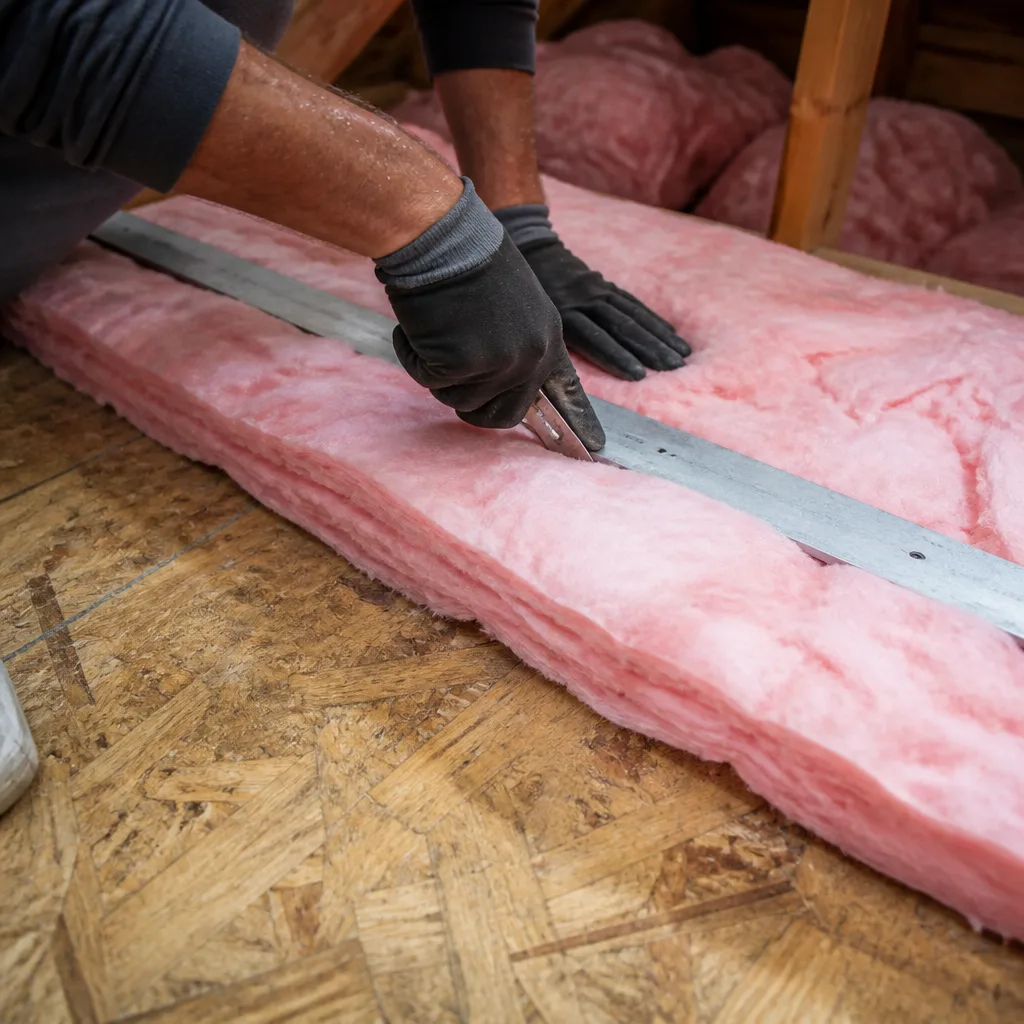
- Open vs. closed walls: Open walls (studs exposed during construction or renovation) are the least expensive to insulate because batts or spray foam go straight into the cavity. Closed walls require drilled-hole injection or blown-in work – more labor, more equipment, and patch repair of the holes afterward. In Santa Clarita, most retrofit jobs are closed-wall, which is why the $2,400 to $4,200 midrange applies to so many homes here.
- Wall area and number of stories: Two-story homes in Saugus or Newhall have significantly more exterior wall square footage than a single-story ranch. More square footage means more material and more labor hours, linearly. A 1,200 sq ft single-story might have 800-900 sq ft of exterior wall surface; a 2,400 sq ft two-story often has 1,600-2,000 sq ft. That difference can be a $1,500 to $2,500 swing in total project cost.
- Insulation type chosen: Fiberglass batts are the least expensive option when walls are open, but they do not air-seal – they only slow heat transfer. Injection foam costs more per square foot but addresses both air leakage and thermal resistance in one pass. In Santa Clarita’s climate – hot, dry summers with valley heat that can run 100°F+ in Agua Dulce and the eastern edges of Canyon Country – the air barrier component matters as much as the R-value. Choosing the right material for your specific problem, not just the cheapest option, affects long-term energy cost more than the installation price difference.
- Framing depth and wall configuration: Standard 2×4 framing caps you at roughly R-13 to R-15 with fiberglass batts. Standard 2×6 framing gets you to R-19 to R-21. If your home’s framing limits what you can achieve and you need Title 24 compliance for a permitted renovation, you may need continuous exterior insulation added – which adds $1.50 to $3.50 per square foot on top of the cavity fill.
- Access and exterior finish type: Homes with stucco exteriors (very common throughout Santa Clarita, particularly in Valencia and Stevenson Ranch) typically require drilling from the interior drywall side rather than exterior to avoid disturbing the stucco system. Interior drilling means patch-and-paint on the inside. Homes with wood or fiber-cement lap siding may allow exterior drilling with easier patching. Either way, patch and paint costs ($200 to $600 depending on scope) should be factored into your total budget.
- Air sealing as part of the scope: This is where Envelope’s approach differs from most competitors in the Santa Clarita area. Insulation installed over air leaks – around electrical outlets, at rim joists, around plumbing penetrations – performs well below its rated R-value because conditioned air is still escaping through the gaps. Sealing those penetrations before or alongside the wall insulation adds cost upfront (typically $300 to $800 for a whole-home air sealing pass on the walls) but produces measurably better results. Envelope will document that result with a before-and-after blower-door test – a pressurization reading that shows, in one number, exactly how much conditioned air the building envelope was losing before the work and after.
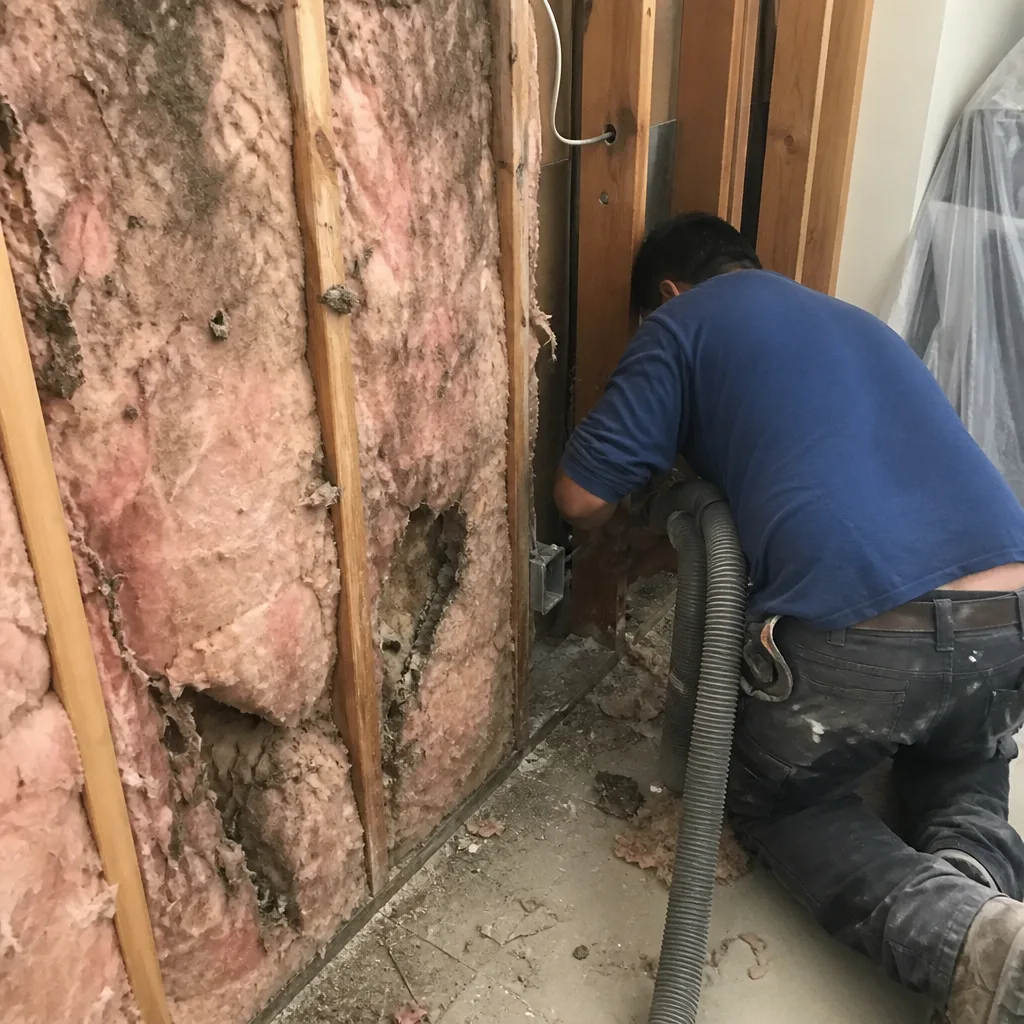 Before
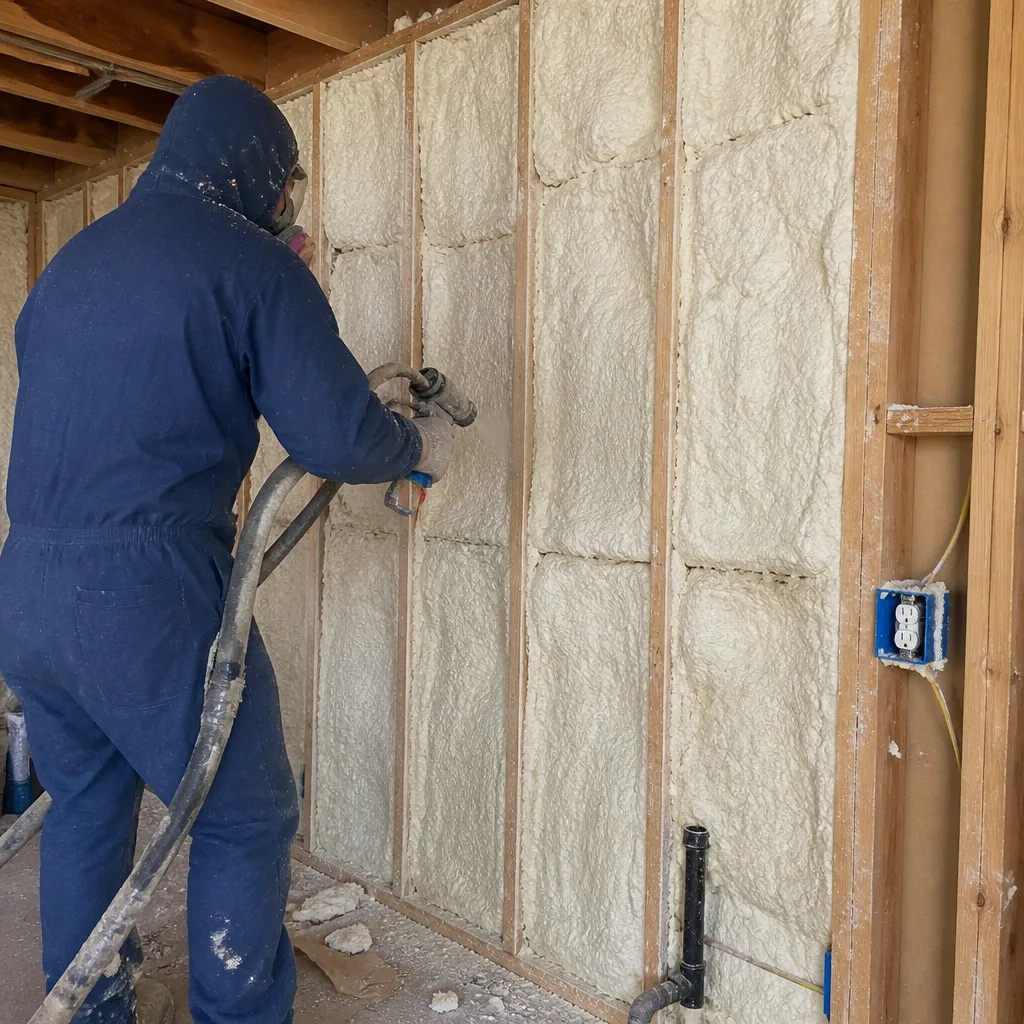 After
AfterWall Insulation and Santa Clarita’s Climate: Why the Numbers Here Are Different
Santa Clarita sits in Climate Zone 10 under California’s Title 24 energy code – one of the hotter inland zones in Southern California. The Santa Clara River valley funnels heat in summer, and the Soledad Canyon corridor on the east side of the city sees temperatures that routinely outpace what’s happening in coastal LA by 15 to 20 degrees. In Acton and Agua Dulce (the eastern edge of the Santa Clarita Valley), summer highs above 105°F are not unusual.
That matters for wall insulation decisions because radiant heat gain through poorly insulated exterior walls is a primary driver of cooling loads in this climate – and a higher cooling load means higher electricity bills. California’s residential electricity rates are among the highest in the country, so the payback math on proper wall insulation is more favorable in Santa Clarita than it would be in a mild coastal city like Santa Monica or Long Beach.
California Title 24 also sets minimum performance requirements for wall insulation when permitted work is being done. For Climate Zone 10, new walls typically require a minimum of R-13 in the cavity plus R-5 continuous insulation, or R-20 cavity alone with no continuous. If your project requires a permit – which depends on scope and your local building department’s interpretation – these minimums apply and can affect which insulation options make sense financially.
The City of Santa Clarita’s building department follows Los Angeles County code on most residential energy work, though permitting thresholds vary. An Wall Insulation in Santa Clarita scope that involves structural work will almost certainly need a permit; a simple blown-in retrofit of existing closed walls often does not. When in doubt, ask before the work starts – pulling a permit after the fact is more expensive and complicated than pulling it first.
Blown-In vs. Injection Foam vs. Spray Foam for Existing Santa Clarita Walls
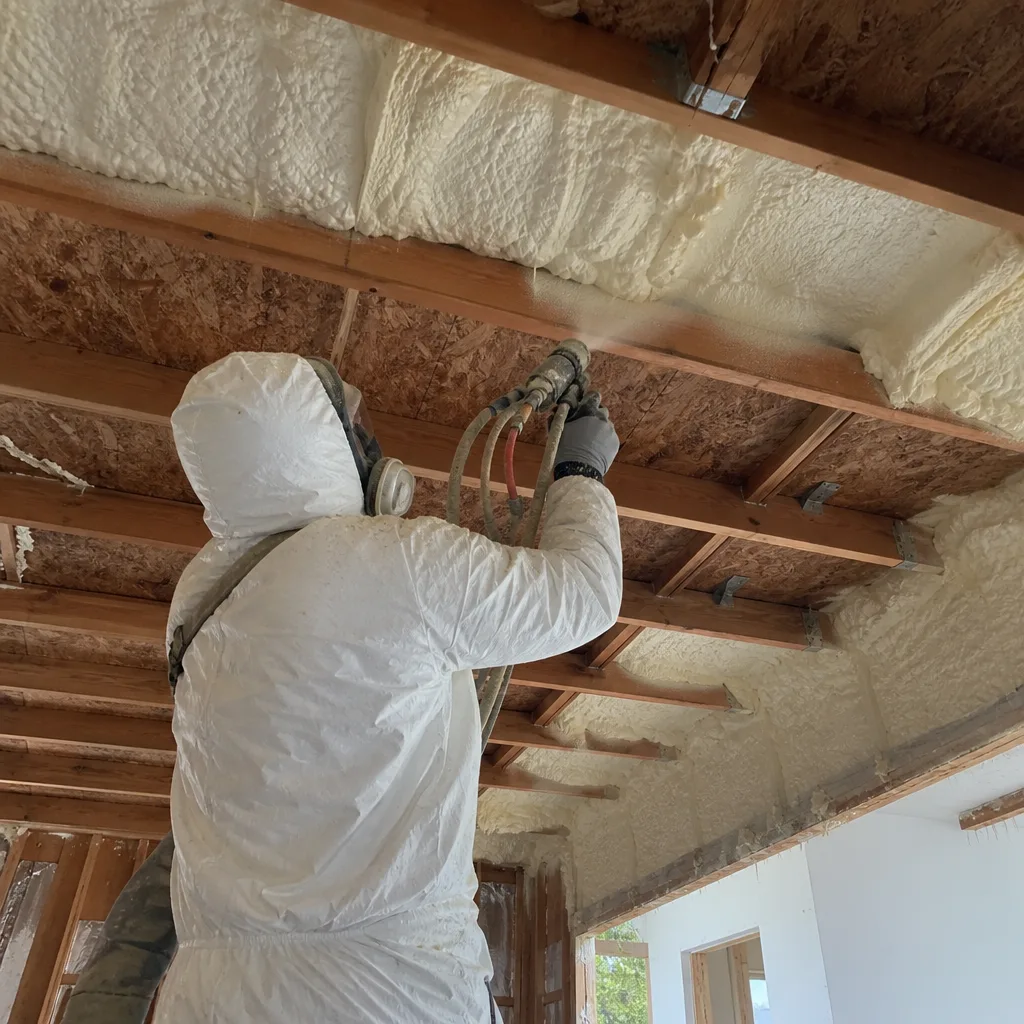
These three options come up on nearly every retrofit conversation in Santa Clarita, and they’re meaningfully different – not just in price.
Blown-In Fiberglass or Cellulose (Retrofit)
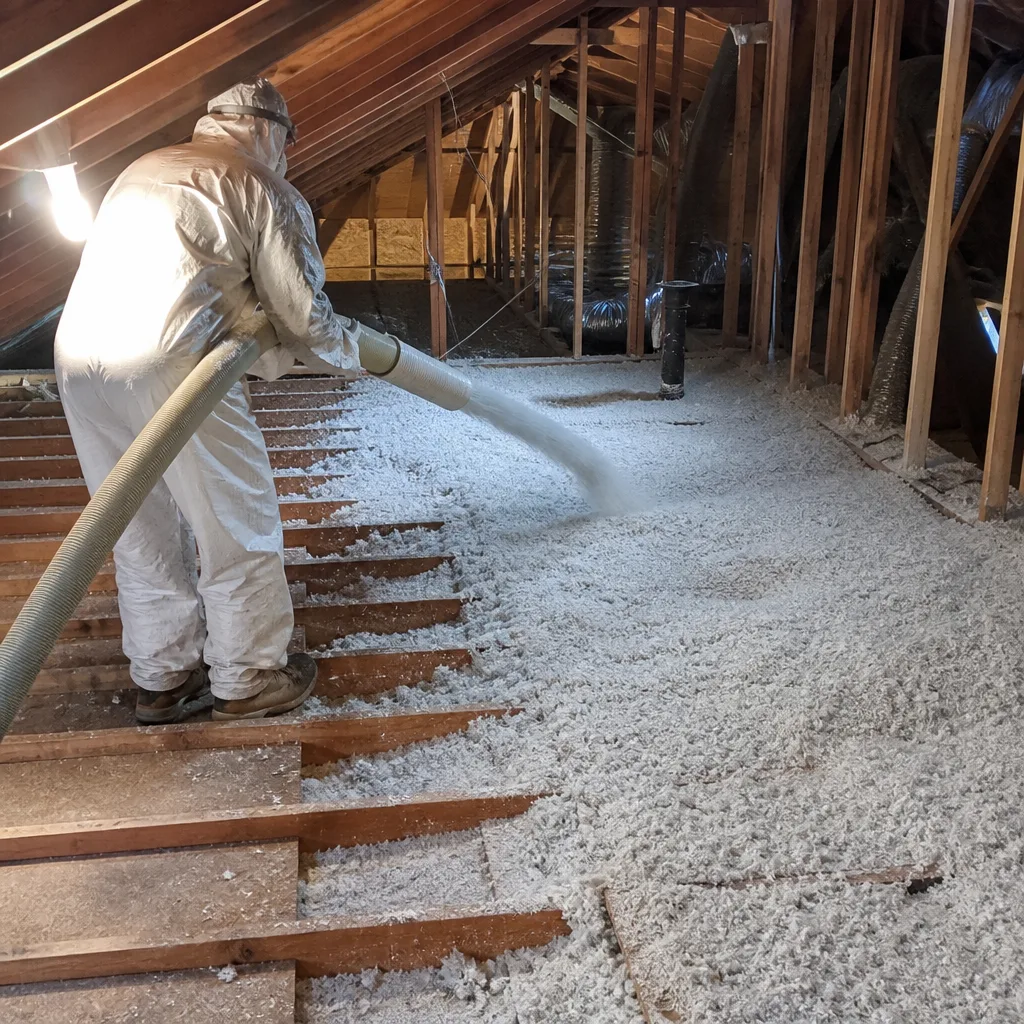
Blown-in insulation – using fiberglass (from brands like Owens Corning or Johns Manville) or cellulose (from GreenFiber) – is the most common retrofit method in the Santa Clarita market. Technicians drill a small hole near the top of each stud cavity, insert a fill tube, and blow material until the cavity is dense-packed. The holes are plugged and patched. Cost: typically $1.25 to $2.50 per square foot installed. Limitation: blown-in material fills the cavity and slows heat transfer but does not create an air barrier by itself. If air movement through the wall assembly is part of your problem, blown-in alone won’t fully solve it.
Injection Foam (Retrofit)
Injection foam – typically a slow-rise two-component foam or a froth-pak type system – is drilled in similarly to blown-in but expands to fill the cavity and adheres to framing, creating both a thermal layer and an air barrier in one product. Brands like Icynene and Demilec produce injection-grade foam systems used in this application. Cost: $2.00 to $3.75 per square foot. The premium over blown-in is real, but for homeowners in Canyon Country and Stevenson Ranch whose walls have notable air leakage paths (older homes especially), the combined thermal and air-sealing benefit often justifies the difference.
Spray Foam (Open Walls Only)
Closed-cell spray foam, applied by a licensed applicator to open wall cavities during construction or a gut renovation, achieves R-6 to R-7 per inch and creates a structural air barrier in one application. At 2 inches depth in a 2×4 wall, you’re at roughly R-13 with a vapor retarder built in. At 3.5 inches you reach R-21 or more, which often satisfies Title 24 requirements without continuous exterior insulation. Cost: $3.00 to $5.50 per square foot. This is the most expensive per-square-foot option and is only practical when walls are already open – it is not a retrofit solution.
For most existing Santa Clarita homes where walls are closed and the homeowner isn’t planning a major renovation, blown-in or injection foam is the realistic choice. The decision between the two usually comes down to how much air leakage is present – which is exactly what a blower-door test quantifies before the work starts.
How to Save on Wall Insulation in Santa Clarita
A few approaches that actually move the needle on cost – and a few that seem like savings but aren’t.
- Bundle with attic work when possible. Mobilization – getting a crew, equipment, and materials to your home – is a fixed cost regardless of job size. If your attic also needs insulation or air sealing, doing both at once typically costs 15 to 25 percent less per square foot than scheduling them separately. Envelope has completed both scopes on thousands of Santa Clarita homes since 2016, and bundled jobs consistently deliver better cost-per-performance outcomes.
- Get a second opinion on any written estimate. If another contractor has given you a written quote, bring it to Envelope. We’ll read it with you – line by line – and tell you if the scope covers what you actually need, or if something important is missing or inflated. This is a standing offer, no obligation.
- Check SoCalGas and SCE rebates before scheduling. Southern California Gas Company and Southern California Edison both offer rebates for insulation upgrades that meet specific performance thresholds. As of 2026, SCE’s residential rebate program has offered up to $0.10 to $0.20 per square foot for qualifying wall insulation in Climate Zone 10, and SoCalGas has had parallel programs for whole-home air sealing. These amounts change – confirm current availability at energyupgradeca.org before you rely on a specific number. A qualifying job in Santa Clarita can reduce your net cost by $200 to $600 on a mid-size project.
- Don’t skip the air sealing to save money. This sounds counterintuitive, but it’s real: insulation installed without addressing air leaks performs below its rated R-value because conditioned air bypasses the insulation through gaps. You pay for R-19 and get the effective performance of R-12. The extra $300 to $800 for a proper air seal before or alongside the insulation is not an upsell – it’s the part that makes the insulation work as specified. Envelope will not blow insulation over an unsealed wall assembly. That’s not a policy slogan; it’s how the work is scoped, in writing, before it starts.
- Prioritize the right walls first. In Santa Clarita, south- and west-facing exterior walls take the most solar heat gain. If budget is a constraint, those walls have the highest ROI for insulation upgrades. A thermal imaging scan during the assessment phase can show exactly where heat is moving through the wall assembly – which walls are underperforming and which are already performing adequately.
For a written price specific to your home, call (747) 294-2764. Envelope Insulation Co. provides free estimates, and every estimate is written – there’s no obligation to proceed and nothing ambiguous in the numbers you receive.
What the Job Looks Like From Start to Finish
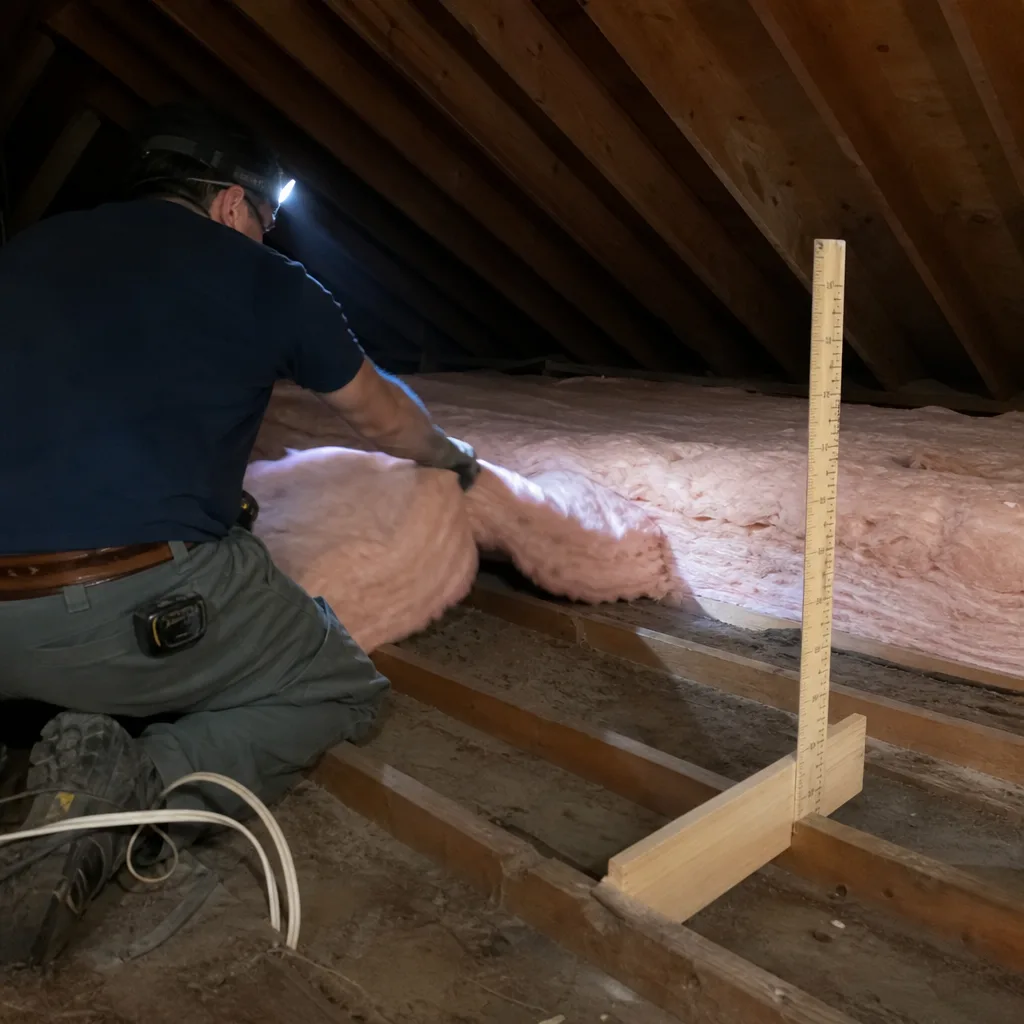
Knowing what the process looks like before you commit helps you ask the right questions of any contractor – including us.
Step 1: Assessment and Blower-Door Baseline
Before a price is written, a technician visits the home, measures wall area, identifies framing type, checks existing insulation (if any), and conducts or schedules a blower-door test if air sealing is part of the scope. The blower-door test depressurizes the home to 50 Pascals and measures total air leakage in CFM50 (cubic feet per minute at 50 Pascals). This gives a baseline number – say, 3,800 CFM50 – so that when the work is done, the post-project reading (say, 2,100 CFM50) shows the measurable improvement in plain numbers. Envelope publishes both figures on every applicable job.
Step 2: Written Price and Scope
You receive a flat, written price covering materials, labor, patch and paint (if applicable), blower-door testing, and the Documented Photo Record. Haven Standard Clause 1: nothing starts without this document in your hands. No verbal quotes that shift when the crew shows up.
Step 3: Air Sealing (Where Applicable)
For closed-wall retrofit jobs, air sealing may involve sealing around electrical outlets, switches, and plumbing penetrations from the interior before injection. For open walls in renovations, this includes sealing top plates, bottom plates, and penetrations before any insulation material goes in. This step is not optional in Envelope’s scope – it is a hard prerequisite, not an add-on.
Step 4: Insulation Installation
For drilled retrofit work, each stud cavity is filled from the top down. Technicians verify fill density by probe before patching holes. For open-wall spray foam, application thickness is verified by depth pins at multiple points before the crew moves on. Materials sourced from Owens Corning, Johns Manville, Knauf, Rockwool, CertainTeed, Icynene, Demilec, and GreenFiber – whichever product matches the application and the written scope.
Step 5: Post-Job Documentation
You receive a Documented Photo Record showing pre-work and post-work conditions, before-and-after blower-door readings (on applicable jobs), the written warranty, and the completed scope confirming what was done. The 365-Day Done Right Promise covers all completed work – if it’s not right, Envelope makes it right, in writing.
Key Takeaways
- Wall insulation in Santa Clarita runs $1,800 to $6,500 for most homes; the typical retrofit project lands between $2,400 and $4,200.
- Closed-wall retrofit using blown-in or injection foam costs $1.25 to $3.75 per square foot installed; open-wall spray foam runs $3.00 to $5.50 per square foot.
- Santa Clarita sits in Climate Zone 10 – one of California’s hotter inland zones – which makes the payback on wall insulation faster than in coastal cities.
- Air sealing before insulation is not an upsell; it’s what makes the R-value hold in the real world. Envelope treats it as a prerequisite, documented with blower-door numbers before and after.
- SCE and SoCalGas rebates can reduce net cost by $200 to $600 on qualifying jobs. Verify current amounts before your project starts.
- Every Envelope job starts with a written price and ends with a Documented Photo Record. The 365-Day Done Right Promise applies to all completed work.
FAQs – Wall Insulation Cost in Santa Clarita
How much does wall insulation cost per square foot in Santa Clarita?
Installed cost in Santa Clarita runs $1.25 to $2.50 per square foot for blown-in retrofit (fiberglass or cellulose), $2.00 to $3.75 per square foot for injection foam retrofit, and $0.75 to $1.50 per square foot for fiberglass batts in open walls. Closed-cell spray foam in open walls runs $3.00 to $5.50 per square foot and is the most expensive option, used primarily in new construction or gut renovations. Los Angeles County labor rates run slightly above the California state average, which is already factored into these ranges. Call (747) 294-2764 for a written price specific to your home – it’s free and there’s no obligation.
Is it cheaper to insulate walls from the inside or the outside?
Interior drilling (drilling through drywall) is typically $0.25 to $0.50 per square foot less expensive than exterior drilling because stucco repair – common on Santa Clarita homes throughout Valencia, Stevenson Ranch, and Canyon Country – costs more per patch than drywall patch-and-paint. However, the correct approach depends on your exterior finish, interior finish quality, and access. Homes with newly painted or wallpapered interiors often prefer exterior drilling even at slightly higher cost. Your written estimate will specify which approach applies and why, before any work starts.
How long does wall insulation take to pay back in Santa Clarita?
In Climate Zone 10, a properly air-sealed and insulated exterior wall assembly typically reduces cooling load enough to cut HVAC runtime noticeably. At current SCE electricity rates, a $3,000 wall insulation project in Santa Clarita that reduces annual cooling costs by $350 to $500 pays back in 6 to 9 years – faster if SCE and SoCalGas rebates reduce your net cost. Before-and-after blower-door numbers, which Envelope documents on every applicable job, let you verify the air-sealing component of that result rather than estimating it. Call (747) 294-2764 to understand what a project scoped for your home’s specific conditions would look like on paper.
Do I need a permit for wall insulation in Santa Clarita?
For a straightforward blown-in or injection retrofit of existing closed walls – no structural changes, no new openings – most Santa Clarita jobs do not require a building permit under current LA County residential code. However, if the project involves opening walls, adding continuous exterior insulation, or is part of a larger renovation with a permit already pulled, Title 24 compliance requirements apply and insulation must meet Climate Zone 10 minimums. When your project scope is written, the permit question should be addressed explicitly. Envelope will tell you whether the planned work requires a permit before any work starts – not after.
What’s the difference between blown-in and injection foam for existing walls?
Blown-in fiberglass or cellulose (cost: $1.25 to $2.50/sq ft installed) fills the wall cavity and slows heat transfer but does not create a continuous air barrier on its own. Injection foam ($2.00 to $3.75/sq ft) expands to fill the cavity and bonds to framing surfaces, providing both thermal resistance and air sealing in one application. For Santa Clarita homes built before 1990, particularly in older Newhall and Canyon Country neighborhoods, air leakage through wall assemblies tends to be significant – and in those cases, injection foam’s combined benefit often justifies the cost difference. A blower-door test before the project identifies whether air leakage is a major factor or a minor one, so the choice of material is based on actual measured conditions, not a guess. Call (747) 294-2764 to schedule a free assessment and get a written price for both options side by side.
Can wall insulation be added without removing drywall?
Yes – blown-in and injection foam are specifically designed for retrofit into existing closed walls without removing drywall. Technicians drill small holes (typically 1 to 1.5 inches in diameter) at the top of each stud cavity, fill the cavity by tube, then plug and patch the holes. On smooth-painted drywall, the patches are nearly invisible after painting. On textured drywall – orange peel or knockdown texture, common in Santa Clarita homes built in the 1990s and 2000s – matching the texture takes more care, and some variation is normal. The written scope will describe the patching approach and what finish condition to expect when the crew leaves. Call (747) 294-2764 if you want to know what that looks like for your specific wall finish before you decide.
About This Guide
Wes Okafor leads Envelope Insulation Co., which has operated under The Haven Standard since 2016 and has sealed and insulated more than 9,000 homes – every one with a written price before work started and a documented record when the crew left. This guide was written to give Santa Clarita homeowners the specific price information that most contractor websites withhold. The home page covers Envelope’s full building-envelope service line for Santa Clarita and surrounding communities.
The 365-Day Done Right Promise applies to all completed wall insulation work. If it’s not done right, Envelope makes it right – in writing, not just in words.
Pricing reflects the Santa Clarita market as of 2026. Topside Attic Insulation Santa Clarita offers free estimates – call (747) 294-2764.
Written by Wes Okafor, Owner at Envelope Insulation Co., serving Santa Clarita since 2016.
What Our Customers Say
"Crawl space encapsulation done properly. Photographs of the vapour barrier at every seam, and the damp smell in the hallway is gone."
- Ainsley P."They air-sealed the attic floor before insulating and showed me the blower-door number before and after. The upstairs is finally the same temperature as downstairs."
- Marisol D."The winter gas bill dropped by about a third. They had estimated a quarter, so they under-promised."
- Genevieve R.