
Blown-In Attic Insulation in Santa Clarita, CA
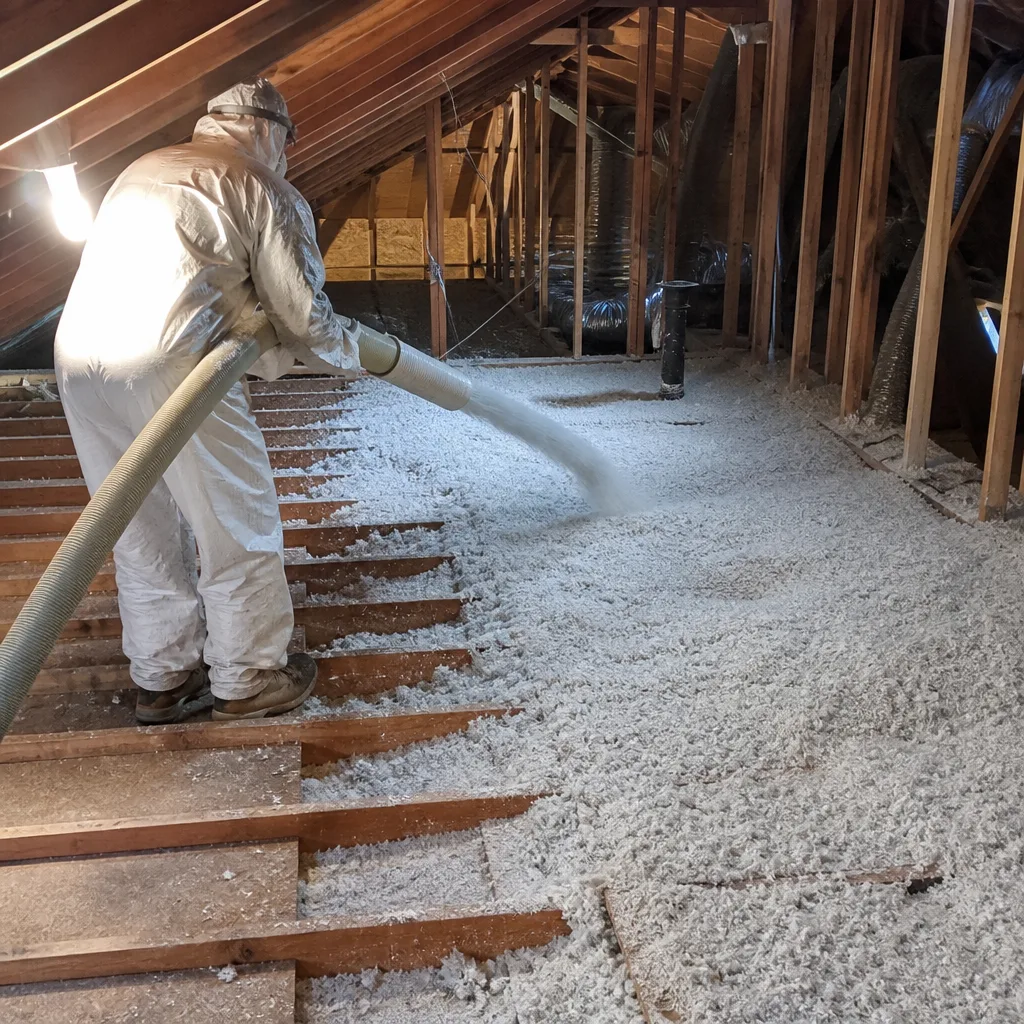
Blown-in attic insulation – loose-fill material pneumatically distributed across your attic floor to a specified depth – is the most practical way to bring an under-insulated Santa Clarita home up to current California Title 24 performance standards. Most attics in this area need to reach R-38 to R-60, and blown-in cellulose or fiberglass gets there faster, cheaper, and with better coverage around obstructions than Attic Batt Insulation ever will. If your upstairs rooms run noticeably hotter than the rest of the house during a July heat wave in Valencia or Saugus, thin or absent attic insulation is almost always part of the explanation.
What separates the way Envelope Insulation Co. handles our Attic Insulation services from most other contractors in the Santa Clarita Valley is the sequence. We air-seal the attic floor first – top plates, recessed can lights, plumbing and electrical penetrations – before a single pound of insulation goes in. Skipping that step is the single most common reason a blown-in job underperforms. Loose fill sits on top of air leaks; it does not plug them. We won’t blow insulation over an unsealed attic floor, and that’s not a talking point, it’s a written commitment in every scope we deliver. Wes Okafor has led this company under The Haven Standard since 2016, and the documentation the crew leaves behind – written scope, blower-door readings before and after, photo record – is what makes that commitment verifiable.
For questions or to schedule your attic assessment, call (747) 294-2764. A live person picks up, every time. This page covers blown-in insulation specifically; for the full picture of attic work in Santa Clarita, see our Attic Insulation in Santa Clarita page.
When You Need Blown-In Attic Insulation
A few clear indicators tell us an attic is ready – or overdue – for blown-in insulation. These show up regularly in homes across Santa Clarita, from the older ranch-style houses in Canyon Country to the early-2000s tract homes in Stevenson Ranch.
- Visible joist tops in your attic. If you can see the top of the ceiling joists when you look across the attic floor, your insulation depth is almost certainly below R-19 – roughly half of what California’s climate zone requires for Santa Clarita. This is the fastest visual confirmation that blown-in is needed.
- Upstairs rooms that won’t cool below 80°F in summer. Santa Clarita regularly hits 100°F-plus in July and August. When an attic has inadequate insulation, radiant heat transfer through the ceiling is relentless. Blown-in material at the correct depth measurably reduces that load.
- Heating and cooling bills that keep climbing. A blower-door test – a pressurization measurement that expresses, in one number called CFM50, how much conditioned air a home is losing – often reveals that a house losing 3,000 to 5,000 CFM50 before air sealing and insulation can drop into the 1,500 to 2,500 range after. That shift shows up in monthly utility costs.
- Existing batts that have settled, shifted, or gotten wet. Fiberglass batts that absorbed moisture from a past roof leak, or that have been pushed aside by rodent activity in the attic, provide almost no thermal resistance where the gaps exist. Blown-in fill covers those gaps far more uniformly.
- A home built before 1990. Most pre-1990 construction in Santa Clarita – particularly in the Newhall and Canyon Country areas – was insulated to standards that were a fraction of current Title 24 minimums. A top-up or full replacement with blown-in material is almost always the most cost-effective upgrade available for these homes.
- Recent rodent activity requiring attic cleaning. If insulation had to be removed to address a contamination issue, blown-in is the standard reinstallation method. It reaches corners and the narrow eave edges that batts rarely cover cleanly.
Our Blown-In Attic Insulation Process
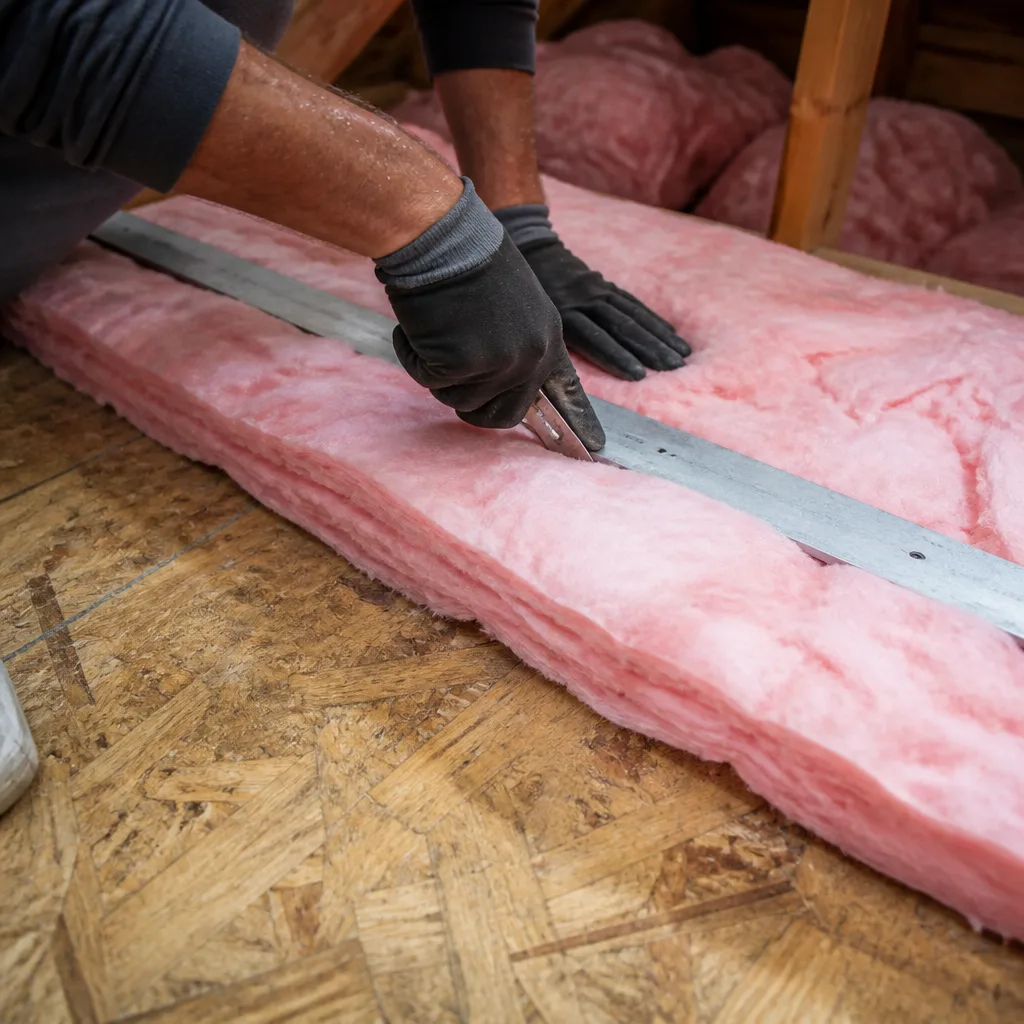
Here is the exact sequence we follow on every blown-in attic job in Santa Clarita, including Attic Baffles & Ventilation Prep. Nothing gets skipped to save time.
- Written scope and price before any work starts. Under Haven Standard Clause 1, you receive a flat written price and a full written scope before anyone picks up a tool. The scope names the target R-value, the material being used, the air-sealing locations, and what the crew will leave behind at closeout. No surprises on the invoice.
- Pre-job blower-door baseline reading. Before the crew does anything in the attic, we run a blower-door test and record the CFM50 reading. This is the before number. It documents how much conditioned air the home was losing through the building envelope before we touched it.
- Attic air sealing – penetrations, top plates, and can lights. Every identifiable air bypass on the attic floor gets sealed: top-plate gaps where walls meet the ceiling, recessed light housings (using fire-rated air-sealing covers where required), plumbing stacks, electrical conduit penetrations, and any HVAC boot gaps. This step takes time. It is also the step most contractors omit. We will not skip it.
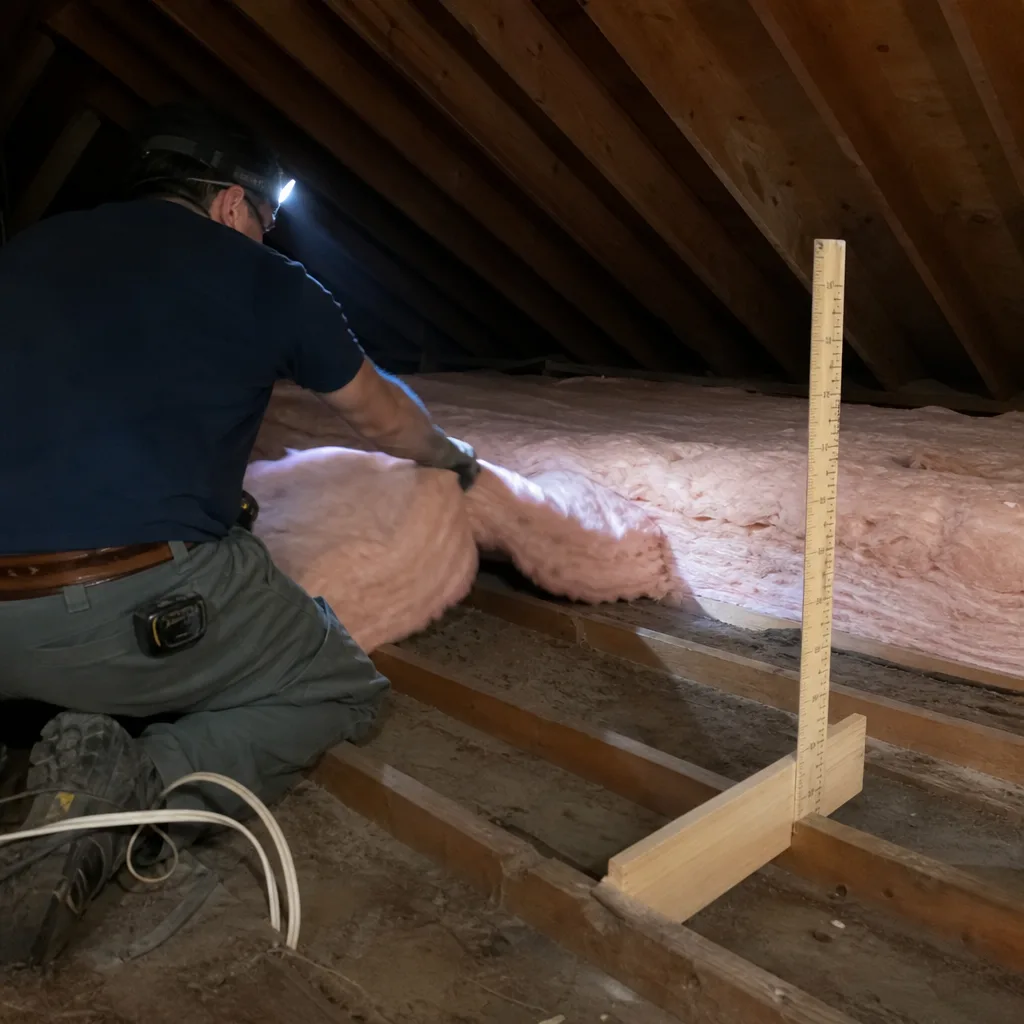
- Depth marker installation and blow. We set depth gauges across the attic floor so the installer can verify coverage in real time. Material – typically Knauf or Johns Manville blown-in fiberglass for most Santa Clarita attics, or cellulose for specific applications – is blown to the specified depth. Knauf EcoSeal is used for the air-sealing step where applicable. Coverage is consistent from the center of the attic to the eave edges where heat transfer is often worst.
- Post-job blower-door reading. After the attic floor is sealed and insulated, we run the blower-door again. The before and after CFM50 numbers go on your Documented Photo Record. You can see, in one concrete figure, what changed. If the air-sealing step did its job, the drop is usually 30 to 50 percent on homes where the attic floor was the primary leakage path.
- Photo record and closeout documentation. Every visible phase of the job is photographed – the attic floor before sealing, the sealed penetrations, the insulation depth at multiple gauge points, and the final even coverage. That photo record, combined with the blower-door numbers and the written warranty, is what we hand you when we leave. The 365-Day Done Right Promise covers every completed job: if it’s not right, we make it right.
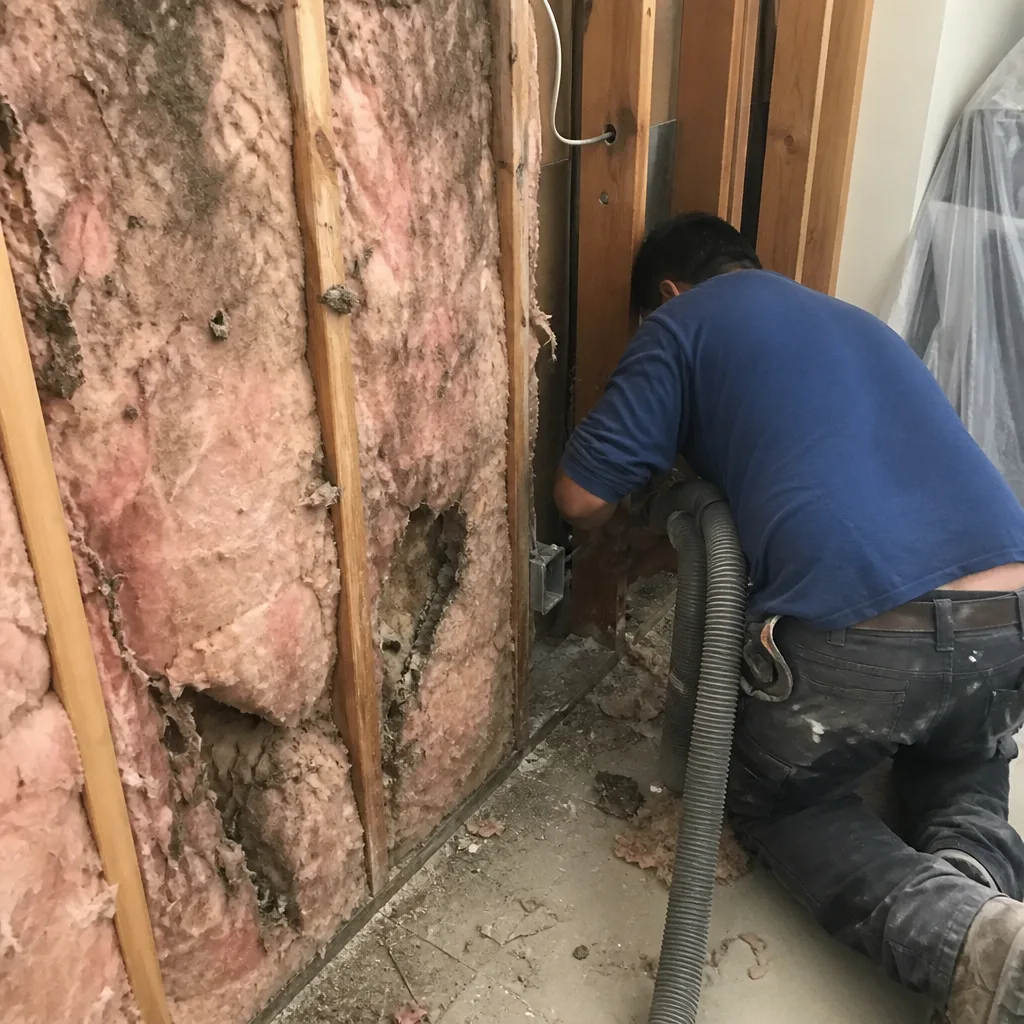 Before
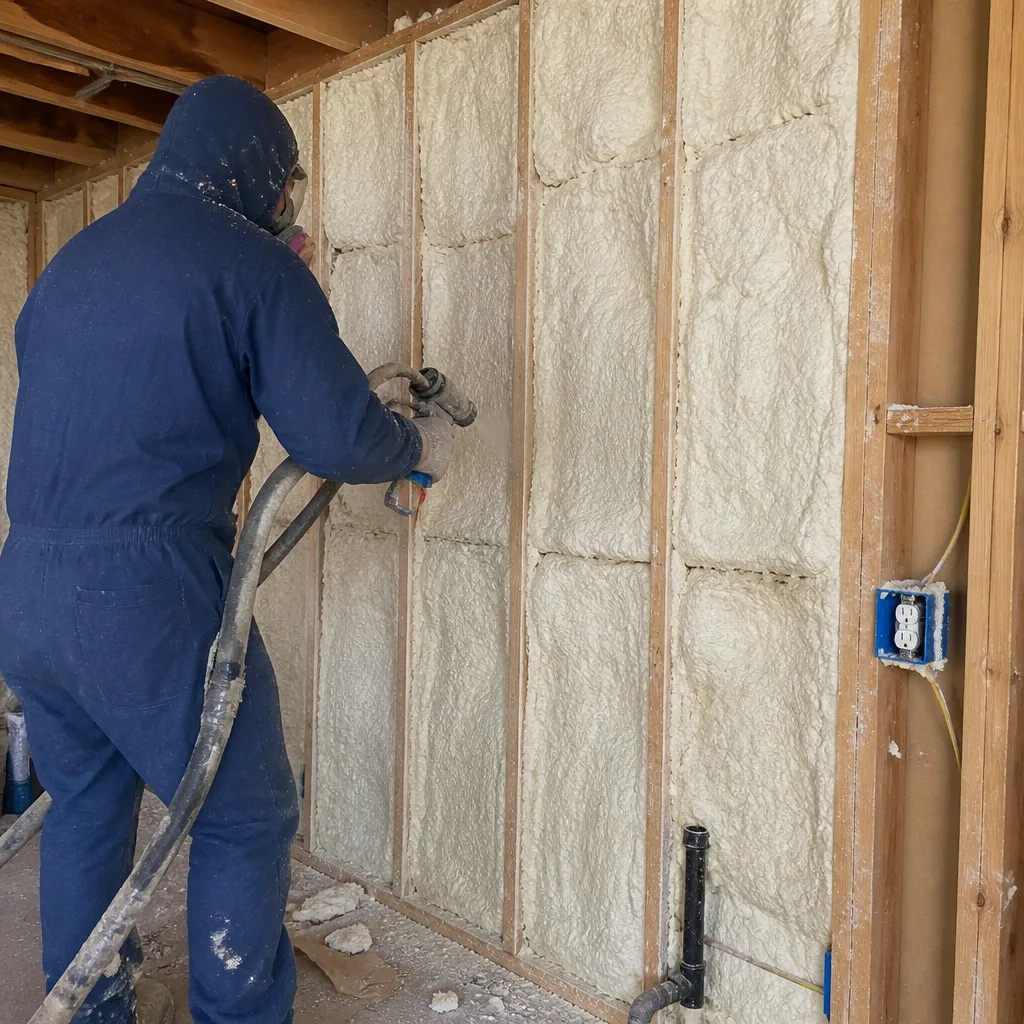 After
AfterBlown-In Attic Insulation Pricing in Santa Clarita
Blown-in attic insulation in Santa Clarita typically runs between $1,800 and $4,500 for a complete job that includes air sealing before the blow; for a detailed breakdown, see How Much Does Attic Insulation Cost? (2026 Price Guide) - Santa Clarita, CA. That range covers the majority of single-story homes between 1,200 and 2,800 square feet of attic floor space. Two-story homes or homes with complex roof framing in areas like Fair Oaks Ranch or Plum Canyon can run higher depending on accessibility and total square footage.
| Scope | Typical Price Range |
|---|---|
| Top-up only (existing R-19 or higher, small attic, minimal air sealing needed) | $800 – $1,500 |
| Full blow to R-38, average 1,500 sq ft attic, air sealing included | $1,800 – $2,800 |
| Full blow to R-49 or R-60, larger attic, significant air sealing, blower-door included | $2,800 – $4,500 |
| Blown-in after insulation removal and attic cleaning (reinstallation only) | $1,200 – $2,400 |
What moves the price up or down
- Attic access and headroom. Attics with low pitch or a single small hatch take longer to work in safely. Many homes in the older Newhall flatlands have tight eave clearances that slow the blow considerably.
- Number of can-light penetrations. Each recessed light in the ceiling below the attic is an air bypass. A home with 40 can lights requires more sealing time than one with 12.
- Current insulation depth. A top-up from R-19 to R-38 uses less material than starting from bare joists. We measure existing depth at multiple points before writing the price.
- Target R-value. California Title 24 for Climate Zone 9 (which covers most of Santa Clarita) requires R-38 minimum for attic insulation. Many energy auditors and utility rebate programs in the area recommend R-49 to R-60 for homes with high cooling loads, which requires more material and adds to cost.
- Material selection. Blown-in fiberglass from manufacturers like Johns Manville and blown cellulose from GreenFiber sit in similar price ranges. The right choice depends on attic moisture conditions and specific performance goals, and we’ll cover both in your written scope.
Every price Envelope Insulation Co. provides is a flat written price delivered before any work starts – Haven Standard Clause 1, no exceptions. There is no “estimate that grows on installation day.” If you have a written quote from another contractor, call (747) 294-2764 and we’ll review it with you at no charge. That free second opinion is available on any written estimate.
FAQs – Blown-In Attic Insulation
How much does blown-in attic insulation cost in Santa Clarita?
Most blown-in attic insulation jobs in Santa Clarita run between $1,800 and $4,500 when air sealing is included, which it always should be. The exact number depends on your attic’s square footage, current insulation depth, target R-value, and how many penetrations need sealing. A top-up on a small attic can be as low as $800. A full blown-in install to R-49 on a larger home in Stevenson Ranch or Valencia with many recessed lights can reach $4,500 or beyond. Call (747) 294-2764 and we’ll give you a flat written price after measuring your attic – no vague estimate ranges that shift when the crew arrives.
Does blown-in insulation work without air sealing first?
Blown-in insulation without prior air sealing delivers a fraction of the performance you’re paying for. Loose-fill material slows conductive heat transfer through the ceiling assembly, but it does not stop air movement through gaps and penetrations. A home with 4,000 CFM50 of air leakage and R-38 of blown-in insulation will still lose large amounts of conditioned air through the top plates and can lights sitting beneath that insulation. That is why Envelope Insulation Co. treats air sealing as a hard prerequisite on every blown-in job, not an optional add-on. The before-and-after blower-door numbers we document on every applicable job exist specifically so you can verify the difference that proper sequencing makes.
What R-value do I need for blown-in attic insulation in Santa Clarita?
California Title 24 requires a minimum of R-38 in attic assemblies for Climate Zone 9, which covers Santa Clarita. In practice, homes in the Santa Clarita Valley that run their air conditioning hard from May through October often benefit from going to R-49, because the incremental material cost is modest relative to the additional thermal resistance during the hottest part of the day. If your home qualifies for utility rebates through SoCalGas or SCE energy efficiency programs – which periodically incentivize upgrades beyond code minimum – R-49 or R-60 may be partially offset. We document the installed depth with photos and blower-door data so you have the paperwork those programs typically require.
How long does a blown-in attic insulation job take?
A typical blown-in attic insulation job in a Santa Clarita home – air sealing plus the blow – takes between three and six hours for an attic in the 1,500 to 2,000 square foot range. Larger attics, tight-access conditions, or homes with extensive can-light arrays may run longer. The blower-door readings add roughly 30 to 45 minutes total, split between the pre-job and post-job measurements. Most homeowners are back to normal use of the home the same afternoon. The crew cleans up before leaving, and the photo record and blower-door documentation are delivered before they go.
Why Santa Clarita Homes Specifically Benefit from Proper Blown-In Installation
Santa Clarita sits in a high-desert climate that pushes attic temperatures to 140°F to 160°F on summer afternoons – significantly above what most coastal California markets experience. That thermal load is relentless from late May through early October, and it doesn’t let up at night the way marine-influenced climates do. Homes in Canyon Country and Saugus that face south or west absorb more of that load directly, and attics without adequate R-value transfer it straight through the ceiling into the living space.
There’s a secondary factor specific to the Santa Clarita Valley that most insulation contractors don’t mention: Santa Ana wind events drive rapid pressure changes across the building envelope. A home with significant attic air leakage – the kind a blower-door test quantifies – can see substantial outdoor air infiltration during a Santa Ana, which dumps dry, hot air into the living space and forces the HVAC system to work against conditions it wasn’t sized to handle continuously. Air sealing the attic floor before insulation is added addresses that infiltration path directly.
Since 2016, Envelope Insulation Co. has completed blown-in work across more than 9,000 homes in the region, each with a written price and a documented record. Our parent service page for home energy envelope work explains the full scope of what that documentation looks like in practice.
Key Takeaways
- Blown-in attic insulation in Santa Clarita costs $1,800 to $4,500 for a complete job with air sealing; top-ups start around $800.
- California Title 24 requires R-38 minimum for Santa Clarita attics (Climate Zone 9); R-49 is often more practical given local summer heat loads.
- Air sealing comes before insulation – always. Blown-in fill does not stop air movement through gaps; it only slows conductive heat transfer.
- Before-and-after blower-door readings are documented on every applicable job so you can verify the actual performance change.
- Every job begins with a flat written price and scope (Haven Standard Clause 1) and ends with a Documented Photo Record and written warranty.
- The 365-Day Done Right Promise applies to every completed blown-in job: if something is not right, Envelope Insulation Co. makes it right.
- A free second opinion is available on any written estimate you bring us from another contractor.
Get Your Written Price for Blown-In Attic Insulation in Santa Clarita
If your attic hasn’t been assessed recently, or if you’re comparing estimates and want a second set of eyes on a quote, call (747) 294-2764. Wes Okafor and the Envelope Insulation Co. crew serve Santa Clarita and the surrounding communities, and a live person answers every time – no voicemail, no callback window. We’ll schedule an attic assessment, measure what’s there, and give you a flat written price before any work is discussed further. That’s how every job starts here, and it has been since 2016.
Written by Wes Okafor, Owner at Topside Attic Insulation Santa Clarita, serving Santa Clarita since 2016.