
Attic Batt Insulation in Santa Clarita, CA
Attic batt insulation in Santa Clarita typically runs between $1,400 and $3,800 for a standard single-story home, depending on square footage, current R-value, and how much air sealing work the attic floor needs before batts go in. Most jobs are completed in a single day. If your home was built before 2005 and the attic has never been touched, there’s a good chance the existing insulation is compacted, rodent-damaged, or sitting over a shell of unsealed penetrations that’s been quietly draining conditioned air every summer since Wes Okafor started doing this work.
Batt insulation – fiberglass or mineral wool cut into pre-sized panels and fitted between joists – is one of the most durable attic insulation formats available. Installed correctly over a sealed attic floor, it holds its R-value for decades. Installed over an unsealed floor, it insulates the dirt in your crawlspace just as effectively as it insulates your living space. That distinction is why we treat air sealing as a hard prerequisite, not a line item you can decline. The attic floor gets sealed first – top plates, can light penetrations, HVAC chases, any plumbing or electrical pass-throughs – then the batts go in. That order is not negotiable at Topside Attic Insulation Santa Clarita, and it’s the reason our before-and-after blower-door numbers look different from the industry average.
If you’re comparing contractors or already have a written estimate in hand, call (747) 294-2764 – we’ll read it with you at no charge. And if you want the full picture on attic insulation types and what makes sense for your home, the parent Attic Insulation in Santa Clarita page covers it in detail.
When You Need Attic Batt Insulation
- Your upstairs rooms stay 6-10°F hotter than the rest of the house in July and August. Santa Clarita’s summers push attic temperatures above 150°F on west-facing pitches in Stevenson Ranch and Canyon Country. If the insulation layer underneath can’t break that heat transfer, the rooms directly below it cook. Batts at R-38 or above give the thermal resistance needed to keep that differential manageable.
- Your energy bills have climbed even though your usage habits haven’t changed. Degraded or settled insulation loses R-value over time. A 25-year-old fiberglass batt that started at R-30 may be performing at R-19 or less after compression and moisture cycling. We’ve measured this gap with a blower-door test – a pressurization reading that shows, in one number, how much conditioned air the home is losing – in dozens of Santa Clarita homes near the Soledad Canyon corridor.
- You’re buying a home built between 1985 and 2005 in Valencia or Saugus. Tract construction in those years commonly used R-19 batts in attics that current Title 24 standards would require at R-38. A pre-purchase energy assessment often reveals insulation that was code-compliant in 1993 and undersized for today’s cooling loads and LADWP rate structures.
- Rodents have nested in the existing insulation. We see this regularly in homes backing up to the Santa Clara River wash in Newhall and along the Placerita Canyon edges. Nesting compresses batts, introduces moisture and contamination, and drops R-value to near zero in affected bays. Removal, sanitation, and fresh batt installation is the documented path forward – not patching.
- You’ve had spray foam or blown-in insulation quoted but want a lower-profile, removable option. Batts are accessible. If you need to run new electrical or plumbing in 10 years, a batt layer can be lifted, the work done, and the insulation replaced. That’s a real advantage in older Santa Clarita homes where the attic still serves as a working utility space.
- Your HVAC ducts run through an unconditioned attic and you’re losing efficiency at the connections. Batt insulation around and over duct runs – combined with mastic sealing of the ducts themselves, which is a separate step we document – materially reduces the load on your air handler. This matters more in Santa Clarita than in coastal climates because the delta between attic air and duct interior is larger here for more months of the year.
Our Attic Batt Insulation Process
- Written scope and price before anyone sets foot in the attic. Under Haven Standard Clause 1, you receive a flat written price, a written scope of work, and a written warranty before any work starts. No ambiguity about what’s included, no “we’ll figure out the rest once we’re up there.” The quote covers removal (if needed), air sealing, batt installation, and the documented photo record. If the attic reveals something the initial visual assessment didn’t catch – a hidden chase opening, a failed vapor barrier – we stop, document it, and revise the scope in writing before proceeding.
- Pre-work blower-door baseline reading. We pressurize the home to 50 pascals – the industry standard – and record the CFM50 figure. This is the “before” number. It tells us exactly how leaky the building envelope is before we touch anything. Skipping this step means the homeowner has no way to verify what the air sealing actually accomplished. We don’t skip it.
- Attic floor air sealing – completed before any insulation is moved or added. Top plates get sealed with fire-rated caulk or two-part foam, depending on the gap size. Recessed can lights – especially the older, non-IC-rated fixtures common in 1990s Santa Clarita construction – get capped with an airtight cover before insulation buries them. Every plumbing stack, electrical conduit, and HVAC penetration through the attic floor gets addressed. This step typically takes two to four hours on a 1,600-square-foot attic floor. It’s not glamorous. It’s the entire reason the R-value number on the batt packaging means what it says.
- Old insulation removal, if required. Contaminated, rodent-damaged, or severely degraded insulation comes out before anything goes in. We use HEPA-filtered vacuum equipment and bag everything for disposal. The attic floor is photographed after clearing so you can see the substrate condition before new material covers it. For homes with blown-in insulation over existing batts – a common layering mistake we find in Granada Hills-adjacent Canyon Country neighborhoods – we assess whether the lower layer is structurally sound or whether a full clear-out is the better call.
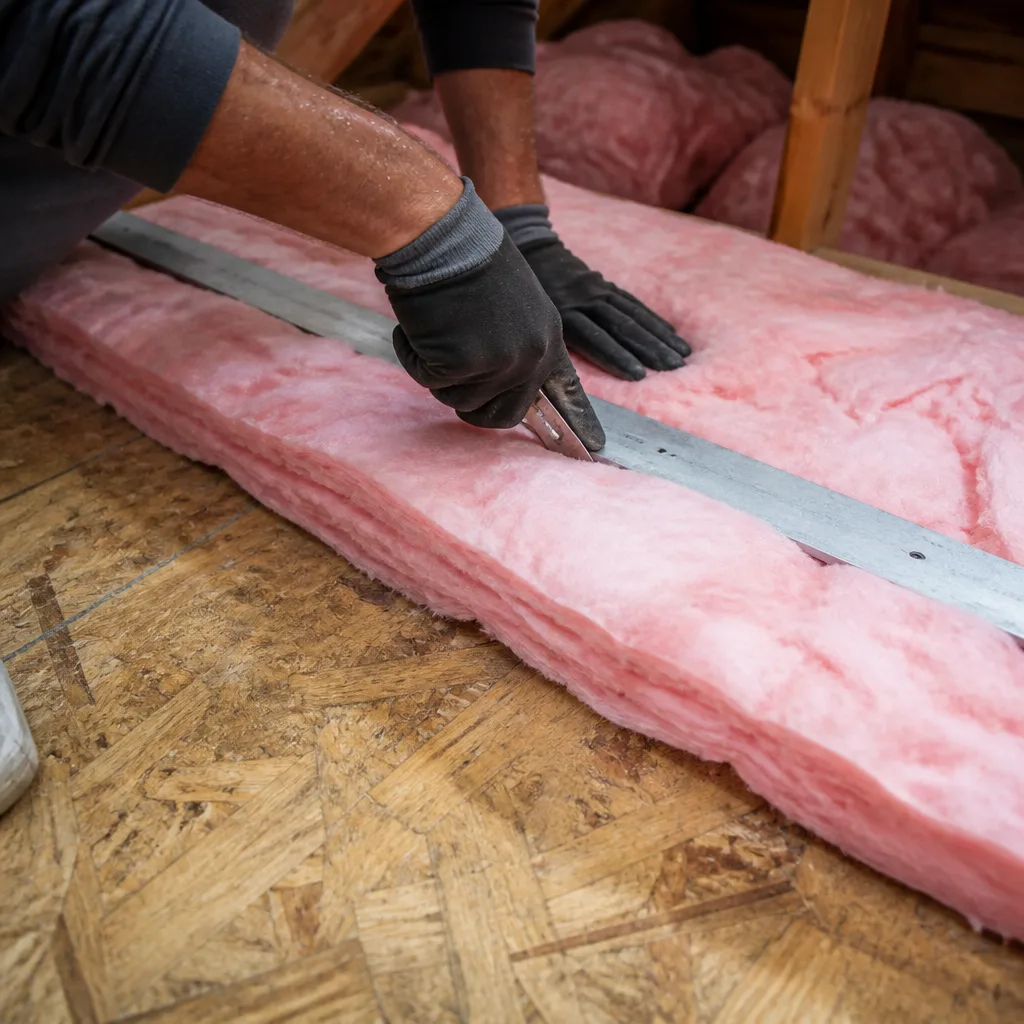
- Batt installation to the specified R-value. We source batts from Johns Manville and Rockwool depending on the application – Johns Manville fiberglass for standard residential joist bays, Rockwool mineral wool where fire resistance rating or moisture tolerance is a priority. Batts are cut to fit, not folded or compressed into bays to make up the difference. Compression reduces R-value directly: a batt compressed to fill a 3.5-inch bay when it’s rated for a 6-inch bay is performing at the R-value of a 3.5-inch batt. Every bay is filled to the correct depth, and the installed R-value is verified against the joist measurement before the crew leaves.
- Post-work blower-door reading, documented photo record, and written closeout. The pressurization test runs again. The after-CFM50 figure is recorded alongside the before figure and included in your job documentation. Photos of the sealed penetrations, the batt installation, and the attic access area are compiled into the Documented Photo Record – included on every job, not available on request. You receive the blower-door numbers, the photos, and the written warranty before the crew loads the van.
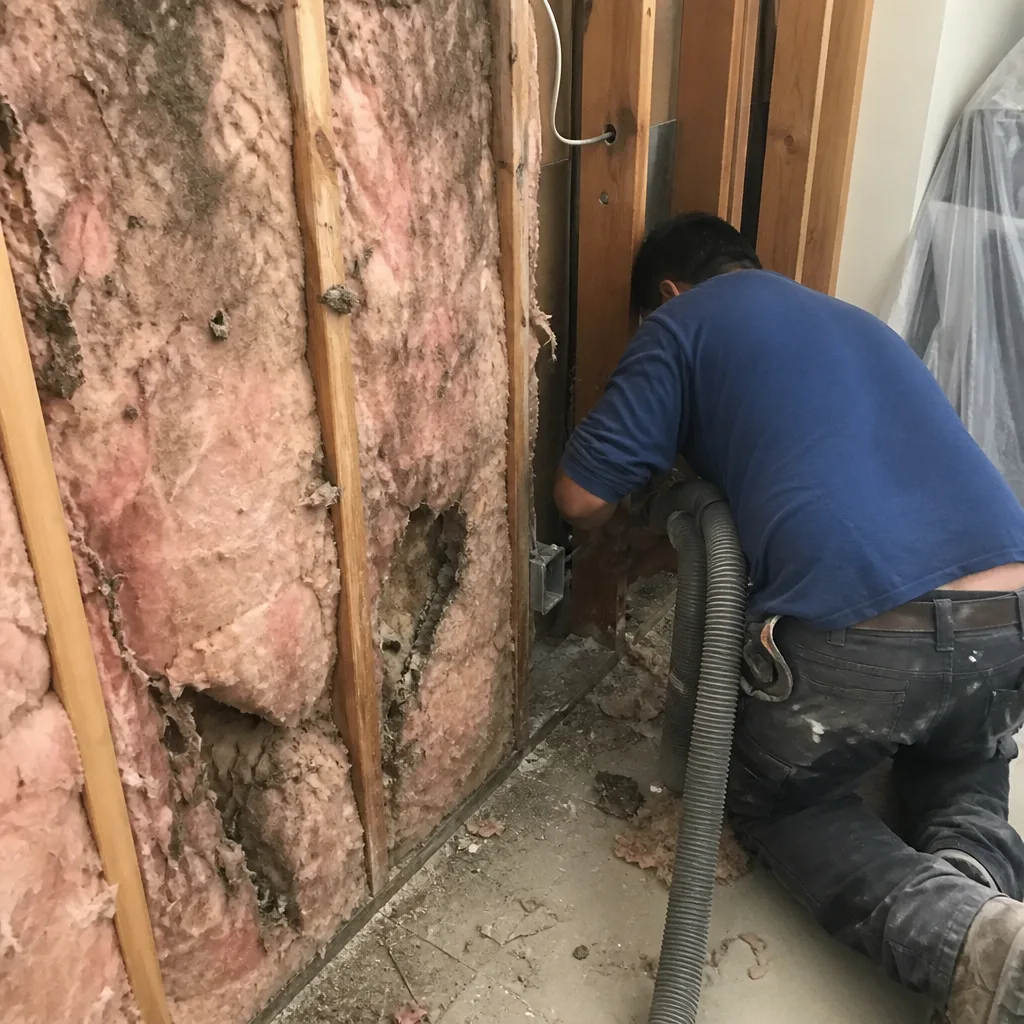 Before
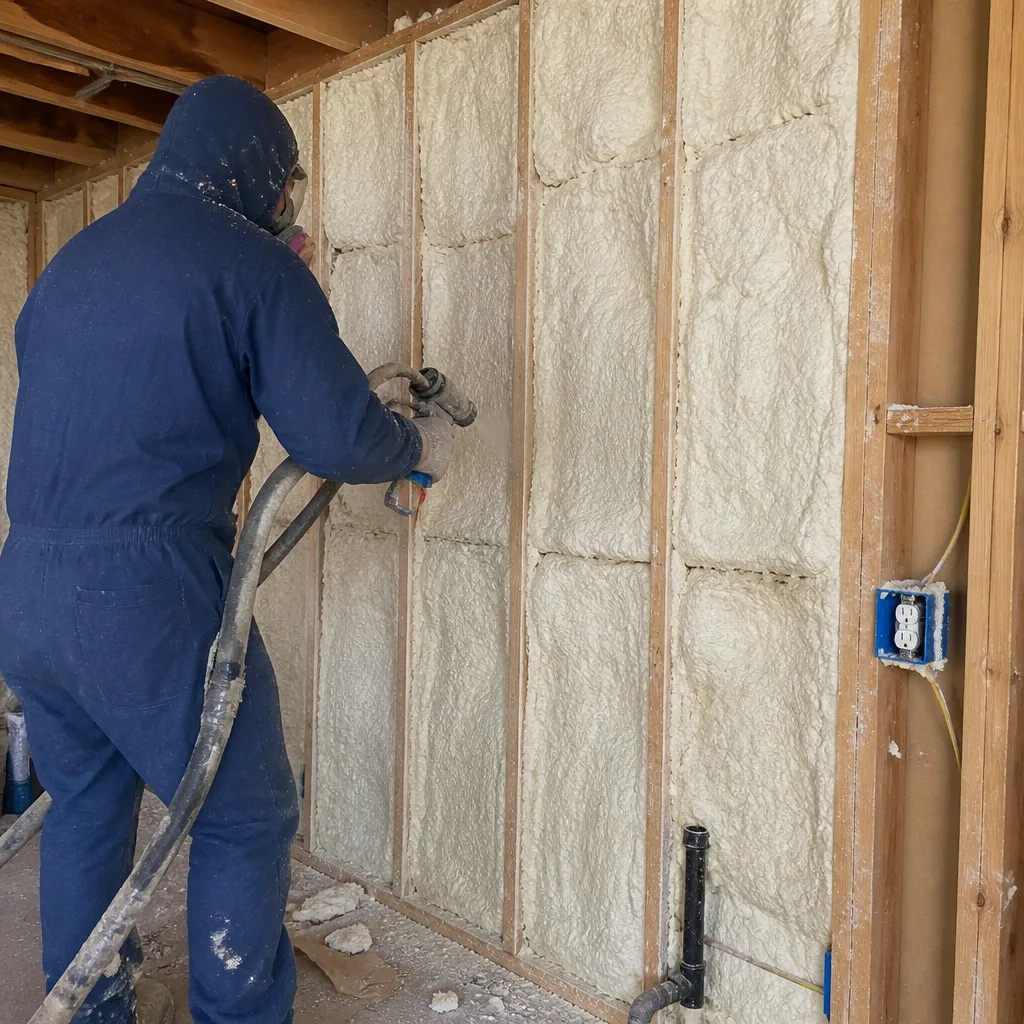 After
AfterAttic Batt Insulation Pricing in Santa Clarita
Most attic batt insulation jobs in Santa Clarita fall into one of three cost tiers, depending on attic size, existing conditions, and the R-value target. The ranges below reflect actual job data from homes we’ve worked on across Valencia, Saugus, Stevenson Ranch, Newhall, and Canyon Country. They include air sealing – because we don’t quote insulation without it – and the Documented Photo Record.
| Scenario | Typical Range |
|---|---|
| New batt installation, no removal, attic under 1,000 sq ft (R-30 to R-38) | $1,400 – $2,000 |
| Batt installation with attic floor air sealing, 1,000-1,800 sq ft (R-38) | $2,000 – $2,800 |
| Full removal, air sealing, and batt reinstall, 1,500-2,200 sq ft (R-49) | $2,800 – $3,800 |
| Rockwool mineral wool batts (premium fire/moisture tolerance), add approximately | $300 – $600 |
Several variables move the number inside those ranges:
- Attic access difficulty. Low-pitch rooflines – common in 1970s and early 1980s construction in Newhall – slow installation and occasionally require additional staging time. Attics under 18 inches of clearance at the eaves are priced separately.
- Number of can light penetrations. Older homes in Valencia and Saugus with 12 or more recessed fixtures in the ceiling below the attic require proportionally more sealing labor. Each fixture cap is documented.
- Contamination level. Heavy rodent activity, black mold staining on the sheathing, or wet insulation from a past roof leak changes the scope. We document every condition we find and revise the written scope before continuing.
- Target R-value. California’s Title 24 requires R-38 minimum for attic insulation in Climate Zone 9, which covers most of the Santa Clarita Valley. Homes in the hotter microclimate pockets near Agua Dulce and Acton – just outside the city boundary – are often better served by R-49, which adds material cost but reduces cooling load meaningfully over a 10-to-15-year horizon.
Under the Haven Standard, you receive a written price before any work starts – a flat number, not a range that expands once the crew is in the attic. If you have a competing written estimate, call (747) 294-2764 and we’ll review it with you. That review is free, and there’s no obligation to book with us afterward.
FAQs – Attic Batt Insulation
What R-value do I need for attic batt insulation in Santa Clarita?
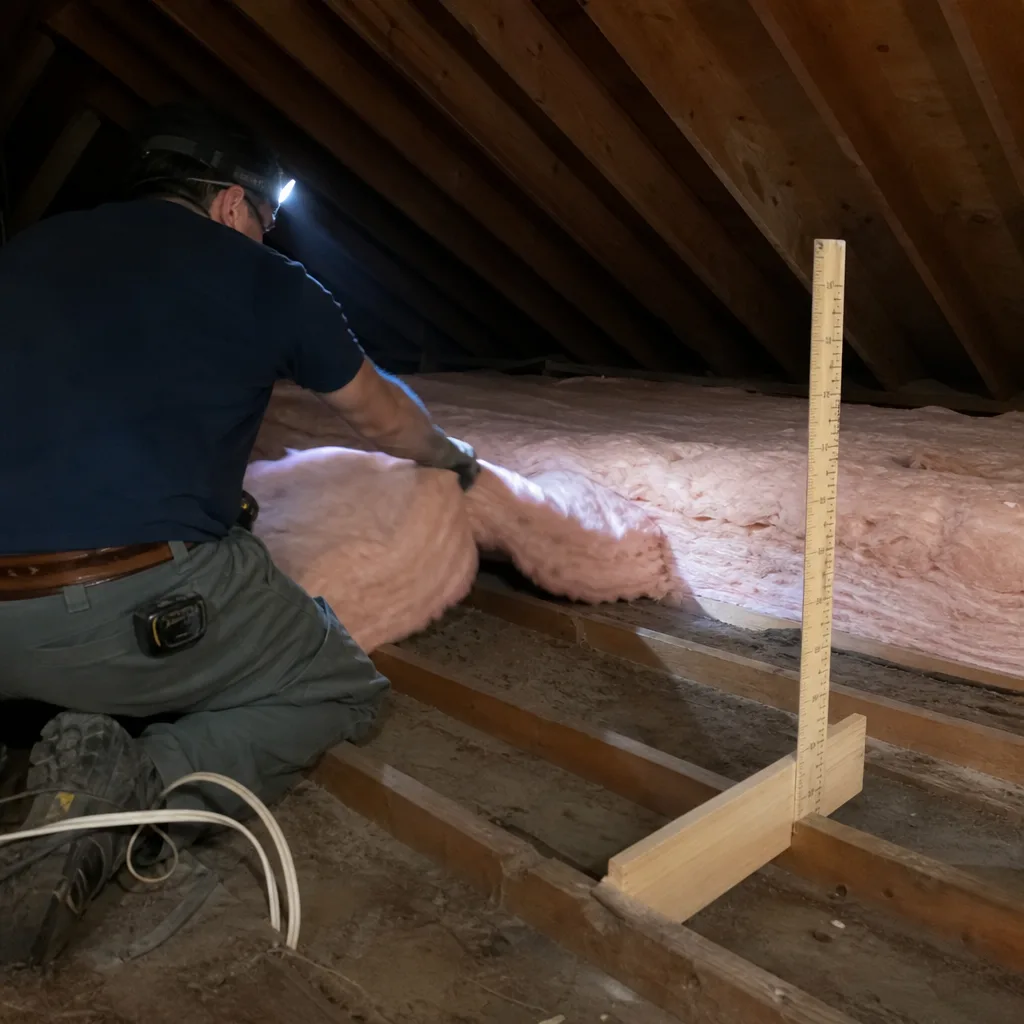
R-38 is the California Title 24 minimum for attic insulation in Climate Zone 9, which covers the Santa Clarita Valley. If your current insulation reads below R-19 on a probe measurement – common in homes built before 2000 – upgrading to R-38 will produce a measurable change in cooling load. Homes in the eastern portions of the valley closer to the desert transition zone often benefit from R-49, which adds roughly $0.15-0.30 per square foot in material cost but reduces the peak-load stress on your HVAC system during the sustained 100°F-plus stretches Santa Clarita sees in August. We’ll give you the specific recommendation for your attic in the written scope before any work starts. To find attic insulation near me in Santa Clarita, CA, call to schedule an assessment. Call (747) 294-2764 to schedule an assessment.
Can you install batt insulation over existing insulation, or does the old material have to come out first?
It depends on the condition of the existing insulation, not its age. If existing batts are dry, undamaged, and haven’t been compressed below their rated R-value, adding a second layer on top is a legitimate option – batts run perpendicular to the joists so they cover the thermal bridges the first layer leaves exposed. If the existing insulation shows rodent damage, moisture staining, or has been disturbed by prior utility work, attic insulation replacement is the correct call. We photograph the attic floor before making that recommendation so you can see the condition we’re basing it on. Roughly 40% of the Santa Clarita homes we inspect have at least some contaminated bays that need clearing before new material goes in. The written scope will tell you exactly which approach applies to your attic.
How long does attic batt insulation installation take?
Most attic batt installations in Santa Clarita are completed in a single day. A straightforward installation with air sealing on a 1,400-square-foot attic typically runs four to six hours for a two-person crew. Add two to three hours if full removal is required. Attics with difficult access – low eave clearances or pull-down stairs as the only entry point – can run longer, and we’ll note that in the written scope. We send you a text when the technician is on the way, and calls are answered by a live person if your schedule changes.
Is batt insulation or blown-in insulation better for a Santa Clarita attic?
Both work. The choice usually comes down to the attic geometry and what you plan to use the space for. Batts are a better fit when joists are evenly spaced and accessible, when the attic contains active utility runs you may need to access later, or when you want a specific R-value in a specific location without relying on even distribution of loose material. Blown-in cellulose or fiberglass covers irregular spaces and tight eave areas more completely, which matters in some of the older Newhall and Canyon Country floor plans. On a practical note, blown-in generally costs less per square foot for large open attics but requires equipment that’s harder to stage in attics with restricted access. Our home page links to the full service list if you want to compare options before committing to either. We’ll give you a written price on both formats if that helps the decision.
Written by Wes Okafor, Owner at Topside Attic Insulation Santa Clarita, serving Santa Clarita since 2016.