
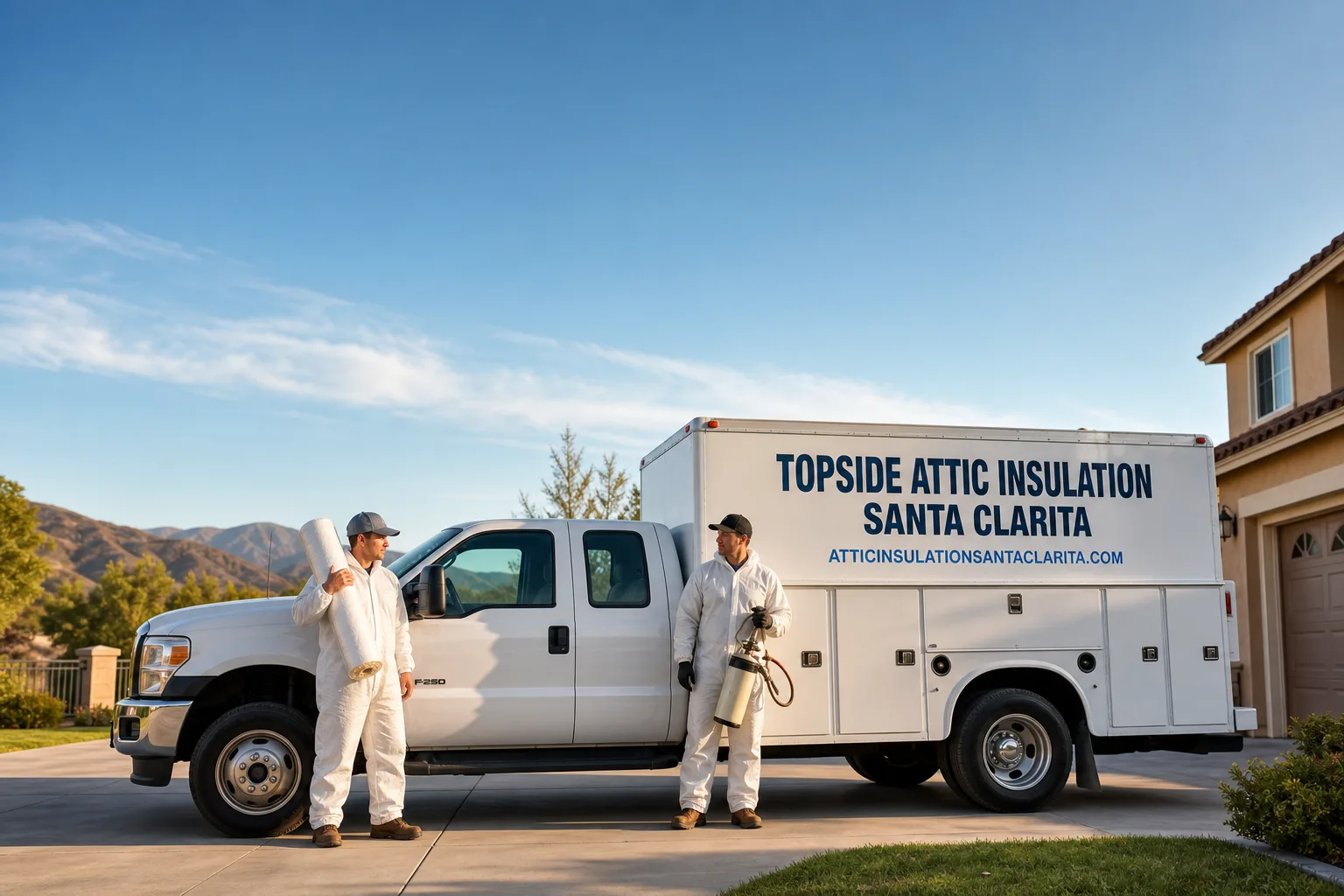
Fast, Reliable Attic Insulation Across Hidden Hills
Attic insulation in Hidden Hills, CA typically runs $2.80-$5.50 per square foot installed, with most ranch-style homes falling between $3,200 and $6,800 for a full replacement and newer estates ranging $8,500-$18,000 depending on attic complexity. We’re usually on-site in Hidden Hills within 45 minutes of dispatch from our Los Angeles office, and same-day assessments are standard. Call (747) 294-2764 for a free written estimate with your scope and price locked before any work starts.
Hidden Hills isn’t a typical Valley suburb. The acreage lots, equestrian zoning, and mix of original 1960s ranches alongside 10,000-square-foot new builds mean every attic is different. We’ve worked on homes off Long Valley Road where the attic access is through a detached garage workshop, and on newer estates near Round Meadow Road with conditioned attic spaces and spray-foam assemblies. That range matters because the wrong approach - blowing fiberglass over unsealed top plates, or skipping baffles in a vented ranch attic - wastes money and can put you out of compliance with the fire codes that govern this entire city.
Why Topside Attic Insulation Santa Clarita Is Hidden Hills’s Preferred Attic Insulation Company
We’ve completed attic work on more than 200 Hidden Hills properties since 2016, from original ranch renovations to new-construction Title 24 verification. Our reviews from Hidden Hills customers consistently cite two things: the blower-door numbers we leave behind, and the fact that we seal before we insulate. One recent customer on Oakfield Drive noted that our crew found bypass leaks around a chimney chase that two previous contractors had missed entirely.
Response time to Hidden Hills averages 40-50 minutes from dispatch. Our crews carry fire-rated batts, thermal barrier materials for spray-foam jobs, and baffle stock sized for both shallow ranch attics and deep new-construction bays, so we’re not making a second trip for parts.
The local knowledge that matters here is regulatory. Hidden Hills sits entirely inside a Very High Fire Hazard Severity Zone, so attic insulation here is a compliance decision before it’s a comfort decision. Spray foam needs a properly installed thermal barrier. Batt and blown products must be fire-rated. Most neighboring San Fernando Valley cities only hit these restrictions in select pockets. We know which products carry the right ICC-ESR reports for this jurisdiction, and we document that compliance in your photo record.
Our Attic Insulation Services in Hidden Hills
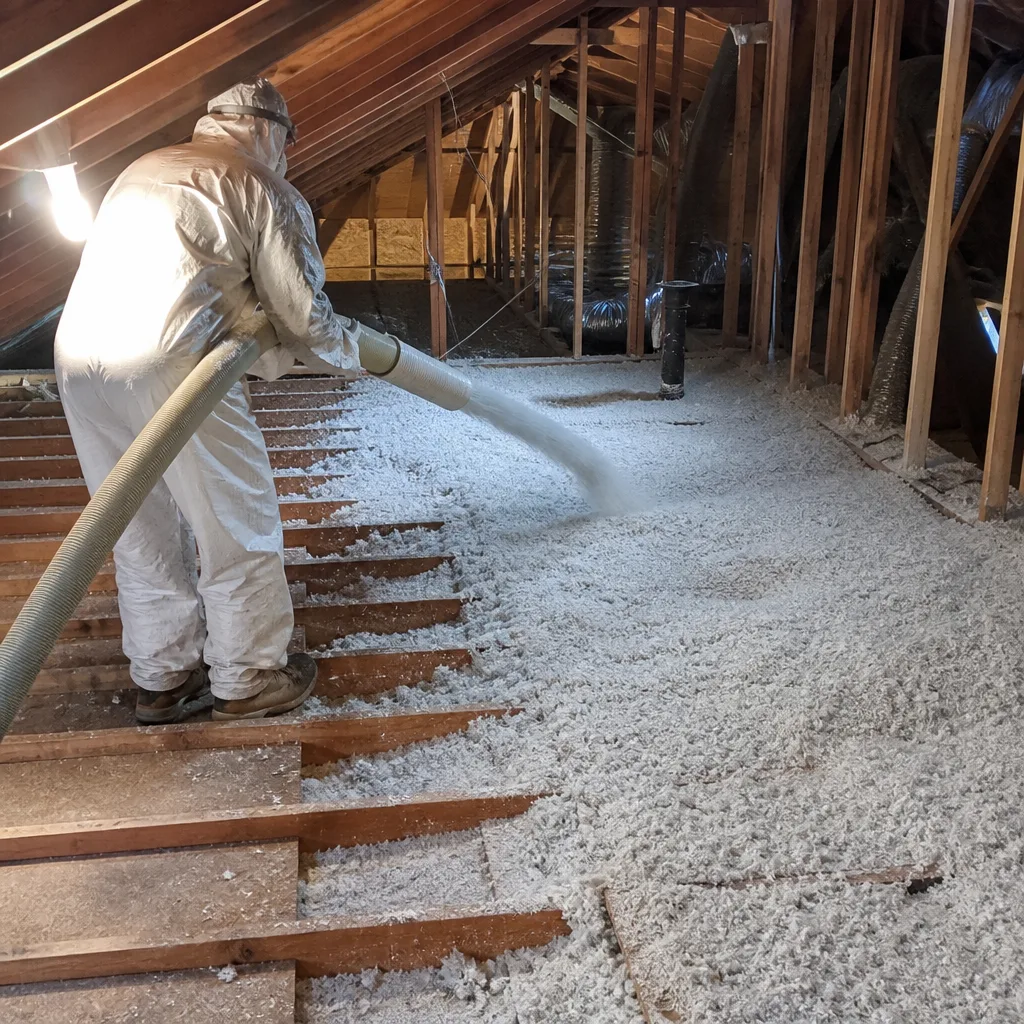
Blown-In Attic Insulation
Blown-in fiberglass or cellulose is our most common fix for Hidden Hills’s original 1960s ranches with shallow attics and scattered existing batts. We use Knauf Jet Stream Ultra or Owens Corning AttiCat systems, blown to depth after air sealing is complete. On a typical 1,800-square-foot ranch near Long Valley Road, that means pulling any compressed or misplaced existing material, sealing top plates and penetrations with fire-rated caulk and intumescent spray, then blowing to R-38 or R-49 depending on whether Title 24 compliance is required. The blower-door test - a pressurization reading that shows, in one number, how much air your building envelope is losing - is performed before and after so you can verify the result.
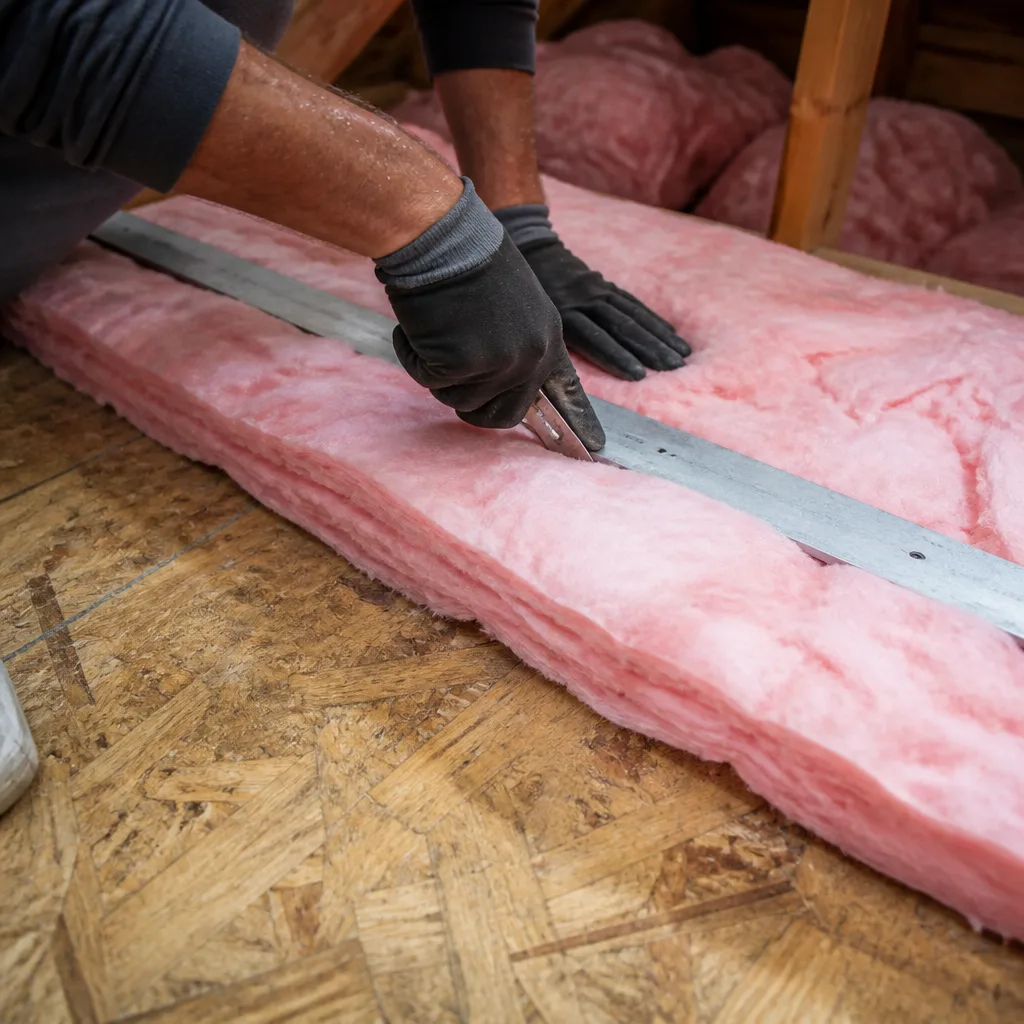
Attic Batt Insulation
New-construction estates in Hidden Hills, or full gut renovations, sometimes call for batt installation where the attic is still open and accessible. We source Rockwool ComfortBatt or CertainTeed fiberglass for these jobs, both fire-rated for VHFHSZ compliance. Batts are cut to fit around obstructions, not compressed over them, and we staple insulation dams at soffit baffles to maintain the ventilation channel. On the larger custom homes near Round Meadow Road, we’ve found that builders sometimes spec’d batts in vaulted ceiling assemblies without proper venting above; we correct that before the ceiling plane starts trapping moisture.
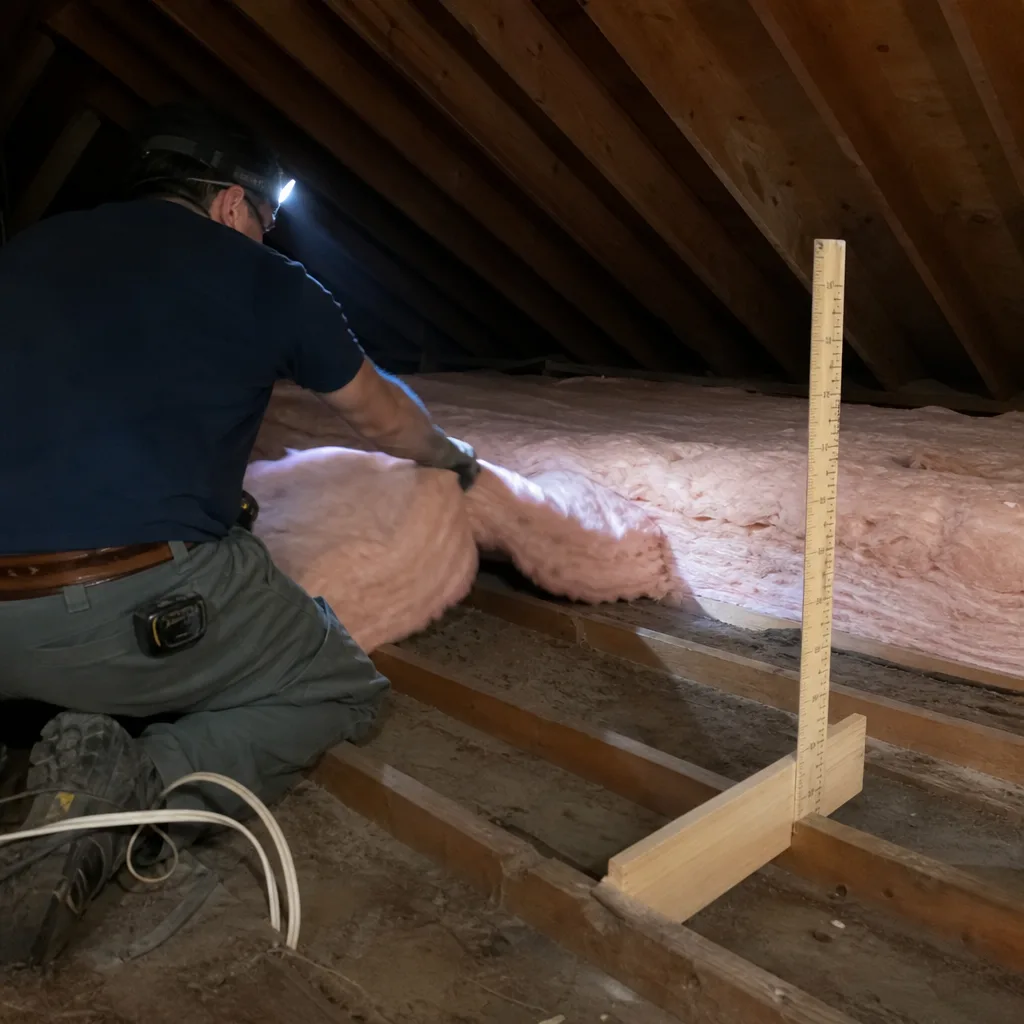
Attic Insulation Top-Up
Top-ups are common in Hidden Hills when existing insulation is present but under depth, or when a 1960s ranch has had partial upgrades over the years. We don’t blow over unsealed attic floors - that’s Haven Standard Clause 1, and it’s non-negotiable. The crew inspects first. If the existing batts are below the joists, as we frequently find in original Hidden Hills construction, we pull them and start correctly. If they’re compressed against soffits and dried out from Santa Ana wind exposure, we remove the damaged material, install baffles, and blow new insulation to uniform depth. Most top-ups in Hidden Hills run $1,800-$3,400.
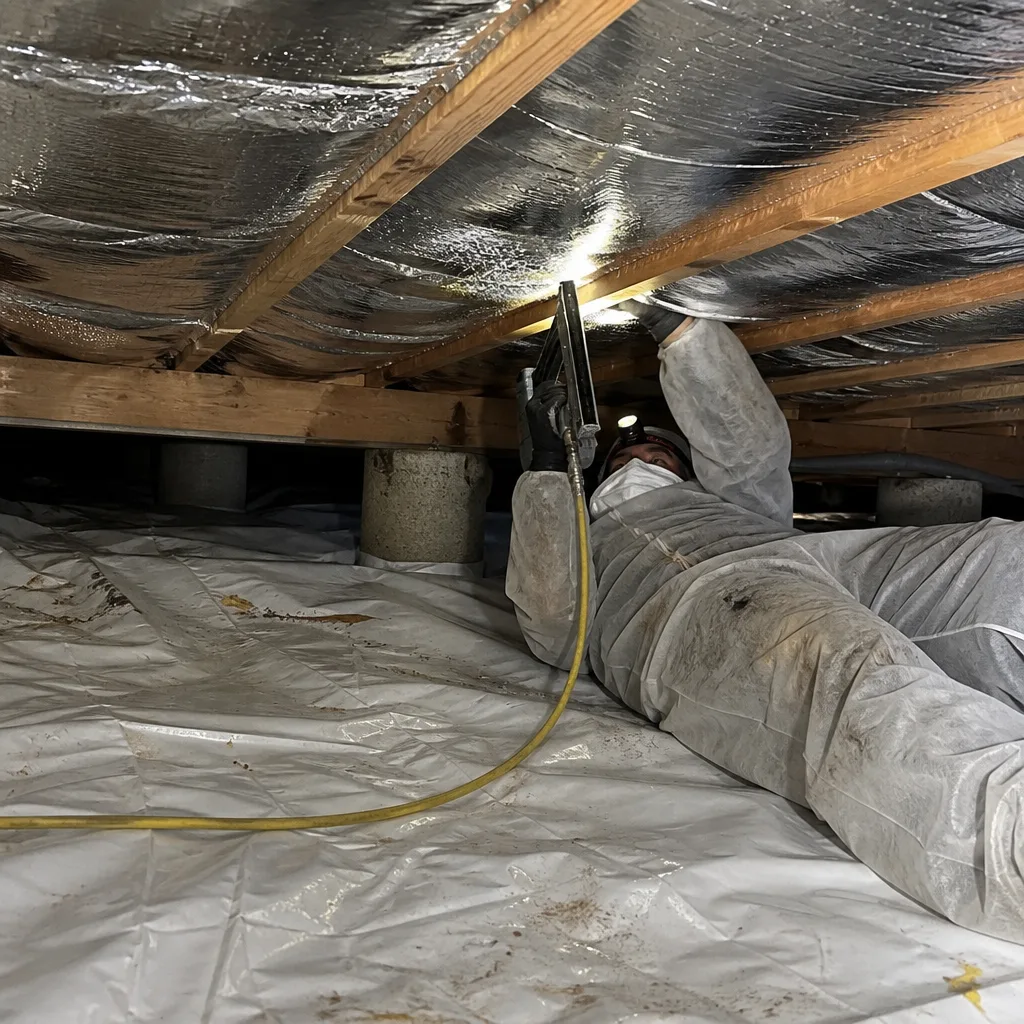
Attic Insulation Replacement
Full replacement is the right call when existing material is contaminated, water-damaged, or installed so incorrectly that adding on top would compound the problem. On a surviving 1960s ranch off Long Valley Road, our crew opened the attic and found the original fiberglass batts laid below the joists instead of between them, so the finished ceiling was absorbing radiant heat off a bare roof deck - the owner had assumed the house was simply too old to cool. We pulled the misplaced batts, blew in Owens Corning fiberglass above the joists to the depth Title 24 wants, and added baffles at the vented soffits, and the afternoon cooling load dropped the same week. Full replacements in Hidden Hills typically range $3,200-$8,500 for ranches, $10,000-$22,000 for large custom estates with complex rooflines.
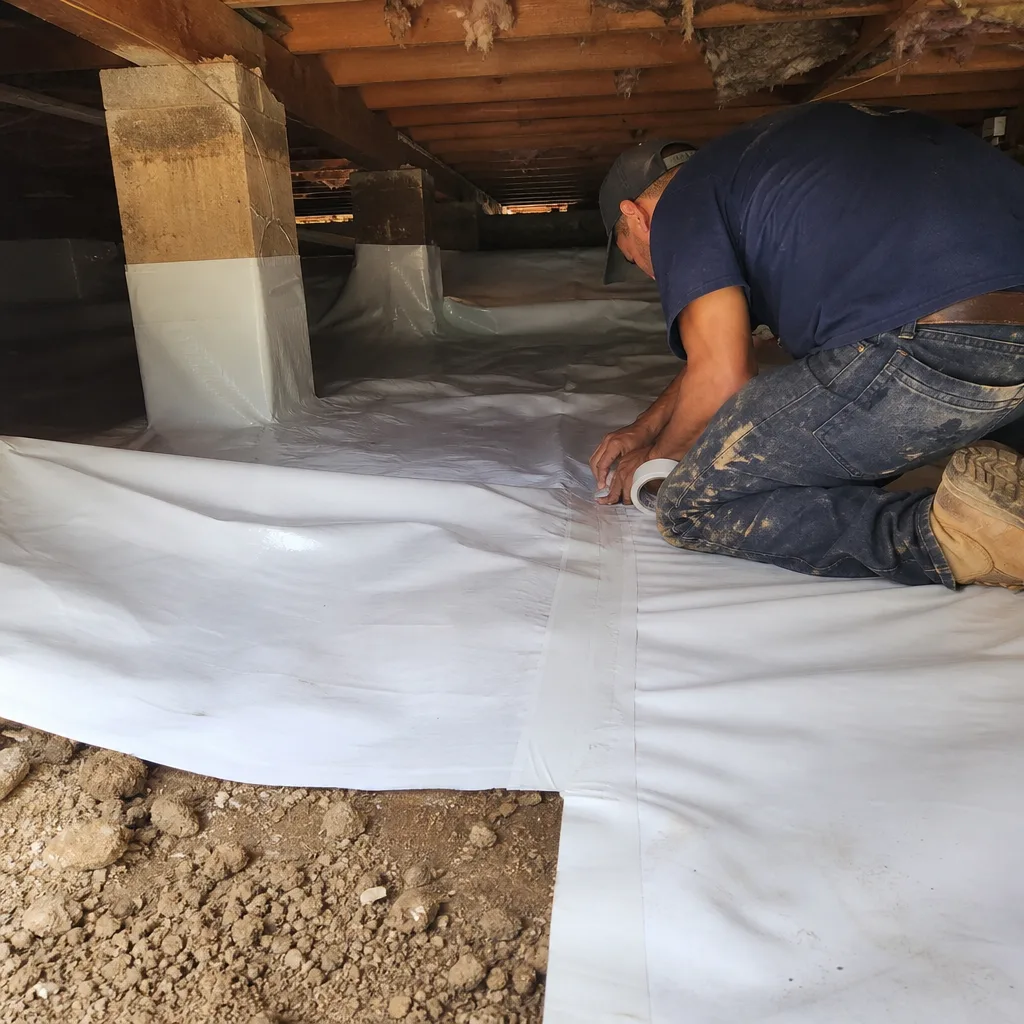
Attic Baffles & Ventilation Prep
Every vented attic in Hidden Hills needs baffles - foam or cardboard channels that keep insulation from blocking soffit vents while maintaining airflow from eave to ridge. We install them as standard on every blown-in job, sized for the attic depth we’re working with. On shallow ranch attics with 2×6 or 2×8 joists, that sometimes means retrofitting raised heel trusses or installing vent chutes that extend above the joist plane. On new-construction estates with deep attics, we verify that builder-installed baffles actually run clear to the ridge; we’ve found more than one $5 million home where they stop halfway.
What happens when you call
- 1
A real person answersNo phone trees - you reach a local pro.
- 2
You get an upfront price rangeHonest numbers before anyone is dispatched.
- 3
A background-checked tech heads outLicensed & insured, dispatched right away.
- 4
You approve before work beginsNothing starts until you say go.
 Before
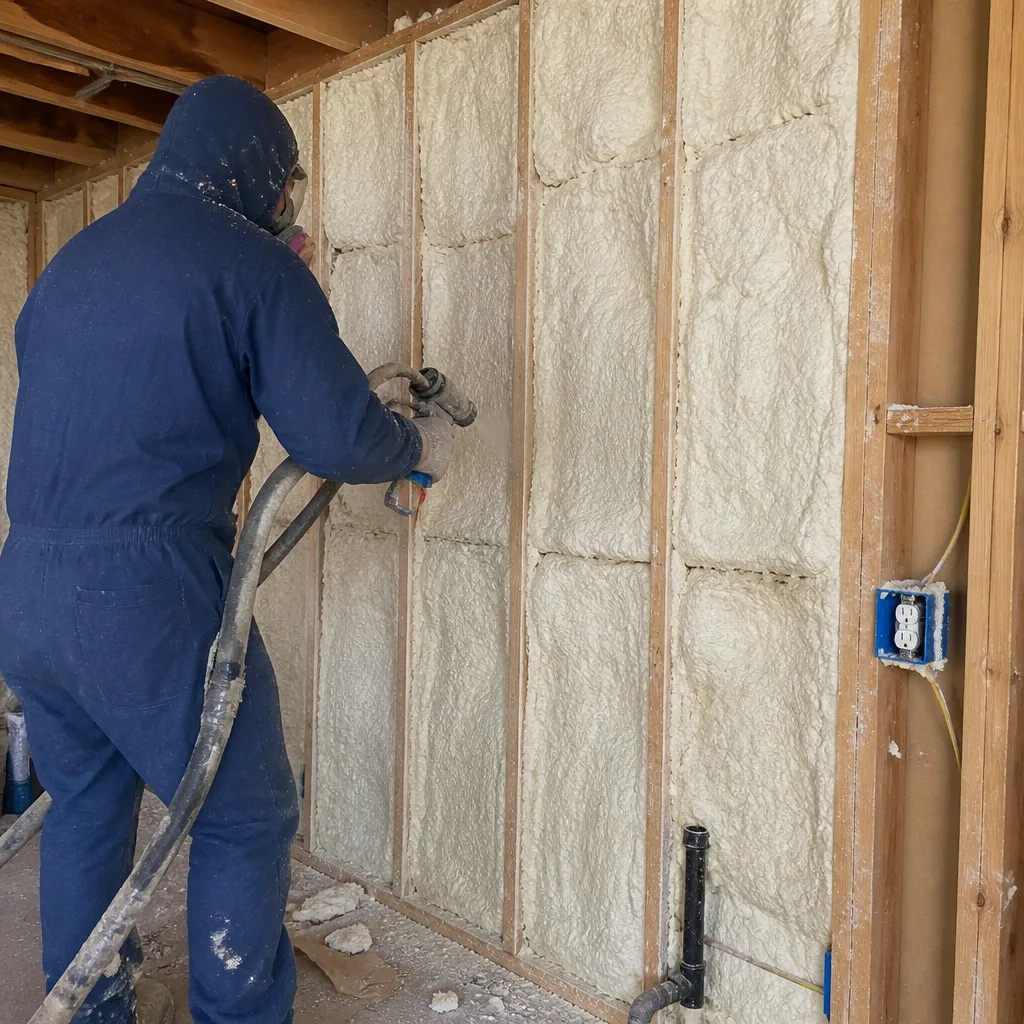 After
AfterTrusted Brands We Service in Hidden Hills
We stock Knauf, Rockwool, and CertainTeed products as our standard fire-rated offerings for Hidden Hills’s VHFHSZ requirements, with Icynene open-cell and closed-cell spray foam available for conditioned attic assemblies where thermal barriers are spec’d. No proprietary lock-in - we select by assembly type, code requirement, and performance target, then document the product lot numbers in your photo record. For Hidden Hills customers, that means no waiting on special orders for compliant materials. Our Los Angeles warehouse carries thermal barrier coatings, intumescent sprays, and fire-rated caulk in quantity, so crews arrive with what’s needed for a single-trip completion.
Common Attic Insulation Problems We See in Hidden Hills Homes
- Original 1960s batts installed below the joists rather than above. This was standard practice in early Hidden Hills construction, and it leaves the roof deck radiating directly into your ceiling plane. The attic looks insulated, but the living space bakes. We find this on roughly one in three ranch inspections.
- Older batts compressed against vented soffits and degraded by Santa Ana wind exposure. Fall wind events in the western Valley interior pull dry air through soffit vents at velocity, desiccating compressed fiberglass until it mats and loses loft. The R-value collapses without any visible gap or missing section.
- Spray foam applied without the thermal barrier VHFHSZ rules require. We’ve been called to correct other contractors’ work where open-cell foam was left exposed in an attic that sits entirely in a Very High Fire Hazard Severity Zone. That’s a compliance failure that can affect insurance coverage and resale.
- Vaulted or sprawling ceiling planes on newer estates with partial top-ups leaving hot zones. On 6,000-15,000 square foot custom builds with complex roof geometry, uneven insulation depth creates measurable temperature stratification. We map with thermal imaging and correct to uniform coverage.
Pricing for Attic Insulation in Hidden Hills, CA
| Service | Typical Range in Hidden Hills |
|---|---|
| Attic air sealing + blown-in top-up (ranch, 1,200-2,000 sq ft) | $1,800 - $3,400 |
| Full batt or blown-in replacement (ranch, 1,200-2,000 sq ft) | $3,200 - $6,800 |
| Full replacement (custom estate, 4,000-8,000 sq ft) | $8,500 - $18,000 |
| Spray foam conditioned attic (estate, per sq ft of roof deck) | $4.50 - $7.20 |
| Attic baffles & ventilation prep only | $650 - $1,400 |
| Blower-door test with written report | $350 - $550 |
What moves the number: attic accessibility (detached workshop access adds time), existing material condition, whether fire-rated products are required by your specific assembly, and whether we’re correcting prior work or starting fresh. Every Hidden Hills job begins with a written price before any work starts - Haven Standard Clause 1 - and includes a Documented Photo Record when the crew leaves. Call (747) 294-2764 for your free written estimate.
We Also Serve Cities Near Hidden Hills
Our crews work throughout the northern San Fernando Valley and Santa Clarita Valley, including Attic Insulation in Hidden Hills as well as Santa Clarita, Stevenson Ranch, San Fernando, and Castaic. Dispatch and scheduling are coordinated from our Los Angeles office, with local crews serving each area. If you’re in a neighboring city and found this page while researching, the same VHFHSZ compliance rules, product specs, and written-price process apply.
Serving Hidden Hills, CA - Our Local Coverage Area
We’re based in the Hidden Hills area and know this community well. Use the map below to see our service coverage - if you’re nearby, we can almost certainly help.
FAQs - Attic Insulation in Hidden Hills
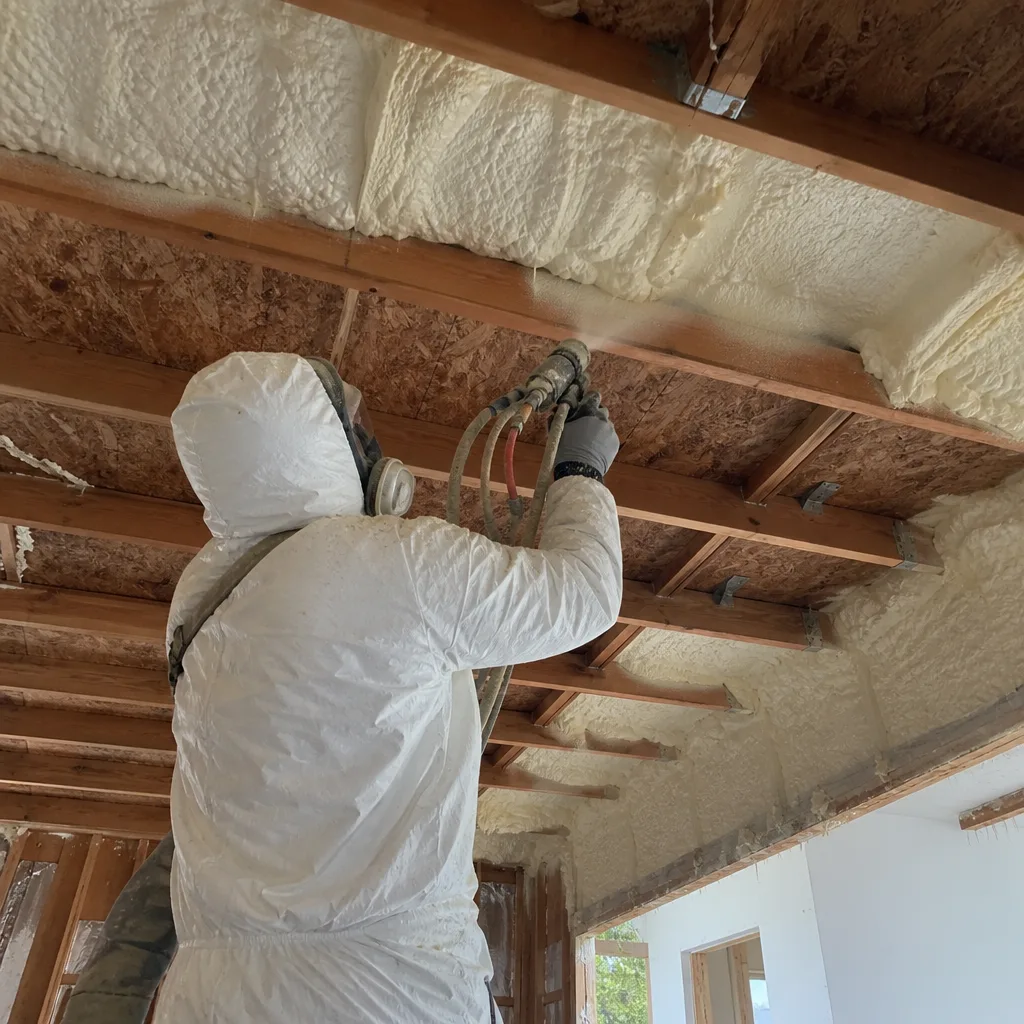
Yes. Because Hidden Hills sits entirely within a Very High Fire Hazard Severity Zone, all attic insulation must be fire-rated or properly protected with a thermal barrier. Spray foam without an approved thermal barrier is not code-compliant here. We use products with ICC-ESR reports accepted by Los Angeles County Fire and document the installation with photos for your record. Call (747) 294-2764 if you’ve received a correction notice and need a compliant fix.
Your original batts are likely installed below the joists, not between them, leaving the roof deck exposed to radiate heat directly into your ceiling. We find this on about a third of surviving ranch inspections in Hidden Hills. The fix is pulling the misplaced material, air sealing the attic floor properly, and blowing new insulation above the joists to the correct depth. Most of these jobs run $3,200-$5,800 and show measurable cooling-load improvement within the first billing cycle.
They do. The western Valley interior sees Santa Ana events that pull dry, high-velocity air through soffit vents, desiccating and compressing fiberglass batts that are stuffed against vent openings without baffles. Over several seasons, the material mats down and loses R-value without any visible gap. We install proper baffles as standard on every Hidden Hills job to maintain the ventilation channel and protect the insulation from wind-driven degradation.
New construction and full replacements must meet California Title 24, which currently requires R-38 to R-49 for attic insulation in this climate zone depending on assembly type. Existing homes being upgraded are generally brought to R-38 minimum. We measure existing depth, calculate current R-value, and spec the upgrade in your written scope before work begins. The blower-door test confirms that the air sealing component is performing, since R-value alone doesn’t stop convective heat transfer.
Fire-rated materials and thermal barrier requirements add 8-15% to material costs compared to non-VHFHSZ areas, but labor rates are consistent across the Valley. The bigger cost driver is attic accessibility and square footage - a 12,000-square-foot estate with multiple roof planes takes longer than a 1,400-square-foot ranch regardless of location. We publish your written price before any work starts so you can compare apples-to-apples with any other estimate. We also offer a Free Second Opinion on any written estimate from another contractor.
Written by Wes Okafor, Owner at Topside Attic Insulation Santa Clarita, serving Hidden Hills and the northern San Fernando Valley since 2016.