
Last updated September 23, 2026
The Complete Guide to Insulation in Santa Clarita
A house in Canyon Country can lose 40% of its HVAC output through unsealed attic bypasses before a single batt of insulation is ever touched - yet most local bids skip the blower-door test entirely. In Santa Clarita, where summer afternoons crack 100°F and winter nights dip below 40°F, that omission costs homeowners thousands in wasted conditioning and premature equipment failure. This guide - alongside our more guides & resources - explains how to measure air leakage first, choose insulation that matches California Energy Commission Zone 9 requirements, and verify the result with documentation you can hold in your hands. You’ll learn what Title 24 actually mandates, what each insulation type costs per square foot installed in this market, and what a complete job file looks like from a contractor who treats air sealing as prerequisite, not upsell.
Quick Answer
Proper insulation in Santa Clarita starts with a blower-door test to measure air changes per hour (ACH50), followed by air sealing of top plates, can lights, and penetrations, then installation of insulation meeting Title 24 R-value minimums - typically R-38 to R-49 in attics, R-13 to R-19 in walls, and R-19 to R-30 in floors. Most complete attic jobs in Santa Clarita run $2.80-$5.50 per square foot depending on material and prep work, with spray foam ranging $4.50-$7.50 per square foot for open-cell and $6.00-$10.00 for closed-cell - see our Insulation Cost Breakdown: The Santa Clarita Homeowner’s Reference for 2026 for full pricing context. The work requires a permit, product data sheets, and photo documentation of installed depths to pass inspection.
Table of Contents
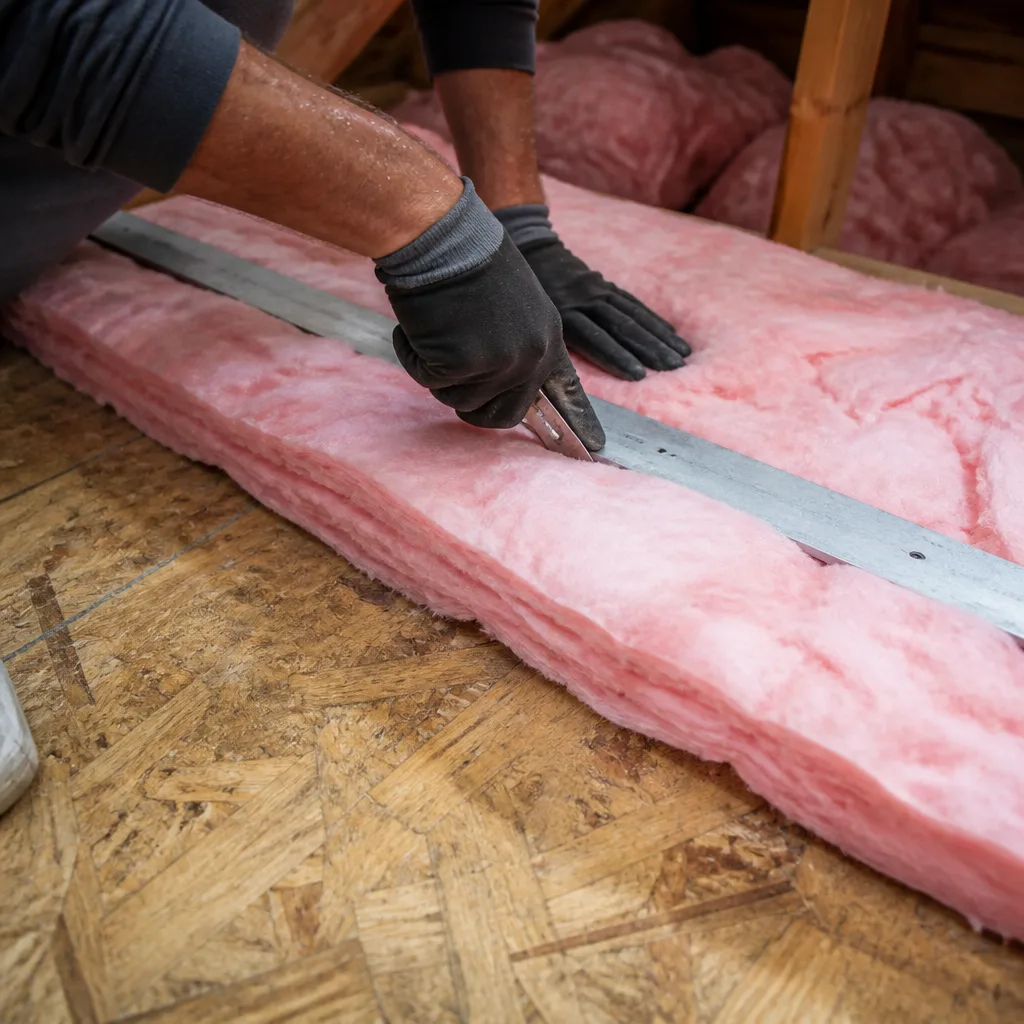
- Why Santa Clarita’s Climate Zone Changes Everything
- The Blower-Door Test: Measure Leakage Before You Insulate
- Insulation Types, Costs, and Best Uses in Santa Clarita
- Title 24 Compliance: What the Code Actually Requires
- Wildfire-Adjacent Construction: Fire Ratings and Ember Sealing
- What a Compliant Job File Looks Like
- Common Mistakes to Avoid
- When to Call a Professional
- Frequently Asked Questions
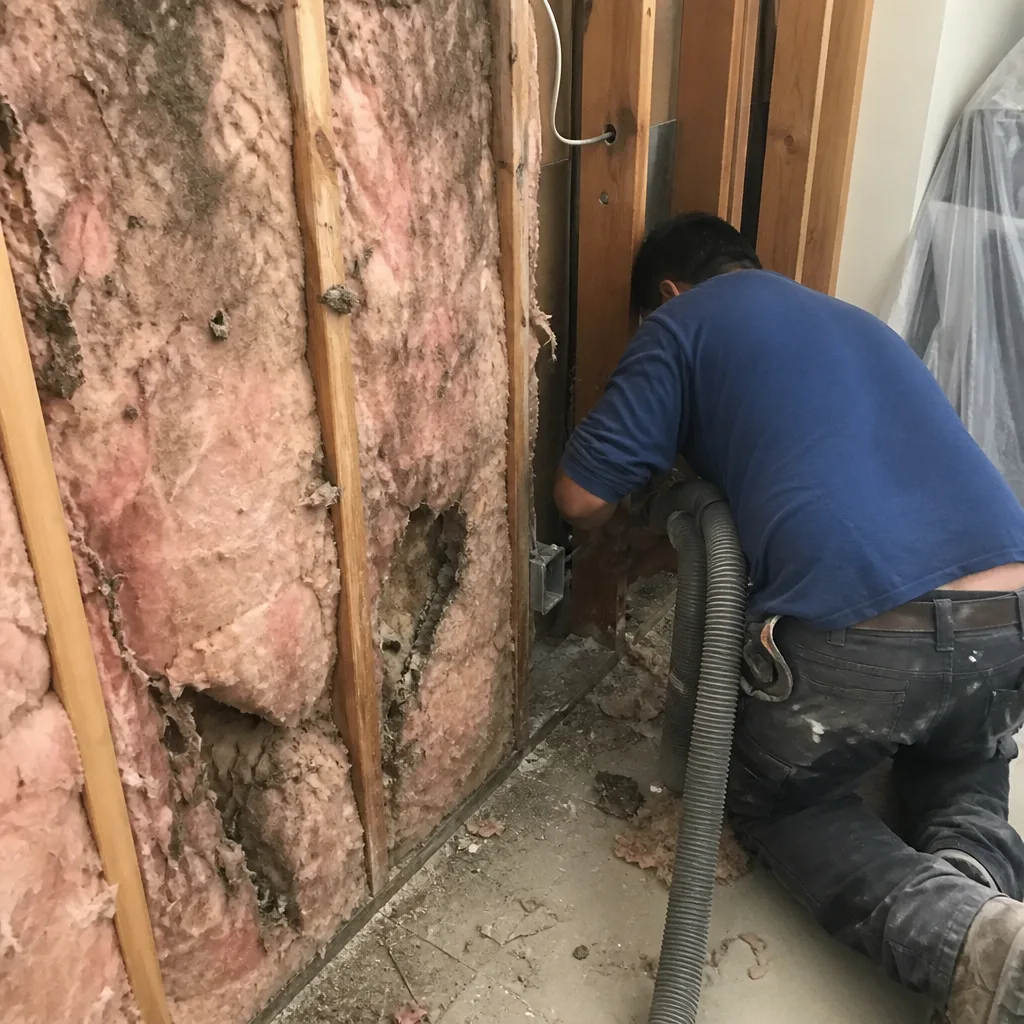 Before
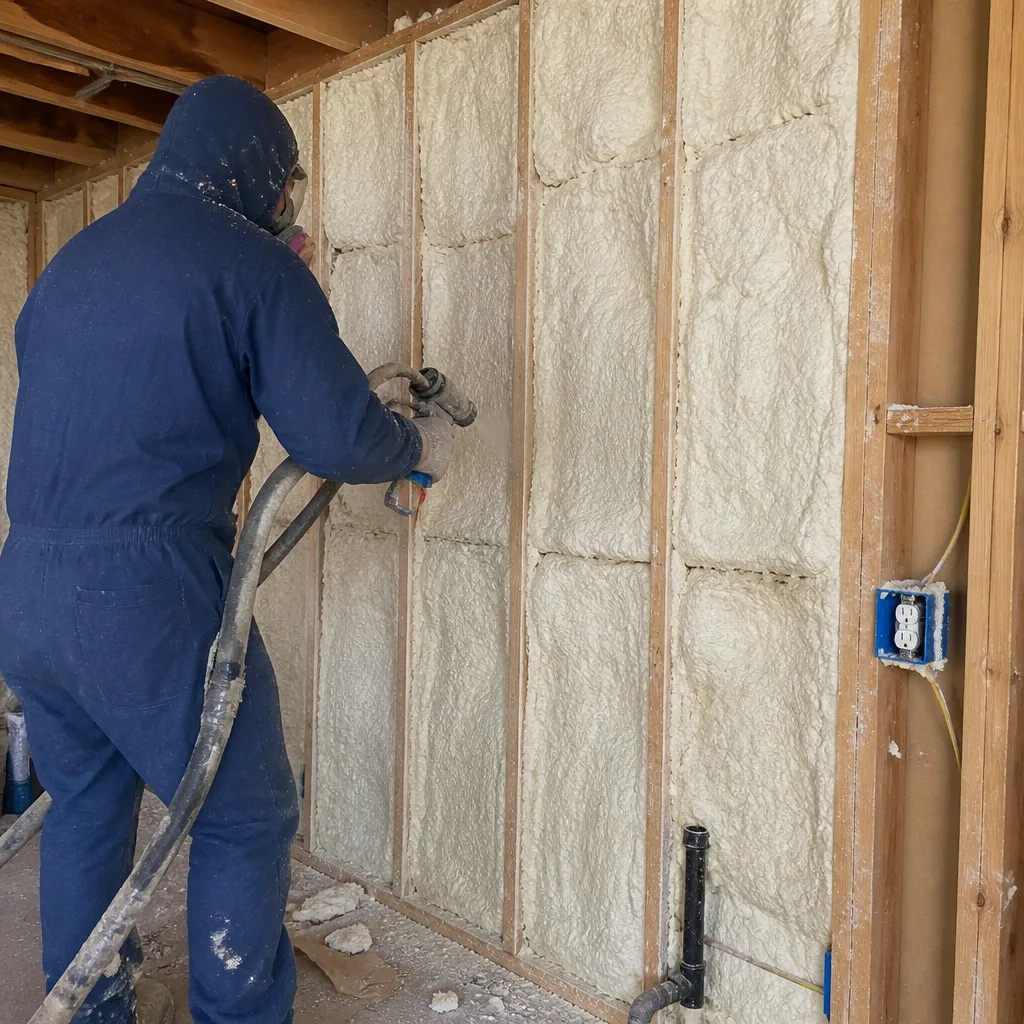 After
AfterWhy Santa Clarita’s Climate Zone Changes Everything
Santa Clarita sits in California Energy Commission Climate Zone 9, a designation that carries specific code requirements most homeowners never hear about until they pull a permit. Zone 9 combines hot, dry summers with cold winter nights - a thermal swing that stresses building envelopes in ways coastal Zone 6 or mild Zone 4 never experience. The 30°F daily temperature swing common in Saugus or Newhall in March means your attic insulation faces expansion and contraction cycles that settle loose-fill materials and degrade adhesive bonds in batts over time.
Title 24-2022, the current energy code enforced in Santa Clarita, sets minimum R-values based on this zone data. For new construction and substantial alterations:
- Attic (vaulted or flat): R-38 minimum, R-49 prescriptive optimum
- Wood-framed walls: R-13 cavity + R-5 continuous, or R-19 cavity alone
- Raised floors: R-19 minimum, R-30 over unconditioned crawl spaces
- Radiant barrier: Required in Climate Zones 8-15 for steep-slope attics; must meet ASTM C1313 emissivity ≤ 0.05
But here’s what the code doesn’t say explicitly: R-value is measured in a still-air laboratory. In a leaky Santa Clarita attic with wind washing across the eaves and thermal bypasses at chases, an R-38 batt performs like R-28 or worse. That’s why we start every attic insulation in Santa Clarita with a blower-door test - the only way to know how much of your R-value you’re actually keeping.
The local geography compounds this. Santa Clarita Valley’s bowl shape traps heat in summer and creates temperature inversions in winter. Homes in Sand Canyon, elevated above the valley floor, see sustained 15-20 mph afternoon winds that drive infiltration through any gap larger than 1/16 inch. We’ve tested homes in that area reading 7.5 ACH50 - more than double the 3.0 ACH50 target for retrofits - with owners who’d already added insulation twice without addressing leakage.
The Blower-Door Test: Measure Leakage Before You Insulate
The blower-door test is a pressurization reading that shows, in one number, how much air your building envelope is losing. A powerful fan mounts in an exterior door, depressurizes the house to 50 Pascals, and measures the airflow required to maintain that pressure difference - reported as CFM50 (cubic feet per minute at 50 Pascals). Divide by conditioned volume and you get ACH50: air changes per hour at 50 Pascals. The lower the number, the tighter the envelope.
In our work across Santa Clarita since 2016, we’ve collected before-and-after readings from over 9,000 homes. Typical findings in this market:
| Home Age / Condition | Typical ACH50 (Before) | Target ACH50 (After Sealing) |
|---|---|---|
| Pre-1980, never sealed | 8.0 - 15.0 | 3.0 - 5.0 |
| 1980-2005, partial sealing | 5.0 - 8.0 | 2.5 - 4.0 |
| 2005-2020, code-built | 3.5 - 6.0 | 2.0 - 3.5 |
| New construction, Title 24-2019+ | 2.5 - 4.0 | 1.5 - 2.5 |
A home in Valencia we worked last spring: 3,200 square feet, built 1994, owner had added R-30 blown fiberglass in 2018. Blower-door reading was 6.2 ACH50 - not terrible, but the thermal camera revealed 14°F temperature differentials at the top plates where attic air poured into wall cavities. We sealed top plates, can lights, duct boots, and the chimney chase with fire-rated caulk and intumescent sealant. Post-sealing: 3.1 ACH50. Then we added insulation to reach R-49. The owner reported their summer peak electric bill dropped 34% - not because of the additional R-value, but because the conditioned air they’d already paid for stopped escaping.
This is the sequence competitors skip. They quote insulation by the square foot, measure existing depth with a ruler, and blow more material over the same leaky floor. Under Haven Standard Clause 1, we publish the blower-door numbers before and after - every applicable job, no exceptions - so the homeowner can verify the performance change they paid for.
Insulation Types, Costs, and Best Uses in Santa Clarita
Santa Clarita’s construction mix - 1970s tract homes in Canyon Country, 1990s stucco boxes in Valencia, custom builds in Sand Canyon - means no single insulation type fits every application. Here’s what we install, what it costs in this market, and where each makes sense.
Blown Fiberglass
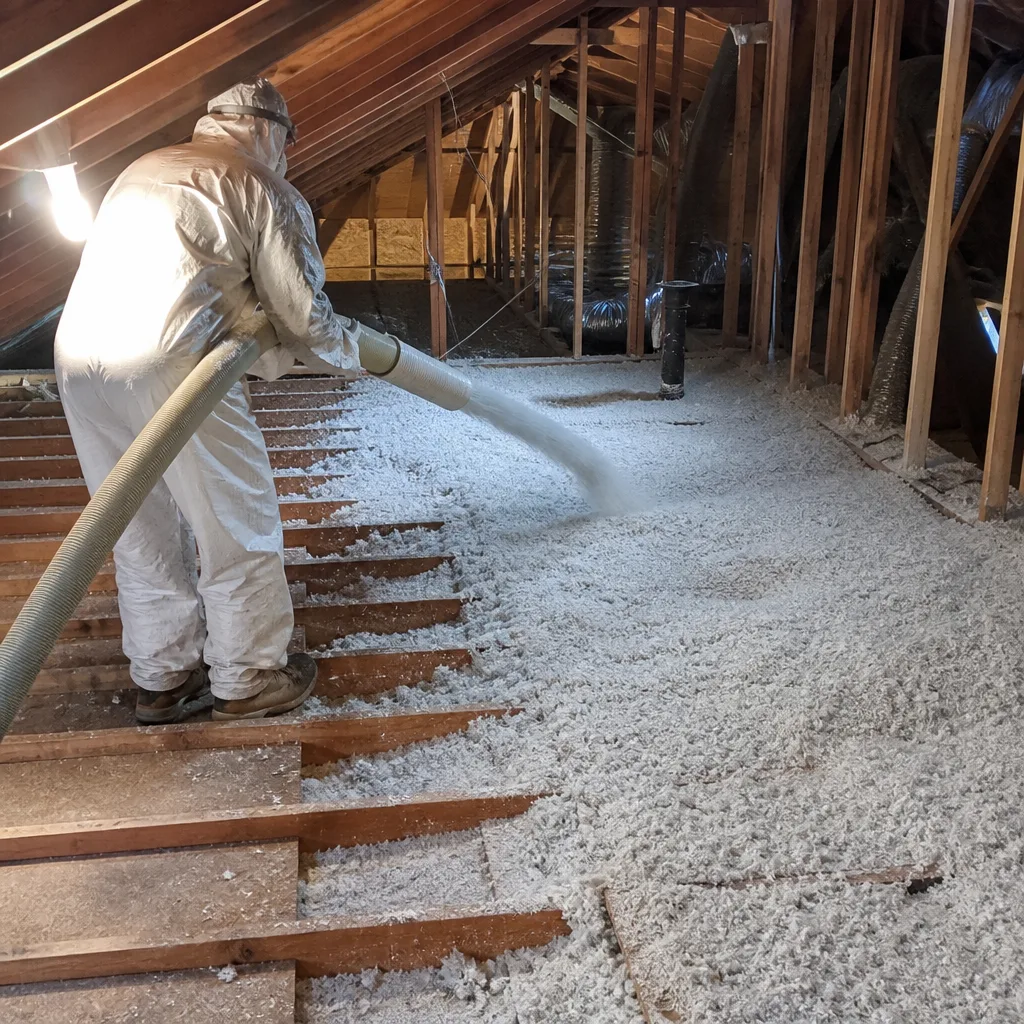
Loose-fill fiberglass, typically Owens Corning AttiCat or Johns Manville Climate Pro, blown to specified depth. Best for open attics with adequate access and minimal obstructions.
- Installed cost: $2.80-$4.20 per square foot (including air sealing prep)
- Settled R-value: R-2.2 to R-2.5 per inch; R-38 requires 15-17 inches, R-49 requires 19-21 inches
- Best for: Standard truss attics, quick retrofits, homes with existing batt infrastructure
- Limitation: Wind washing in vented attics with poor baffles; requires complete air sealing first
We specify Owens Corning L77 in most Santa Clarita attics - its density holds better against the valley’s thermal cycling than lower-weight alternatives. In homes near the Santa Clara River wash where dust infiltration is chronic, we prefer Johns Manville Spider system, which adds a light adhesive during application to reduce settlement.
Cellulose
Ground paper fiber treated with boric acid fire retardant, typically GreenFiber or similar. Higher density than fiberglass, better at blocking air movement, but heavier on ceiling drywall.
- Installed cost: $3.20-$4.80 per square foot
- Settled R-value: R-3.2 to R-3.8 per inch; R-38 requires 10-12 inches
- Best for: Older homes with irregular framing, homeowners prioritizing recycled content, sound attenuation
- Limitation: Weight - verify ceiling joist capacity before installing over 12 inches; moisture sensitivity in roof leak scenarios
Cellulose performs well in Santa Clarita’s dry climate where mold risk is minimal, but we avoid it in homes with active roof leaks or inadequate ventilation. The boric acid treatment meets Class 1 fire rating per ASTM E84, critical for wildland-urban interface zones.
Open-Cell Spray Foam
Half-pound density polyurethane, expands to fill cavities, remains vapor-permeable. Demilec Heatlok HFO is our typical specification.
- Installed cost: $4.50-$7.50 per square foot (2-3 inches typical for walls; 5-6 inches for rooflines)
- R-value: R-3.6 to R-3.8 per inch
- Best for: Vaulted ceilings, conditioned attics, irregular framing, air barrier continuity
- Limitation: Requires ignition barrier in accessible attics; not for direct exposure to living space
Open-cell excels in Santa Clarita’s many 1980s-1990s homes with complex rooflines and minimal attic access. We used it extensively in a Stevenson Ranch project last year: 2,400 square foot home with a 12:12 pitch cathedral ceiling over the great room. Batts were impossible to install properly; open-cell at 5.5 inches gave R-20 plus complete air sealing in one operation. The blower-door dropped from 5.8 to 2.9 ACH50.
Closed-Cell Spray Foam
Two-pound density polyurethane, vapor-impermeable, structural rigidity. Highest R-value per inch, highest cost.
- Installed cost: $6.00-$10.00 per square foot (2-3 inches typical)
- R-value: R-6.0 to R-6.5 per inch
- Best for: Crawl space rim joists, metal building conversions, severe space constraints, flood-prone zones
- Limitation: Higher global warming potential (though HFO-blown formulations like Demilec Heatlok XT reduce this); requires professional application; cost premium
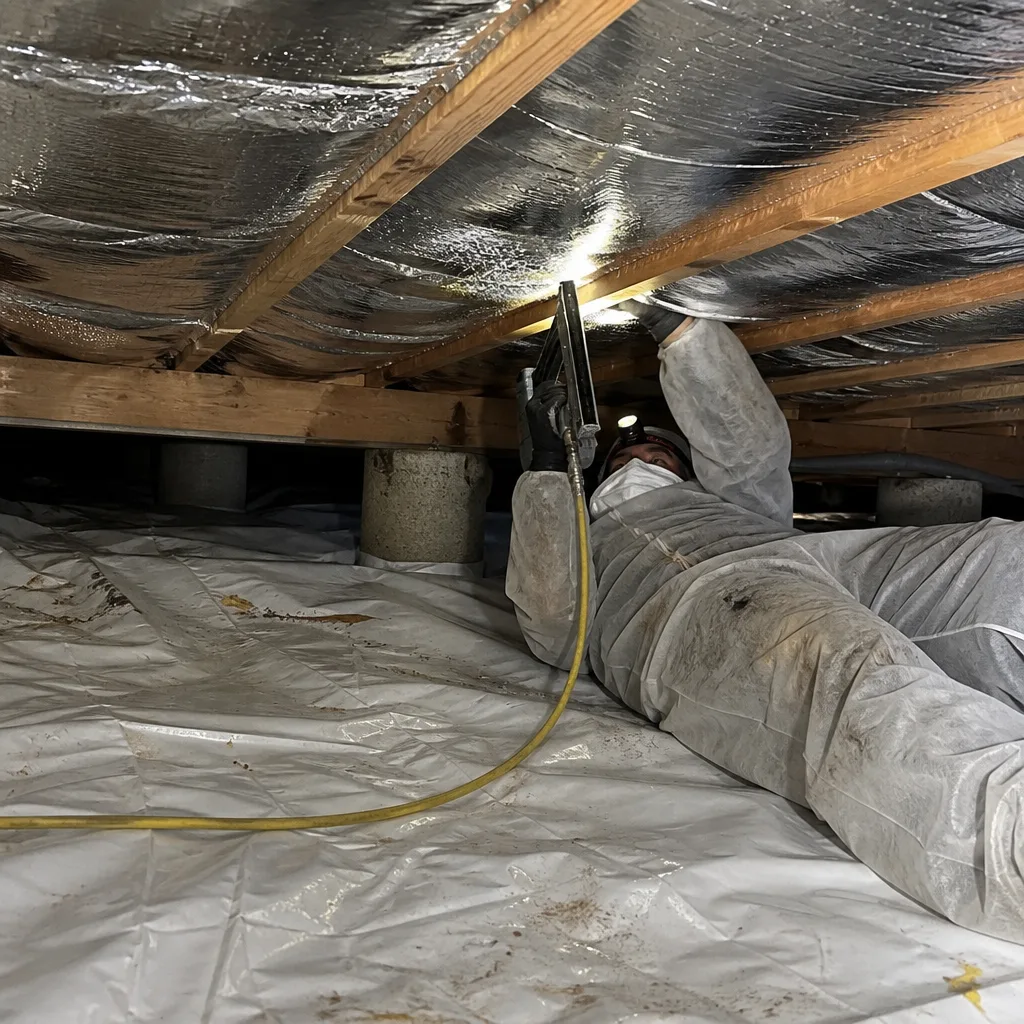
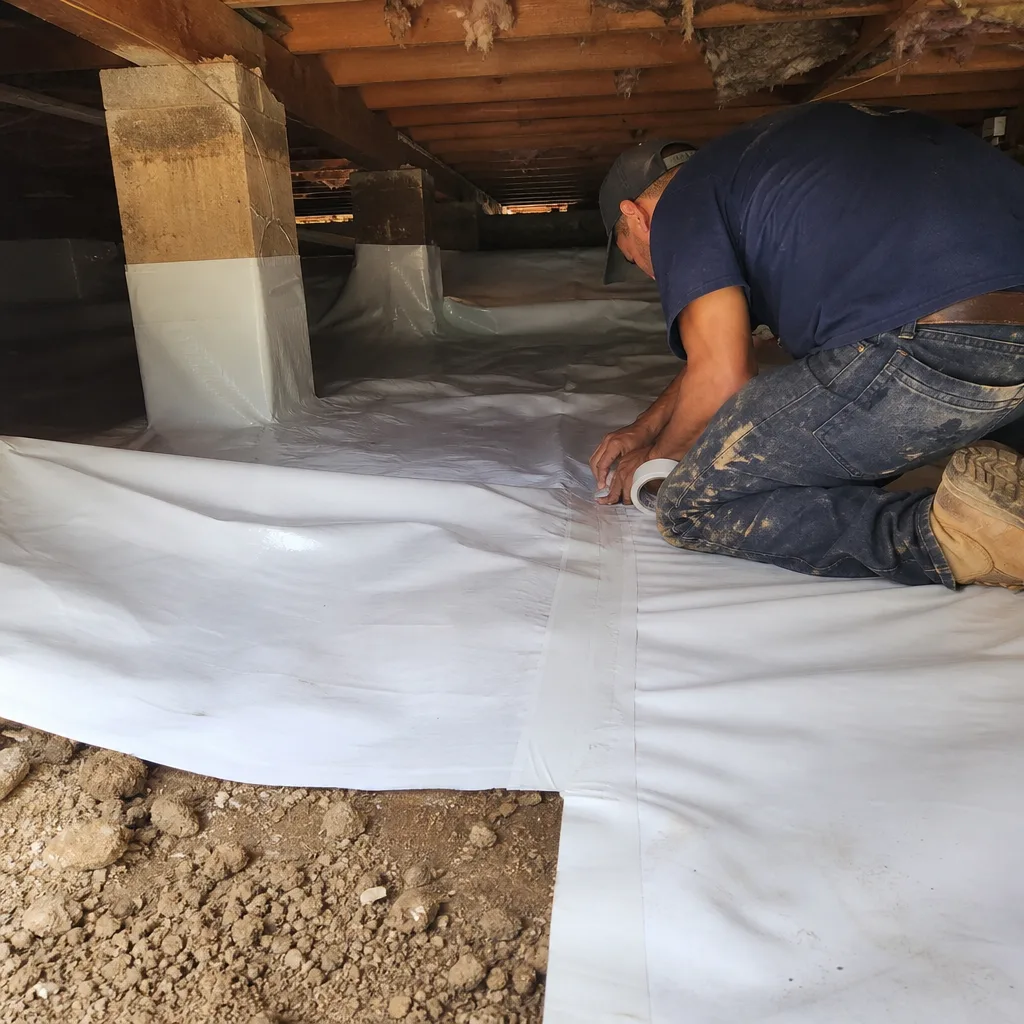
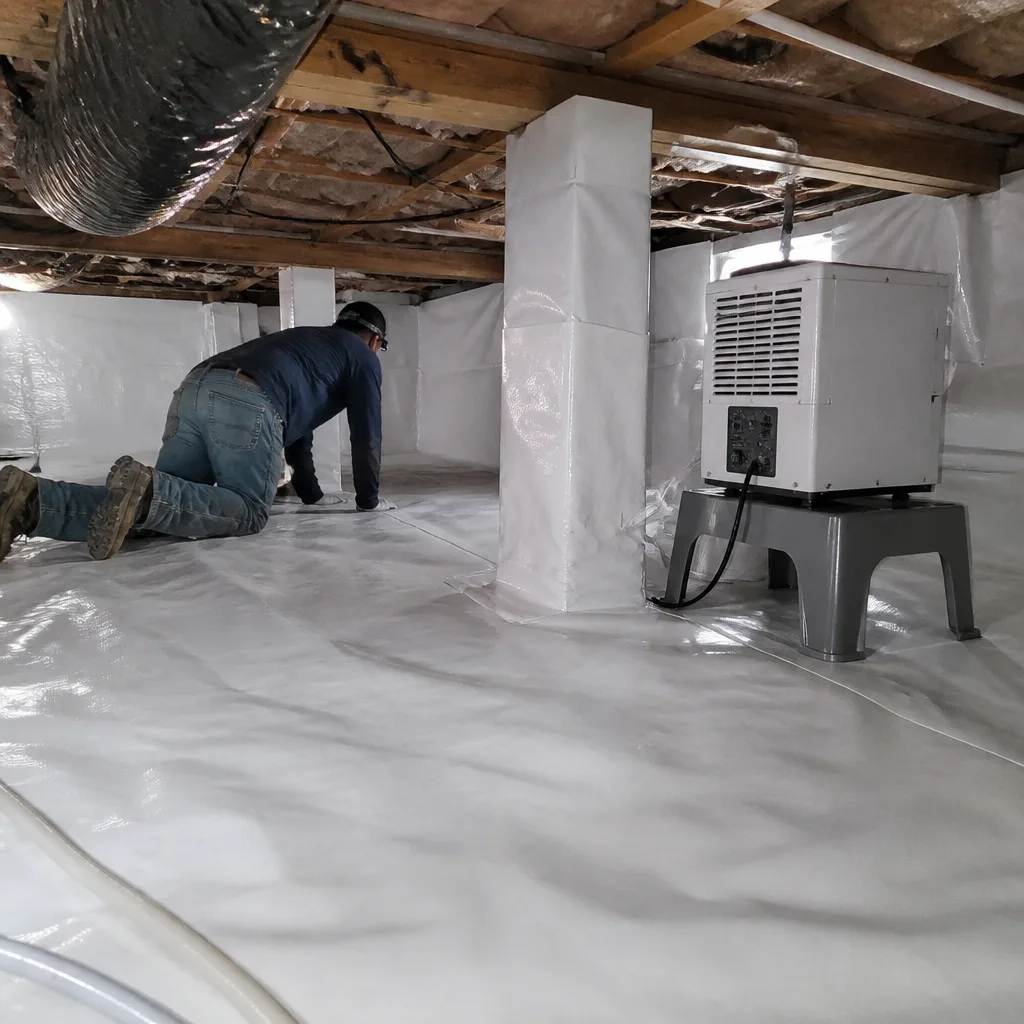
In Santa Clarita, we deploy closed-cell primarily for crawl space encapsulation and vapor barrier work - rim joist sealing where ground moisture meets conditioned space. The 2023 atmospheric river events flooded several crawl spaces in Newhall; closed-cell at 2 inches on rim joists prevented the mold blooms we saw in unsealed neighbors.
Fiberglass Batts
Pre-cut blankets, faced or unfaced. Lowest installed cost, highest failure rate when poorly installed.
- Installed cost: $2.20-$3.50 per square foot (materials only; with proper installation labor, approaches blown-in pricing)
- R-value: R-3.0 to R-3.3 per inch (R-13 for 3.5-inch wall, R-19 for 5.5-inch wall, R-30 for 9.5-inch attic)
- Best for: New construction with complete access, walls with no obstructions
- Limitation: Compression at wires, pipes, and electrical boxes destroys R-value; gaps at framing corners; nearly impossible to install correctly in existing construction
We remove more improperly installed batts than we install. The “fluffy and full” standard - batts not compressed, filling the cavity completely - is rarely achieved in retrofit work. For Santa Clarita homeowners with existing batt insulation, we typically recommend removal and replacement with blown material, or dense-pack cellulose for walls - a decision covered in depth in our DIY vs Professional Insulation: The Santa Clarita Homeowner’s Decision Guide.
Title 24 Compliance: What the Code Actually Requires
Title 24-2022, enforced by the Santa Clarita Building and Safety Division, sets the floor for insulation performance. But compliance isn’t just R-value - it’s documentation, installation quality, and verification. Here’s what a compliant job actually involves.
- Permit application: Required for all insulation work in attics, walls, or floors exceeding 10% of the building envelope. The permit card stays on site until final inspection.
- Product data sheets: Manufacturer specifications for all installed materials - R-value, fire rating, formaldehyde content - submitted with the permit application or kept on site for inspector review.
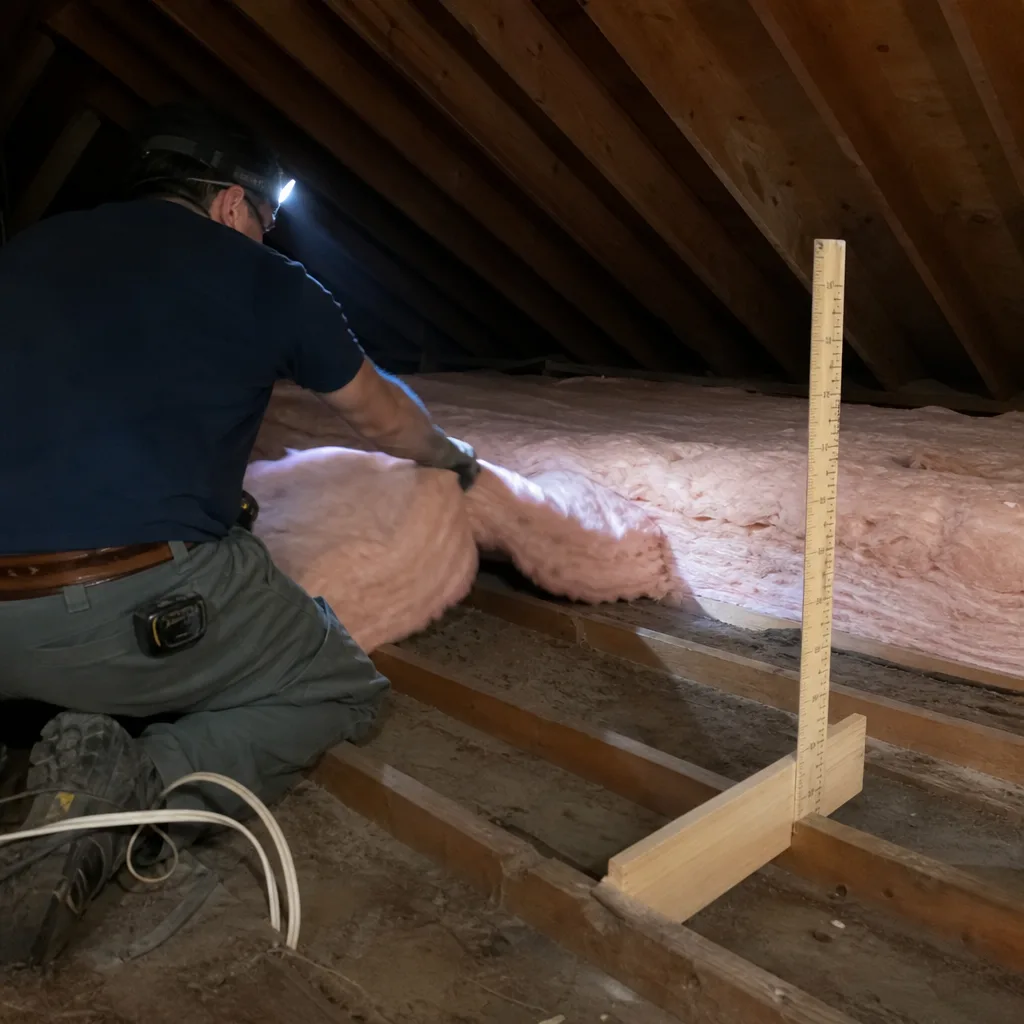
- Installed depth markers: Required every 300 square feet in attics, visible from the access hatch, showing target and achieved depth for the specified R-value.
- Quality insulation installation (QII): For new construction and some alterations, third-party verification that insulation fills cavities completely without compression, gaps, or voids.
- HERS verification: Home Energy Rating System rater confirms duct sealing, air sealing, and insulation performance for new construction and major additions.
The Santa Clarita inspector will check depth markers against the product data sheet. We’ve seen jobs fail because a contractor used R-30 batts labeled for 9.5-inch cavities in 8-inch trusses - compression to 8 inches drops effective R-value to approximately R-25, below code. The fix: remove and reinstall with proper material, at the contractor’s expense.
For retrofits, the code allows “like-for-like” replacement without permit in some cases, but adding R-value or changing material type triggers permit requirements. Most homeowners don’t know this; unpermitted work can complicate future sales or insurance claims. Under Haven Standard, we pull permits on every job that requires one - the written scope includes permit number and inspection schedule.
Wildfire-Adjacent Construction: Fire Ratings and Ember Sealing
Santa Clarita’s wildland-urban interface designation - particularly in Sand Canyon, Bouquet Canyon, and areas north of Soledad Canyon Road - adds fire-performance requirements that standard insulation bids ignore. The 2019 Saddleridge Fire and 2020 Lake Fire both tested local building envelopes; ember intrusion through unsealed soffits and eave vents was a primary ignition pathway.
California Building Code Chapter 7A, enforced in Santa Clarita’s Very High Fire Hazard Severity Zones, mandates:
- Exterior walls: Ignition-resistant construction with tested assembly; insulation must maintain fire rating of the assembly
- Eave and soffit vents: 1/8-inch mesh or approved ember-resistant design; we seal gaps around vent frames with intumescent caulk
- Attic vents: Class A rated or 1/8-inch mesh; insulation must not block required ventilation area
Material selection matters for fire performance. Mineral wool, such as Rockwool Comfortbatt, achieves ASTM E136 noncombustible status - it won’t ignite, melt, or release toxic smoke at temperatures exceeding 2,000°F. We specify it for fire-rated wall assemblies in wildfire zones. Fiberglass is naturally noncombustible (melting point ~1,000°F) but the facing and binders may contribute smoke; unfaced high-density batts or loose-fill are preferred. Cellulose’s boric acid treatment achieves Class 1 fire rating but is not noncombustible - it will char and smolder under sustained heat.
Ember sealing at soffits is air sealing by another name. The same gaps that leak conditioned air admit glowing embers during wind-driven fire events. In our wildfire-zone work, we treat soffit-to-wall junctions, vent perimeter gaps, and electrical penetrations with fire-rated sealant as standard practice - not as an upsell, but as prerequisite work that happens before insulation touches the space.
What a Compliant Job File Looks Like
Every job we complete in Santa Clarita closes with documentation the homeowner keeps. Not a marketing folder - a record that proves what was done, with what materials, to what standard. Here’s what leaves with the customer:
- Written scope and price: Signed before work begins, per Haven Standard Clause 1. Flat price, no change orders without written amendment.
- Pre-job blower-door reading: CFM50 and ACH50, with date, time, and outdoor temperature - conditions affect readings, and we note them.
- Product data sheets: Manufacturer specifications for every material installed, with lot numbers where applicable.
- Installed depth photos: Time-stamped images showing depth markers in place, material distributed evenly, no compression at obstructions.
- Post-job blower-door reading: CFM50 and ACH50 after air sealing and insulation, with calculated improvement percentage.
- Permit card copy: Inspector sign-off, permit number for city records.
- 365-Day Done Right Promise: Written warranty, specific to this address and scope, with contact information for claims.
This is what we mean by “documented record.” Not a feel-good statement - a file folder the homeowner can hand to the next buyer, the insurance adjuster, or the HERS rater. In our experience, Santa Clarita buyers in the 32-50 demographic specifically request this documentation during due diligence; homes with verified envelope performance close faster and at stronger prices.
Common Mistakes to Avoid
- Insulating over air leaks: Blowing fiberglass over unsealed top plates in a Valencia tract home traps moisture in wall cavities and wastes R-value. The insulation becomes a filter for attic air, not a barrier.
- Ignoring wind washing: Santa Clarita’s afternoon canyon winds drive unconditioned air through soffit vents across attic insulation. Without proper baffles extending past the insulation depth, the first 3-4 feet of perimeter R-value is effectively zero.
- Compressing batts to fit: Stuffing R-30 batts into 2×8 joists (actual depth 7.25 inches) reduces effective R-value by 15-20%. The label R-value assumes full loft.
- Blocking ventilation: Adding insulation without extending baffles or maintaining vent free area traps moisture in Santa Clarita’s occasional winter rain events. We’ve removed moldy insulation from three Canyon Country homes where contractors packed eaves solid.
- Skipping the permit: Unpermitted insulation work voids some homeowners insurance policies and creates disclosure issues on sale. Santa Clarita’s building department charges modest fees; the permit protects both parties.
- Using the wrong foam in fire zones: Standard open-cell spray foam requires an ignition barrier in accessible attics; exposed foam in a Very High Fire Hazard Severity Zone is a code violation and a liability.
- Trusting depth alone: A ruler measurement doesn’t verify coverage uniformity. We’ve found 8-inch depths next to 2-inch voids where installers worked around ductwork. Photo documentation catches this; ruler spot-checks don’t.
When to Call a Professional
Call a professional - our How to Hire a Insulation Contractor in Santa Clarita: A Step-by-Step Guide can help - when your summer electric bills exceed $400 for a home under 3,000 square feet, when rooms on the north side of your Santa Clarita home are consistently 8°F colder than south-facing rooms, or when you can see floor joists through existing attic insulation. These symptoms indicate envelope failure that DIY addition of batts won’t fix.
Also call before any major HVAC replacement. A 5-ton system in a leaky envelope is oversized, short-cycling, and doomed to early failure. We regularly see Santa Clarita homeowners replace compressors every 6-7 years when proper air sealing and insulation would have extended equipment life to 15+ years.
Topside Attic Insulation Santa Clarita offers free estimates in Santa Clarita - call (747) 294-2764. We’ll run the blower-door test, show you the numbers, and provide a written price before any work starts. Bring us a competing quote; we’ll read it with you and explain what’s included, what’s missing, and what the missing items cost to fix later.
Frequently Asked Questions
Most complete attic insulation jobs in Santa Clarita run $2.80-$5.50 per square foot for blown fiberglass or cellulose, including air sealing prep, or $4.50-$7.50 per square foot for open-cell spray foam. A typical 1,500 square foot attic with air sealing, R-49 blown fiberglass, and documentation runs $4,200-$6,800. Call (747) 294-2764 for a written price on your specific home - estimates are free.
Title 24-2022 requires R-38 minimum in attics for Climate Zone 9, with R-49 as the prescriptive optimum for new construction. Walls require R-13 cavity plus R-5 continuous insulation, or R-19 cavity alone. Raised floors require R-19 minimum, R-30 over unconditioned crawl spaces. These are minimums; performance improves with higher R-values and proper air sealing.
Yes - air sealing must precede insulation. In Santa Clarita’s Climate Zone 9, a home at 7.0 ACH50 loses 30-40% of conditioning energy through leakage regardless of R-value. Sealing first typically reduces ACH50 by 40-60%, making added insulation effective. We won’t blow insulation over an unsealed attic floor; it’s performance theater, not building science.
Spray foam is worth the premium when you have irregular framing, vaulted ceilings, or need both insulation and air barrier in one application. For standard truss attics with good access, blown fiberglass or cellulose at proper depth with thorough air sealing delivers comparable performance at lower cost. We specify spray foam for about 30% of our Santa Clarita jobs - where the geometry demands it, not as a default upsell.
Correct installation shows uniform depth with no compression, no gaps around obstructions, depth markers visible from the access hatch, and documentation including product data sheets and photos. If your contractor can’t produce these, you don’t have verification. Under Haven Standard, every job includes a Documented Photo Record delivered before the crew leaves.
Mineral wool (Rockwool) is noncombustible per ASTM E136 and preferred for fire-rated assemblies in Very High Fire Hazard Severity Zones. Unfaced fiberglass achieves similar performance at lower cost for standard applications. Cellulose is Class 1 fire-rated but not noncombustible. Critical: ember sealing at soffits, eaves, and vents matters as much as insulation choice - the same gaps leak air and admit embers.
The Bottom Line
Insulation in Santa Clarita isn’t about buying R-value by the bag. It’s about measuring air leakage first, sealing every bypass that lets conditioned air escape, then installing material that meets Title 24’s Zone 9 requirements with documentation that proves it. The homes that perform best - lowest bills, most even temperatures, longest equipment life - are the ones where a blower-door test preceded material selection and a written record closed the job. Everything else is guesswork, and guesswork gets expensive in a climate that swings from 100°F afternoons to 35°F nights.
We’ve sealed and insulated over 9,000 homes since 2016, every one with a written price before work started and a documented record when the crew left. If your Santa Clarita home’s envelope hasn’t been tested, it hasn’t been optimized. Call (747) 294-2764 for a free estimate with blower-door testing included. We’ll show you the numbers, explain the options, and give you a written price you can compare - no voicemail, no callback windows, no surprises.
Written by Wes Okafor, Owner at Topside Attic Insulation Santa Clarita, serving Santa Clarita since 2016.