
Last updated September 23, 2026
How to Hire a Insulation Contractor in Santa Clarita: A Step-by-Step Guide
Three bids for the same 1,800 square foot attic in Santa Clarita can run from $1,400 to $4,200, and the spread has almost nothing to do with contractor margins. In our experience across Valencia, Saugus, and Canyon Country, two of those bids typically omit air sealing, skip the blower-door test, and bury permit fees in fine print. Homeowners think they’re comparing apples to apples. They’re not even in the same orchard. This guide - alongside our Insulation Cost Breakdown: The Santa Clarita Homeowner’s Reference for 2026 - walks you through a hiring process that forces every bidder onto the same scope before anyone names a price, so you actually get what you pay for.
Quick Answer
To hire an insulation contractor in Santa Clarita, verify their CSLB license (C-2 or B classification), demand a written scope that includes air sealing, blower-door testing, and permit fees before receiving any bid, then compare only standardized proposals. The right contractor will document every step and hand you before-and-after performance numbers, not just a receipt.
Table of Contents
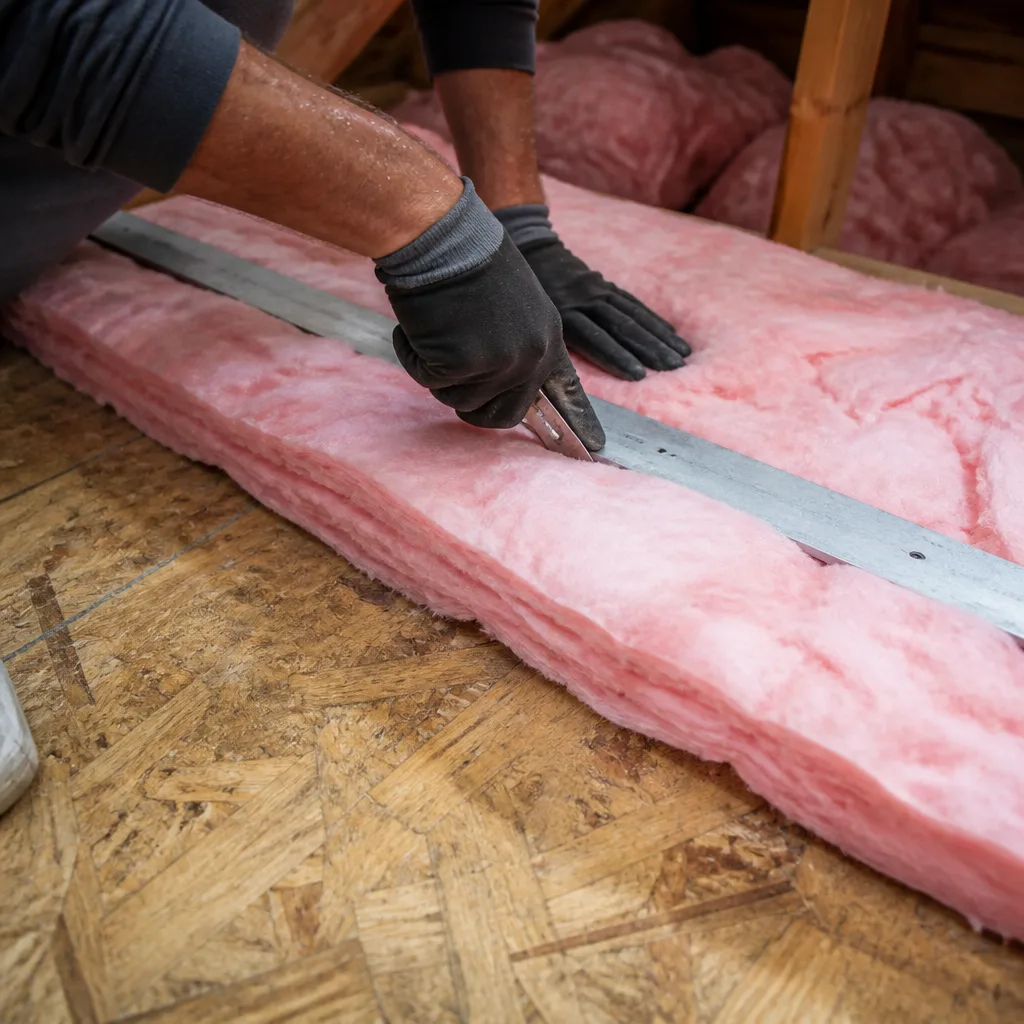
- Why Santa Clarita Insulation Bids Vary So Widely
- Step 1: Verify License and Insurance Through CSLB
- Step 2: Issue a Mandatory Scope Checklist Before Bids
- Step 3: Demand a Written Price, Not a Verbal Estimate
- Step 4: Ask the Five Questions That Reveal Building Science Knowledge
- Red Flags Specific to the Santa Clarita Market
- What Documentation You Should Receive at Job’s End
- Common Mistakes to Avoid
- When to Call a Professional
- Frequently Asked Questions
- The Bottom Line
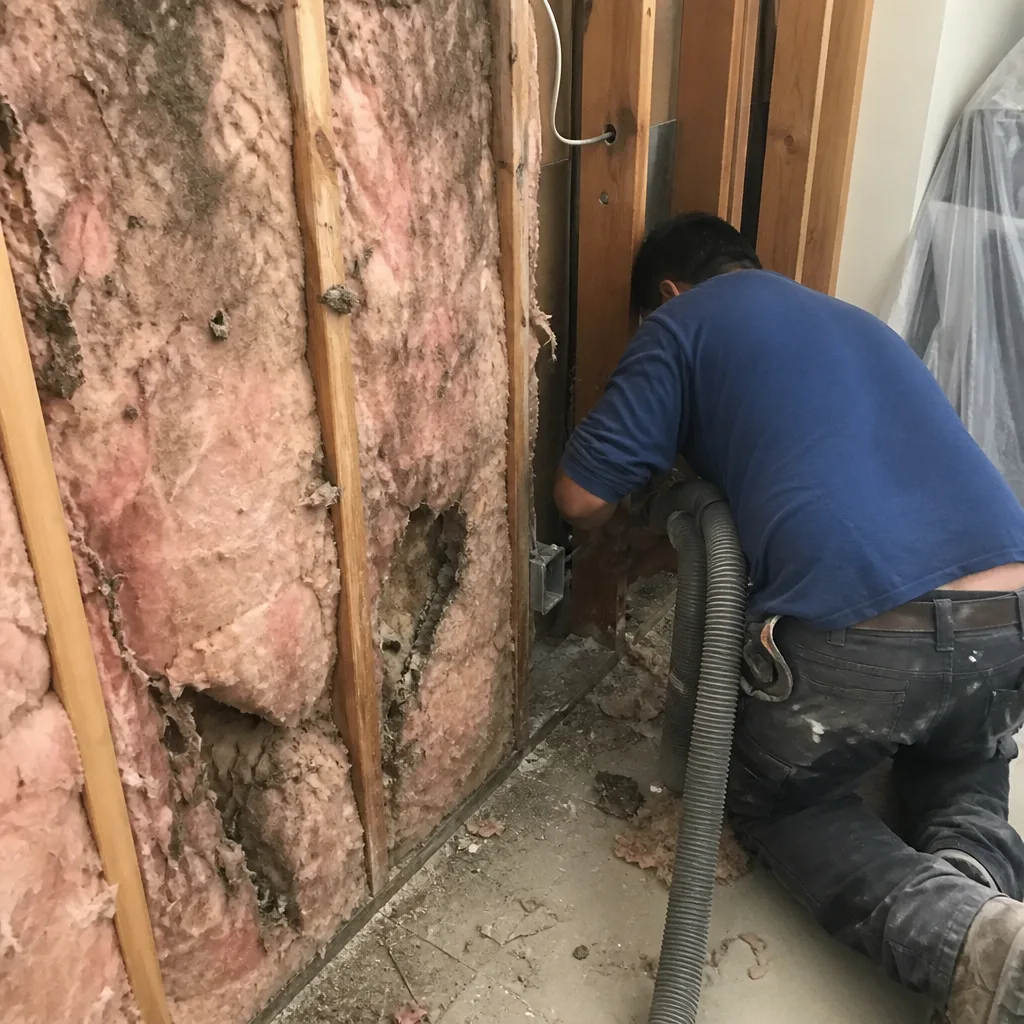 Before
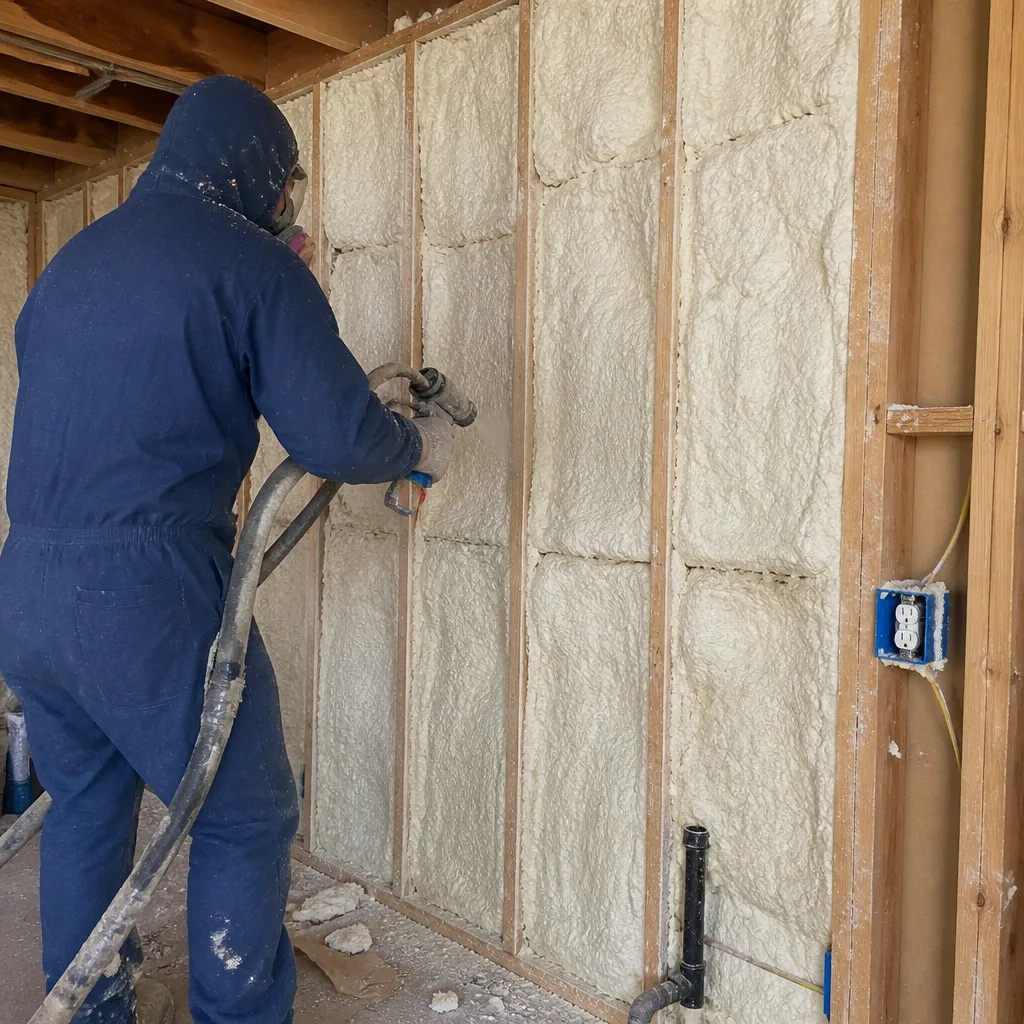 After
AfterWhy Santa Clarita Insulation Bids Vary So Widely
The Santa Clarita Valley’s housing stock tells part of the story. Homes built from the 1970s through the early 2000s, common in neighborhoods like Newhall Ranch and Sand Canyon, were insulated to code minimums that haven’t aged well under California’s Title 24 updates. Attics in these homes often have original fiberglass batts compressed below current R-38 requirements, and many were never air sealed at the top plates or around recessed can lights.
Here’s where bids diverge. One contractor quotes $1,400 to blow GreenFiber cellulose over existing material, no questions asked. Another quotes $2,800 for the same square footage but includes pulling back old insulation, sealing top plates and electrical penetrations, installing baffles at the eaves, and running a blower-door test - a pressurization reading that shows, in one number, how much conditioned air your building envelope is losing. A third bid lands at $4,200 and adds radiant barrier installation and crawl space vapor barrier work that the homeowner didn’t request.
None of these contractors are necessarily dishonest. They’re selling different jobs. The problem is that homeowners receive these bids without a standardized scope, so they compare three prices for three different outcomes. The $1,400 job leaves the attic floor leaking air. The $4,200 job may solve problems the homeowner doesn’t have. Our approach at Topside Attic Insulation Santa Clarita home starts with a free second opinion on any written estimate - bring us a competing quote and we’ll read it with you, line by line, to show what’s actually included.
Santa Clarita’s climate amplifies the stakes. Summer highs regularly hit the triple digits in July and August, and winter lows in January can dip into the 30s. An attic that leaks conditioned air in both directions works your HVAC system harder, year-round. The difference between a sealed and unsealed attic isn’t abstract - it shows up on your SCE bill.
Step 1: Verify License and Insurance Through CSLB
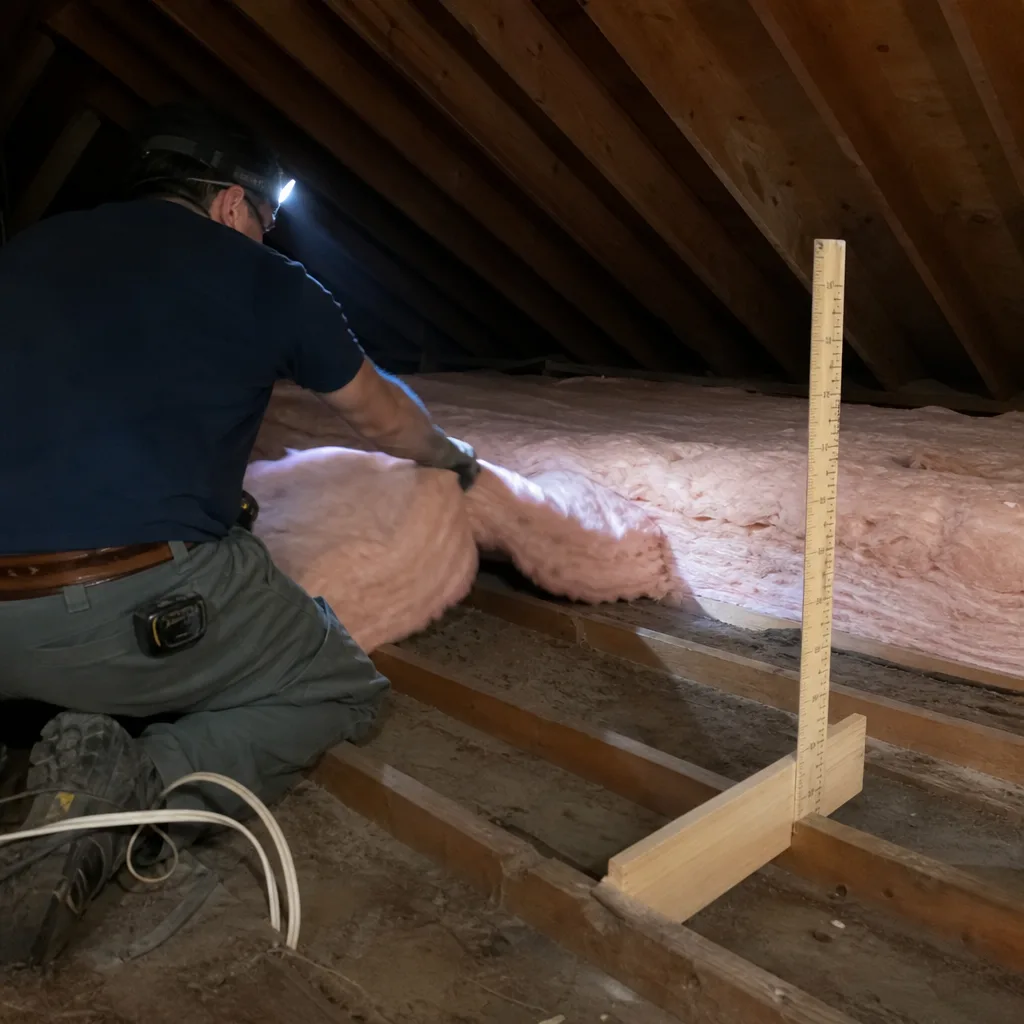
California requires insulation contractors to hold either a C-2 Insulation and Acoustical Contractor license or a B General Building Contractor license. The C-2 is specific to insulation work; the B allows broader envelope work but requires the contractor to have passed trade exams covering insulation installation. Either is legal for your job, but the classification tells you something about the contractor’s focus.
Here’s how to verify:
- Go to checkthelicensefirst.com, the CSLB’s official lookup tool.
- Enter the contractor’s license number or business name.
- Confirm the status reads “Active” and the classification includes C-2 or B.
- Check the “Workers’ Compensation” section - if the contractor has employees, this must show coverage. If it reads “Exempt,” the contractor claims to have no employees, which is unusual for a crew-based trade.
- Review the “Bond History” - an active $25,000 contractor’s bond is required.
- Scroll to “Citations/Complaints” for any disciplinary action in the past ten years.
We check competitor licenses regularly in Santa Clarita, and we’ve found active C-2 holders with expired bonds and B contractors whose license status flipped to “Suspended” mid-job. This takes two minutes. Do it before anyone steps on your property.
Insurance verification is equally critical. Ask for a certificate of insurance (COI) naming you as the certificate holder, with general liability coverage of at least $1 million per occurrence. In Santa Clarita’s hillside neighborhoods like Stevenson Ranch and Fair Oaks Ranch, where crews work on steep-pitched roofs and in tight attic scuttles, the accident risk is real. If a worker falls through your ceiling and the contractor lacks coverage, your homeowner’s policy becomes the primary target.
Step 2: Issue a Mandatory Scope Checklist Before Bids
This is the step almost no homeowner takes, and it’s the single biggest lever for getting comparable bids. Before any contractor visits, email or hand them this checklist. Tell them: your bid must address every item, or it will not be considered.
Mandatory Scope Checklist for Santa Clarita Insulation Bids
- Air sealing scope: Will you seal top plates, electrical penetrations, can lights, chimney chases, and duct boots before installing insulation? Specify materials (caulk, foam, fire-rated barriers where required).
- Blower-door test: Will you conduct a blower-door test - a pressurization reading that shows, in one number, how much air the building envelope loses - before and after work? Report results in CFM50 and ACH50.
- Permit and inspection: Will you pull a Santa Clarita building permit for this work? Include permit fee in the bid. Schedule and pass required inspections.
- Depth tab installation: Will you install depth markers or tabs to verify installed insulation depth meets specified R-value?
- Material specification: Name the insulation type (fiberglass, cellulose, spray foam, mineral wool), brand (Owens Corning, Johns Manville, Knauf, Rockwool, CertainTeed, Icynene, Demilec, GreenFiber), and installed R-value.
- Preparation work: Will existing insulation be removed, or will new material be installed over old? If removal, include disposal.
- Post-job documentation: What written records, photos, and test results will the homeowner receive at job completion?
- Warranty terms: Length, coverage, and transferability.
The checklist eliminates the $1,400-to-$4,200 spread we opened with. A contractor who planned to skip air sealing now has to price it or explain why they won’t. A contractor who doesn’t own a blower door has to subcontract testing or admit they can’t measure results. In Santa Clarita’s competitive market, this filtering alone typically eliminates half the bidders.
We’ve used this checklist on over 9,000 homes sealed and insulated since 2016 - every one with a written price before work started and a documented record when the crew left. Under Haven Standard Clause 1, we provide a flat price, written scope, and written warranty before anyone lifts a tool. No exceptions.
Step 3: Demand a Written Price, Not a Verbal Estimate
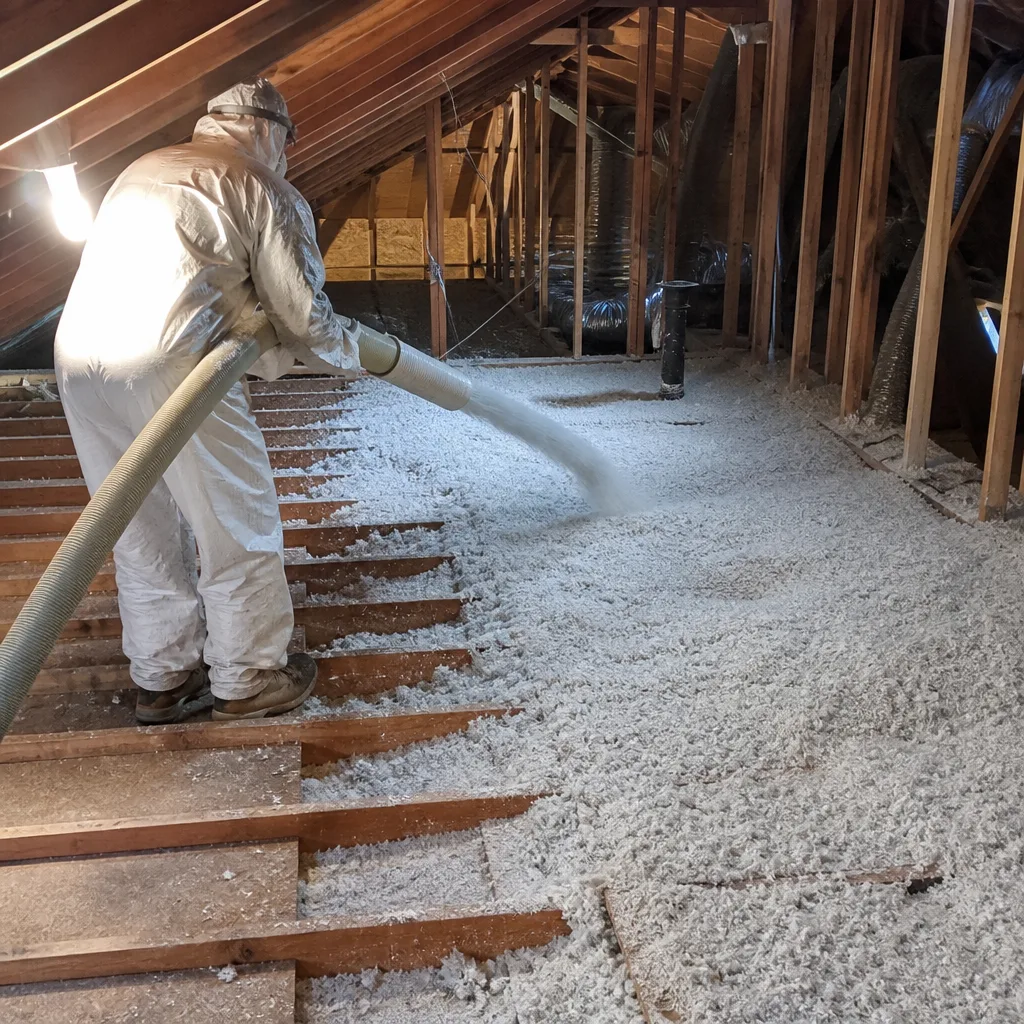
A verbal estimate is a guess with social pressure. A written price is a contract’s foundation. In Santa Clarita, we’ve heard too many stories of contractors who quoted “$2,500 to $3,000” over the phone, then presented a $4,800 invoice with “discovered damage” charges no one discussed.
Here’s what a written price should include, line by line:
| Line Item | What It Should Specify |
|---|---|
| Materials | Insulation type, brand, R-value, and square footage covered |
| Air sealing materials | Caulk, spray foam, fire-rated sealant, tape - with quantities |
| Labor | Hours or flat rate, crew size, estimated duration |
| Air sealing labor | Separate from insulation labor, with scope boundaries |
| Permit fee | City of Santa Clarita permit cost, included or separate |
| Blower-door testing | Pre- and post-test, with report format specified |
| Contingency for discovered damage | Maximum dollar amount, with trigger conditions (rodent damage, water staining, structural repair) |
| Removal/disposal | If applicable, with weight or volume estimate |
| Total | Single number, with payment schedule |
The contingency line matters especially in Santa Clarita’s older stock. Homes in Old Town Newhall and original Valencia tracts may have rodent activity, water-damaged decking, or obsolete knob-and-tube wiring hidden under insulation. A written price caps the surprise at a negotiated maximum - say, $500 for discovered damage beyond visual inspection - rather than leaving it open-ended.
Under Haven Standard: Have it in writing, we deliver the written price before any work starts. Not before the crew arrives. Before anyone schedules the job. If a contractor in Santa Clarita won’t commit to this, they haven’t finished their own homework, and they’re asking you to fund their uncertainty.
Step 4: Ask the Five Questions That Reveal Building Science Knowledge
Insulation installation is manual labor, but building envelope work is applied physics. A contractor who understands the science will answer these questions with specific numbers and methods. One who doesn’t will deflect to experience or reputation.
Question 1: What ACH50 do you expect after completion?
ACH50 - air changes per hour at 50 Pascals of pressure - is the blower-door metric that tells you how tight your home is. Santa Clarita’s Title 24 compliance threshold varies by climate zone, but for existing homes, a meaningful air-sealing job typically cuts ACH50 by 30-50%. A contractor who can’t name a target number doesn’t measure, and if they don’t measure, they can’t verify. At Envelope, we publish before-and-after blower-door numbers on every applicable job so homeowners can see the performance change they actually paid for.
Question 2: How do you handle attic bypasses at top plates?
Top plates - the horizontal framing members where interior walls meet the ceiling - are among the leakiest junctions in a house. The right answer involves sealing with caulk or foam, installing rigid blocking where gaps exceed two inches, and verifying with visual inspection and blower-door-directed air sealing. “We spray some foam around” is not an answer.
Question 3: What documentation do I receive at job’s end?
The answer should include: written invoice matching the pre-approved scope, photos of work areas before and after, blower-door test report with CFM50 and ACH50 readings, permit inspection sign-off, and warranty document. Our Documented Photo Record on Every Visit is included on every job, not available on request. You should know what leaving looks like before we arrive.
Question 4: How do you prevent wind washing at eaves?
Wind washing - when outside air enters the attic through soffit vents and disturbs loose-fill insulation - reduces R-value at the edges where you need it most. The correct answer mentions baffles (proper vents) installed between rafters to maintain a clear air channel above the insulation. In Santa Clarita’s Santa Ana wind conditions, this detail matters more than in calmer climates.
Question 5: What’s your sequence: seal first, or insulate first?
The only acceptable answer is seal first, then insulate. Blowing cellulose or fiberglass over an unsealed attic floor buries air leaks under material that makes them harder to find and fix later. We will never blow insulation over an unsealed attic floor; air sealing of top plates, can lights, and penetrations is completed before any insulation is added. This isn’t an upsell. It’s physics.
Red Flags Specific to the Santa Clarita Market
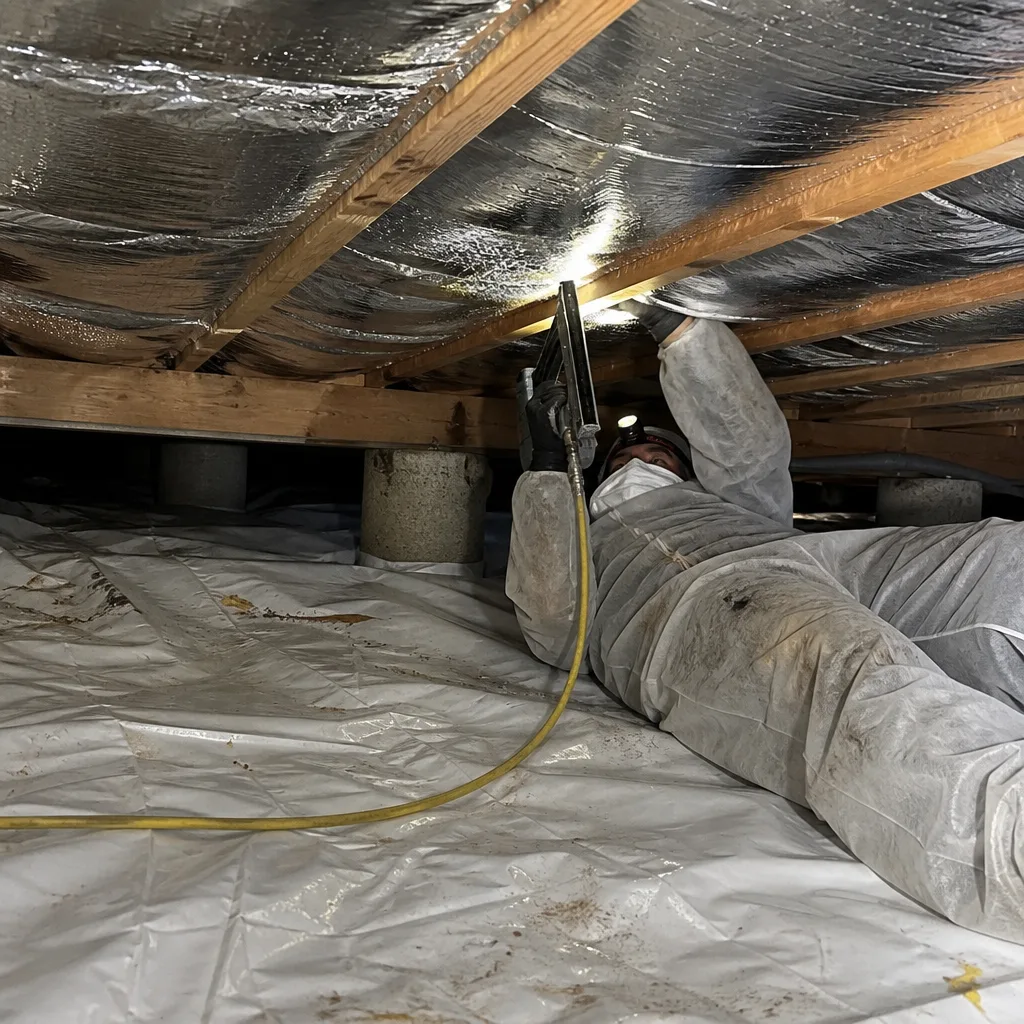
Some insulation warning signs are universal. Others show up repeatedly in Santa Clarita’s particular mix of suburban expansion, hillside construction, and aging inventory.
Verbal bids delivered on the spot. A contractor who walks your attic for fifteen minutes and names a price before leaving is selling, not estimating. Real scope development takes measurement, sometimes thermal imaging, and always time to write.
No pre-job walkthrough. In Santa Clarita’s gated communities like Westridge and custom homes in Sand Canyon, attic access varies wildly - scuttle holes, pull-down stairs, or exterior roof hatches. A contractor who doesn’t verify access before bidding hasn’t thought through how crews will move material.
Air sealing as a line-item upgrade. This is the most common and most expensive red flag. The bid shows $2,200 for insulation, with “optional air sealing” at $800. Air sealing is not optional for performance. It’s a prerequisite. Treating it as an upgrade means the base bid produces a substandard result. Attic Insulation in Santa Clarita should never be priced without it.
Material brand vagueness. “Premium fiberglass” or “top-grade foam” without a manufacturer name often means commodity product bought on price. We source materials from Owens Corning, Johns Manville, Knauf, Rockwool, CertainTeed, Icynene, Demilec, and GreenFiber - no proprietary product lock-in - and we name the brand in every written scope.
No permit discussion. Santa Clarita Building and Safety requires permits for insulation work that exceeds replacement-in-kind. A contractor who says “permits just slow things down” is asking you to absorb their non-compliance risk.
Pressure to decide immediately. Under Haven Standard, we provide written prices with no expiration shorter than fourteen days. Any “today only” discount is urgency theatre, and we don’t do theatre.
What Documentation You Should Receive at Job’s End
The job isn’t done when the crew leaves. It’s done when you hold documentation that proves what happened. Here’s what a complete closeout looks like:
- Final invoice matching the pre-approved written price, with no unexplained additions
- Before-and-after photos of attic floor, top plates, penetrations, and any problem areas found
- Blower-door test report with pre-work CFM50, post-work CFM50, calculated ACH50, and target comparison
- Permit inspection approval from City of Santa Clarita, with inspector sign-off
- Warranty document with terms, duration, and claim procedure
- Material data sheets for installed insulation, with R-value and coverage verification
This documentation serves you at resale, in warranty claims, and if you ever need to match the work for an addition. We’ve had Santa Clarita homeowners use our blower-door reports to qualify for SCE rebate programs or to document energy efficiency improvements for appraisal. The photos alone have resolved neighbor disputes about whether work was actually performed in shared-wall townhomes in Valencia.
Our 365-Day Done Right Promise - if it’s not done right, we make it right - is backed by this same written scope and documented record. You can’t promise what you can’t prove.
Common Mistakes to Avoid
- Comparing bids without a standardized scope. The $1,400 bid and the $2,800 bid are not the same job. Force scope alignment first, then compare price.
- Ignoring air sealing entirely. In Santa Clarita’s climate, an insulated but leaky attic loses conditioned air faster than a sealed attic with lower R-value. R-value measures resistance to conductive heat flow; it does not stop air movement.
- Choosing by price per square foot alone. This metric hides material type, installation quality, and whether old insulation was removed. A low price per foot often means blowing over compressed, contaminated existing material.
- Skipping the CSLB lookup. We’ve found active contractors in Santa Clarita with suspended licenses, expired bonds, and workers’ comp exemptions that don’t match their crew size. Two minutes of verification prevents months of dispute.
- Accepting verbal warranties. “Lifetime warranty” means nothing without written terms defining the lifetime, what’s covered, and who’s responsible. Our written warranty specifies materials, labor, and the claim process.
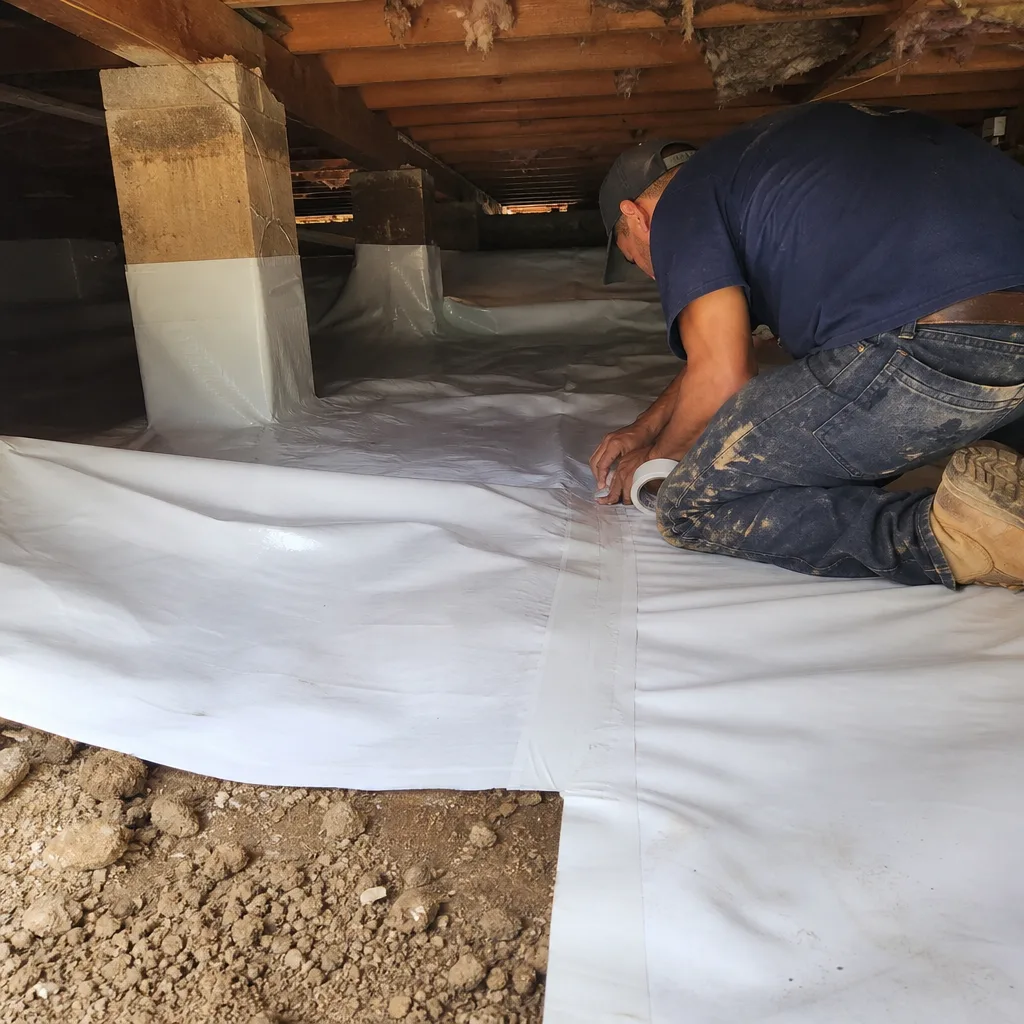
- Neglecting crawl space condition. In Santa Clarita’s older homes with raised foundations, particularly in Canyon Country and parts of Saugus, crawl space moisture and uninsulated floors undermine attic work. Crawl Space Encapsulation & Vapor Barrier in Santa Clarita may be the higher-priority job.
- Hiring based on review count alone. Read the three-star reviews. They reveal pattern problems - scheduling, cleanup, communication - that five-star gloss overs. We encourage prospective customers to read our full review history, including the critical ones.
When to Call a Professional
Some insulation scenarios in Santa Clarita demand immediate professional assessment: visible water staining or mold in the attic, rodent droppings or nesting material, a sudden spike in SCE bills without HVAC changes, or rooms that won’t hold temperature despite running the system continuously. In hillside homes with complex roof geometries, like those in Fair Oaks Ranch or custom builds along Sand Canyon, DIY assessment is nearly impossible without blower-door equipment and thermal imaging.
If you’ve received a bid that seems incomplete, or you’re trying to compare proposals that don’t line up, Spray Foam Insulation in Santa Clarita and other envelope services from Topside Attic Insulation Santa Clarita include a free second opinion on any written estimate. Bring us a competing quote and we’ll read it with you. We also offer free estimates throughout Santa Clarita - call (747) 294-2764. A live person answers 24/7, and you’ll get a named technician with a text when they’re on the way.
Frequently Asked Questions
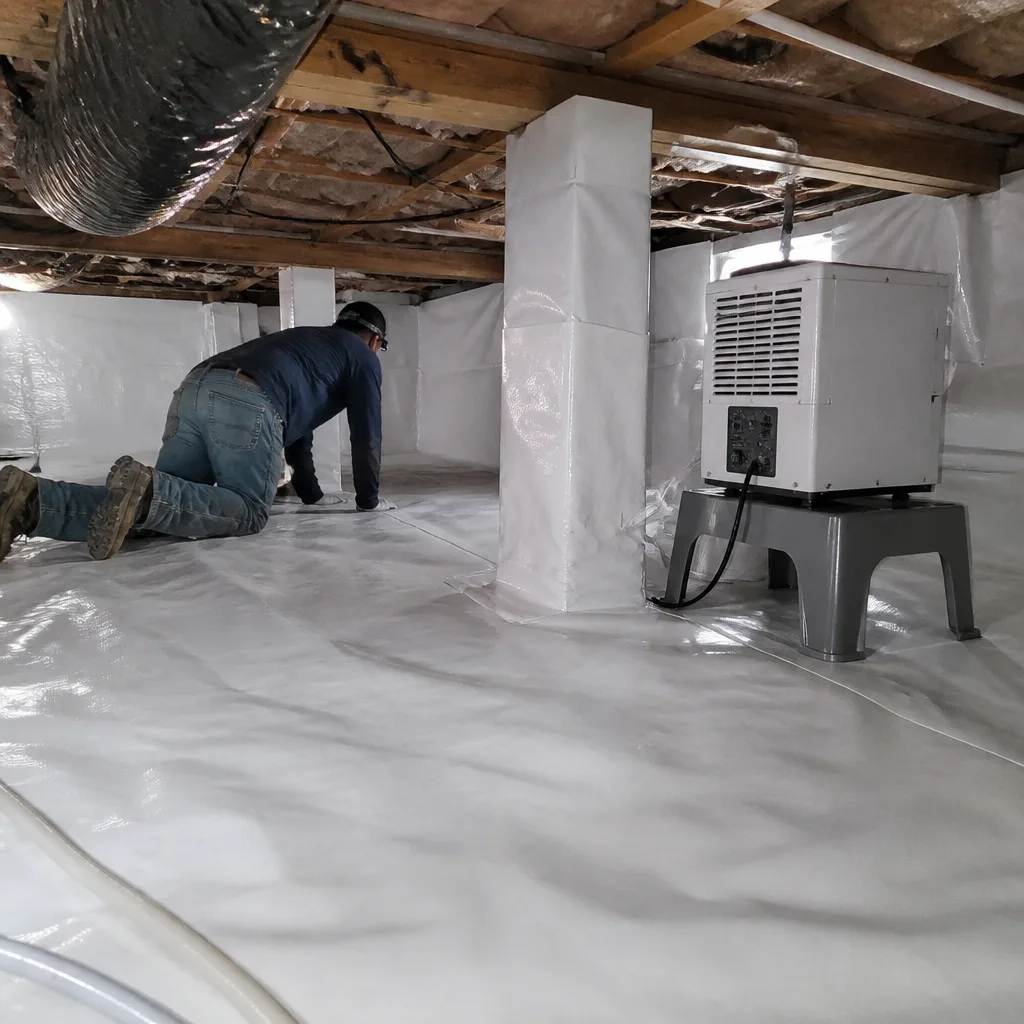
Most complete attic jobs in Santa Clarita - including air sealing, blower-door testing, permit, and insulation to R-38 or R-49 - run between $2,400 and $4,500 for a typical 1,500 to 2,500 square foot home. Bids below $2,000 typically omit air sealing or testing. Call (747) 294-2764 for a written price on your specific home - estimates are free.
Yes, if the work exceeds replacement-in-kind. The City of Santa Clarita Building and Safety Department requires permits for insulation upgrades that change R-value or involve air sealing modifications. A legitimate contractor pulls the permit and schedules inspection as part of the job scope. If a bidder says permits aren’t needed, ask them to cite the municipal code section they’re relying on.
Blown-in fiberglass or cellulose fills attic floors to a specified depth, works well in vented attics, and costs less per square foot. Spray foam - either open-cell or closed-cell - adheres to roof decks and creates an unvented conditioned attic, which is better for complex HVAC duct layouts but costs roughly double. In Santa Clarita’s hot summers, closed-cell spray foam’s higher R-value per inch matters in tight spaces, but it’s not the right choice for every home. We specify the material that matches your roof structure and budget, with no proprietary lock-in.
A typical Santa Clarita attic - air sealing, blower-door test, and blown-in insulation - takes one to two days for a crew of two. Spray foam jobs run two to three days including cure time. Homes in older neighborhoods like Old Town Newhall may need an extra half-day for access challenges or discovered damage. We specify duration in every written scope.
Sometimes, but only if the existing material is dry, uncompressed, uncontaminated, and properly air sealed beneath. In Santa Clarita, we frequently find rodent-affected or water-stained insulation that must be removed first. Blowing new material over old without inspection buries problems and reduces performance. Our scope checklist specifies whether removal is included.
A blower-door test is a pressurization reading that shows, in one number, how much air your building envelope is losing. A powerful fan depressurizes the house while sensors measure airflow in CFM50 (cubic feet per minute at 50 Pascals). We conduct this test before and after air sealing so you can verify the result. In our Santa Clarita work, we’ve seen pre-test readings of 4,200 CFM50 drop to 2,100 after proper sealing - a 50% reduction that shows up in comfort and utility bills.
Repair - spot-adding material to low areas - is cheaper in the moment but rarely solves the underlying problem. In Santa Clarita’s climate, compressed or uneven insulation with unsealed air leaks performs so poorly that partial repair wastes money. A full replacement with integrated air sealing typically pays back in three to five years through reduced HVAC runtime. We provide both options in writing so you can compare lifecycle cost, not just day-one price. Call (747) 294-2764 for a free estimate.
The Bottom Line
Hiring an insulation contractor in Santa Clarita isn’t about finding the lowest bid (see more guides & resources). It’s about forcing every bidder to price the same scope, then choosing the one who documents their work and stands behind it with measurable results. Verify the CSLB license. Issue the mandatory scope checklist. Demand a written price with line-item detail. Ask the five building-science questions. And never accept a job that treats air sealing as optional.
The contractor who seals first, tests before and after, and hands you a documented record isn’t selling harder. They’re doing the job correctly. In Santa Clarita’s climate, that difference shows up every month on your utility bill and every summer afternoon in your living room.
Written by Wes Okafor, Owner at Topside Attic Insulation Santa Clarita, serving Santa Clarita since 2016.