
Last updated September 23, 2026
Insulation Warning Signs: A Santa Clarita Homeowner’s Reference Guide
Adding R-19 over existing R-11 in an attic with unsealed top-plate bypasses produces, on average, less than 8% reduction in heating and cooling costs. The air leaking through those bypasses carries more energy than the added insulation resists, and in Santa Clarita’s climate, that leakage gets worse every summer when temperature differentials peak. Most homeowners we meet in Valencia, Saugus, and Canyon Country have already spent money on insulation that didn’t solve the problem because nobody sealed the envelope first. This guide shows you how to read the real warning signs, distinguish insulation problems from air-sealing failures, and know what a proper diagnostic visit should include before you spend another dollar.
Quick Answer
The most common insulation warning signs in Santa Clarita homes are uneven room temperatures, utility bills 20-40% above comparable homes, visible daylight at attic eaves, dark staining on fiberglass batts, and HVAC systems that run continuously during heat waves. These symptoms often indicate air leakage rather than insufficient R-value, and adding insulation without sealing first typically wastes 50-70% of the improvement potential. A proper assessment requires blower-door depressurization and infrared scanning to separate insulation gaps from air bypasses before any work is specified.
Table of Contents
- Eight Specific Warning Signs and What They Actually Mean
- Insulation Problem or Air Sealing Problem? The Incense Test
- Severity Triage: DIY, Contractor, or HERS Rater Required
- What a Proper Diagnostic Visit Looks Like (and What It Costs)
- Santa Clarita’s Wildfire Risk: When Insulation Signs Signal Fire Vulnerability
- Common Mistakes to Avoid
- When to Call a Professional
- Frequently Asked Questions
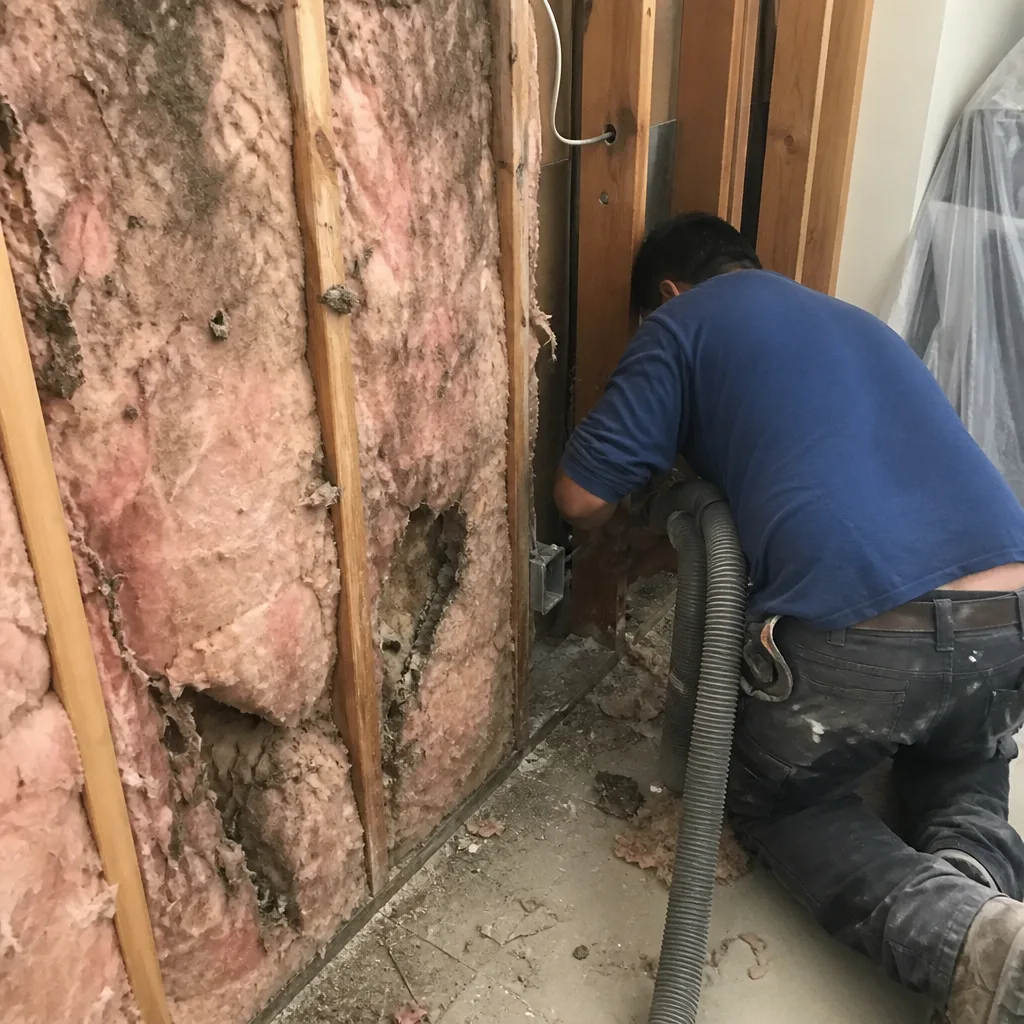 Before
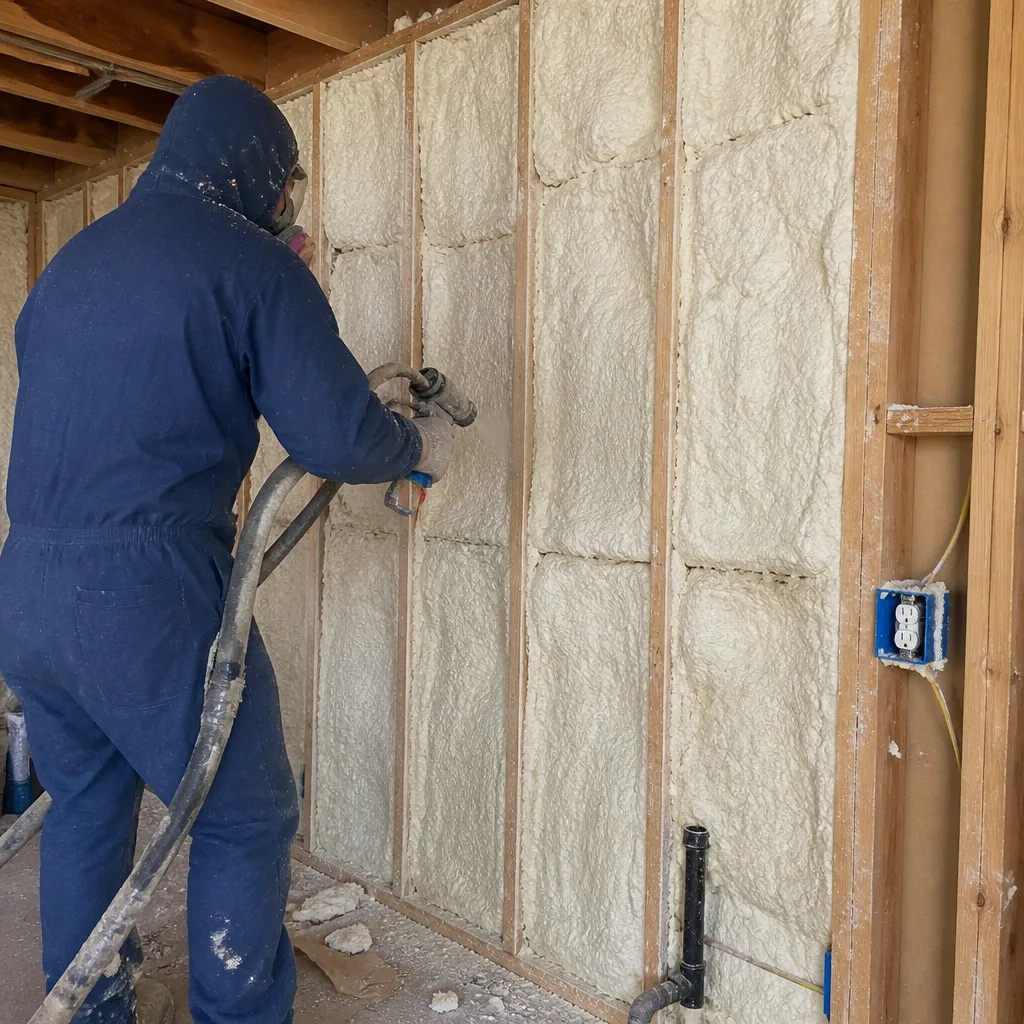 After
AfterEight Specific Warning Signs and What They Actually Mean
We’ve documented conditions in over 9,000 homes since 2016, and the same eight warning signs appear repeatedly in Santa Clarita. Each one tells a different story about what’s failing in the building envelope. Here’s how to read them correctly.
1. Uneven Room Temperatures
The master bedroom runs five degrees warmer than the hallway. The guest room over the garage never cools below 78°F in July. Homeowners in Sand Canyon and Stevenson Ranch call us about this constantly, and most have already been told they need more attic insulation.
Here’s what we actually find: in about 60% of cases, the R-value in the attic is adequate, but conditioned air is escaping through top-plate bypasses - the gaps where interior walls meet the attic floor. Warm air from the attic drops into wall cavities in winter; conditioned air leaks out in summer. The insulation sits on top of the ceiling drywall doing its job, while air moves around it through framing gaps. A blower-door test - a pressurization reading that shows, in one number, how much air your building envelope is losing - typically reveals 2,500-4,500 CFM50 in these homes, well above the 1,500-2,000 CFM50 we’d expect for the square footage.
More insulation won’t seal a bypass. It will bury it, make it harder to find, and leave the temperature imbalance unchanged.
2. High Utility Bills
We ask every caller: “Do you know your home’s ACH50?” Almost none do. Air Changes per Hour at 50 Pascals of pressure difference - that’s the standardized measurement of how leaky your envelope is. In Santa Clarita, where summer cooling loads dominate, a home at 8 ACH50 costs roughly 35-50% more to condition than the same home at 3 ACH50, even with identical insulation levels.
Before ordering insulation, measure this. A HERS rater or qualified insulation contractor can run a blower-door test in under 90 minutes. In our experience across Santa Clarita, homes built 1985-2005 typically test at 6-10 ACH50; homes built 2005-2015 at 4-7 ACH50; and even newer homes with visible insulation can leak at 5-8 ACH50 if the builder skipped detailed air sealing. We’ve tested a 2018 build in Westridge that leaked at 7.2 ACH50 because the can lights were never sealed to the drywall.
The fix isn’t always more insulation. Sometimes it’s sealing the envelope to 3 ACH50 or better, then verifying the existing insulation depth is adequate.
3. Visible Daylight at Attic Eaves
Climb into your attic on a sunny day. Look where the roof meets the exterior walls. If you see daylight, you have one of two problems: missing or failed baffles (the cardboard or foam channels that keep insulation from blocking soffit vents), or the insulation was blown or placed directly against the roof deck without maintaining the ventilation channel.
In Santa Clarita’s climate, this is serious. Blocked soffit ventilation creates heat buildup that accelerates asphalt shingle degradation and can push attic temperatures past 140°F in July. The radiant heat gain then overwhelms your ceiling insulation regardless of R-value. We see this constantly in older homes in Newhall and Bouquet Canyon where blown-in cellulose or fiberglass has migrated into the eaves over years of vibration and air movement.
The diagnostic step: measure attic temperature at noon on a 95°F day. If it’s within 15°F of outside ambient, ventilation is probably working. If it’s 130°F+, you have a ventilation problem that insulation alone won’t fix.
4. Pest Evidence in Blown Fill
Droppings, nesting material, or tunnels through your attic insulation indicate rodent activity. But here’s what most homeowners miss: rodents compress insulation as they travel, and compressed insulation loses R-value proportionally. Fiberglass batt compressed to half its design thickness performs at roughly half its rated R-value. Blown cellulose that’s been tunneled through develops voids and thermal bypasses.
In Santa Clarita, roof rats are the primary culprit, and they’re drawn to attics for the same reason your HVAC struggles: thermal bypasses create temperature differentials and air currents that signal accessible shelter. We document this with photos on every job - part of our Documented Photo Record included on every visit. If you’re seeing pest evidence, you need rodent proofing and insulation replacement, but you also need to find how they’re entering. That entry point is almost always an air leak you didn’t know existed.
5. Dark Staining on Fiberglass Batts
Gray or black streaks on the surface of fiberglass batts look like mold or dirt. They’re usually neither. This is “air-washing” - dust and particulate carried by moving air through the insulation, depositing on the upstream face of the batt where air leaks through gaps in the ceiling plane. The batt acts as a filter.
Air-washing proves air is moving through your insulation, not just around it. Every dark streak marks a thermal bypass that’s reducing the effective R-value of the entire assembly. We’ve pulled batts in Santa Clarita homes where the center was still yellow-pink but the edges were charcoal gray - the edges were against unsealed top plates, and air had been washing through for years.
The insulation isn’t failed. The air sealing is failed, and the insulation is documenting it.
6. Frost on Interior Windows in Winter
Santa Clarita winters are mild, but January nights still drop to the 30s. If you’re seeing frost on the inside of windows, the immediate cause is high interior humidity meeting a cold surface. The building science question is: where’s the moisture coming from?
Often, it’s infiltration. Leaky envelopes draw in outside air, which in winter carries moisture that condenses on cold surfaces. Paradoxically, a tighter home with proper mechanical ventilation has fewer frost issues than a leaky home in our climate. The frost is a warning that your envelope is too porous, and the fix is air sealing - not window replacement, not more insulation in walls that aren’t the problem.
Check: does frost appear on windows in rooms with exterior walls that feel drafty? That’s infiltration. Does it appear uniformly, even on interior windows? That’s a humidity source issue, possibly from a crawl space with failed vapor barrier. Our Crawl Space Encapsulation & Vapor Barrier in Santa Clarita service addresses the latter.
7. HVAC Running Continuously
Your compressor never cycles off during August afternoons. The air coming from vents feels cool, but the house won’t reach setpoint. Most HVAC contractors will check refrigerant charge and ductwork, which is correct - but if those check out, the building envelope is the next suspect.
Here’s the critical distinction: continuous HVAC operation can mean your cooling load exceeds your system’s capacity, or it can mean your system is fighting a losing battle against air leakage. A Manual J load calculation - the industry standard for sizing HVAC equipment - assumes a specific envelope tightness. If your home leaks at 8 ACH50 and the calculation assumed 4 ACH50, your system is undersized for the actual load. Adding insulation without sealing makes this worse, because the insulation adds thermal mass that delays temperature response while the air leakage continues unabated.
We’ve seen this in Santa Clarita’s 3,000-square-foot homes where a 5-ton system should be adequate but can’t maintain 75°F because the envelope leaks at 9 ACH50. Seal to 3 ACH50, and the same system performs adequately.
8. Musty Attic Odor
A damp, earthy smell from the attic access hatch indicates moisture accumulation. In Santa Clarita’s dry climate, this is almost always a vapor management failure, not bulk water intrusion. Warm, humid interior air leaks through ceiling penetrations into the attic, where it cools below dew point on winter nights or on the underside of the roof deck where radiant cooling occurs.
The insulation isn’t the primary failure - it’s the air leakage path that carries moisture. But wet insulation compounds the problem: fiberglass loses R-value when damp, cellulose can compress and support mold growth, and spray foam can delaminate from substrates. Our Attic Insulation in Santa Clarita assessments always include moisture meter readings at five points across the attic floor.
If you’re smelling mustiness, you need to stop the air leakage first, then assess whether insulation replacement is required.
Insulation Problem or Air Sealing Problem? The Incense Test
There’s one diagnostic test any Santa Clarita homeowner can perform without equipment. It won’t quantify the leakage, but it will prove whether your problem is insulation or air movement.
What you need: A stick of incense, a windy day (Santa Clarita’s afternoon onshore flow works well, or any day with 10+ mph winds), and an electrical outlet on an exterior wall.
- Close all windows and exterior doors. Turn off HVAC, fans, and exhaust vents.
- Light the incense and hold it 2-3 inches from the outlet cover plate.
- Observe the smoke for 60 seconds.
What you’re looking for:
- Smoke pulls steadily toward the outlet: The wall cavity is depressurized relative to the room, drawing air in from outside. You have envelope leakage at that location. The outlet is a symptom; the bypass is likely at the top plate, sill plate, or around the electrical box itself.
- Smoke pushes away from the outlet: The wall cavity is pressurized, pushing air into the room. This is less common but indicates a connection to the attic or another pressurized zone.
- Smoke rises straight with minimal drift: The wall cavity is relatively static. The outlet is not a significant leakage point.
Repeat at outlets on different walls, especially on the windward side of the house. If you see consistent pulling or pushing at multiple locations, your home has systemic air leakage that insulation alone will not address.
The limitation: this test finds leakage paths but doesn’t measure their cumulative effect. A blower-door test does. In our work across Santa Clarita, we depressurize the house to 50 Pascals - roughly equivalent to a 20 mph wind on all sides simultaneously - and use a smoke pencil to locate every significant leak. The incense test is the homeowner’s version; the blower-door test is the professional standard that produces a number you can hold a contractor to.
Severity Triage: DIY, Contractor, or HERS Rater Required
Not every warning sign demands the same response. Here’s how we triage what we’ve found in Santa Clarita homes, based on what’s safe to address yourself, what requires professional equipment, and what needs third-party verification.
DIY-Addressable Issues
- Visible gaps at attic access hatch: Weatherstrip the hatch frame and add rigid foam insulation to the hatch itself. Cost: $30-60 in materials.
- Failed baffles at eaves: Install proper vent chutes (we prefer AccuVent or similar rigid products over cardboard) and ensure insulation doesn’t block soffit vents. Cost: $2-4 per linear foot of eave.
- Single-room temperature imbalance with clear duct issue: Check for closed or blocked vents, disconnected flex duct in attic. Cost: $0-50 if it’s a connection you can reach safely.
Safety note: attic work involves heat exposure, trip hazards from joists, and in older Santa Clarita homes, possible asbestos in vermiculite insulation. If you encounter loose gray pebbles, stop and call for testing.
Contractor Assessment Required
- Multiple warning signs from the eight listed above: Systemic issues need systemic diagnosis. A qualified contractor should perform blower-door testing, infrared scanning, and provide a written findings report.
- Pest evidence in insulation: Requires rodent proofing, contamination assessment, and likely insulation replacement. This is beyond homeowner scope for health and safety reasons.
- Dark staining on batts with suspected air-washing: The sealing work requires attic access, proper PPE, and knowledge of fire-blocking requirements where penetrations pass between floors.
What to expect from a contractor: a written scope with line-item pricing, a description of diagnostic methods used, and documentation of findings. Under our Haven Standard, every job begins with a Written Price Before Any Work Starts - flat price, written scope, written warranty before anyone lifts a tool.
Contractor + HERS Rater Required
- Continuous HVAC operation with no clear duct or equipment fault: You need a Manual J load calculation verified against actual envelope performance. A HERS rater provides independent verification; the contractor provides remediation. Neither should do both without disclosure.
- New construction or major renovation with code compliance requirements: California Title 24 requires HERS verification for many envelope measures. Santa Clarita building inspectors will ask for CFM50 documentation.
- Dispute with builder or previous contractor about performance: Third-party testing establishes baseline facts. We’ve provided blower-door evidence for homeowners in Valencia and Castaic in warranty disputes.
Cost expectation in Santa Clarita: a HERS-rated blower-door test with infrared scan runs $400-700. A contractor diagnostic visit with blower-door and written report runs $150-350, often credited toward remediation work. Be wary of “free estimates” that don’t include diagnostics - you can’t price work you haven’t properly diagnosed.
What a Proper Diagnostic Visit Looks Like (and What It Costs)
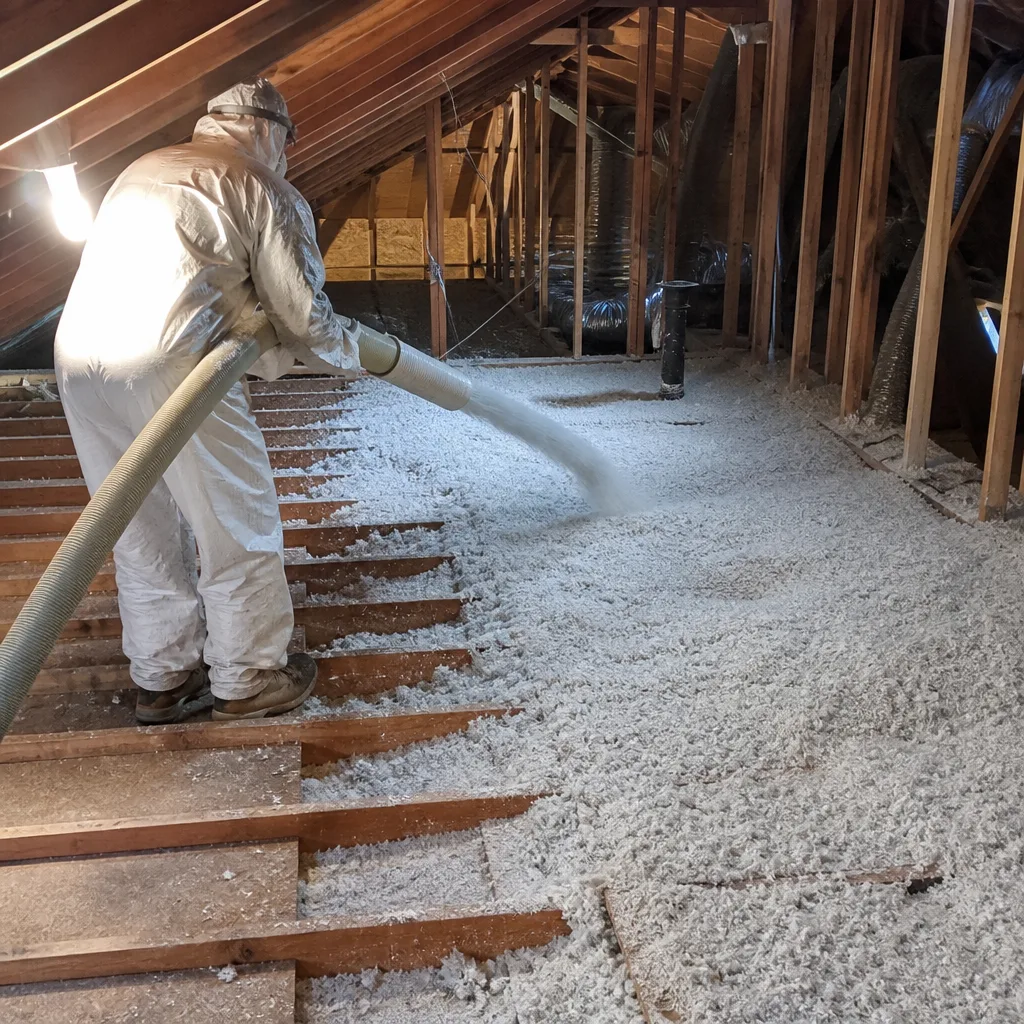
We’ve described what homeowners should expect. Here’s what we actually do on every assessment, and what separates a diagnostic visit from a sales call.
Step 1: Blower-door depressurization. We install a calibrated fan in an exterior door frame and depressurize the house to 50 Pascals. The CFM50 reading tells us the total leakage rate. We then walk the house with a smoke pencil to locate the largest leaks - typically top plates, can lights, electrical boxes, and duct boots. In a 2,400-square-foot home in Santa Clarita, we’d expect to find 15-25 significant leakage points.
Step 2: Infrared scan of the ceiling plane. With the house depressurized, we use a thermal imaging camera to visualize air movement through the ceiling. Bypasses show as cold streaks in winter or warm streaks in summer. Insulation gaps show as uniform temperature differences. The pattern distinguishes air leakage from missing insulation instantly.
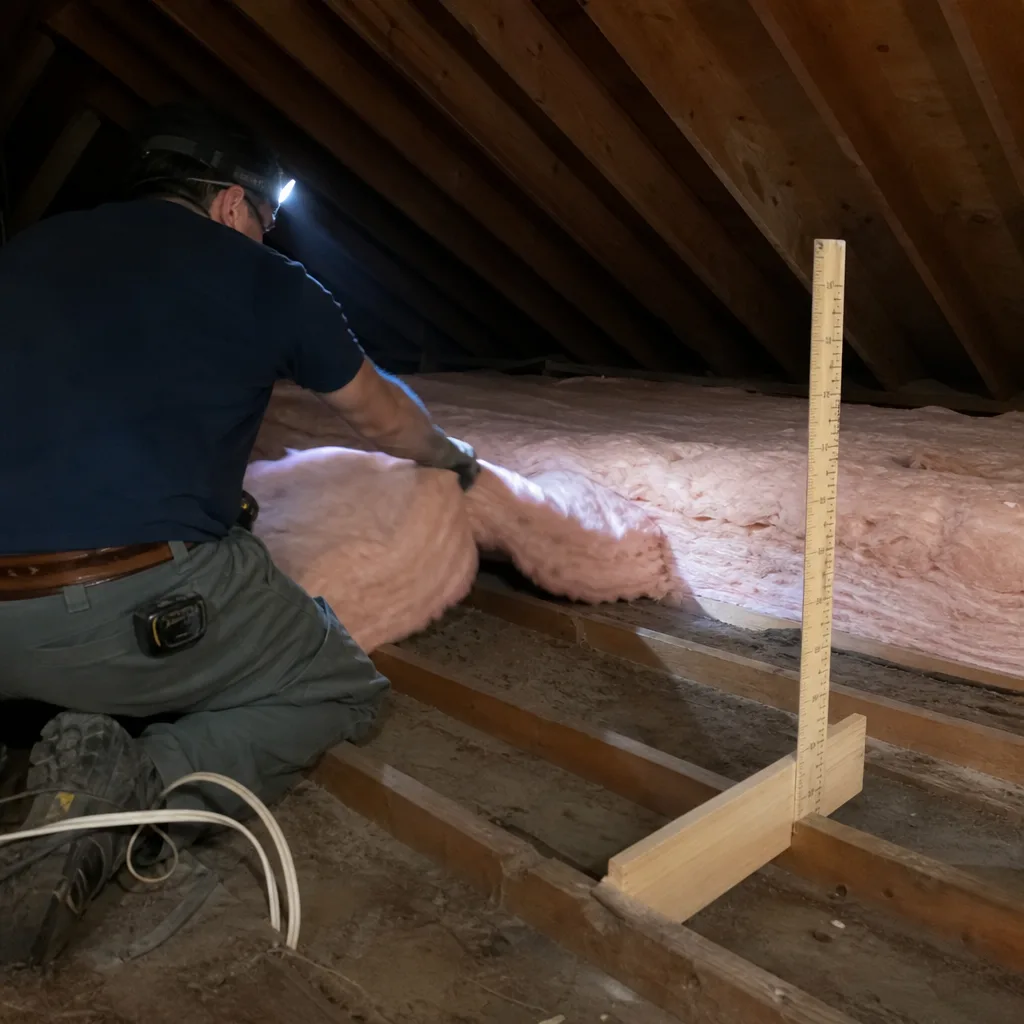
Step 3: Attic depth measurements at five points. We measure at the access, two points along the centerline, and two points near eaves. Current California Energy Code calls for R-38 minimum in climate zone 9 (Santa Clarita’s zone). At R-38, blown fiberglass is roughly 12-14 inches; cellulose 10-12 inches; mineral wool 9-11 inches. We photograph each measurement.
Step 4: Written findings report. You receive a document with: the blower-door CFM50 reading; infrared images with annotations; insulation depth measurements with code reference; a prioritized list of air leakage locations; and a separate scope for insulation work if needed. This is your record. Under our Haven Standard, it’s delivered before any pricing discussion.
What this costs in Santa Clarita: Our diagnostic visit is $250, credited in full toward any work we perform. Independent HERS raters charge $400-700 and provide code-compliant documentation but don’t perform remediation. Either way, you should never pay for insulation work based on an attic glance and a verbal quote. The diagnostic is the foundation; the written price is the contract.
On applicable jobs, we provide before-and-after blower-door numbers so you can verify the air-sealing result. A typical Santa Clarita home starts at 3,500 CFM50 and finishes at 1,800-2,200 CFM50 after comprehensive air sealing. You see the number. You know what you paid for.
Santa Clarita’s Wildfire Risk: When Insulation Signs Signal Fire Vulnerability
Santa Clarita sits in a high fire hazard severity zone. The 2019 Saddleridge Fire, 2020 Lake Fire, and repeated smaller incidents have made ember intrusion a specific, documented risk for our community. What many homeowners don’t recognize: the same attic ventilation and insulation defects that create thermal problems also create ember entry paths.
California Building Code Chapter 7A requires ember-resistant venting in new construction and substantial remodels in wildland-urban interface zones. Most Santa Clarita homes built before 2008 lack this protection. Here’s how insulation warning signs intersect with fire vulnerability:
- Visible daylight at eaves with failed baffles: This opening is an ember entry point. During a wind-driven fire, embers can penetrate soffit vents and ignite accumulated debris or compromised insulation in the attic. We inspect for 1/8-inch mesh screening (required for ember resistance) and proper baffle installation that doesn’t create gaps.
- Compressed or disturbed insulation near vents: Indicates possible rodent activity, which often enlarges vent openings. Enlarged openings defeat ember-resistant design.
- Gaps around chimney penetrations or flues: These are required fire-blocking locations that also function as major air leaks. Infrared scanning often reveals them as primary bypasses.
In 2022, we assessed a home in Sand Canyon where the homeowner called for high summer bills. We found failed baffles, compressed GreenFiber cellulose with rodent tunnels, and 3/4-inch gaps around a furnace vent that passed through the attic. The thermal problem was real, but the fire vulnerability was more urgent. We sealed the penetrations, replaced the contaminated insulation with Rockwool mineral wool (which provides both thermal resistance and improved fire performance), and installed ember-resistant soffit vents. The blower-door reading dropped from 4,100 to 1,900 CFM50. The homeowner received before-and-after documentation and a written scope under our 365-Day Done Right Promise.
If your insulation warning signs include any attic ventilation defect, ask your contractor specifically about wildfire ember resistance. It’s not a standard insulation question, but in Santa Clarita, it should be.
Common Mistakes to Avoid
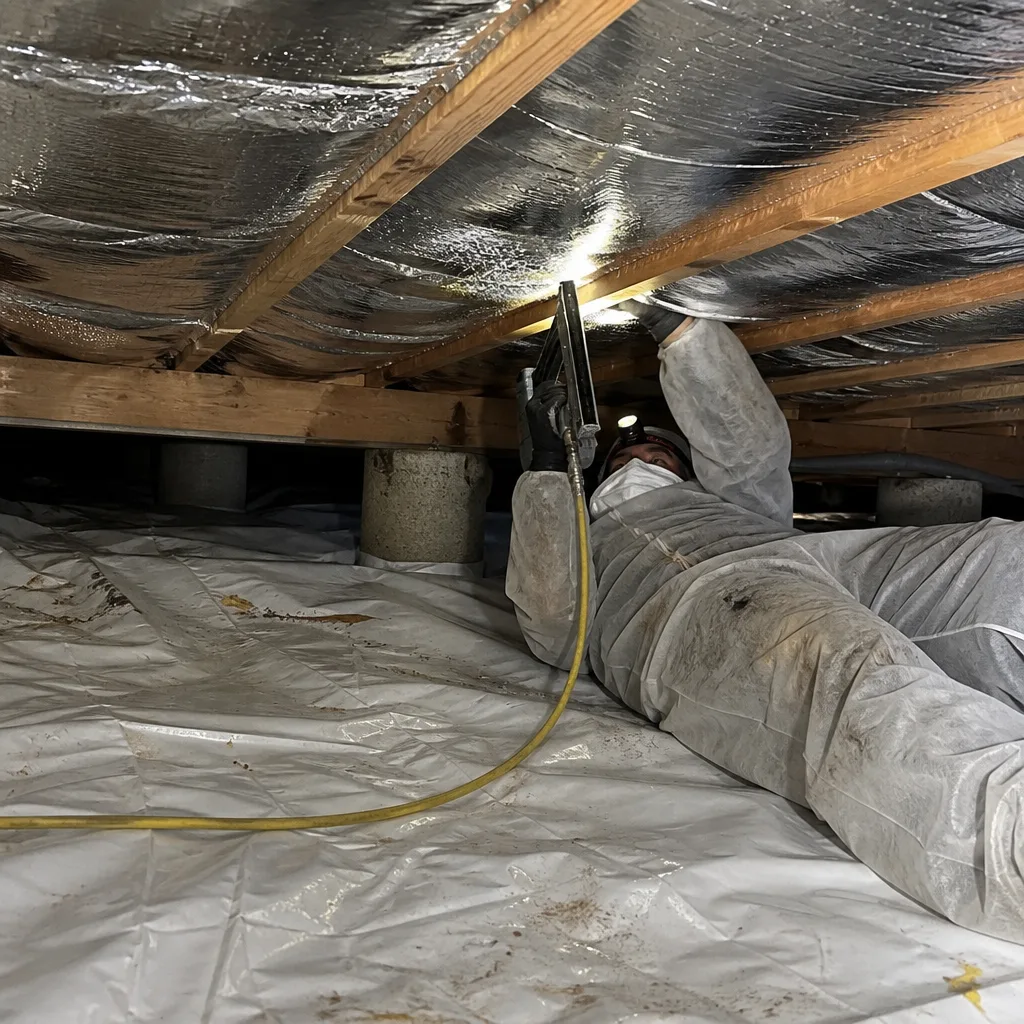
- Adding insulation over unsealed air leaks: This buries the real problem, makes future diagnosis harder, and typically delivers less than 15% of the potential energy improvement. In Santa Clarita’s climate, the summer cooling penalty from air leakage dominates any R-value gain.
- Assuming R-value equals performance: R-value is measured in a lab with no air movement. Your attic has air movement. A well-sealed R-30 assembly outperforms a leaky R-50 assembly every time. We verify this with blower-door numbers, not insulation labels.
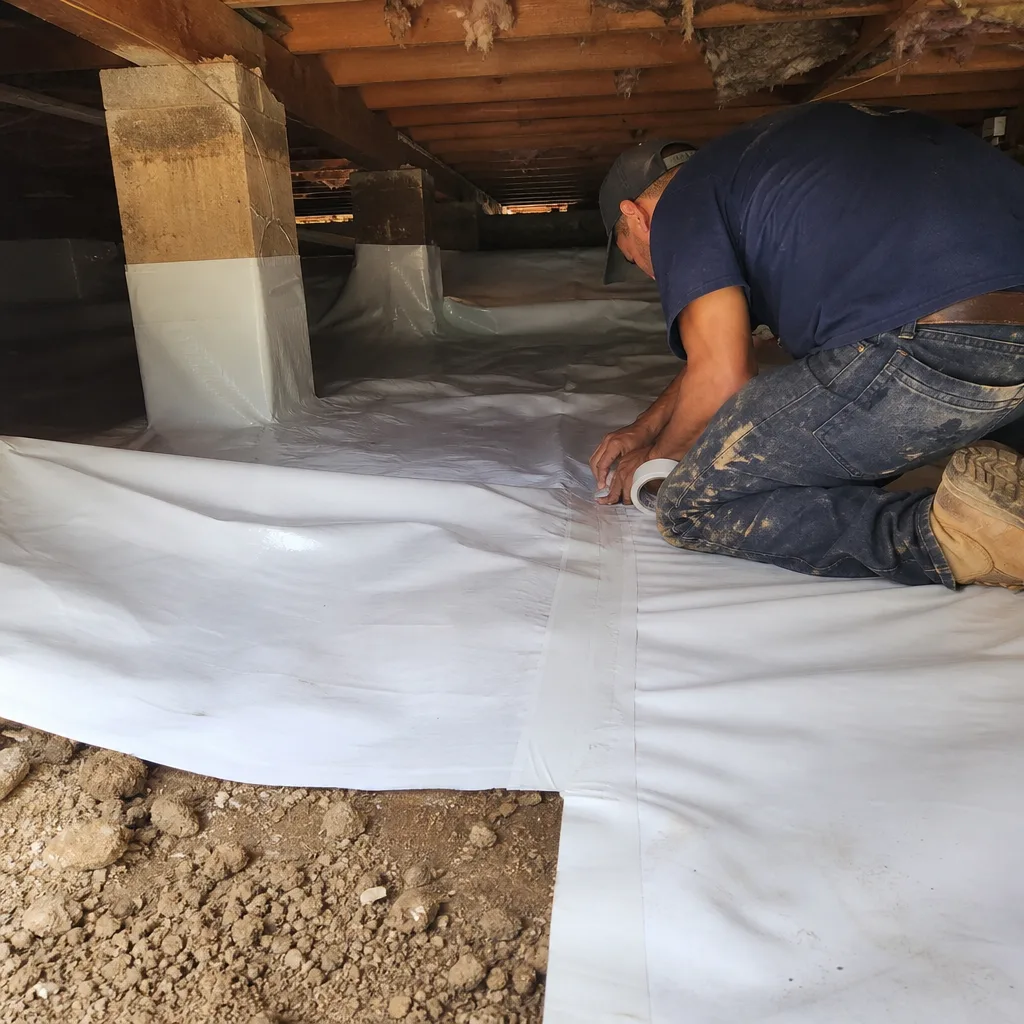
- Ignoring the crawl space: In homes with raised floors, particularly in older Santa Clarita neighborhoods like Newhall, unsealed crawl spaces introduce moisture and undermine upper-floor insulation performance. Our crawl space encapsulation service addresses this directly.
- Accepting a quote without a written scope: Verbal estimates with “about $X per square foot” leave room for scope reduction and blame-shifting. Haven Standard Clause 1 requires a flat price, written scope, and written warranty before work starts. Anything less is a risk you don’t need to take.
- Choosing spray foam without understanding the application: Open-cell and closed-cell foams have different vapor permeance, expansion characteristics, and fire rating requirements. In Santa Clarita’s climate, open-cell on the roof deck requires careful vapor analysis to avoid moisture accumulation. Our spray foam insulation service includes this analysis in every scope.
- DIY air sealing without proper PPE and fire-blocking knowledge: Caulking around outlets is fine. Sealing top plates and penetrations in an attic with active knob-and-tube wiring or within 3 feet of a flue requires code knowledge and safety equipment. We’ve been called to remediate homeowner work that created fire hazards.
- Neglecting to verify results: If you pay for air sealing, you should receive a post-work blower-door number. Without it, you have no evidence the work was effective. We publish before-and-after readings on every applicable job because documentation is the only proof that matters.
When to Call a Professional
Call when multiple warning signs appear together, when any sign involves safety (pest contamination, possible asbestos, electrical hazards in the attic), or when you’ve already spent money on insulation that didn’t solve the problem. The most expensive insulation is the insulation that doesn’t work because it was installed over an unsealed envelope.
Topside Attic Insulation Santa Clarita offers free estimates in Santa Clarita - call (747) 294-2764. Every estimate includes a diagnostic conversation about your specific symptoms, and if we visit, we deliver a Written Price Before Any Work Starts with a Documented Photo Record. Our 365-Day Done Right Promise applies to all completed work. Calls are answered by a live person 24/7.
Frequently Asked Questions
A comprehensive home energy audit with blower-door test, infrared scan, and written findings report typically costs $250-700 in Santa Clarita, depending on home size and whether HERS certification is required. Our diagnostic visit is $250, credited in full toward any work we perform. Call (747) 294-2764 to schedule - estimates are free, and the diagnostic fee only applies if we perform testing.
DIY insulation installation is possible for simple attic floor applications in accessible spaces with no air sealing required, no electrical hazards, and no contamination. However, in our experience across Santa Clarita, fewer than 20% of homes meet these criteria. Most have air leakage that must be sealed first, electrical penetrations that require fire-blocking, or existing insulation that needs removal. For wall insulation, crawl spaces, or spray foam, professional installation is required for code compliance and safety.
Heat stratification in two-story homes is usually caused by air leakage at the top plates of interior walls, duct leakage in the attic, or inadequate return air pathways, not insufficient insulation. The added insulation may be performing correctly while conditioned air escapes through bypasses you can’t see. A blower-door test with infrared scanning locates these bypasses precisely. We’ve solved this exact issue in dozens of Valencia and Stevenson Ranch homes by sealing first, then verifying insulation depth.
Insulation materials themselves are stable for decades: fiberglass and mineral wool don’t degrade chemically; cellulose is treated with borate for pest and fire resistance; spray foam, properly applied, lasts the life of the building. The problem is rarely material failure. It’s compression from foot traffic or pests, moisture damage from undetected leaks, or air-washing that reduces effective performance. In Santa Clarita’s dry climate, moisture damage is less common than in coastal areas, but summer attic heat can accelerate binder degradation in some products. We assess condition with depth measurements and density testing, not age assumptions.
Batts (pre-cut fiberglass or mineral wool panels) work well in open attic floors with uniform joist spacing and minimal obstructions. Blown-in fiberglass or cellulose conforms to irregular spaces and provides better coverage around wires and pipes, but requires proper density to achieve rated R-value. In Santa Clarita’s climate zone 9, either can meet code when installed to R-38 depth. We specify based on attic geometry, existing conditions, and whether air sealing work will disturb the installation. For homes with significant top-plate sealing required, blown-in is usually more practical after sealing is complete.
Closed-cell spray foam provides the highest R-value per inch and functions as both insulation and air barrier, which can eliminate separate air sealing labor. Open-cell is less expensive but requires careful vapor analysis in our climate. The value depends on your specific application: roof decks with limited clearance, irregular framing, or conditioned attics often justify the premium. For standard vented attics with adequate clearance, a sealed blown-in system at R-38 or R-49 typically delivers comparable performance at lower cost. We provide both options with written pricing so you can compare actual numbers, not generalizations. Our Spray Foam Insulation in Santa Clarita page details applications where foam is the clear choice.
The Bottom Line
Insulation warning signs are symptoms of envelope failure, not product failure. The homeowner who reads them correctly saves money and gets results; the homeowner who assumes “more insulation” is always the answer often pays twice. In Santa Clarita’s climate, air sealing is the foundation, insulation is the supplement, and documentation is the proof. Measure before you modify. Seal before you insulate. Verify with numbers, not assumptions. And if you’ve already been down this road without success, bring us your story - we read competing estimates with you, and we start every job with a written price.
Written by Wes Okafor, Owner at Topside Attic Insulation Santa Clarita, serving Santa Clarita since 2016.