
Last updated September 23, 2026
Insulation Cost Breakdown: The Santa Clarita Homeowner’s Reference for 2026
Here’s something most Santa Clarita contractors won’t put in writing: blown fiberglass for a 1,500 square foot attic runs $0.40-$0.55 per square foot in material alone. If your bid bundles everything into one number and the implied material cost works out to $1.20 per square foot, you’re looking at a 150% markup before labor even enters the equation. Worse, if air sealing isn’t listed as its own line item, the scope is incomplete by definition - and in our climate, with Santa Clarita’s 100-degree summer days and winter nights that dip below 40, an unsealed attic is a money furnace.
This guide unbundles every cost you’ll see on a legitimate 2026 insulation bid in Santa Clarita: material costs at current distributor pricing, labor rates for our market, permit fees from LA County, the rebate documentation you’ll need, and the hidden conditions - rodent damage, wet insulation, knob-and-tube wiring - that can double a project’s cost. You’ll learn to read a bid like a technician, not a salesperson.
Quick Answer
Most complete attic insulation jobs in Santa Clarita in 2026 range from $2,800 to $7,500 for a single-story home between 1,200 and 2,400 square feet, depending on insulation type, air sealing scope, and existing conditions. A bid should show five separate line items at minimum: materials, air sealing labor, permits, haul-away, and HERS verification. If any of those are missing or bundled into a single opaque number, you don’t have a scope - you have a guess.
Table of Contents
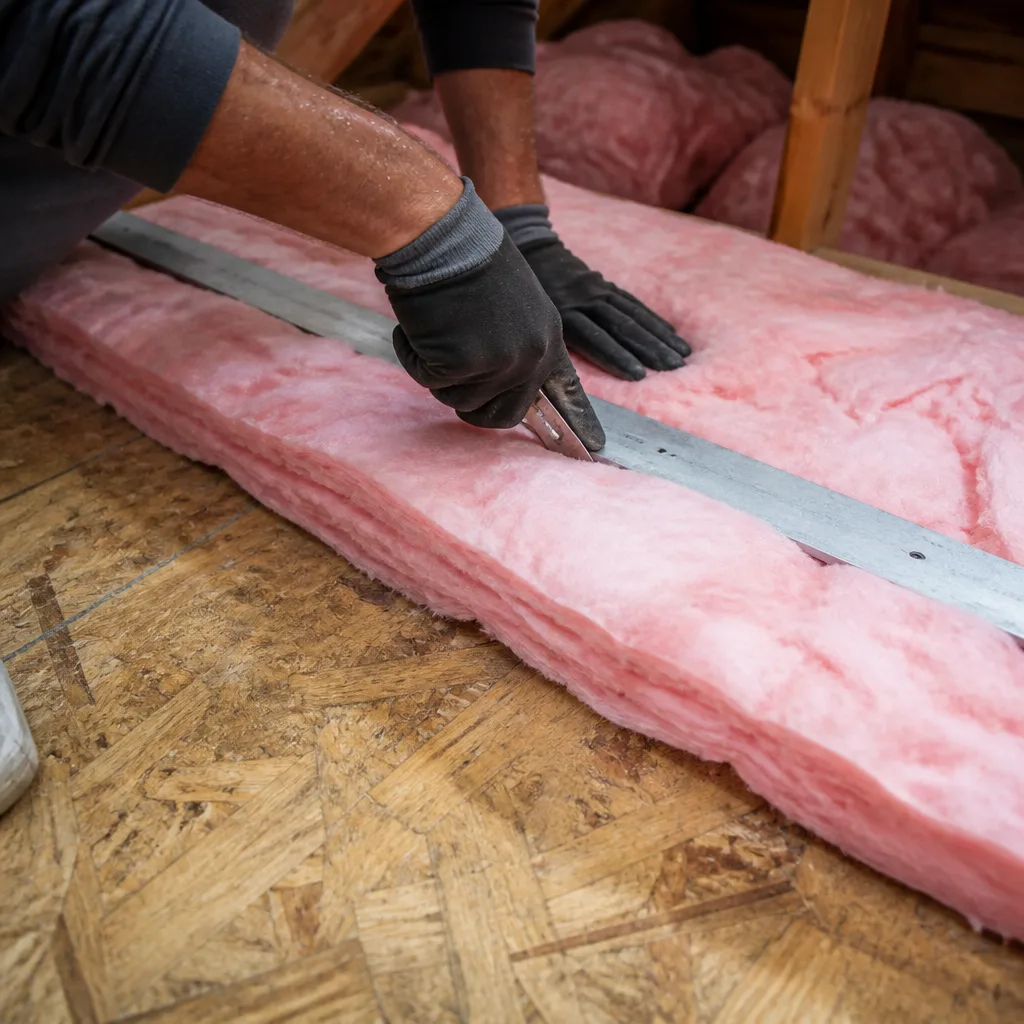
- 2026 Material Costs Per Square Foot in Santa Clarita
- Non-Material Costs Every Bid Should Itemize
- How Existing Conditions Change Your Price
- Sample Cost Comparison: 1,800 Sq Ft Santa Clarita Home
- 2026 Rebates and Tax Credits Available in Santa Clarita
- How to Read a Bid Like a Technician
- Common Mistakes to Avoid
- When to Call a Professional
- Frequently Asked Questions
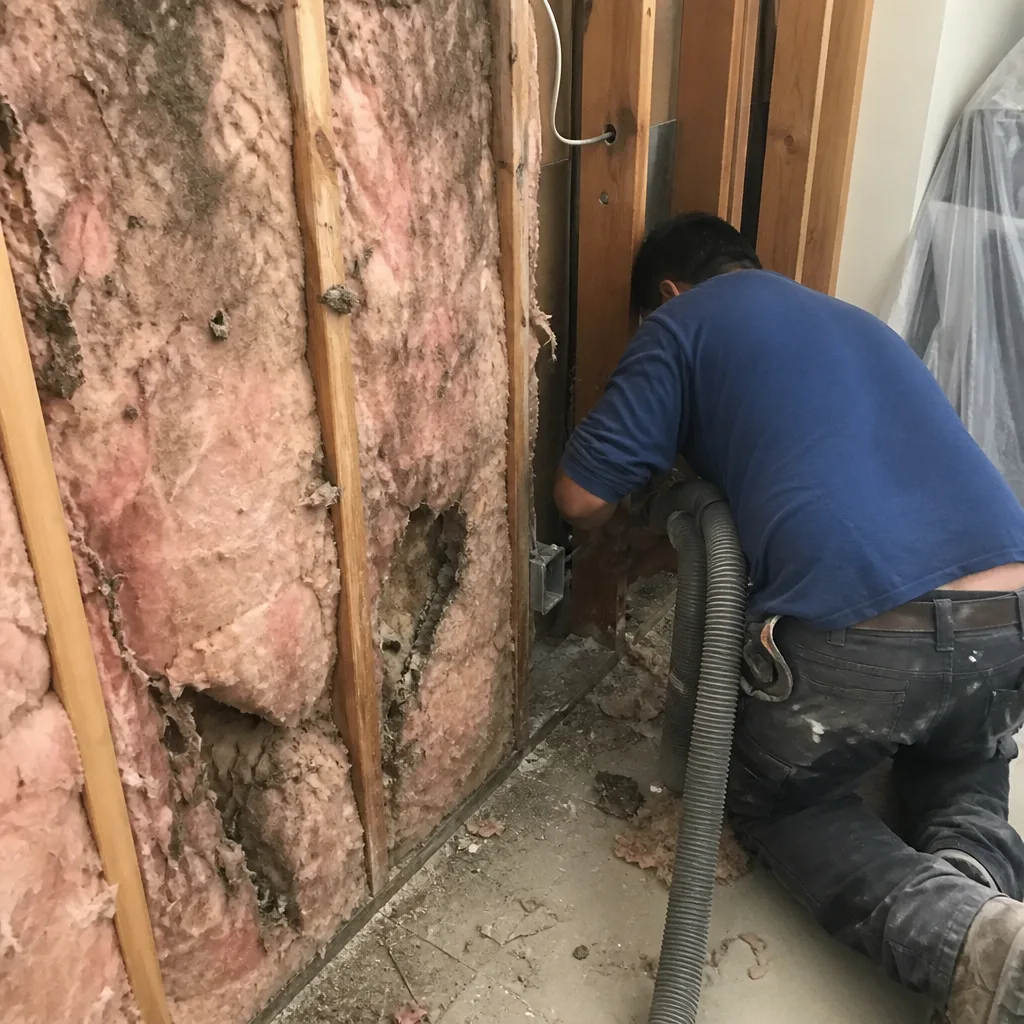 Before
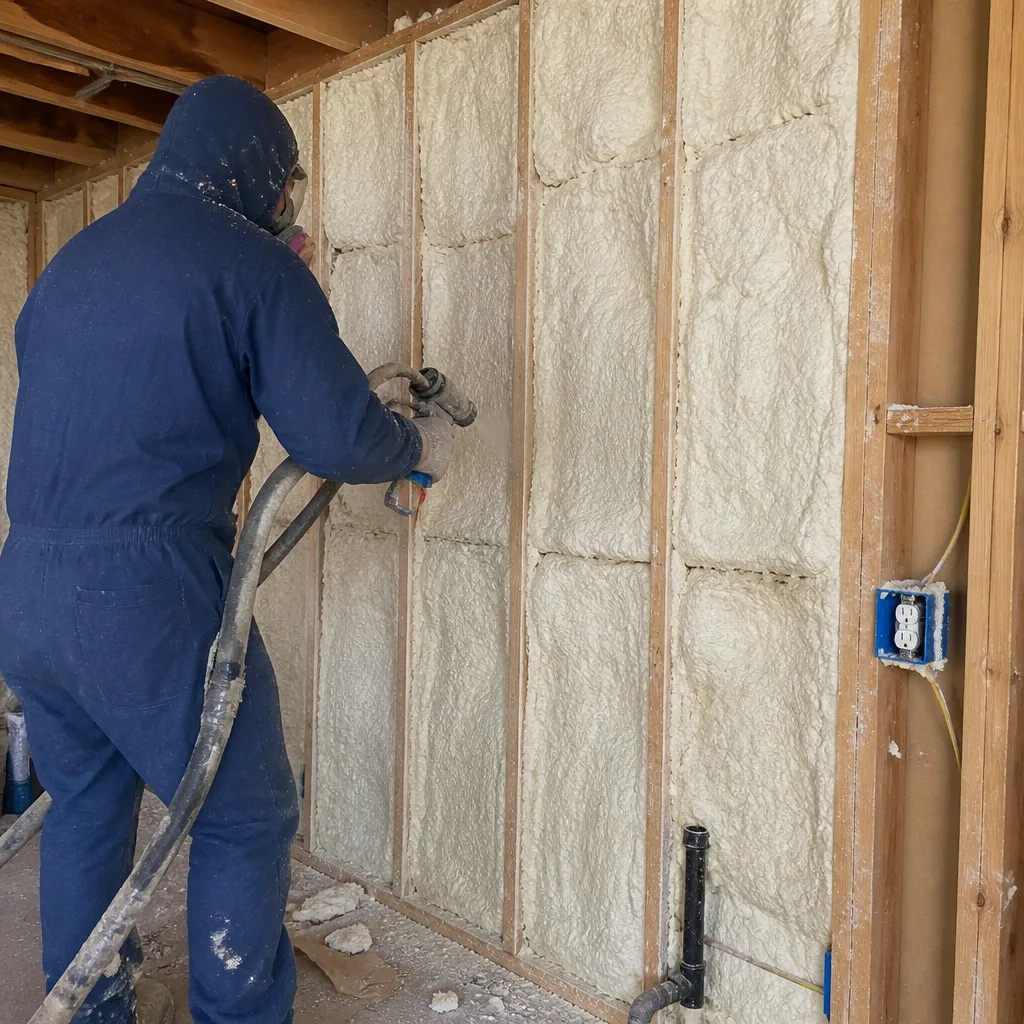 After
After2026 Material Costs Per Square Foot in Santa Clarita
Material pricing moves with petroleum markets, paper pulp futures, and freight costs from the ports of Long Beach and Los Angeles. These figures reflect distributor pricing available to licensed Santa Clarita contractors in early 2026, sourced from invoices we’ve paid to regional suppliers serving the Santa Clarita Valley. Your contractor’s cost will vary slightly based on volume commitments and delivery logistics to neighborhoods like Valencia, Saugus, or Canyon Country.
| Insulation Type | Material Cost per Sq Ft (installed depth) | R-Value per Inch | Typical Application |
|---|---|---|---|
| Blown fiberglass (Owens Corning AttiCat or Johns Manville Climate Pro) | $0.40-$0.55 | R-2.5 to R-3.0 | Attic floor, open blow |
| Blown cellulose (GreenFiber or equivalent) | $0.35-$0.50 | R-3.2 to R-3.8 | Attic floor, dense pack walls |
| Open-cell spray foam (Icynene or Demilec) | $1.10-$1.60 | R-3.6 to R-3.8 | Attic roofline, rim joist |
| Closed-cell spray foam (Demilec or equivalent) | $1.80-$2.50 | R-6.0 to R-6.5 | Crawl spaces, metal buildings, moisture barriers |
| Kraft-faced fiberglass batts (Knauf or Owens Corning) | $0.55-$0.85 | R-3.1 to R-3.4 | Wall cavities, knee walls, bonus rooms |
These are material-only figures. They do not include labor, equipment, markup, or the air sealing that must precede installation. A contractor buying GreenFiber cellulose by the semi-load might hit the low end of that range; a smaller operation buying by the pallet pays closer to retail and passes that through.
The R-value per inch matters in Santa Clarita’s climate more than in milder zones. Title 24 - California’s energy code - requires R-38 to R-49 in attic floors for our climate zone, depending on exact jurisdiction and whether the home has existing insulation. At R-3.5 per inch, cellulose needs 11 to 14 inches. At R-2.5 per inch, fiberglass needs 15 to 19 inches. That depth difference affects material volume, blower machine runtime, and whether your attic hatch needs extension framing.
We specify Owens Corning, Johns Manville, Knauf, and GreenFiber because these manufacturers publish independent third-party testing and maintain California distributor networks with consistent availability. We don’t use proprietary products with undisclosed formulations, and we don’t lock customers into single-source materials.
Non-Material Costs Every Bid Should Itemize
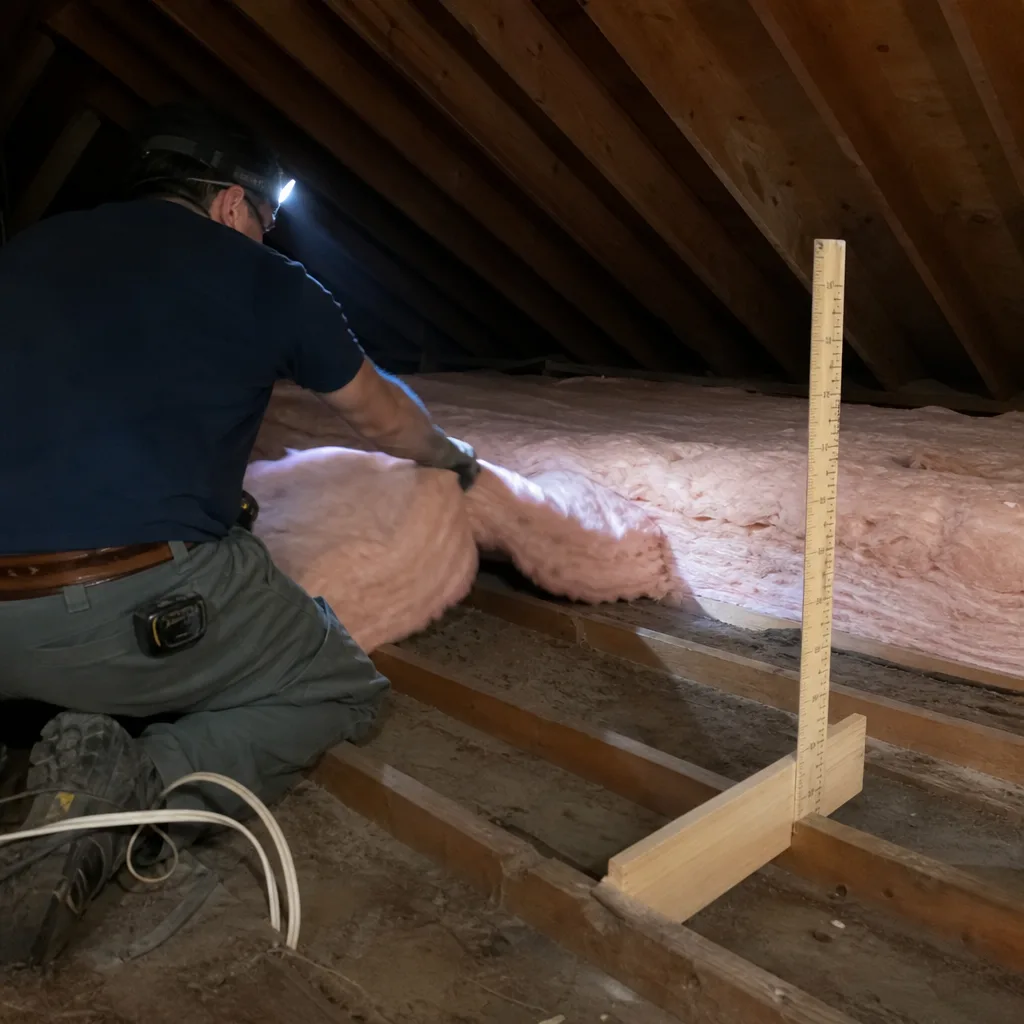
A complete bid in Santa Clarita separates materials from labor from permits from verification. Bundling hides markup and makes scope disputes inevitable. Here are the non-material line items that belong on every legitimate proposal.
Air Sealing Labor and Materials
This is the line item most often omitted - and it’s the one that determines whether your insulation performs. Air sealing addresses top plates - the horizontal framing members where interior walls meet the attic floor - can lights, plumbing and electrical penetrations, chimney chases, and the attic hatch itself. In Santa Clarita’s older neighborhoods like Newhall and parts of Canyon Country, we’ve found homes with 4,000+ CFM50 of leakage through these pathways alone.
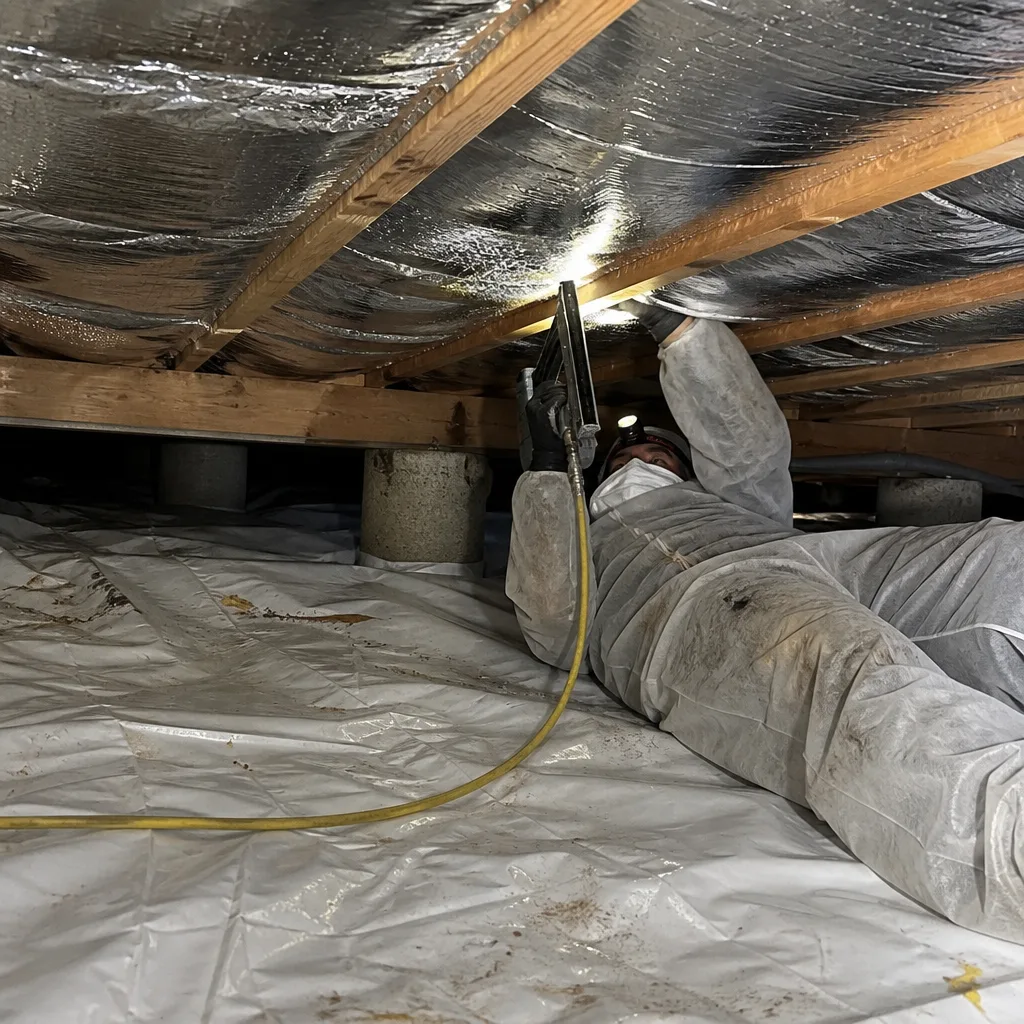
Typical cost for a standard single-story attic: $400-$900. Complex attics with multiple HVAC platforms, recessed lighting throughout, or vaulted ceilings can run $1,200-$2,000. The work uses acrylic latex caulk, fire-rated sealant around chimneys, rigid foam for large gaps, and pre-fabricated covers for can lights. Every gap sealed is a gap that won’t bypass your new insulation.
At Topside Attic Insulation Santa Clarita home, air sealing is never an upsell. It’s a prerequisite. We won’t blow insulation over an unsealed attic floor because we’ve seen what happens: the insulation becomes a filter for air moving through the gaps, compressing in pathways and creating cold spots on the ceiling below.
Permit Fee
LA County Building and Safety charges permit fees based on project valuation. For attic insulation in a typical Santa Clarita home, expect $150-$350. The exact fee depends on the scope - insulation-only permits cost less than jobs combining insulation with electrical or HVAC modifications. Your contractor should pull the permit, not hand you a homeowner permit application. If a bid doesn’t mention permitting, ask directly whether the work will be permitted and inspected.
HERS Verification
California’s Title 24 requires HERS - Home Energy Rating System - verification for many insulation upgrades. A certified HERS rater visits the site to verify insulation depth, coverage completeness, and proper installation. Cost in the Santa Clarita market: $150-$300. Some contractors build this into their price; others pass it through as a separate line item. Either approach is fine if it’s disclosed. What’s not fine is skipping verification entirely - which voids rebate eligibility and can create problems at resale.
Haul-Away of Old Insulation
Existing insulation removal runs $200-$500 for a standard attic, depending on depth, area, and contamination level. Fiberglass batts come out faster than compacted blown material. Rodent-affected insulation requires hazmat handling and costs more - see the next section. The disposal fee at Waste Management’s Santa Clarita facility factors into this line item, as does truck time to and from the site.
Scaffolding or Lift
Two-story homes with limited attic access, steep roof pitches common in Valencia’s hillside developments, or commercial-style buildings may require scaffolding or a boom lift. Budget $300-$800 if this applies. Most single-story Santa Clarita homes don’t need it, but your bid should state the assumption clearly.
Blower-Door Testing
Not every job requires it, but every air-sealing job benefits from it. A blower-door test - a pressurization reading that shows, in one number, how much air your building envelope is losing - costs $250-$400 as a standalone service. When bundled with insulation work, some contractors include it at reduced cost or absorb it entirely. The before-and-after numbers document your actual improvement, not just the material that was installed.
We publish before-and-after blower-door numbers on every applicable job. A typical Santa Clarita home starts at 3,500-5,000 CFM50 and finishes at 2,000-3,000 CFM50 after comprehensive air sealing and insulation. You get those numbers in writing, with the photos to match.
How Existing Conditions Change Your Price
Material and labor estimates assume a more-or-less clean attic with functional access, intact decking, and no surprises. In 9,000+ homes since 2016, we’ve learned that surprises are the rule, not the exception. Here’s what we’ve found in Santa Clarita attics and what each condition adds to the project cost.
Rodent Contamination
Santa Clarita’s hillside interface - especially in Sand Canyon, Bouquet Canyon, and the northern edges of Valencia - puts homes in regular contact with roof rats, squirrels, and the occasional raccoon. Rodent-affected insulation can’t be topped off; it must be removed, the attic sanitized, and entry points sealed before new material goes in.
Cost impact: $800-$2,500 above standard removal, depending on contamination extent and whether structural repairs to chewed wiring or ductwork are needed. We use HEPA vacuums and full PPE for this work, and we document the condition with photos before touching anything. The photo record protects you if questions arise later about what was there.
Wet or Mold-Affected Insulation
Roof leaks, bathroom exhaust fans vented into attics instead of outside, and condensation on ductwork in unconditioned spaces all wet insulation. Wet fiberglass loses R-value and compresses. Wet cellulose supports mold growth. In Santa Clarita’s dry climate, homeowners sometimes miss slow leaks that have been dripping for years.
Remediation before replacement: $500-$1,500 for mold treatment, deck repair, and drying time. The source of moisture must be fixed first - we stop work if we find active leaks and require documentation of repair before resuming. Installing new insulation over a wet deck guarantees failure.
Knob-and-Tube Wiring
Pre-1950s homes in Newhall and original Canyon Country construction may still have active knob-and-tube wiring. California code prohibits installing insulation over active knob-and-tube - the wiring needs clearance for heat dissipation. We stop work immediately when we find it and require a licensed electrician’s letter certifying replacement or decommissioning before we continue.
Cost impact: Variable, but typically $2,000-$5,000 for full replacement, which must be completed by a C-10 licensed electrician with permits. We don’t perform electrical work; we coordinate with electricians we’ve worked with before and resume insulation once clearance is documented.
Inadequate or Blocked Ventilation
Santa Clarita’s summer attic temperatures regularly exceed 140°F. Without adequate soffit and ridge ventilation, that heat radiates downward and accelerates shingle degradation. We inspect ventilation during every attic evaluation. Adding baffles for soffit intake, replacing inadequate ridge vents, or installing powered ventilators runs $400-$1,200.
Compromised Attic Decking
Storage platforms, walking boards, and the decking around HVAC platforms deteriorate under foot traffic and heat cycling. We replace compromised sections at $8-$15 per square foot of decking, material and labor. We photograph the condition and include replacement in the written scope if needed - never as a mid-project add-on.
Sample Cost Comparison: 1,800 Sq Ft Santa Clarita Home
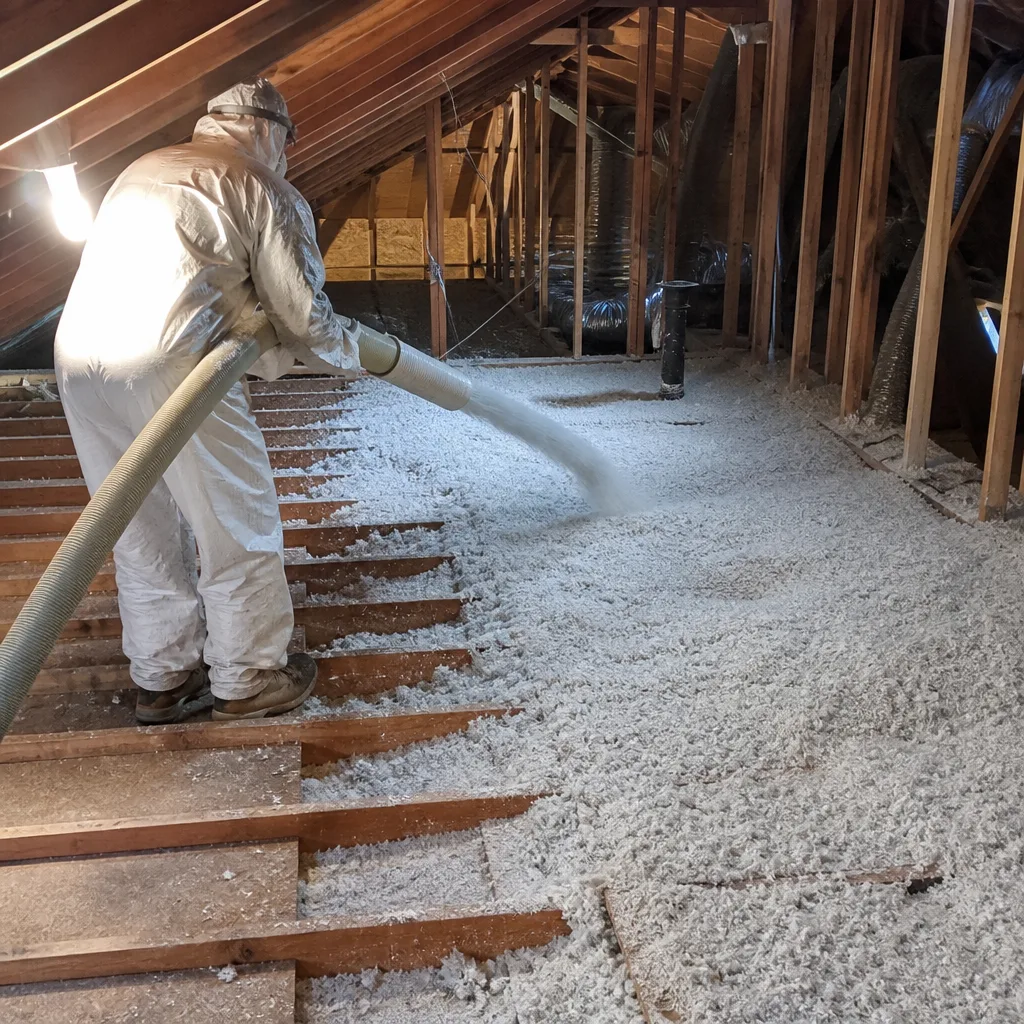
This comparison assumes a single-story home in Valencia with 1,500 square feet of attic floor, R-30 existing fiberglass in fair condition (to be removed), standard air sealing scope, LA County permit, HERS verification, and haul-away. No existing conditions complications. Three insulation approaches, with honest trade-offs stated.
| Line Item | Blown Cellulose | Blown Fiberglass | Open-Cell Spray Foam (Roofline) |
|---|---|---|---|
| Material | $525-$750 | $600-$825 | $2,475-$3,600 |
| Air sealing labor & materials | $550-$750 | $550-$750 | $650-$900 |
| Old insulation removal & disposal | $350-$450 | $350-$450 | $350-$450 |
| Permit (LA County) | $200-$280 | $200-$280 | $250-$350 |
| HERS verification | $180-$250 | $180-$250 | $200-$280 |
| Blower-door test (before/after) | $0 (included) | $0 (included) | $0 (included) |
| Total Project Range | $2,805-$4,530 | $2,880-$4,605 | $3,925-$5,580 |
Trade-offs to understand:
- Blown cellulose gives the highest R-value per inch and the best dense-pack performance for wall retrofits, but it settles slightly over time and requires deeper initial installation to hit target R-value. GreenFiber and equivalent products use recycled paper content with borate fire retardant - effective and low-embodied-energy, though some homeowners prefer inorganic materials.
- Blown fiberglass doesn’t settle, resists moisture better if a leak occurs, and is easier to remove in future renovations. It requires greater depth for the same R-value, which can complicate attic hatch clearance and soffit ventilation baffle installation in shallow attics.
- Open-cell spray foam on the roofline converts the attic to conditioned space, eliminating the temperature extreme that degradates HVAC equipment and ductwork. It’s the most expensive approach and requires careful moisture management - the foam must be thick enough to prevent condensation on the roof sheeting during Santa Clarita’s occasional winter cold snaps. Not recommended for homes with certain roof configurations or inadequate HVAC capacity to handle the additional conditioned volume.
None of these is universally “best.” The right choice depends on your roof configuration, HVAC location, budget, and whether you plan to use the attic for storage or conversion. We specify the approach in writing with the reasoning, not just the price.
2026 Rebates and Tax Credits Available in Santa Clarita
Multiple programs reduce net cost for insulation upgrades in 2026. The documentation requirements are specific, and missing a step means missing the money. Here’s what’s available and how to qualify.
Federal 25C Tax Credit
The Energy Efficient Home Improvement Credit - IRC Section 25C - provides up to 30% of project cost, capped at $1,200 annually for insulation and air sealing combined. Key requirements for 2026:
- Work must be performed by a qualified contractor (not DIY).
- The home must be your primary residence, located in the United States.
- You need a manufacturer’s certification statement for the insulation product - we provide this with every job.
- The IRS requires documentation of energy savings; blower-door test results before and after air sealing satisfy this requirement and strengthen your filing.
Claim the credit on Form 5695 with your federal tax return. We deliver the manufacturer’s certification and blower-door documentation in your project folder so you have everything in one place.
SCE Energy Upgrade California Rebates
Southern California Edison offers rebates through the Energy Upgrade California program for comprehensive home energy improvements. Insulation upgrades combined with air sealing qualify when part of a whole-home approach. Rebate amounts vary by program tier and home size; typical Santa Clarita homes see $500-$1,500 for insulation-centric packages.
Requirements include pre- and post-upgrade assessment by a participating contractor, HERS verification, and submission through the program portal within 90 days of completion. We handle the paperwork as part of our standard process - the rebate application is included in your documented record, not an afterthought.
SoCalGas Rebates
SoCalGas offers insulation rebates for natural gas-heated homes, with higher incentives for low-income households through the Energy Savings Assistance Program. Standard rebates run $0.15-$0.35 per square foot of insulation installed, depending on R-value improvement and whether air sealing is included.
Documentation required: itemized invoice showing insulation type, square footage, and R-value; HERS verification certificate; and program application with homeowner signature. We prepare this documentation before the crew leaves the site.
Why Blower-Door Results Strengthen Rebate Applications
Rebate programs are increasingly performance-based, not just prescriptive. Showing that you installed R-38 insulation is table stakes. Showing that you reduced envelope leakage from 4,200 CFM50 to 2,100 CFM50 proves the insulation is actually performing. We publish these numbers because they matter for rebates, for resale documentation, and for your own understanding of what you paid for.
Under Haven Standard: Have it in writing. Your rebate documentation is part of that written record, delivered with your final invoice and photo documentation.
How to Read a Bid Like a Technician
Most Santa Clarita homeowners receive two or three bids and compare bottom-line numbers. That’s the wrong comparison, and our more guides & resources explain why deeper evaluation matters. Here’s how to evaluate what you’re actually being sold.
Step 1: Verify the R-Value Target
Title 24 requires R-38 to R-49 for attic floors in our climate zone, depending on whether the home has existing insulation and the exact jurisdiction. A bid specifying “R-30 blown fiberglass” for a new installation in an uninsulated attic doesn’t meet code. A bid specifying “R-38” without stating the installed depth at the material’s actual R-value per inch is incomplete - R-3.0 per inch requires 12.7 inches; R-2.5 requires 15.2 inches. The depth matters more than the R-value claim.
Step 2: Check for Air Sealing as a Separate Line Item
If air sealing isn’t listed separately, it’s either not happening or it’s buried in markup. Ask directly: “Are you sealing top plates, can lights, and penetrations before insulation?” If the answer is “we’ll do some caulking” or “the insulation will seal it,” that’s insufficient. Fiberglass and cellulose are air filters, not air barriers. They don’t seal.
Step 3: Confirm Permitting and HERS
Ask for the permit number before work starts, not after. Ask whether HERS verification is included and who the rater is. Reputable contractors in Santa Clarita work with established HERS raters and can name them. Vague answers suggest the work won’t meet rebate or resale documentation standards.
Step 4: Compare Material Specifications
A bid saying “blown insulation” without naming the product, the manufacturer, and the installed density (for cellulose, typically 1.6-2.0 lbs per cubic foot for open attics) is incomplete. We specify Owens Corning, Johns Manville, Knauf, or GreenFiber by product line, with density targets, because those specifications are enforceable. “Blown insulation” is not.
Step 5: Review the Warranty and Promise Terms
What happens if insulation settles below target depth? If a leak develops and wets the material? If you find a missed penetration six months later? Our 365-Day Done Right Promise covers these scenarios - if it’s not done right, we make it right, with the written scope as the reference standard. Any warranty shorter than one year, or any warranty that excludes “settling” or “acts of God” without defining those terms, deserves scrutiny.
We also offer a Free Second Opinion on any written estimate. Bring us a competing quote and we’ll read it with you, line by line, no charge. We’ve found scopes missing air sealing, underestimating material depth, or specifying products discontinued years ago. The written estimate is the contract; it should withstand that level of examination.
Common Mistakes to Avoid
- Accepting a single bundled number. A bid that reads “$4,500 - attic insulation” gives you no basis to evaluate fairness or compare alternatives. Every legitimate scope breaks out materials, labor, permits, and verification. If a contractor won’t itemize, that’s information in itself.
- Ignoring air sealing. In Santa Clarita’s climate, an unsealed attic with new insulation performs like a sealed attic with no insulation. The stack effect - warm air rising and escaping through gaps - doesn’t care about your R-value if the air is moving around the insulation, not through it.
- Installing over wet or contaminated material. We’ve been called to fix jobs where a contractor blew new fiberglass over rodent-affected cellulose to save removal cost. The homeowner smelled it within weeks. Removal and remediation cost double what it would have as part of the original scope.
- Choosing spray foam without understanding moisture management. Open-cell spray foam on a roofline requires sufficient thickness to keep the sheeting above dew point during cold weather. In Santa Clarita, that’s typically 5.5-6 inches minimum. Thinner application risks condensation, sheeting rot, and expensive remediation. Some contractors spec thinner to hit a price point.
- Missing rebate deadlines. SCE and SoCalGas rebates require submission within 90 days of project completion. Federal tax credits apply to the tax year of installation. We calendar these deadlines and include reminder documentation in your project folder, but ultimately the claim is your responsibility. Start the paperwork before the crew arrives.
- Assuming all insulation contractors carry proper coverage. Verify general liability, workers’ compensation, and contractor’s license status through the CSLB website. We’ve seen unlicensed operators working in Santa Clarita with expired bonds and no workers’ comp - a workplace injury on your property becomes your homeowner’s insurance problem.
When to Call a Professional
Call when your energy bills spike without explanation, when you feel temperature variation between rooms that used to be consistent, or when you venture into the attic and see compressed, discolored, or wet insulation. Call before you sell - unpermitted insulation work surfaces in disclosure and can delay closing. Call if you’ve received a bid that doesn’t make sense and you want a second set of eyes on it.
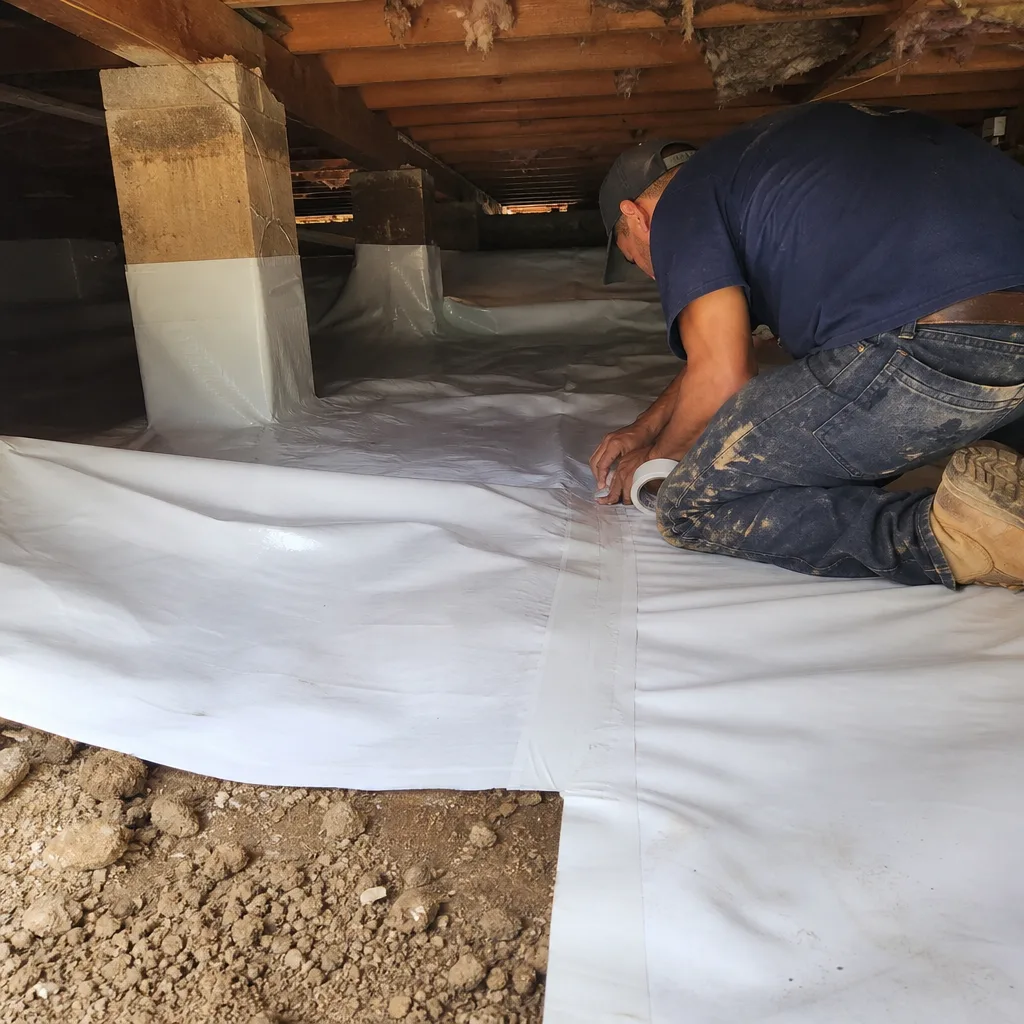
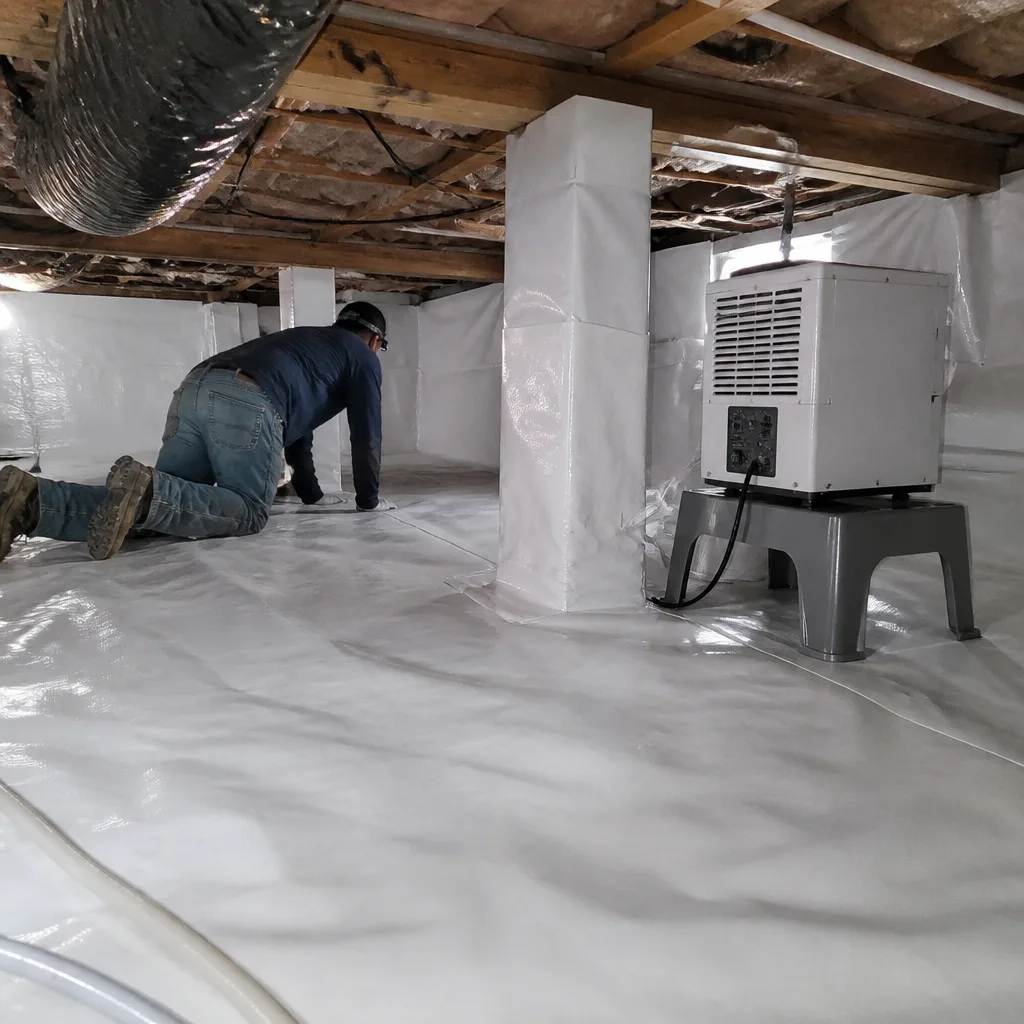
Crawl space encapsulation and spray foam applications are not DIY projects - the moisture management, chemical handling, and ventilation requirements demand trained installation. Attic work involving removal of contaminated material requires HEPA containment and proper disposal. The savings from professional installation, properly documented, typically exceed the cost difference through rebates, warranty protection, and actual performance.
Topside Attic Insulation Santa Clarita offers free estimates in Santa Clarita - call (747) 294-2764. You’ll get a written price before any work starts, a documented photo record when the crew leaves, and before-and-after blower-door numbers on every air-sealing job. That’s Haven Standard: Have it in writing.
Frequently Asked Questions
Most complete attic insulation jobs for single-story homes in Santa Clarita range from $2,800 to $7,500 in 2026, depending on insulation type, air sealing scope, and existing conditions. A typical blown cellulose or fiberglass job with removal, air sealing, permits, and HERS verification runs $3,000-$5,000. Call (747) 294-2764 for a written estimate on your specific home - estimates are free.
Repair is rarely practical. Existing insulation that’s compressed, contaminated, or below current code can’t be effectively supplemented - the new material doesn’t bond to old, and the resulting layers create thermal bridges and air gaps. Removal and replacement with proper air sealing typically costs 15-25% more than topping off, but performs 40-60% better and qualifies for rebates that partial upgrades don’t. Call us for a free second opinion on any estimate recommending a “top-off” without removal.
No - and any contractor who can hasn’t performed proper evaluation. We measure attic floor area, inspect for existing conditions, perform blower-door testing on air-sealing jobs, and prepare a written scope with line-item pricing. That process takes 45-90 minutes on site and the written price is delivered within 24 hours. Same-day installation skips at least one of those steps, usually the inspection that finds the problems that double your cost mid-project.
Because it’s a distinct trade with distinct materials, labor rates, and quality standards. Air sealing uses caulk, foam, and fire-rated sealants applied by technicians working in confined spaces on their hands and knees. Insulation installation uses blowing machines or spray rigs operated from the attic hatch or roofline. Separating the costs lets you verify that each scope is adequate and compare bids fairly. Bundling hides markup and makes it impossible to tell whether you’re getting comprehensive sealing or a token bead of caulk around the hatch.
Three programs apply in 2026: the federal 25C tax credit (up to $1,200 for insulation and air sealing), SCE Energy Upgrade California rebates ($500-$1,500 for comprehensive packages), and SoCalGas rebates ($0.15-$0.35 per square foot for gas-heated homes). All require professional installation, HERS verification, and specific documentation. We provide the manufacturer certifications, blower-door results, and completed application forms as part of every job. Call (747) 294-2764 to discuss which programs apply to your home and heating type.
Request the HERS verification certificate, the blower-door test results if air sealing was performed, and photos of installed depth and coverage. Properly installed blown insulation shows uniform depth with no thin spots near eaves or around obstructions; properly air-sealed attics show caulked top plates, sealed can lights, and covered penetrations. We deliver all of this in your documented photo record, with the written scope as the reference standard for our 365-Day Done Right Promise.
The Bottom Line
Insulation pricing in Santa Clarita doesn’t have to be opaque. The material costs are knowable, the labor rates are market-standard, and the permits and verification are fixed by regulation. What varies is contractor practice: whether air sealing is performed as prerequisite or omitted, whether existing conditions are inspected or ignored, whether documentation is delivered or promised. A legitimate 2026 bid shows five line items minimum, names the products and the R-value targets, and comes with a written scope and warranty before anyone lifts a tool. Anything less is a guess dressed as a price.
We’ve sealed and insulated 9,000+ homes since 2016, every one with a written price before work started and a documented record when the crew left. If you’re evaluating bids and something doesn’t add up, bring us the estimate. We’ll read it with you.
Written by Wes Okafor, Owner at Topside Attic Insulation Santa Clarita, serving Santa Clarita since 2016.