
Last updated September 23, 2026
DIY vs Professional Insulation: The Santa Clarita Homeowner’s Decision Guide
In California, you can legally blow fiberglass into your own attic without a contractor’s license. But you cannot pull your own permit in Santa Clarita’s incorporated areas, cannot perform your own HERS verification, and cannot legally claim utility rebates without documentation only a licensed contractor can generate. We’ve been in thousands of Santa Clarita attics since 2016, and the pattern is consistent: the insulation that underperforms almost always went in over unsealed air leaks that the installer - homeowner or pro - never found. This guide breaks down exactly where DIY ends and licensed work begins, what California law actually restricts, and how to know which side of the line your project falls on.
Quick Answer
DIY insulation in Santa Clarita is legally viable only for adding R-value in an accessible attic with no permit trigger, no existing insulation removal, and no air sealing deficiencies you cannot verify. Professional work is required for spray polyurethane foam above certain thicknesses, any project needing a permit in incorporated Santa Clarita, and any job where utility rebates or HERS compliance documentation is needed. The critical factor most homeowners miss: insulation installed over unsealed bypasses will underperform its rated R-value, and without a blower-door test - a pressurization reading that shows, in one number, how much air your building envelope is losing - you cannot know if your air sealing worked before you bury it under fill.
Table of Contents
- What California Law Allows Homeowners to Do Themselves
- The Air Sealing Prerequisite: Why Insulation Without It Fails
- Real Cost Comparison: DIY vs. Professional in Santa Clarita
- Three Scenarios Where DIY Is Genuinely Viable
- Four Scenarios Where Professional Work Is the Right Call
- The Documentation Checklist: What to Demand Either Way
- How Santa Clarita’s Climate and Codes Shape the Decision
- Common Mistakes to Avoid
- When to Call a Professional
- Frequently Asked Questions
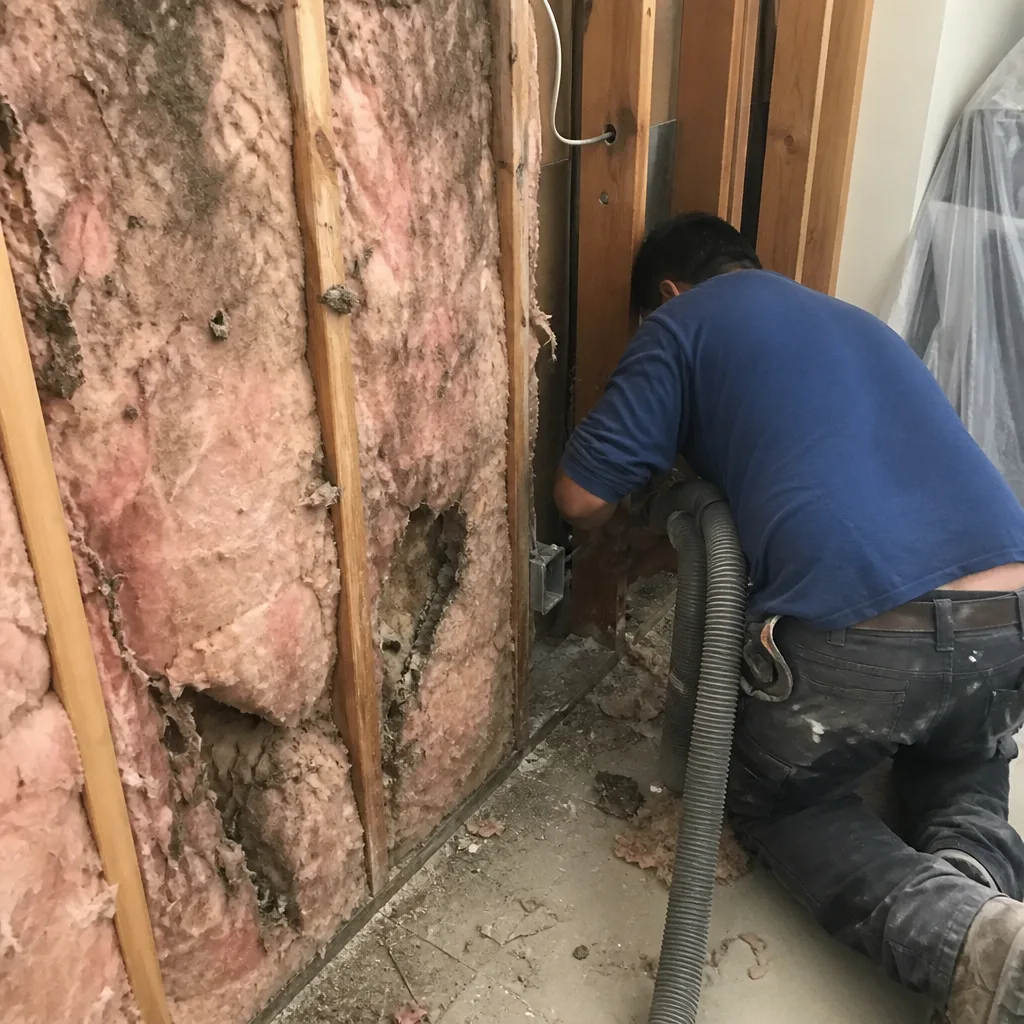 Before
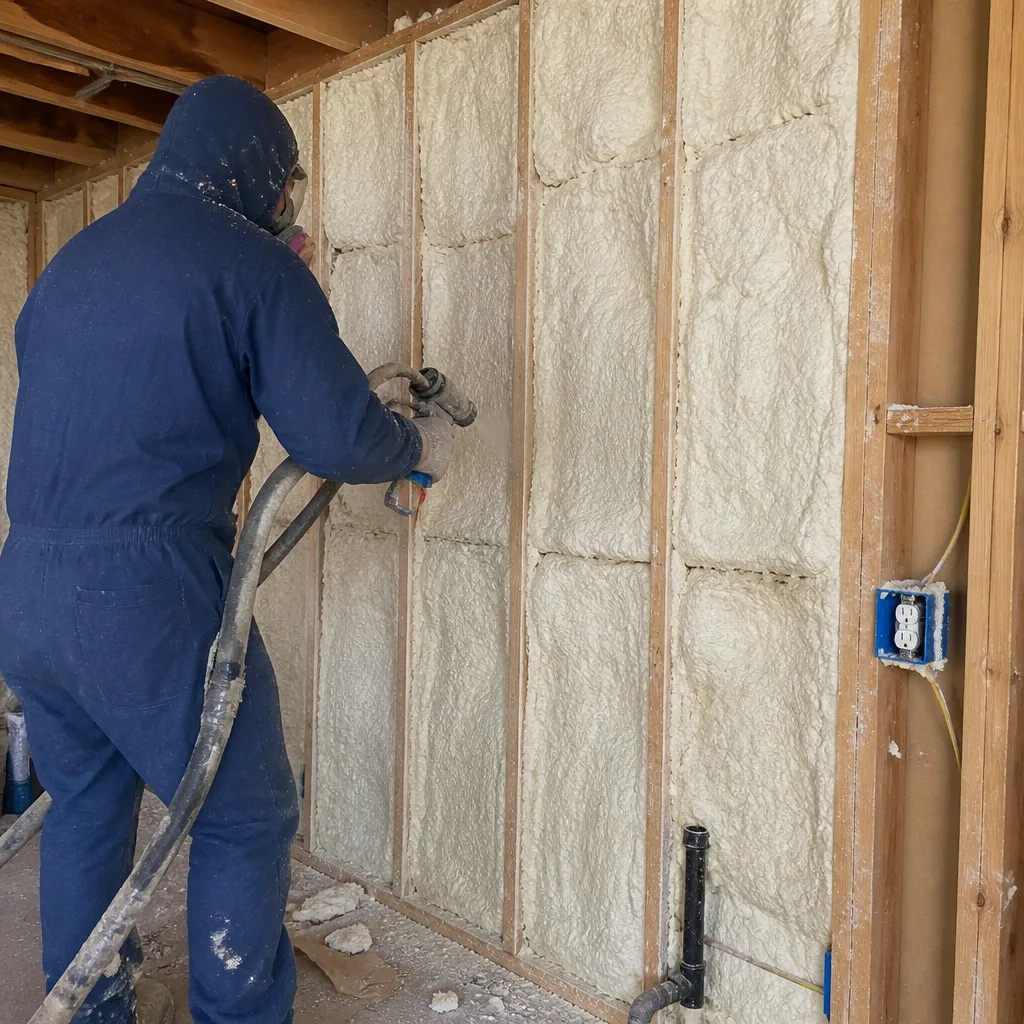 After
AfterWhat California Law Allows Homeowners to Do Themselves
California’s Contractors State License Board draws a sharp line between work a homeowner can self-perform and work that requires a C-2 Warm-Air Heating, Ventilating and Air-Conditioning contractor or a B General Building contractor. Understanding this line saves you from a red-tagged project or a failed final inspection.
Homeowners may legally self-perform:
- Installing batt or blown-in fiberglass, cellulose, or mineral wool in an accessible attic or crawl space where no permit is required
- Adding R-value over existing insulation that is clean, dry, and uncontaminated
- Installing radiant barrier foil in an attic, provided no electrical work is involved
- Removing and replacing small sections of damaged batt insulation, provided no hazardous material (asbestos, rodent waste) is present
California law restricts to licensed contractors:
- Spray polyurethane foam (SPF) insulation above 2 inches in thickness - this triggers mechanical ventilation requirements under Title 24 and falls under C-2 or B license scope
- Any insulation work requiring a building permit, which in Santa Clarita’s incorporated areas (Valencia, Saugus, Canyon Country, Newhall, Castaic within city limits) means virtually any project involving structural modification, electrical box relocation, or removal of existing insulation in a home sale or refinance context
- Work requiring HERS verification - a third-party inspection and testing protocol California mandates for most energy efficiency improvements that affect the building envelope
- Insulation removal where asbestos or rodent contamination is suspected - this requires specialized abatement licensing
The permit distinction matters in Santa Clarita specifically because the city is incorporated. Unincorporated Los Angeles County areas nearby have different permit triggers, but within Santa Clarita city limits, the Building and Safety Division requires permits for insulation replacement in many residential contexts, particularly when tied to a remodel, addition, or HVAC changeout. A homeowner cannot pull their own permit for this work; only a licensed contractor can.
Utility rebates compound the licensing requirement. Southern California Edison and SoCalGas rebate programs for insulation upgrades require documentation - installed depth verification, product specification sheets, and often blower-door test results - that only a licensed contractor can generate and certify. A DIY installation, no matter how well executed, cannot legally access these funds.
The Air Sealing Prerequisite: Why Insulation Without It Fails
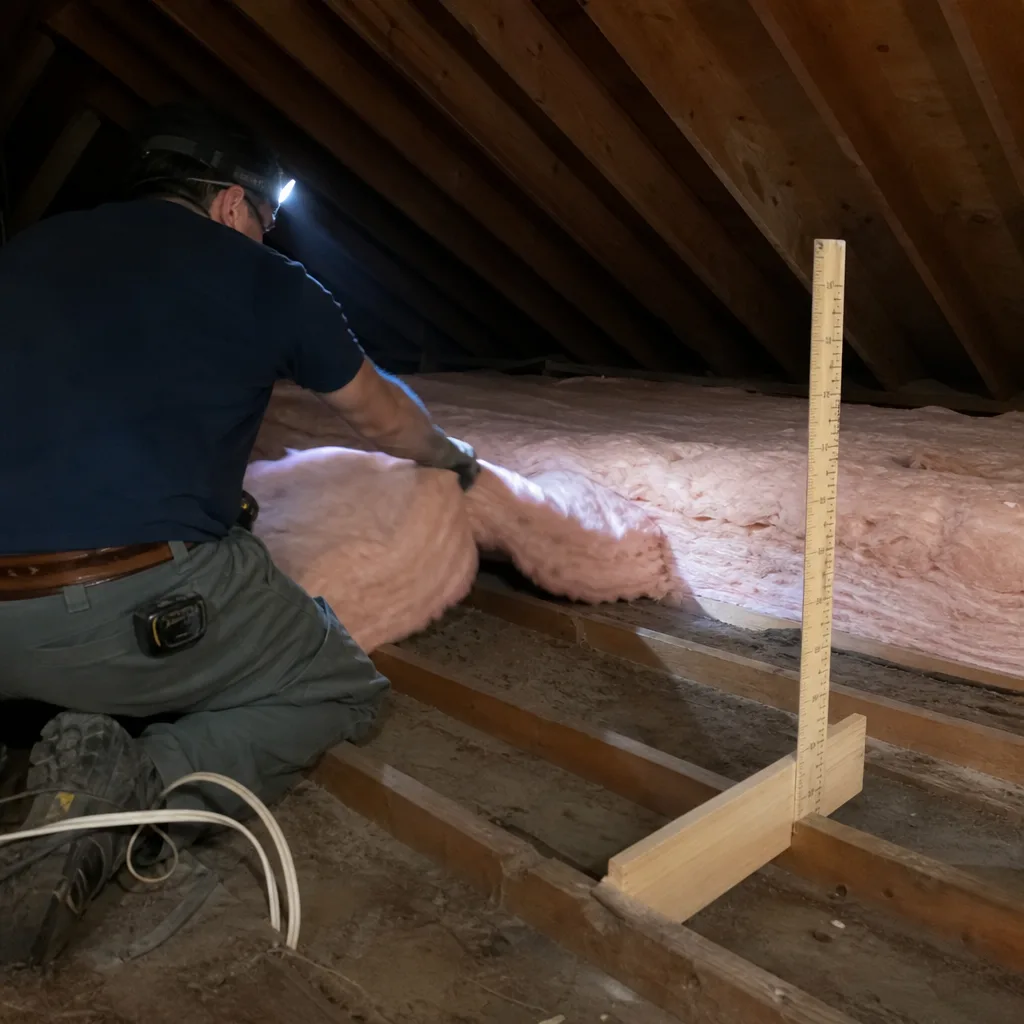
Here’s what we’ve learned from 9,000+ homes since 2016: insulation is only as good as the air sealing beneath it. A blower-door test - a pressurization reading that shows, in one number, how much air your building envelope is losing - typically reveals that 30% to 50% of conditioned air escapes through bypasses the homeowner never knew existed.
Common bypasses in Santa Clarita homes built between 1970 and 2005 - the bulk of our housing stock - include:
- Top plate gaps - the horizontal framing member where interior walls meet the attic floor; rarely sealed in production framing, and each gap is a direct path from conditioned space to attic
- Recessed can light housings - especially non-IC-rated fixtures installed before 2008 Title 24 updates; these create open chimneys to the attic
- Plumbing and electrical penetrations - every pipe and wire that exits the conditioned envelope, typically with a 1/2-inch to 2-inch gap around it
- Chimney chases and soffit drops - framed cavities that connect conditioned space to attic air, often with no blocking at all
- Duct boots and register boxes - where flex duct connects to ceiling registers; the drywall cutout is almost never sealed to the boot
When you blow cellulose or fiberglass over these bypasses, you bury the problem. The insulation performs at a fraction of its rated R-value because convective air movement through the bypasses carries heat directly past the insulation layer. In Santa Clarita’s climate - with summer attic temperatures regularly reaching 140°F and winter nights dropping below 40°F - this means your HVAC system works harder year-round, and the insulation you paid for never delivers.
A homeowner doing their own work faces a measurement problem. You can caulk visible gaps, foam around penetrations, and install baffles at eaves. But without a blower-door test before and after air sealing, you cannot know whether your work reduced air leakage by 5% or 50%. We’ve tested homes where homeowners spent weekends sealing every gap they could reach, only to see the blower-door reading drop by 200 CFM50 - barely measurable - because the largest bypasses were hidden above a vaulted ceiling or behind a chase they couldn’t access.
Under The Haven Standard, we never blow insulation over an unsealed attic floor. Air sealing of top plates, can lights, and penetrations is completed before any insulation is added. We then run a second blower-door test to verify the reduction, and we publish those before-and-after numbers on every applicable job so the homeowner can see the performance change they actually paid for. A DIY installer has no equivalent feedback loop.
Real Cost Comparison: DIY vs. Professional in Santa Clarita
Homeowners often compare material costs alone and conclude DIY saves thousands. The full accounting tells a different story, especially when you factor in equipment, permit fees, documentation value, and the cost of fixing mistakes - see our Insulation Cost Breakdown: The Santa Clarita Homeowner’s Reference for 2026 for detailed numbers.
| Cost Component | DIY Range | Professional Range | Notes |
|---|---|---|---|
| Blown fiberglass/cellulose material (1,500 sq ft attic to R-38) | $600 - $900 | Included in labor | DIY: Owens Corning AttiCat or GreenFiber cellulose at big-box pricing |
| Blower machine rental | $75 - $150/day | Included | Often “free” with material purchase at Home Depot or Lowe’s; weekend rental typical |
| Air sealing materials (caulk, foam, weatherstripping) | $150 - $300 | Included | DIY: likely underestimates quantity needed for typical Santa Clarita attic |
| Personal protective equipment | $80 - $150 | N/A | Respirator, coveralls, eye protection, gloves; often skipped by DIYers |
| Permit fees (Santa Clarita, if required) | Cannot self-permit | $250 - $500 | Homeowner cannot pull permit; professional includes this in scope |
| HERS verification | Not available DIY | $300 - $600 | Required for most rebate programs and many permit finals |
| Blower-door testing | $300 - $450 rental or service call | Included | DIY: single-use rental rare; most homeowners skip entirely |
| Utility rebate eligibility | $0 (ineligible) | $500 - $2,000+ | SoCalGas/SCE insulation rebates require licensed contractor documentation |
| Insulation removal (if needed) | $400 - $800 (dump fees, equipment) | Included or itemized | DIY: often underestimated; contaminated material requires specialized disposal |
| Total out-of-pocket, comparable scope | $1,600 - $2,750 | $2,800 - $4,500 | Professional includes documentation, warranty, and rebate access |
The gap narrows significantly when rebates are captured. A professional job at $3,800 with a $1,200 utility rebate nets to $2,600 - comparable to DIY, but with documented blower-door results, a written warranty, and a permit final. In our experience, most Santa Clarita homeowners who start DIY intending to save money end up spending 60% to 80% of professional cost while achieving uncertain results.
One cost DIY estimates rarely include: the second project. We’ve been called to homes in Valencia and Saugus where a homeowner added R-30 over unsealed bypasses, saw no comfort improvement, and called us two years later to remove the new layer, seal properly, and reinstall. The total spend exceeded professional work from the start.
Three Scenarios Where DIY Is Genuinely Viable
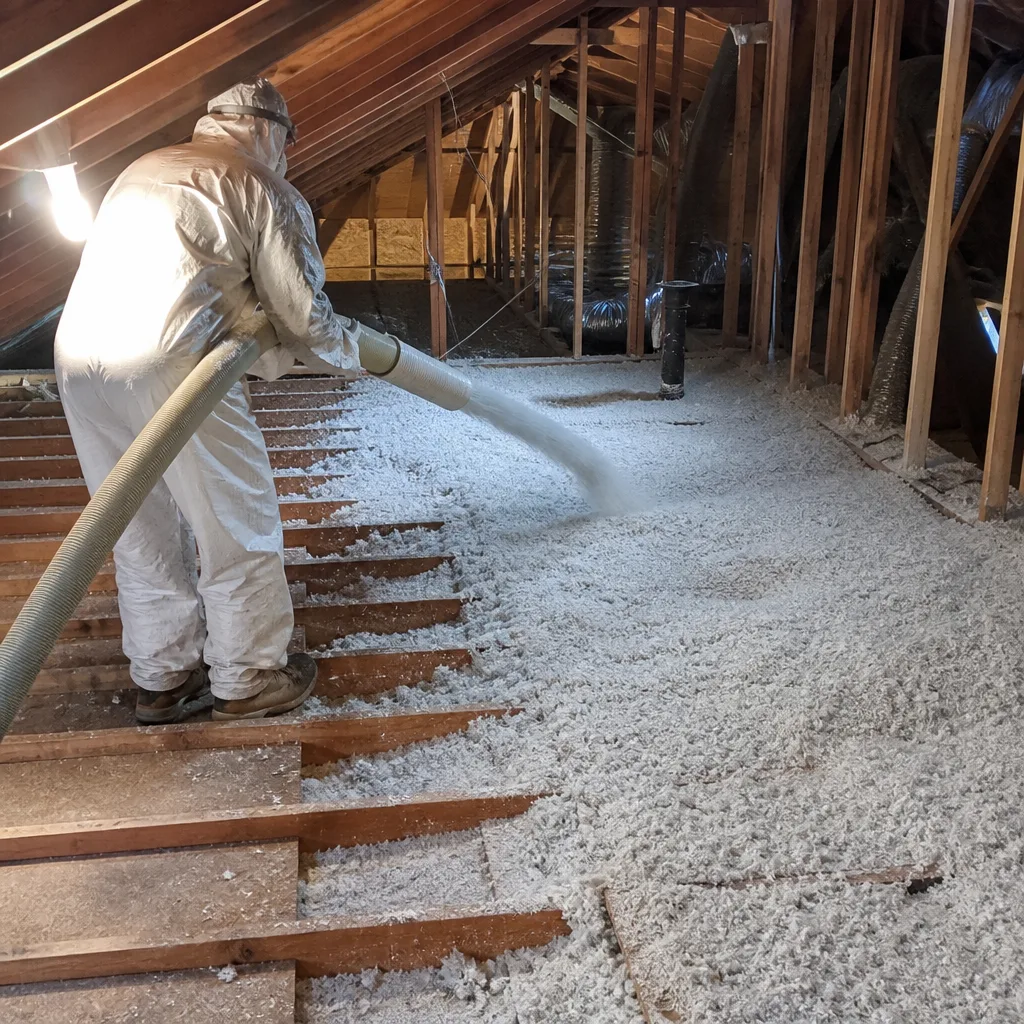
Despite the caveats, there are Santa Clarita homes where a competent homeowner can achieve good results without a contractor. Each scenario requires all conditions to be met; missing one pushes the project into professional territory.
Scenario 1: Adding R-value in a clean, accessible attic with no air sealing deficiencies
This applies to homes where:
- Existing insulation is dry, uncontaminated, and evenly distributed
- A recent energy audit or blower-door test confirmed minimal attic bypass leakage (below 1,500 CFM50 for the home’s square footage)
- The attic has permanent flooring or ample joist spacing for safe movement
- No electrical, plumbing, or HVAC work is needed
- The home is in unincorporated Los Angeles County or no permit trigger exists
In Canyon Country, we’ve seen this work well in post-2010 production homes where builders already sealed top plates and used airtight can light housings. The homeowner adds R-19 or R-30 over existing R-30 to reach R-49, the current Title 24 prescriptive requirement for Santa Clarita’s climate zone.
Scenario 2: Spot repair of localized damage in an otherwise intact envelope
A roof leak in one corner of a Valencia attic, for example, may saturate a 4×8 foot area of fiberglass batts. If the leak is repaired, the decking is dry, and the surrounding insulation tests clean, a homeowner can remove the damaged section, verify no mold growth in the ceiling drywall, and install matching batt product. The key constraint: the repair must not trigger permit requirements, and the homeowner must not disturb suspect materials.
Scenario 3: Radiant barrier installation in a truss attic with no electrical work
Stapling perforated radiant barrier foil to rafter bottoms or laying it over existing attic insulation is labor-intensive but technically straightforward. Santa Clarita’s high summer attic temperatures make radiant barriers particularly effective. The homeowner must avoid compressing existing insulation, must not cover recessed lights or attic ventilation paths, and must not drill or staple into electrical wiring. No permit is typically required for this work.
In all three scenarios, we still recommend a pre-project blower-door test and a post-project verification. The test costs $300 to $450 as a standalone service call - a worthwhile investment to confirm your envelope was sound before you started and remained sound after you finished.
Four Scenarios Where Professional Work Is the Right Call
These scenarios cover the majority of Santa Clarita homes we see. If your project matches any of these, the cost of professional work is recovered through performance, documentation, and avoided rework.
Scenario 1: Any project requiring a permit in incorporated Santa Clarita
City of Santa Clarita Building and Safety requires permits for insulation removal and replacement in most contexts tied to remodeling, HVAC replacement, or energy efficiency programs. Only a licensed contractor can pull these permits. The permit final requires inspection, and the inspector will flag unpermitted work that must be removed and redone.
Scenario 2: Spray foam insulation of any thickness
California’s Title 24 and OSHA regulations restrict SPF application to licensed contractors. The chemistry requires respiratory protection beyond homeowner-grade equipment, the installation affects vapor drive and requires hygrothermal analysis, and the mechanical ventilation requirements for occupied buildings during curing cannot be met with household fans. For spray foam insulation in Santa Clarita, professional installation is not just preferable - it’s legally required.
Scenario 3: Existing insulation removal, especially in pre-1990 homes
Homes in Newhall and older Canyon Country neighborhoods may contain vermiculite insulation (potentially asbestos-contaminated), urea-formaldehyde foam, or fiberglass contaminated with rodent waste. Removal requires specialized PPE, negative-air containment, and disposal at permitted facilities. A homeowner handling these materials risks serious health exposure and illegal dumping penalties. Our Topside Attic Insulation Santa Clarita home page details our removal and replacement protocol, including the Documented Photo Record you receive showing before, during, and after conditions.
Scenario 4: Any project where utility rebates, HERS compliance, or resale documentation is needed
Santa Clarita’s housing market is competitive, and buyers increasingly request energy efficiency documentation. A professional job generates:
- Installed depth photos with measurement verification
- Product data sheets showing R-value per inch
- Before-and-after blower-door readings if air sealing is in scope
- The permit final card if a permit was pulled
- A written warranty transferable to subsequent owners
DIY work produces none of this. When you sell, the buyer’s inspector notes the insulation age and condition; without documentation, you have no evidence of performance to support your asking price.
The Documentation Checklist: What to Demand Either Way
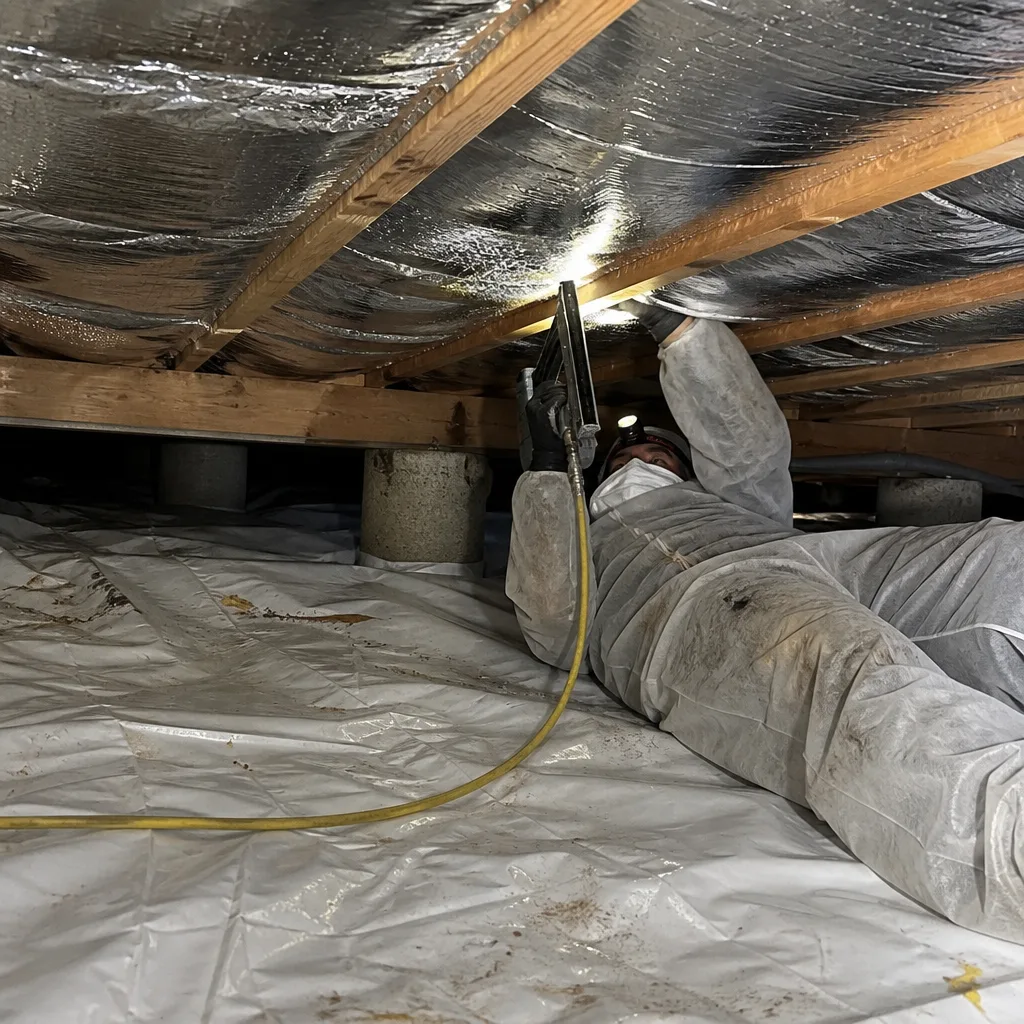
Whether you DIY or hire a professional, certain documentation protects your investment and proves what was done. Here’s what to collect and keep with your home records.
- Installed depth photos with visible measurement - A ruler or tape measure visible in the photo, showing average depth across multiple attic locations. R-value depends on depth and product density; photos prevent disputes about whether the quoted thickness was achieved.
- Product data sheet showing R-value per inch - Manufacturers like Owens Corning, Johns Manville, and Knauf publish this data. For blown products, the sheet must specify the coverage chart (bags per square foot at target R-value) and the settled density. Cellulose settles 20% over time; the initial depth must account for this.
- Before-and-after blower-door readings if air sealing is in scope - Demand CFM50 at 50 Pascals depressurization, with the test date and technician name. A meaningful air sealing job in a 2,000 square foot Santa Clarita home typically reduces leakage from 3,500+ CFM50 to under 2,500 CFM50. Without this number, you have no performance verification.
- The permit final card if a permit was pulled - In Santa Clarita, this is a green tag or electronic final from the Building and Safety Division. Unpermitted work must be disclosed in real estate transactions and may trigger lender requirements for correction.
- Written warranty with scope, duration, and transferability - Under The Haven Standard, we provide a 365-Day Done Right Promise - if it’s not done right, we make it right - with written scope and written warranty delivered before anyone starts. DIY work has no warranty; professional work without written terms is barely better.
For professional jobs, we also provide a Documented Photo Record on every visit - included, not available on request. This shows attic conditions before work, air sealing in progress, insulation at specified depth, and final conditions. Homeowners receive this via email within 48 hours of job completion.
How Santa Clarita’s Climate and Codes Shape the Decision
Santa Clarita sits in California Climate Zone 9, with specific implications for insulation strategy that generic guides miss.
Temperature extremes: Summer attic temperatures in Valencia and Saugus regularly reach 130°F to 145°F. Winter nights in Canyon Country and Castaic can drop to 32°F. This wide swing means insulation must perform in both directions - resisting heat gain in summer and heat loss in winter. R-38 to R-49 in attics is the current Title 24 prescriptive minimum, but performance depends entirely on the air sealing beneath it.
Wind-driven dust: Santa Clarita’s Santa Ana wind events pressurize attic spaces and drive fine dust through any gap in the ceiling plane. We’ve found homes in Newhall where the attic insulation was clean but the ceiling drywall was blackened around unsealed register boots - the filter was bypassing entirely. DIY insulation over these gaps buries the symptom without fixing the path.
Wildfire smoke infiltration: The 2019 Tick Fire and ongoing regional fire risk have heightened awareness of envelope tightness. A well-sealed attic floor with proper ventilation strategy reduces smoke particle infiltration during extreme events. This is not a DIY consideration for most homeowners, but it’s increasingly a factor in professional scope discussions.
Local code enforcement: Santa Clarita’s Building and Safety Division enforces Title 24 energy code strictly, particularly for projects tied to HVAC replacement or room additions. HERS raters are required for most envelope improvements that affect compliance. A homeowner who self-performs and later needs compliance documentation for sale or refinance faces expensive retroactive testing or redo.
Utility program requirements: SoCalGas and SCE territory covers all of Santa Clarita. Their Home Energy Upgrade programs require licensed contractor participation, pre- and post-installation inspection, and specific product approvals. DIY work cannot access these funds, which currently range from $500 to $2,000+ for attic insulation projects depending on home size and baseline efficiency.
Common Mistakes to Avoid
- Blowing insulation over recessed can lights without verifying IC rating - Non-IC fixtures require 3-inch clearance from insulation and proper covers; burying them creates fire risk. In Santa Clarita’s dry climate, this is a genuine hazard we’ve seen in pre-2005 homes across Saugus and Canyon Country.
- Skipping the baffles at eaves - Cardboard or foam baffles maintain soffit ventilation paths. Without them, blown insulation blocks airflow, creating moisture buildup and winter ice dam conditions even in our relatively mild climate. Condensation in unvented attic corners is common in Castaic’s slightly higher elevations.
- Compressing batt insulation into cavities narrower than the rated width - R-value depends on loft; a 6-inch batt compressed into a 4-inch cavity performs like R-11, not R-19. This is the most common DIY error we find in Valencia townhomes with irregular framing.
- Assuming more insulation fixes an air leak - In Newhall, we tested a home where the homeowner had added R-60 over a chase that was leaking 400 CFM50. The insulation was pristine; the chase was still a 6-inch square hole to the attic. Air sealing first, always.
- Not checking for knob-and-tube wiring before adding insulation - Pre-1950 homes in older Santa Clarita neighborhoods may have active knob-and-tube circuits. California Electrical Code prohibits burying this wiring in insulation. A licensed electrician must upgrade or replace it first.
- Ignoring the access hatch - The attic pull-down or scuttle is often the largest single uninsulated surface. DIY projects frequently leave the hatch at R-1 while the attic floor reaches R-38. Rigid foam board, weatherstripping, and latch hardware are required for proper treatment.
- Working without adequate lighting and fall protection - Santa Clarita attics in 1970s and 1980s construction often have 24-inch on-center joists with no decking. A knee through drywall is expensive; a fall through a vaulted ceiling is dangerous. Proper lighting, walk boards, and a spotter are minimum safety requirements.
When to Call a Professional
Call a licensed insulation contractor when your project involves permits, spray foam, existing insulation removal, air sealing verification, or any documentation need; our How to Hire a Insulation Contractor in Santa Clarita: A Step-by-Step Guide walks you through the selection process. In Santa Clarita specifically, call when your home is in an incorporated area with Building and Safety oversight, when you’re pursuing utility rebates, or when you simply cannot verify - with a blower-door test - that your envelope is tight before adding insulation.
Topside Attic Insulation Santa Clarita offers free estimates in Santa Clarita - call (747) 294-2764 - and explore our more guides & resources to plan your project. We provide a Free Second Opinion on any written estimate; bring us a competing quote and we will read it with you. Every job begins with a written price before any work starts, and every applicable job ends with before-and-after blower-door numbers you can verify.
Frequently Asked Questions
Yes, if your home is within Santa Clarita city limits and the project involves removal of existing insulation, structural modification, or is tied to an HVAC replacement or energy efficiency program. Only a licensed contractor can pull the permit. Unincorporated Los Angeles County areas near Santa Clarita have different thresholds; call the City of Santa Clarita Building and Safety Division at (747) 294-2764 to confirm your address status.
Most attic insulation jobs in a 1,500 to 2,500 square foot Santa Clarita home run between $2,800 and $4,500 for blown fiberglass or cellulose to R-38 or R-49, including air sealing, permit, and documentation. Spray foam runs higher due to material and application requirements. The exact price depends on attic accessibility, existing condition, and whether removal is needed. Call (747) 294-2764 for a written estimate - estimates are free, and we provide the price before any work starts.
No. Southern California Edison and SoCalGas rebate programs require documentation from a licensed contractor, including installed depth verification, product specification sheets, and often HERS rater sign-off. DIY installations are ineligible regardless of quality.
A blower-door test is a pressurization reading that shows, in one number, how much air your building envelope is losing. You need one if air sealing is part of your project, because without it you cannot verify whether your sealing work was effective before you bury it under insulation. We publish before-and-after blower-door numbers on every applicable job so homeowners can see the performance change they paid for.
Spray foam provides superior air sealing and R-value per inch, making it effective for tight spaces like vaulted ceilings or rim joists where batt or blown products are impractical. In Santa Clarita’s climate, open-cell spray foam at roof decks can solve complex HVAC distribution problems in homes with ducts in vented attics. However, it requires professional installation, costs 2 to 3 times more than blown fiberglass, and the environmental profile differs from fiber products. For spray foam insulation in Santa Clarita, we evaluate each home’s specific conditions before recommending. Call for a written scope and price comparison.
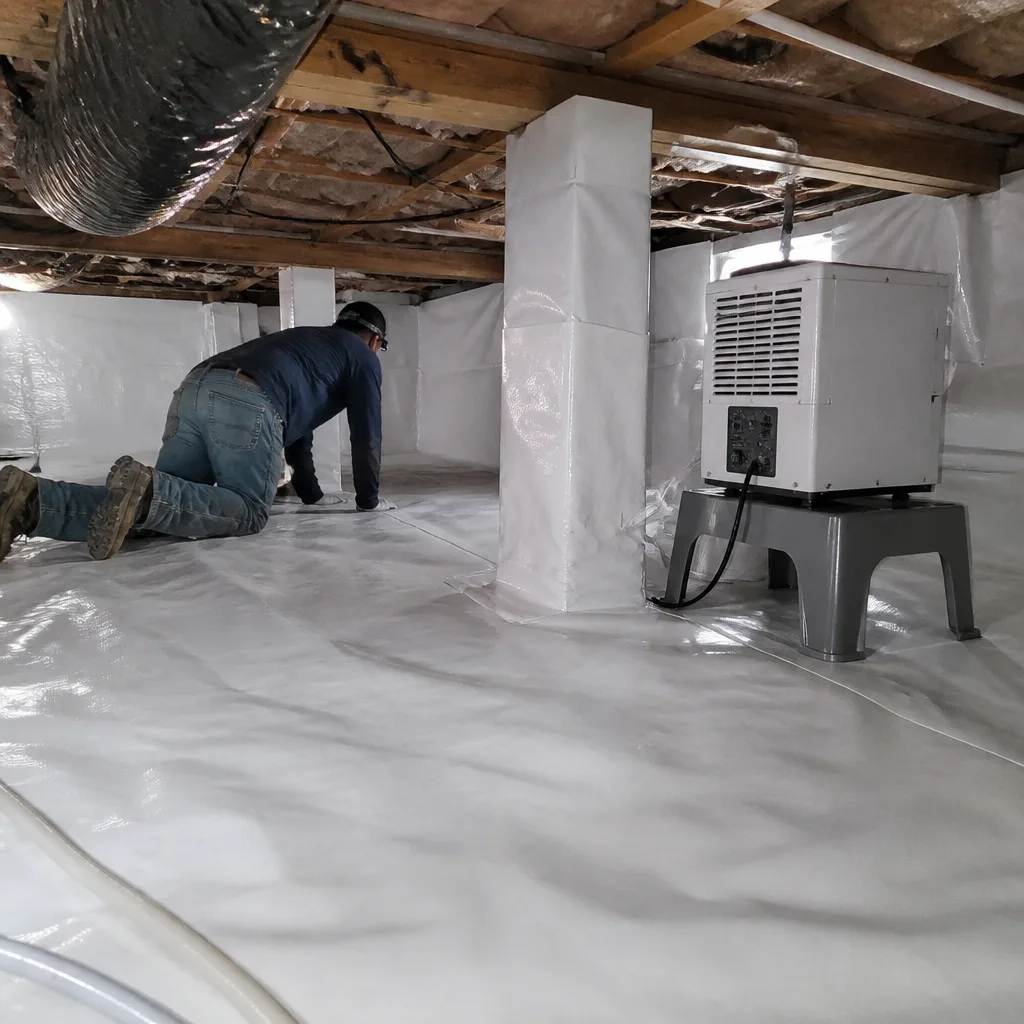
Removal is required when insulation is wet, mold-contaminated, rodent-infested, or contains vermiculite or urea-formaldehyde foam. Topping off is viable when existing insulation is dry, evenly distributed, and uncontaminated. We provide a Documented Photo Record on every visit so you can see the condition we found and the basis for our recommendation. For homes with crawl space moisture issues, crawl space encapsulation and vapor barrier in Santa Clarita may be needed to protect attic insulation from humidity migration.
We seal first, then insulate - in that order. We never blow insulation over an unsealed attic floor. We publish before-and-after blower-door numbers on every applicable job. We provide a written price before any work starts, a 365-Day Done Right Promise, and a Documented Photo Record on every visit. Our materials come from Owens Corning, Johns Manville, Knauf, Rockwool, and other major manufacturers - no proprietary lock-in. We’ve sealed and insulated 9,000+ homes since 2016, every one with a written price before work started and a documented record when the crew left.
The Bottom Line
DIY insulation in Santa Clarita is legally possible for limited, well-defined projects in accessible attics with no permit trigger and no air sealing concerns. For everything else - spray foam, permitted work, removal jobs, rebate-eligible projects, and any home where you cannot verify envelope tightness - professional work is not just preferable but required by law or necessary for documentation. The decisive factor is not skill but scope: does your project include air sealing that you can measure, permits that you can pull, and documentation that you can generate? If any answer is no, hire a licensed contractor who provides written price, written scope, and written warranty before anyone lifts a tool. That’s Haven Standard Clause 1, and it’s how we’ve worked since 2016.
Written by Wes Okafor, Owner at Topside Attic Insulation Santa Clarita, serving Santa Clarita since 2016.